
Outdoor In-Ground Lighting
Inground Outdoor Lighting:
A Clean, Architectural Approach
Inground outdoor lighting — also called well lights or recessed landscape lights — is installed flush with the surface to highlight what matters: trees, stonework, columns, and circulation paths.
Inground Outdoor Lighting: A Clean, Architectural Approach to Landscape Illumination
Inground outdoor lighting — also called well lights or recessed landscape lights — refers to fixtures installed flush or nearly flush with the ground surface.
Rather than drawing attention to the fixture itself, these lights direct illumination upward. The result is controlled uplighting that highlights trees, architectural features, columns, hardscapes, and pathways without visible hardware disrupting the view.
When thoughtfully specified and installed, inground lighting delivers subtle drama while maintaining a clean landscape aesthetic.
Where Inground Lighting Is Used
Inground fixtures are commonly used to illuminate:
- Mature trees and layered planting
- Architectural facades and stonework
- Columns and entry features
- Driveways and walkways
- Patios and terraces
- Sculptural elements
- Retaining walls and hardscapes
Because the fixture sits flush with the surface, the focus remains on what is being lit — not the light source itself.
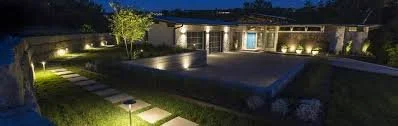
Choose the form that fits the surface.
Most modern systems use LED technology for long service life, low energy consumption, and reduced heat output.
Architectural emphasis. Discreet design.
Uplighting adds depth, contrast, and dimension. Trees gain presence. Stonework gains texture. Facades gain clarity.
No visible stakes or posts. The landscape remains visually uncluttered.
Flush-mounted fixtures can illuminate walkways and drive areas without creating glare.
With proper drainage and wet-rated fixtures, quality systems perform reliably. Low-voltage LED is energy-conscious and residential-safe.
Specify for longevity.
The longevity of an inground system depends heavily on material selection and installation quality.
- Brass (corrosion-resistant and durable)
- Aluminum (lightweight and cost-effective)
- Stainless steel
- Low-voltage vs. line-voltage systems
- Proper IP rating for water exposure
- Drainage planning beneath the fixture
- Beam spread and color temperature selection
- Access for future service
In humid or coastal climates, corrosion resistance and drainage planning are especially important.
Details determine performance.
Inground fixtures must be installed carefully to perform long term. Key factors include:
- Proper trench depth for wiring
- Direct burial-rated cable and sealed connections
- Gravel or drainage base beneath the housing
- Level placement, flush with grade
- Transformer sizing appropriate for total load
Low-voltage systems are common in residential settings. More complex layouts or line-voltage installations typically require professional oversight. Poor drainage and improper sealing are the most common causes of premature failure.
Considerations Before Installing
- Initial investment varies depending on fixture quality and layout complexity
- Lenses require occasional cleaning
- Fixtures must remain accessible for service
- Drainage planning is essential to prevent water accumulation
Well-designed systems prioritize longevity, serviceability, and predictable performance — not just visual effect.
Refined illumination, hidden in plain sight.
Inground lighting offers one of the most refined ways to illuminate a landscape. It emphasizes architecture and plant material while keeping the source discreet.
When properly designed, it delivers subtle drama without visual clutter — enhancing both the experience of the property and its long-term value.

Want a lighting plan that stays clean for years?
We coordinate design intent, fixture specification, and long-term serviceability—so the landscape looks refined and performs predictably.
LEARN MORE: HAMPTONS HARDSCAPES
FAQ: Inground Outdoor Lighting
What is inground outdoor lighting?
Inground outdoor lighting refers to fixtures installed flush or nearly flush with the ground surface to direct light upward. Often called well lights or recessed landscape lights, they are commonly used to illuminate trees, architectural features, walkways, and hardscapes while keeping the fixture itself visually discreet.
What is the difference between a well light and an in-grade light?
A well light is typically installed below grade with the lamp recessed inside a cylindrical housing, making it ideal for uplighting trees and walls. In-grade lights are designed to integrate into hardscape surfaces like concrete, stone, or pavers and are often rated for walkover or driveover use.
Where are inground lights commonly used?
Inground lighting is frequently used for:
Architectural facades
Columns and entryways
Patios and terraces
Retaining walls and stonework
Are inground outdoor lights waterproof?
Quality inground fixtures are designed for wet environments and should carry an appropriate IP rating for water exposure. Proper drainage beneath the fixture is equally important to prevent water accumulation and premature failure.
Are LED inground lights better than traditional bulbs?
Yes. Most modern inground lighting systems use LED technology because LEDs offer:
Lower energy consumption
Longer service life
Reduced heat output
Improved reliability
Better color consistency
Do inground lights require professional installation?
Simple low-voltage systems may be suitable for experienced installers, but professional installation is recommended for most projects. Proper trenching, drainage, transformer sizing, and sealed wiring connections are critical for long-term performance.
How long do inground landscape lights last?
The lifespan depends on fixture quality, installation methods, and environmental conditions. High-quality brass or stainless steel LED fixtures installed with proper drainage can perform reliably for many years with minimal maintenance.
What materials are best for inground lighting fixtures?
Common materials include:
Brass for corrosion resistance and durability
Stainless steel for strength and clean aesthetics
Aluminum for lightweight, cost-effective applications
In coastal or humid climates, corrosion-resistant materials are especially important.
Do inground lights need maintenance?
Yes. While low-maintenance, inground fixtures benefit from periodic cleaning to remove dirt, mulch, and debris from lenses. Systems should also remain accessible for future servicing or lamp replacement.
Can inground lights be installed in driveways or walkways?
Yes. Many in-grade fixtures are specifically designed and rated for walkover or driveover applications, making them suitable for pathways, patios, and select driveway installations.
Are solar inground lights a good option?
Solar inground lights can work well for light-duty or decorative applications, but they are generally less powerful and less reliable than wired low-voltage LED systems.
What color temperature is best for landscape lighting?
Warm white color temperatures — typically between 2700K and 3000K — are commonly preferred for residential landscape lighting because they create a softer, more natural appearance while enhancing architectural materials and planting.
Why is drainage important for inground lighting?
Without proper drainage, water can collect around the fixture housing and wiring connections, leading to corrosion, electrical issues, and shortened fixture lifespan. A gravel drainage base is often recommended beneath the fixture.
Is low-voltage landscape lighting safer?
Yes. Low-voltage systems are widely used in residential landscapes because they are energy efficient, safer around outdoor environments, and easier to expand or modify over time.
How do you prevent glare from inground lighting?
Glare is minimized through careful beam selection, fixture positioning, shielding, and aiming angles. Well-designed systems illuminate architectural and landscape features without exposing harsh light sources to occupants or guests.