
A Welcome After Dark - Lighting a Coastal Landscape with Purpose
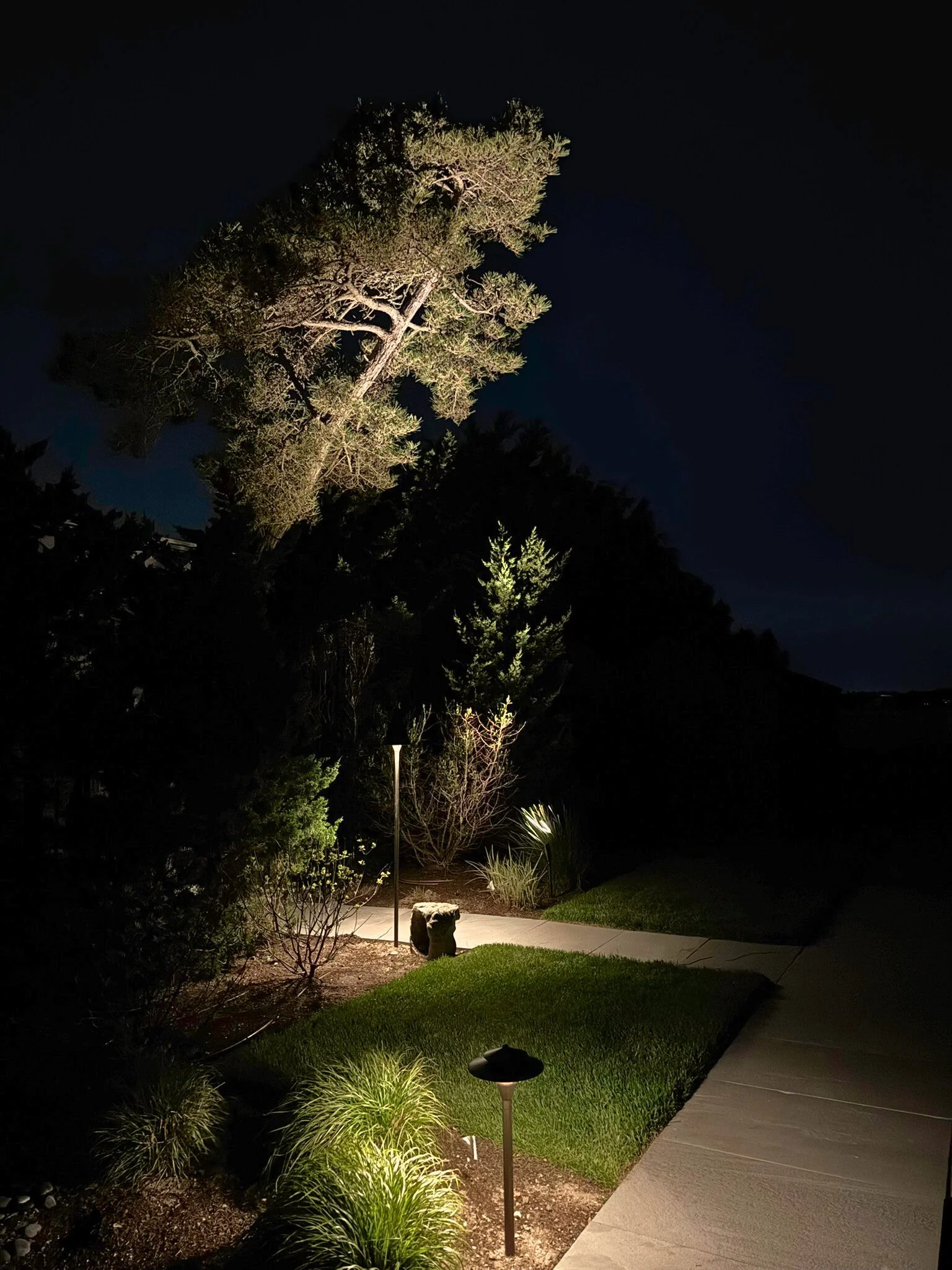
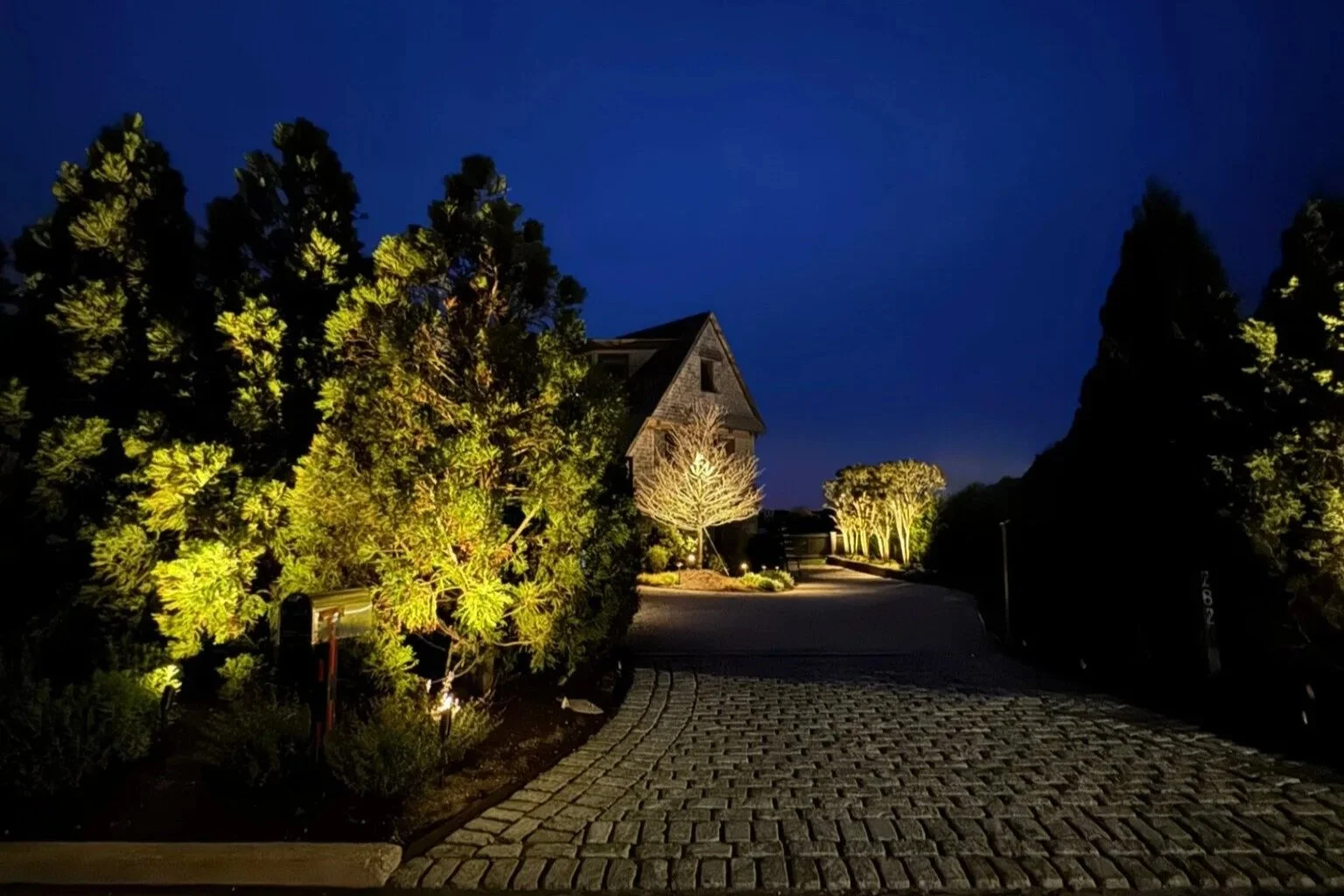
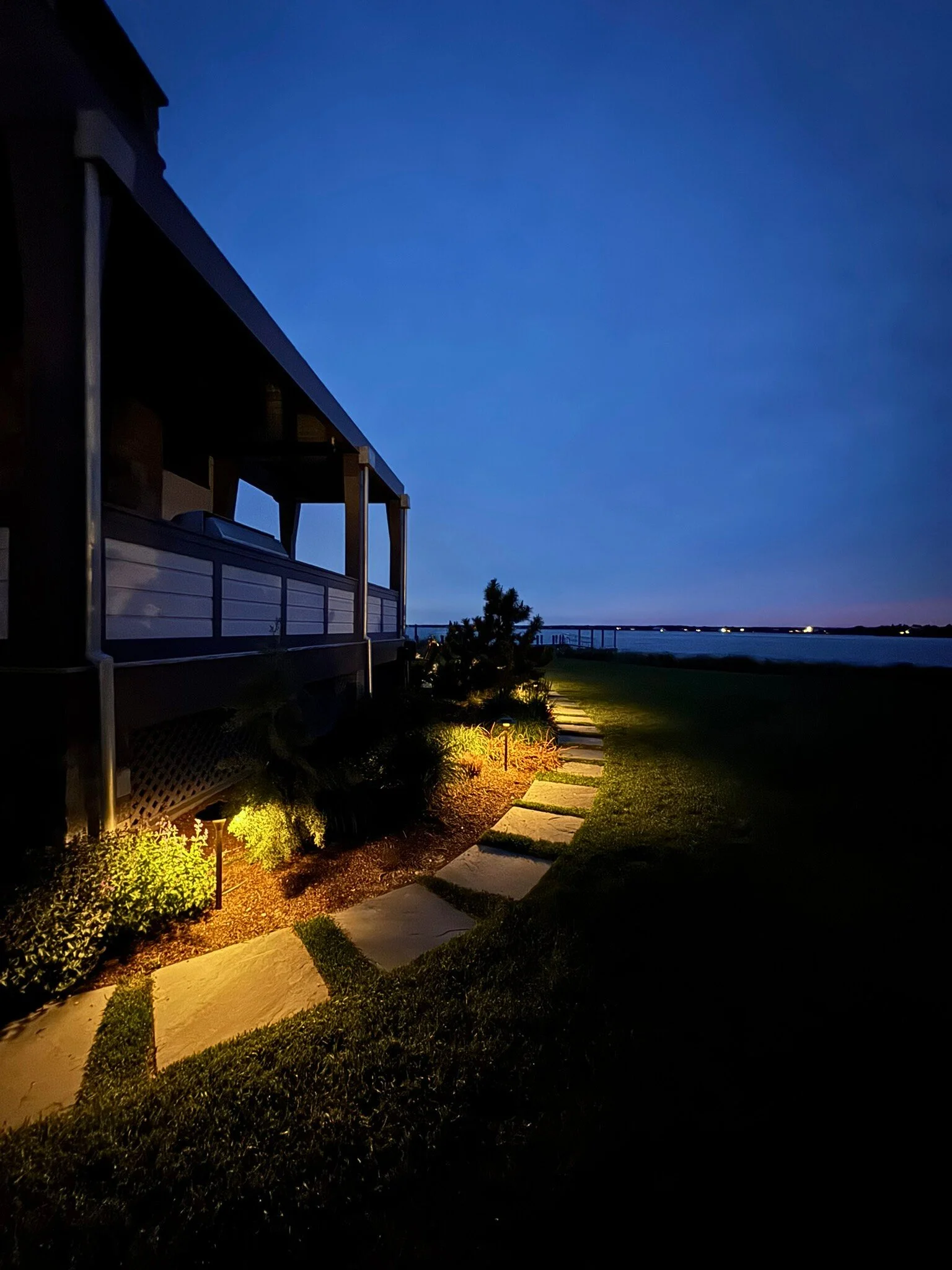
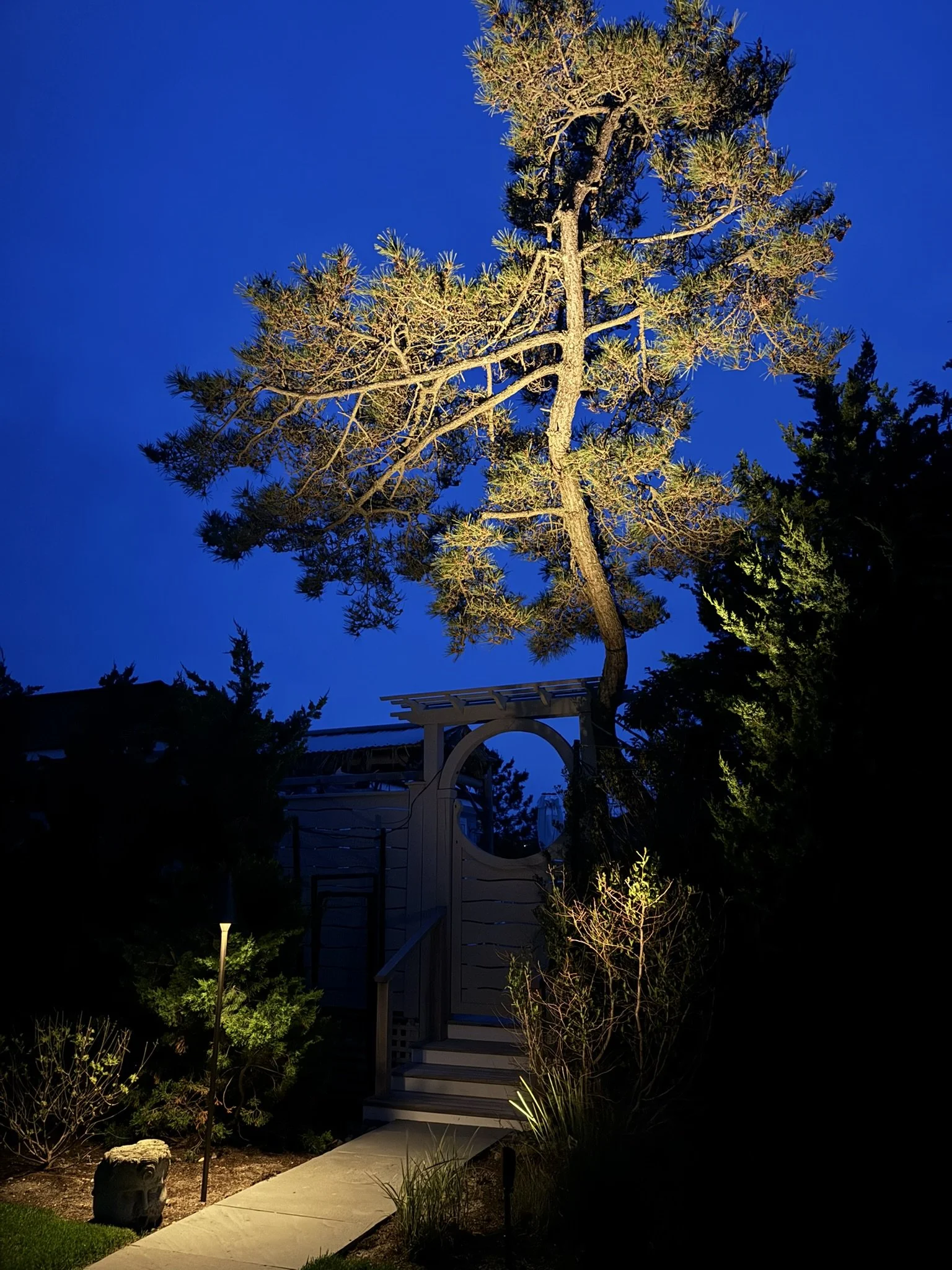


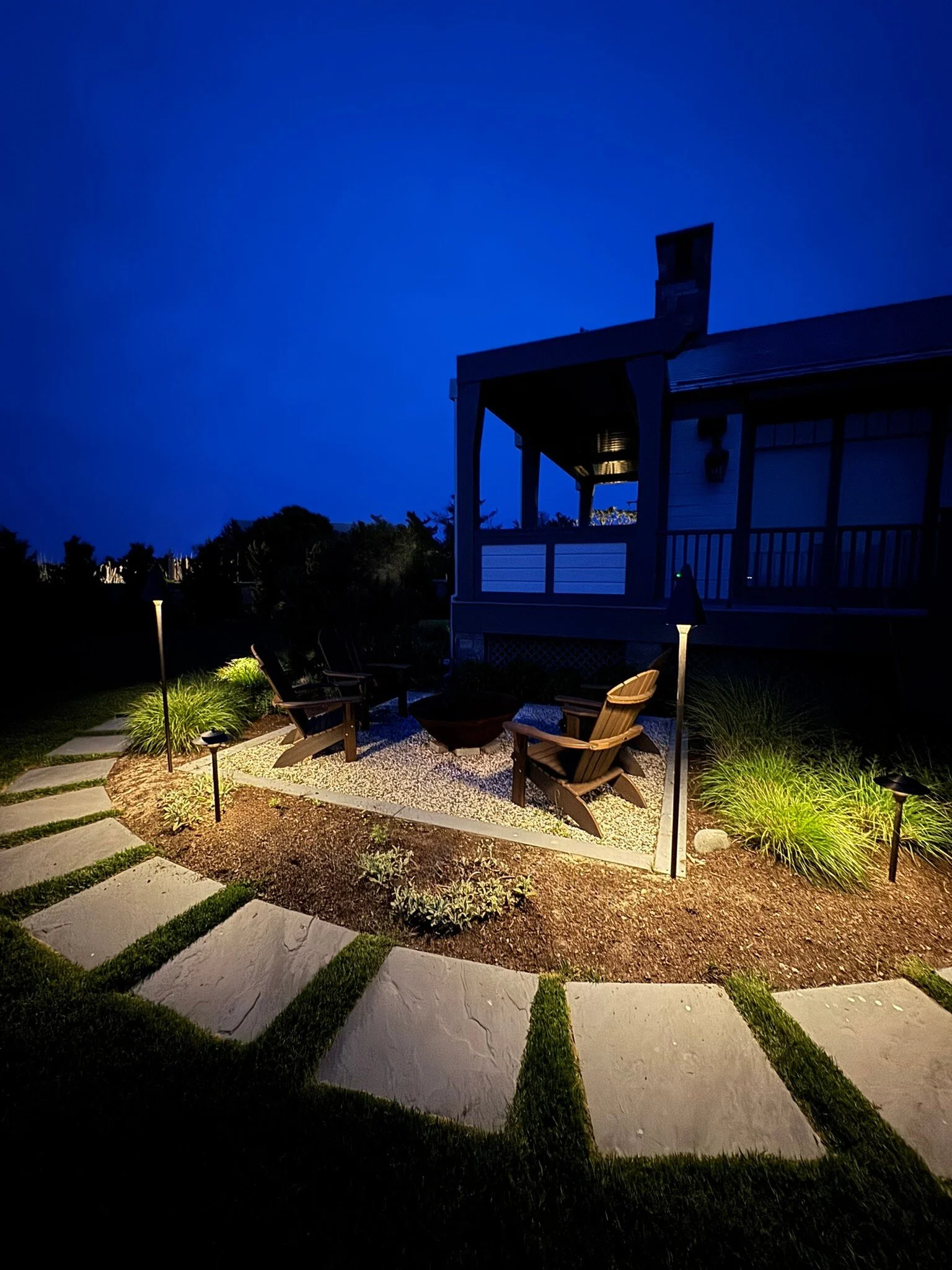

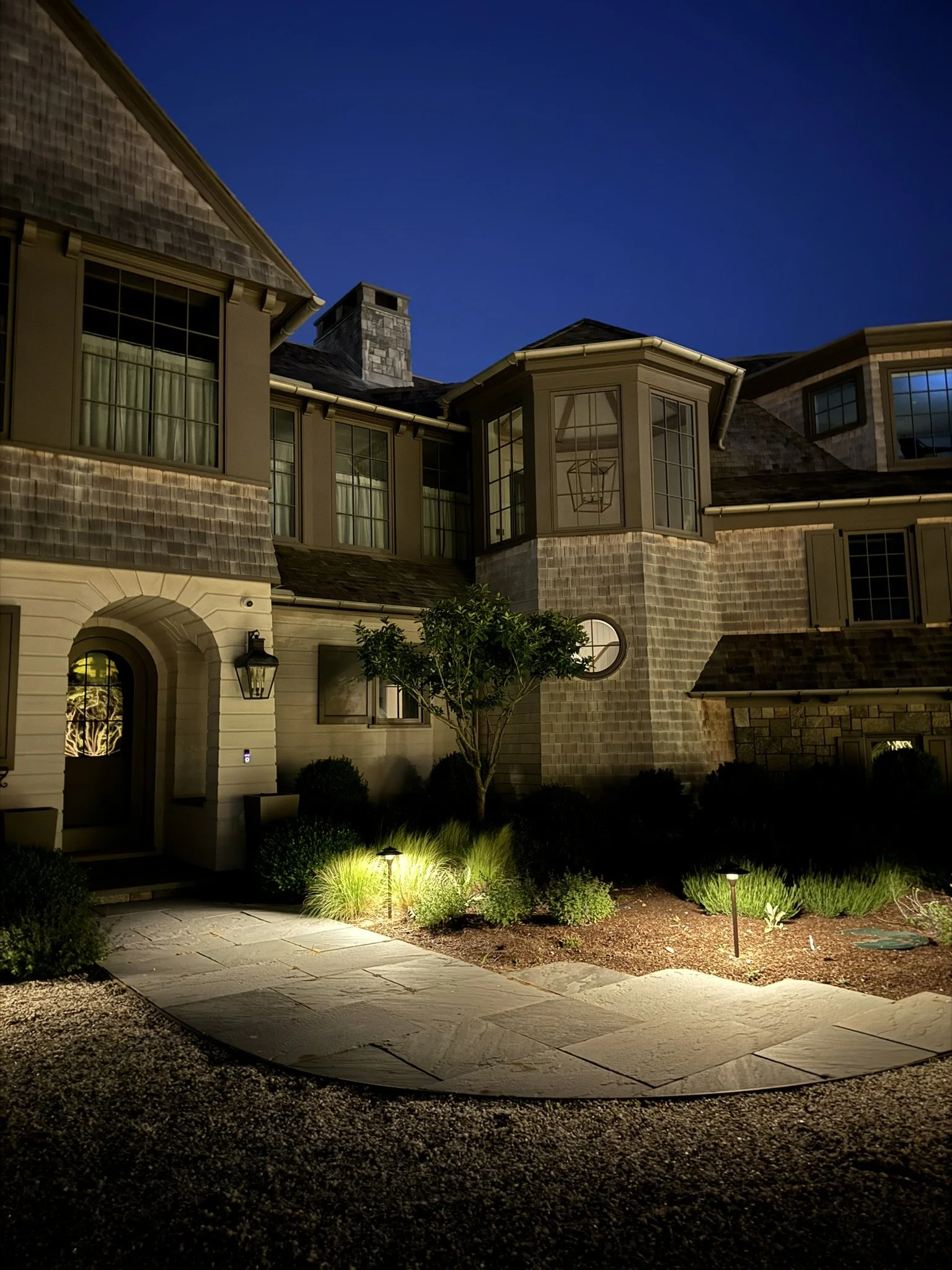
At this Westhampton property, a purposeful coastal landscape lighting design transforms the arrival experience, outdoor gathering areas, garden views, and pathways into one quietly elegant composition. Every layer was designed to enhance the property after dark while accounting for salt air, changing plant material, and the realities of life near the water.
Lighting That Begins with the Experience
How do you create an exterior lighting plan that feels effortless, elegant, and built to last—especially along the coast?
The answer rarely begins with a fixture. It begins with understanding how the property is approached, where people naturally pause, which landscape elements define its character, and how every view should feel after sunset.
For this Westhampton residence, Hamptons Landscape Lighting lead designer Vanessa Kordich developed a full-property strategy that could guide, reveal, and evolve. What began as a desire for improved visibility and ambiance became a layered design shaped by field experience, close collaboration, and a clear point of view: the lighting should support the landscape without competing with it.
A Curved Driveway Becomes a Composed Arrival
The experience begins before guests reach the front door.
As the driveway curves through the property, light reveals the landscape in measured intervals rather than illuminating everything at once. Crepe myrtles are softly lit to bring out their branching structure, seasonal canopy, and sculptural character. Garden beds receive lower, more precise layers that establish depth while keeping the overall scene calm.
This balance is important. Too much uniform light can flatten a landscape and make a residential property feel commercial. By allowing areas of darkness to remain between illuminated moments, the design creates visual rhythm, supports orientation, and draws attention to the elements that make the property distinctive.
The lighting accomplishes three important goals:
Guidance: Light supports safe, intuitive movement along the driveway, garden paths, and transitions between elevations.
Depth: Layered illumination separates the foreground, middle ground, and background so the landscape retains its dimension after dark.
Restraint: Careful aiming, shielding, and output control reduce glare and keep the visual effect refined.
Gathering Spaces Designed for Warmth
At the fire pit, the design priority shifts from arrival to comfort.
Coastal Source tiki torches introduce a warm, flickering layer that complements the fire and helps define the gathering area without relying on harsh overhead illumination. Their mosquito-control capability also supports how the space is actually used during summer evenings.
The result is atmospheric but functional. Faces remain visible, circulation feels clear, and the surrounding landscape stays connected to the experience.
The lighting does not announce itself as a collection of products. It simply makes the outdoor room feel warmer, more intimate, and more inviting.
Refining the Design in the Field
One of the most valuable parts of a professional lighting design process is the ability to evaluate the finished effect on-site.
Drawings establish the intent, but field conditions reveal how elevations, finished materials, plant density, and actual sightlines interact after dark. A fixture that appears appropriate on a plan may create an unexpected reflection, shadow, or glare once installed.
That became especially important at the stairway connecting two areas of this property. During installation, the team reconsidered the initial approach and adjusted the fixture type and layout to create a softer, more diffused effect.
The change improved visual comfort and made the transition feel integrated with the surrounding landscape rather than separately illuminated.
A strong lighting plan is precise without being rigid. Thoughtful adjustments in the field help protect the original design intent when the built environment presents information that a plan alone cannot show.
Choosing Fixtures for a Coastal Environment
Westhampton’s salt air, moisture, wind, irrigation, and seasonal exposure place real demands on outdoor equipment.
Coastal properties benefit from fixtures, connections, and installation methods selected for long-term performance—not merely their appearance on installation day.
For this project, the team specified Coastal Source fixtures and adapted the layout as site conditions required. Coastal-appropriate materials help the system withstand environmental exposure while maintaining a refined appearance.
Durable fixtures are only one part of the equation. Long-term performance also depends on:
Proper fixture placement
Protected electrical connections
Awareness of irrigation and drainage
Accessible locations for future service
Routine cleaning and adjustment
Coordination with gardeners and landscape professionals
These details are especially important near the water, where unsuitable products or installation methods can lead to corrosion, performance problems, and premature failure.
Lighting That Respects the Nighttime Environment
Good landscape lighting is not about making a property as bright as possible. It is about placing the appropriate amount of light exactly where it is needed.
Careful aiming helps keep light out of windows and neighboring properties. Shielding limits direct views of the light source, while appropriate output levels prevent pathways and gardens from feeling overly bright.
This restrained approach also allows the eye to move comfortably through the property. Instead of competing pools of light, the landscape becomes a balanced composition of highlights, shadows, silhouettes, and subtle transitions.
The result feels more natural because darkness remains an intentional part of the design.
A System Designed to Grow with the Landscape
A landscape is never static.
Trees mature, shrubs fill in, gardens are refreshed, and outdoor living areas change over time. Lighting that appears balanced today may need a different aiming angle, output level, or fixture position in future seasons.
For that reason, this project included full as-built documentation. The documentation provides a reliable record of fixture locations, wiring, transformers, and important system decisions.
This makes future adjustments more efficient and helps preserve the original design intent as the property evolves. It also turns maintenance from a reactive repair exercise into a more informed stewardship program.
When the service team understands why each fixture was placed in a particular location, it becomes easier to make changes without weakening the overall composition.
The Importance of Ongoing Maintenance
Even a well-designed coastal lighting system requires regular attention.
Plants can grow across beams, fixtures can shift due to landscaping activity, lenses can accumulate mineral deposits, and seasonal weather can affect aiming or connections. A system that has not been reviewed for several years may still operate, but the original visual effect can gradually disappear.
Routine landscape lighting maintenance may include:
Cleaning fixture lenses
Removing leaves and landscape debris
Checking wiring and electrical connections
Straightening or repositioning fixtures
Adjusting fixtures around plant growth
Reviewing brightness and beam direction
Confirming transformer and control operation
Replacing damaged or underperforming components
Coordinating adjustments with landscape renovations
These visits are not only about correcting failures. They are opportunities to refine the system as the landscape and the homeowner’s needs change.
From Individual Fixtures to a Complete Experience
What makes this Westhampton project successful is not any single fixture or technique. It is the relationship between each lighting layer.
The illuminated crepe myrtles contribute to the arrival experience. Lower garden lighting establishes depth. The fire pit lighting creates warmth. The redesigned stair lighting supports movement between areas. Coastal-ready products and careful documentation prepare the system for long-term service.
Together, these elements create an experience that feels natural, comfortable, and considered.
From lighting design and installation to maintenance, upgrades, lighting control systems, and outdoor audio/video, Hamptons Landscape Lighting provides comprehensive outdoor lighting services.
Frequently Asked Questions About Coastal Landscape Lighting
What makes coastal landscape lighting different?
Coastal lighting systems must account for salt air, moisture, wind, irrigation, shifting soils, and seasonal exposure. Fixture materials matter, but so do protected electrical connections, appropriate placement, drainage conditions, service accessibility, and routine maintenance.
How do you create elegant exterior lighting without overlighting a property?
Elegant lighting relies on hierarchy. A designer identifies the most important trees, architectural features, paths, and gathering areas, then varies intensity, beam spread, direction, and darkness between them. Shielding and precise aiming help control glare and keep the light sources visually quiet.
Can landscape lighting improve safety without looking harsh?
Yes. Steps, grade changes, pathways, and driveway edges can be made easier to navigate with low-level, diffused, or indirect light. The objective is useful visibility and visual comfort—not maximum brightness.
Why is an on-site nighttime adjustment important?
Some lighting effects can only be judged after dark. A nighttime review allows the design team to fine-tune aiming, brightness, glare control, and the relationship between different lighting layers. It also provides an opportunity to respond to actual sightlines, plant density, and finished materials.
Can an existing landscape lighting system be renovated or upgraded?
Often, yes. A professional assessment can identify reusable infrastructure, failed or dated fixtures, weak coverage, control limitations, and opportunities to improve efficiency and visual quality. Depending on the condition of the system, the best solution may combine selective replacement with a redesigned layout.
How do lighting controls support a Hamptons property?
Lighting controls can automate schedules, create different scenes for arrival or entertaining, and reduce unnecessary runtime late at night. The appropriate control system depends on how the property is used, whether it is occupied seasonally, and how the outdoor lighting should coordinate with other systems.
When should landscape lighting be planned?
Ideally, lighting should be considered while the landscape, hardscape, pool, or renovation plans are still being developed. Early coordination can simplify conduit routes, transformer locations, sleeve placement, and fixture integration. Existing properties can also be successfully retrofitted with careful planning.
How often should coastal landscape lighting be maintained?
A coastal lighting system should generally be reviewed seasonally and after major landscape work or severe weather. The appropriate maintenance schedule will depend on the property’s exposure, plant growth, irrigation, usage, and the complexity of the system.
Reimagine How Your Property Feels After Dark
Great lighting is more than fixtures and footcandles. It is the welcome created along the driveway, the ease of moving through a garden, and the atmosphere that encourages people to remain outdoors a little longer.
Ready to reimagine your own property with light? Hit the button below, give us a call at (631)259-3462 or send an email to sales@hamptonslandscapelighting.com.
