
Designing to Disguise Outdoors
HLL’s Services Beyond Lighting
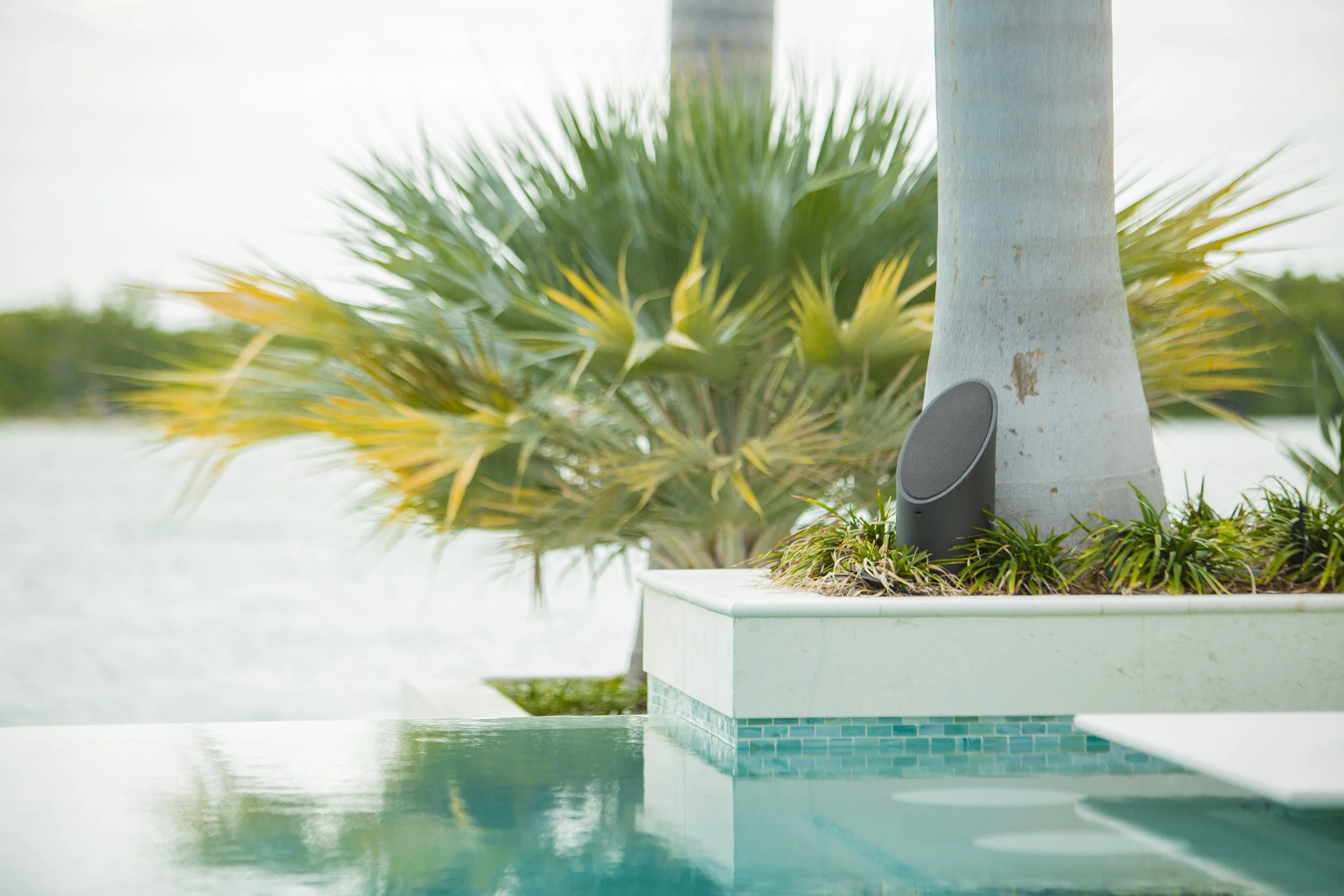
At Hamptons Landscape Lighting (HLL) we work with renowned architects and designers to not only seamlessly integrate our landscape lighting features but also outdoor technology, while disguising the electronics.
Many of our clients keep their interior décor blemish free with mirror televisions, media lifts, and invisible speakers, but what can be done to camouflage exterior technology?
Communication
The backbone of outdoor tech is your network. Just like wireless access points, phones, and cell boosters are distributed throughout your home to provide a strong, continuous signal, the same must be done in your yard. We use a combination of weatherproof access points and strategic placement of traditional boosters to ensure full coverage.
These small devices are hidden in cabinets, in nooks and crannies, and other out of sight locations.
Audio
Distributed audio has become a staple in all high-end homes. Having a tune play both inside and out has never been easier, but not everybody wants to see their speakers. For music lovers, Sonos outdoor audiophile speakers, camouflage into your design disguised as landscape lighting.
For those who appreciate background music but aren't quite as particular about the sound, speakers hidden in planters, or made to look like rocks may be the solution for you. Requests for underwater speakers for athletes who like to swim to their workout playlist are also on the rise.
Video
Demand for outdoor video has increased dramatically over the last few years. These exterior televisions and projectors used to stay in full view, but now homeowners want their outdoor video equipment to be hidden when not in use, similar to their interior electronics.
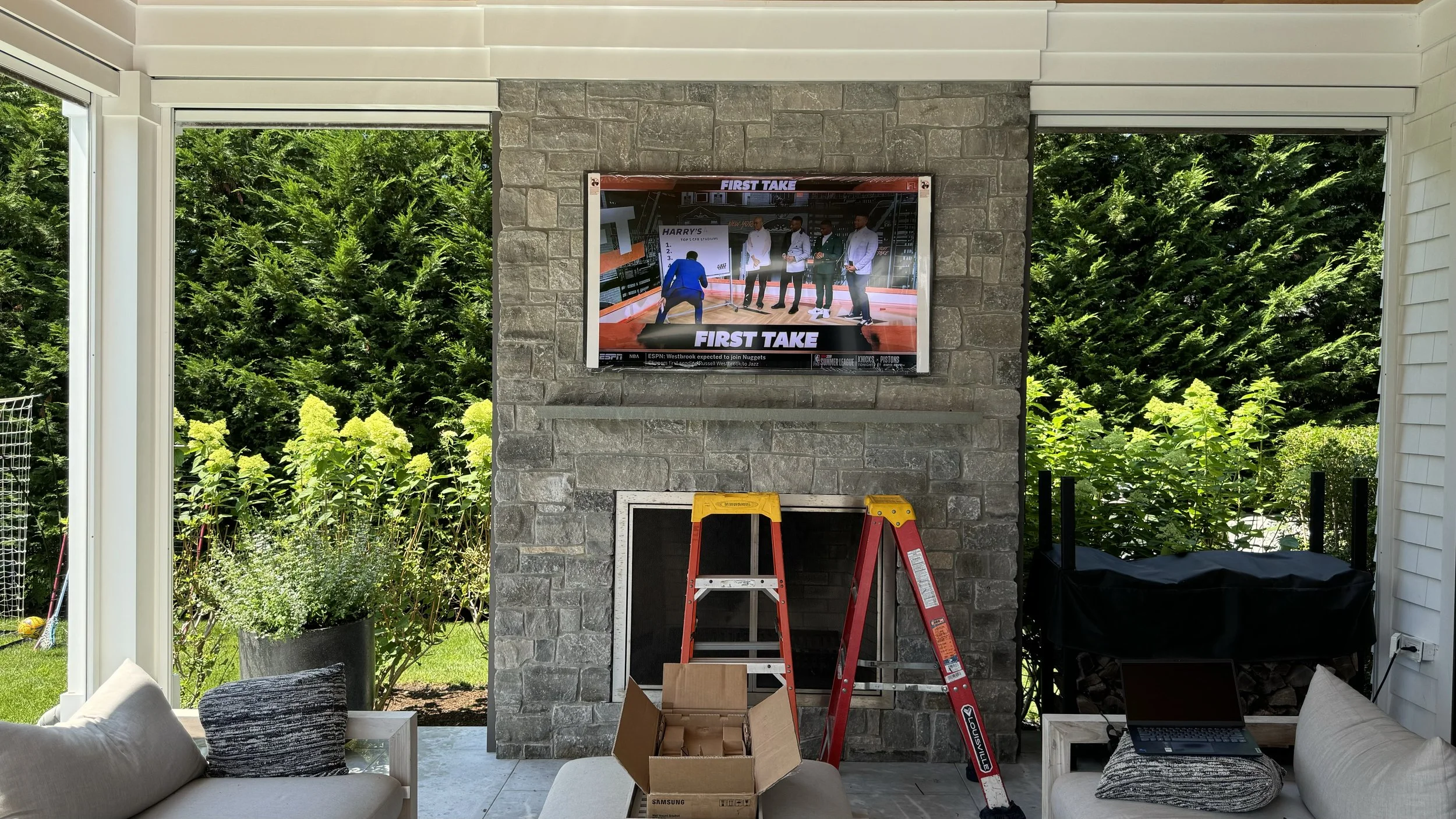
Outdoor TVs and projectors are most commonly disguised with media lifts. These lifts can go in the ground, be hidden in outdoor cabinetry and bars, or ascend into pavilion roof tops.
Cameras
To be clear, the cameras with the highest resolution, best functionality (pan, tilt, zoom, motion, etc.) and integration capabilities look like cameras. With that said, if you're willing to sacrifice quality and capability for an incognito option, there are a few designs that can hide in plain site. These cameras can look like rocks, lamps, and mailboxes.
Shades
While motorized shades have been gaining popularity, few people know about outdoor shades, which are perfect for blocking out harsh sun without sacrificing your view.
When it comes to concealing the shades, the rollers are hidden in custom made pockets, the same way they're concealed indoors. Motorized exterior shades are great additions to patios and front porches alike.
Frequently Asked Questions About Concealing Outdoor Technology
Can outdoor technology be integrated without disrupting the landscape design?
Yes. The most successful outdoor technology is planned alongside the architecture, landscape, hardscape, and lighting—not added after those elements are complete. Early coordination gives the design team more opportunities to conceal equipment within planting beds, custom cabinetry, structures, and other carefully selected locations.
What types of outdoor technology can be concealed?
Many exterior technology components can be hidden or visually minimized, including:
Wi-Fi access points and network equipment
Landscape and architectural speakers
Outdoor televisions and projection systems
Motorized television lifts
Exterior shade housings
Selected surveillance cameras
Equipment enclosures, wiring, and controls
Not every component should be made completely invisible. Performance, ventilation, service access, weather protection, and security coverage must remain part of the design.
How can strong Wi-Fi coverage be provided without placing noticeable equipment throughout the property?
Outdoor connectivity typically requires strategically positioned, weather-resistant access points. Depending on the property, these may be concealed within architectural elements, discreet enclosures, cabinetry, covered structures, or carefully selected landscape locations.
Placement is based on coverage and performance—not simply appearance. The goal is to create reliable connectivity across patios, pools, outdoor kitchens, guest houses, gardens, and other frequently used areas while keeping the supporting equipment visually quiet.
Can outdoor speakers be hidden within the landscape?
Yes. Landscape audio systems can use discreet speakers placed among plantings, mounted beneath architectural features, incorporated into planters, or designed to resemble natural landscape elements. Subwoofers can also be partially buried, leaving only a small, unobtrusive opening visible.
For the most natural listening experience, we typically recommend distributing multiple carefully positioned speakers throughout the property. This creates balanced coverage at comfortable volume levels instead of relying on a few conspicuous speakers playing too loudly.
Will concealed outdoor speakers still provide good sound quality?
They can, provided the audio system is properly designed. Speaker selection, placement, amplification, landscape conditions, listening areas, and neighboring properties all affect performance.
A well-designed system should produce even, immersive sound without creating obvious hot spots or sending unnecessary volume beyond the intended entertaining areas.
Are underwater speakers available for swimming pools?
Yes. Specialized underwater speakers can bring music or audio cues into the pool itself. They may be appropriate for lap swimmers, synchronized swimming, aquatic exercise, or homeowners who want a more immersive pool experience.
Because these systems require specialized installation and coordination with the pool design, they should be discussed before construction or renovation whenever possible.
Can an outdoor television be completely hidden when it is not being used?
In many settings, yes. Weather-rated televisions can be concealed within custom cabinetry, outdoor bars, architectural structures, or motorized lift systems. Depending on the design, a television may rise from the ground or cabinet, descend from an overhead structure, or disappear behind a coordinated architectural panel.
The enclosure must still provide appropriate weather protection, airflow, drainage, structural support, power, connectivity, and service access.
Can outdoor projectors and screens also be concealed?
Yes. Retractable projection screens can be recessed into ceilings, pavilion structures, or custom housings. Projectors may be installed within weather-protected enclosures or incorporated into architectural features.
Outdoor projection requires careful evaluation of ambient light, viewing distance, weather exposure, screen placement, and nighttime lighting. It works best when the landscape lighting and video system are designed together so glare and excessive brightness do not compromise the image.
Can security cameras be hidden in the landscape?
Some cameras can be visually minimized or incorporated into architectural and landscape features. However, the most capable surveillance cameras generally still look like cameras.
Disguising a camera may require compromises in image quality, field of view, low-light performance, motion tracking, maintenance access, or integration. For many properties, thoughtful placement and a finish selected to blend with the architecture provide a better balance than attempting to conceal every camera completely.
Can exterior motorized shades be hidden when they are open?
Yes. Exterior shade rollers can often be recessed into custom pockets within pergolas, porch ceilings, pavilions, and other architectural structures. Side channels and related hardware can also be coordinated with surrounding materials and finishes.
Planning these pockets early creates a cleaner result and helps the shades feel like part of the architecture rather than an accessory added later.
What are the benefits of exterior motorized shades?
Exterior shades can reduce glare, provide relief from direct sun, improve privacy, and make covered outdoor areas more comfortable throughout the day. Depending on the selected fabric and system, they can preserve outward views while helping define patios, porches, outdoor kitchens, and entertaining areas.
They may also help protect furnishings and finishes from prolonged sun exposure.
When should concealed outdoor technology be planned?
Ideally, planning should begin before hardscape, planting, cabinetry, pool construction, and pavilion details are finalized. Early coordination allows the project team to account for conduit, wiring, drainage, equipment locations, structural support, ventilation, service access, and custom concealment details.
Existing properties can also be upgraded, but retrofit options may be more limited once finished surfaces and mature landscaping are in place.
Does hiding outdoor technology make it harder to maintain?
It can if service access is not considered during design. Concealment should never mean permanently sealing equipment behind finished materials or placing it where technicians cannot reach it safely.
The best solutions keep technology out of sight during everyday use while preserving practical access for maintenance, upgrades, and replacement.
Who should be involved in planning an integrated outdoor system?
Outdoor technology works best when the technology integrator coordinates early with the homeowner, architect, landscape architect, interior designer, builder, electrician, pool professional, and outdoor-kitchen or cabinetry team.
That collaboration allows lighting, connectivity, audio, video, shades, and security to support the larger design intent—creating a refined outdoor environment without allowing the electronics to become the visual focus.
LEARN MORE:
LANDSCAPE LIGHTING REPAIR
LANDSCAPE LIGHTING INSTALLATION
LANDSCAPE LIGHTING DESIGN