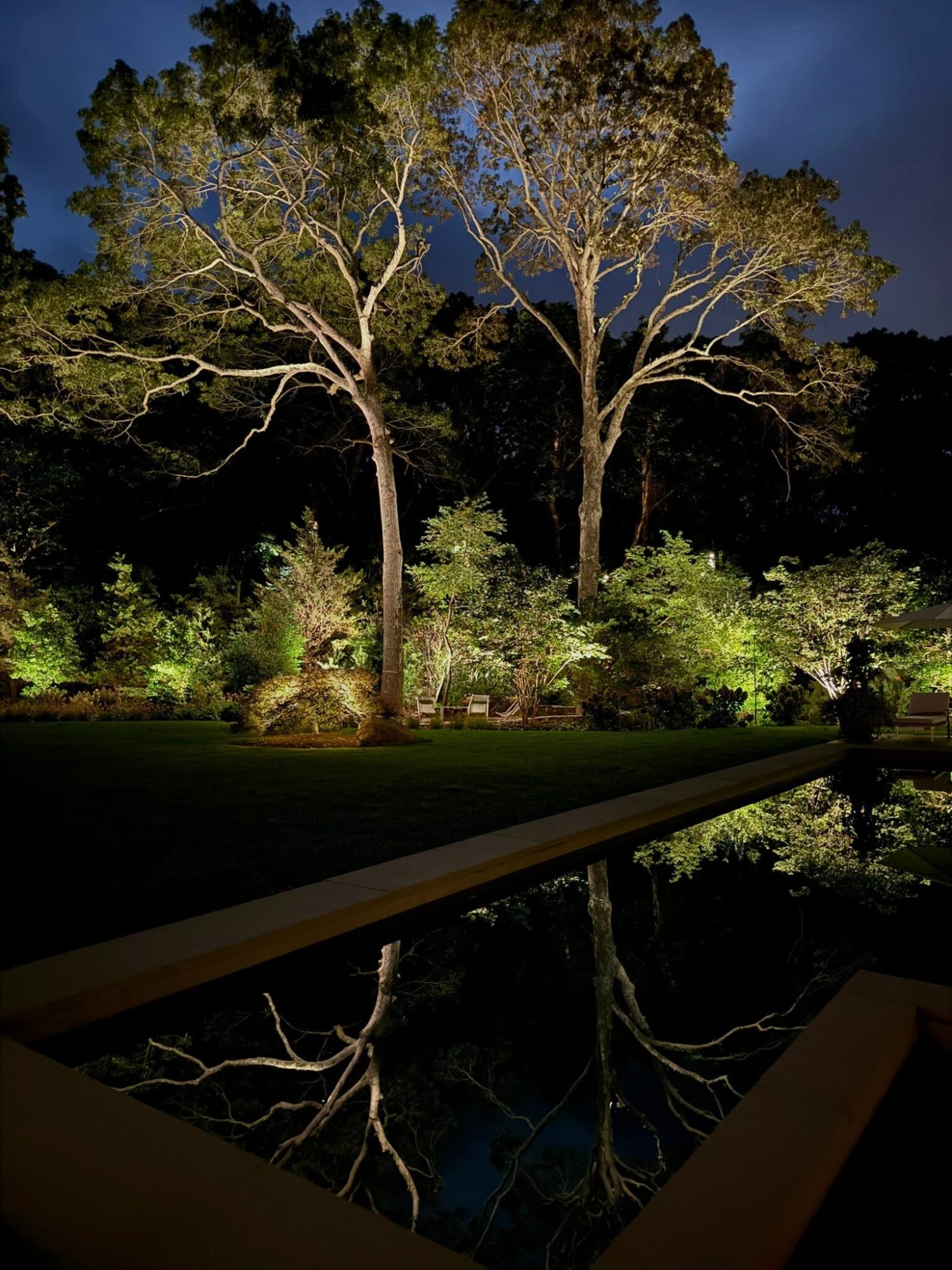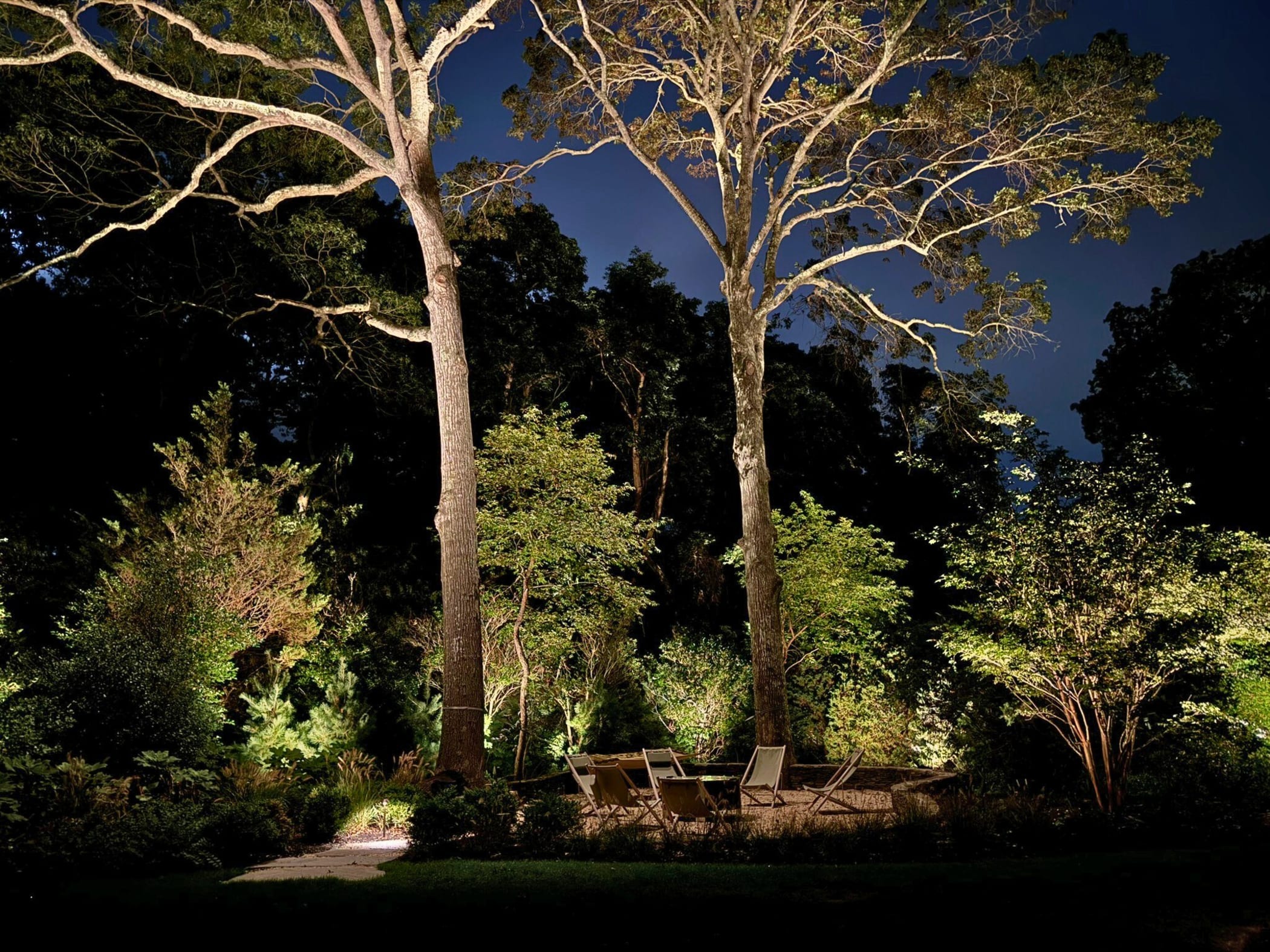
Architectural landscape lighting illuminating mature trees and an outdoor gathering area at an Amagansett estate

The Cost of Waiting

Avoid the Dark Season Tax.

The best summer nights should not be spent realizing your property is underlit.

Prepare the Property

Make the evenings ready before they arrive.

Tell us what feels dark, unfinished, or difficult to use after sunset. We will help you understand the right scope and a practical starting budget.

Summer Begins After Sunset

Waiting costs the nights you meant to enjoy.

The Dark Season Tax is the experience lost when outdoor lighting is postponed until the season is already underway. The pool is open, the furniture is outside, guests are arriving—and paths still feel uncertain, patios disappear at the edge, and the landscape becomes a dark backdrop instead of part of the evening.

This is not manufactured urgency. It is simple seasonality. By the time Memorial Day arrives in the Hamptons, the evenings people have been waiting for are already here. Starting earlier gives a considered landscape lighting project time for discovery, budgeting, design, installation, and professional aiming after dark.

Hamptons Landscape Lighting provides design-led outdoor lighting for homes and estates across the East End. We plan architecture, gardens, movement, outdoor living, controls, and long-term service as one nighttime composition—not as a collection of fixtures added wherever darkness is most obvious.

What Waiting Looks Like

The Dark Season Tax is paid in ordinary moments.

02

Uncertain movement

Dark steps, uneven paths, and poorly defined transitions make arrival and circulation feel less comfortable than the property deserves. Explore path and walkway lighting.

03

A missing landscape

Architecture, mature trees, gardens, and views disappear instead of giving the property depth and presence at night.

04

Rushed additions

Solving isolated dark spots during peak use can create patchwork lighting instead of one balanced, serviceable system.

The best summer nights should not be spent realizing your property is underlit.
Layered tree and pool lighting reflected across an Amagansett property after dark

Designed, Not Merely Installed

Good lighting changes how the whole property feels.

Professional landscape lighting does more than make a property brighter. It shapes arrival, movement, architecture, planting, views, and the places where people spend time. The aim is visual comfort and atmosphere: enough light to make the property legible, with enough restraint to preserve the character of night. HLL’s guide to natural versus staged landscape lighting explains that distinction further.

HLL considers sightlines from inside the home, the relationship between foreground and background, the scale of mature trees, the position of windows, and the transitions between entries, paths, patios, pools, and gardens. Fixture placement, beam spread, direction, intensity, zoning, and glare control work together to create depth without making the equipment the focus.

That distinction matters most on large or detailed properties. Lighting added one dark spot at a time may solve immediate visibility, but a coordinated plan gives the estate one visual language and a clear structure for controls, future expansion, and maintenance. See the principles applied in an Amagansett landscape lighting case study.

What’s Included

A lighting approach built around the property.

The exact scope depends on the home, landscape, and existing system. HLL begins by identifying what must improve after dark, then recommends a focused upgrade or a more complete design path.

Entry and architecture

Compose the arrival with warm, controlled illumination that reveals materials and form without flattening the façade or producing harsh hotspots.

Paths and transitions

Clarify driveways, walks, steps, grade changes, and routes between outdoor spaces with light placed for comfort rather than runway-like repetition.

Gardens and trees

Use selective uplighting, downlighting, silhouetting, and layered beam direction to create depth through planting and specimen trees.

Pool and entertaining

Support patios, terraces, outdoor kitchens, fire features, and pool areas with atmosphere that allows people to linger without glare in their eyes.

Controls and schedules

Organize lighting into practical zones and scenes, with astronomical timing and seasonal adjustments suited to changing sunset and occupancy patterns.

Existing-system review

Assess fixtures, wiring, transformers, connections, controls, color consistency, dark zones, and aiming before deciding what should be maintained, repaired, replaced, or expanded.

From Conversation to Summer Nights

A clear path from concern to completion.

A defined area such as a front walk, entry, patio, or pool path may fit HLL’s Quick Start lighting path. Larger estates and more complex landscapes benefit from a dedicated full landscape lighting design phase before installation.

01 · DISCOVER

Start with the evening.

We discuss where the property feels dark, how it is used, what is changing, and which summer moments matter most.

02 · WALK

Read the property.

HLL reviews architecture, planting, paths, outdoor rooms, views, existing equipment, coastal exposure, and coordination needs.

03 · PLAN + INSTALL

Build the right scope.

We establish the lighting approach, fixture locations, beam intentions, zones, controls, transformers, and professional installation details.

04 · AIM

Complete it after dark.

Each fixture is tuned under real nighttime conditions so angle, intensity, spread, comfort, and the overall composition can be judged by eye.

Warm pathway lighting guiding movement through a Hamptons garden at night

Lighting should make the evening easier—not louder.

More light is not always better light. Thoughtful placement, shielding, warm color, and professional aiming reveal the path while protecting visual comfort and the atmosphere of the property.

Designed for the East End

Summer readiness requires coastal thinking.

Hamptons landscape lighting must perform through salt air, irrigation, sandy soil, storms, landscape growth, freeze-thaw cycles, and active property maintenance. HLL accounts for those real conditions with fixtures and materials selected for the East End, professional low-voltage connections, properly planned transformers, concealed placement, and an installation that can be serviced as the property changes. Read how those decisions shaped a layered Westhampton coastal lighting project.

Seasonal readiness also continues after installation. Plants grow into beams, lenses collect salt and debris, soil shifts, and timers need to follow changing daylight. Brilliance Care landscape lighting maintenance helps restore the intended composition through scheduled cleaning, inspection, re-aiming, and control adjustments. The guide to seasonal landscape lighting adjustments explains why a living landscape cannot be treated as static.

For a deeper look at the complete design and installation sequence, explore HLL’s landscape lighting process. For focused repairs or upgrades to a failing system, review landscape lighting repair and service.

Who Should Plan Now

A season-ready property starts before the season.

Spring planning is especially valuable for homeowners preparing for Memorial Day, summer entertaining, Fourth of July gatherings, or a full season in residence. It is also the right moment for new owners who have not yet experienced the property after dark and for existing clients whose lighting has shifted, failed, or become uneven since the previous year.

The right next step is not always a complete replacement. A property may need focused pathway improvements, refreshed aiming, a pool-area expansion, updated controls, repair of failed connections, or a full-property design. HLL begins with what the evening needs and recommends the level of work the property actually warrants.

That is how the Dark Season Tax is avoided: not by rushing, and not by adding brightness everywhere, but by making the important decisions while there is still time to complete them thoughtfully.

Continue Exploring

Plan the property from the questions that matter most.

These HLL service pages and field notes expand on the decisions behind a season-ready property—from choosing the right project path to completing the design after dark.

Common Questions

Planning Hamptons landscape lighting before summer.

When should I start planning landscape lighting for summer?
Begin before the evenings you most want to enjoy. Starting early gives HLL time to understand the property, establish a practical budget, plan the right scope, coordinate installation, and complete professional aiming after dark. A focused upgrade may move more directly than a full-estate design, so timing depends on the property and the work required.
Can HLL improve an existing landscape lighting system?
Yes. HLL can evaluate many older systems and recommend whether the property needs maintenance, repair, selective fixture replacement, revised aiming, updated controls, a focused expansion, or a broader redesign. The goal is not automatically to replace everything; it is to restore a coordinated, comfortable, and serviceable nighttime experience.
What areas of a property can landscape lighting address?
A coordinated plan can address architecture, entries, driveways, paths, steps, gardens, specimen trees, pools, patios, terraces, outdoor kitchens, and other gathering areas. The scope should reflect how the property is approached, viewed, and used after sunset rather than following a generic fixture count.
Why is professional night aiming important?
Night aiming lets the designer evaluate every beam under real conditions. Fixture angle, intensity, and spread can be adjusted to reveal architecture and planting, improve visual comfort, and reduce distracting glare or hotspots. It is the point at which individual fixtures become one composition.
Does Hamptons landscape lighting require special materials?
Coastal properties expose lighting systems to salt air, moisture, irrigation, sandy soil, storms, and landscape activity. HLL accounts for those conditions through corrosion-resistant materials, professional low-voltage connections, suitable equipment placement, and serviceable installation methods.
How can landscape lighting stay ready throughout the season?
Seasonal maintenance helps keep fixtures clean, properly aimed, and operating as designed as plants grow and weather affects the property. HLL’s Brilliance Care program can include cleaning, inspection, aiming corrections, and seasonal control adjustments, with a written report identifying service completed and issues that may need attention.

Before Another Season Passes

Let the property feel finished when summer begins.

Whether the need is a focused upgrade, an existing-system review, or a complete estate design, begin with the evenings you want the property to support.