

Light the property—not just the fixtures.
We design landscape lighting as a complete nighttime environment, shaping how architecture, gardens, pathways, gathering spaces, and views are experienced after sunset.
Create a clear vision for the property after dark.
Start with a design conversation focused on the architecture, landscape, circulation, atmosphere, and long-term use of your property.
Landscape lighting should begin with intent.
A successful outdoor lighting system is not a collection of fixtures placed around a property. It is a deliberate composition of light, shadow, contrast, and restraint.
Our dedicated design process begins by understanding the property as a whole: how the home sits within the landscape, how people arrive and move through it, which features deserve emphasis, and where darkness should remain. From there, we create a lighting plan that supports comfort, safety, atmosphere, and architectural character without making the equipment itself the focus.
The result is an exterior environment that feels resolved after sunset— layered, calm, and naturally connected to the way the property is used.
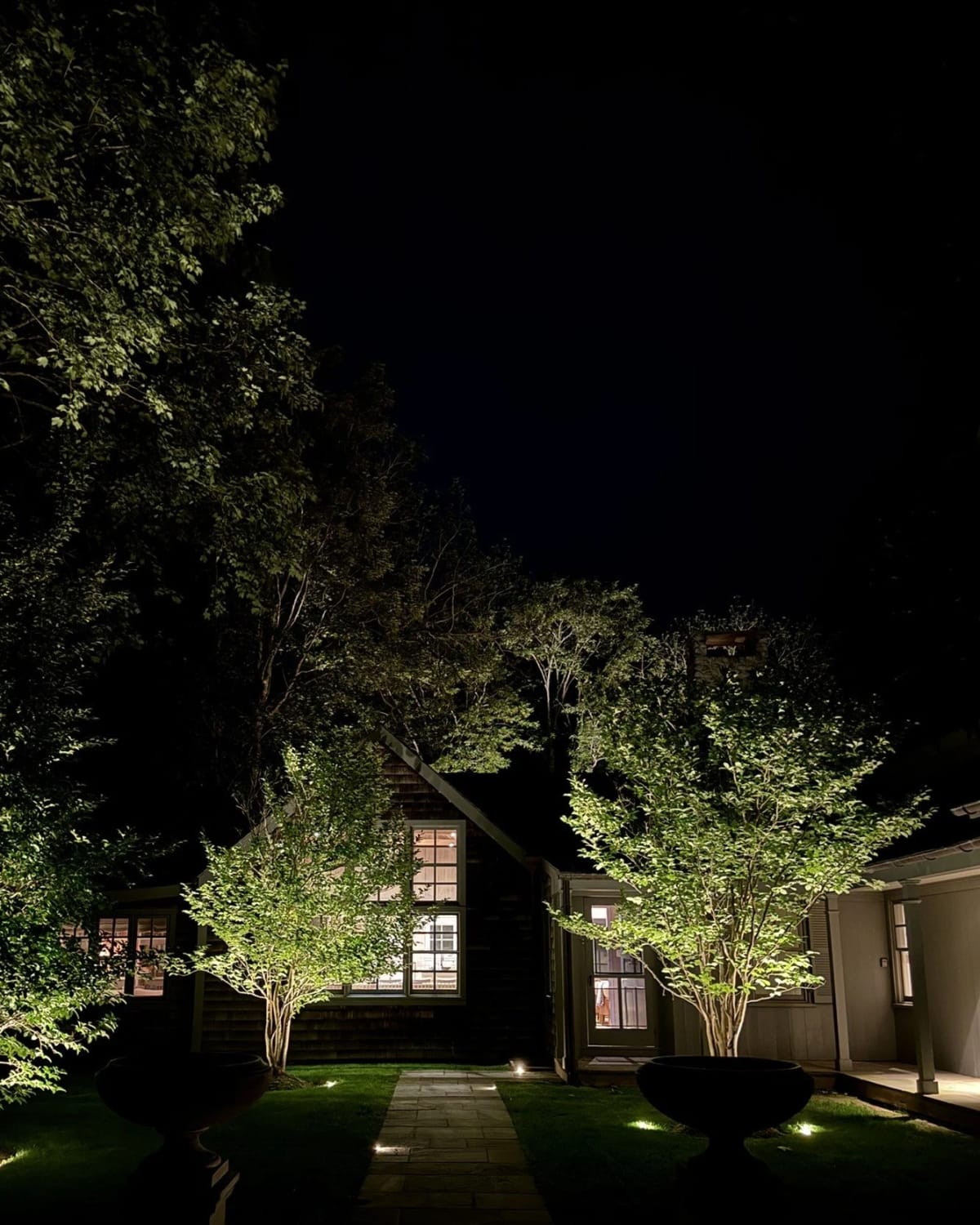
A complete nighttime experience, built from layers.
Every lighting decision should serve the larger composition. We balance visual hierarchy, movement, atmosphere, and durability so the property feels cohesive rather than uniformly bright.
Reveals the landscape
Selected trees, plantings, garden structures, and textures gain depth without flattening the property with excess light.
Supports movement
Arrival areas, paths, steps, terraces, and transitions become easier to understand while preserving a refined visual experience.
Creates atmosphere
Pools, dining areas, fire features, and outdoor rooms receive the warmth and definition needed for comfortable evening use.
Respects the architecture
Light reinforces materials, proportions, entrances, and sightlines without overpowering the home or competing with its interior glow.
Controls glare
Thoughtful shielding, aiming, beam selection, and fixture placement help keep the source discreet and the illuminated effect comfortable.
Plans for change
Zones, capacity, controls, and fixture locations anticipate landscape growth, seasonal use, and future adjustments.
From property study to final night aiming.
Design continues beyond the drawing. We carry the visual intent through specification, installation coordination, after-dark aiming, and final commissioning.
Discovery and property study
We review the architecture, landscape plan, outdoor living program, arrival experience, important views, existing infrastructure, and the way the property is intended to feel at night.
Lighting concept and hierarchy
We establish focal points, ambient layers, circulation lighting, areas of contrast, and the relationships between the home, landscape, and exterior destinations.
Fixture and performance specifications
We select appropriate fixture types, beam spreads, outputs, color temperature, finishes, shielding, mounting methods, transformers, controls, and zoning.
Design documentation
The plan records fixture locations, types, zones, power requirements, and installation intent so the work can be coordinated clearly with the broader project team.
Installation coordination
We help align the lighting plan with planting, grading, drainage, hardscape, electrical work, irrigation, and construction sequencing.
Night aiming and commissioning
After dark, fixtures are aimed, dimmed, shielded, and balanced in the real environment. This final editing is essential to achieving the intended composition.

The drawing sets the direction. Darkness reveals the final answer.
Even a carefully documented plan must be tuned on site. Plant material varies, views change, reflective surfaces respond differently, and the relationship between one beam and the next can only be judged after sunset.
During night aiming, we refine direction, intensity, spread, shielding, and balance. The goal is not simply to confirm that every fixture turns on. It is to edit the property until the individual sources disappear into one coherent visual experience.
One lighting language, expressed in different ways.
The needs of a driveway are different from those of a pool terrace or a specimen garden. A dedicated design unifies these areas while allowing each one to serve its own purpose.
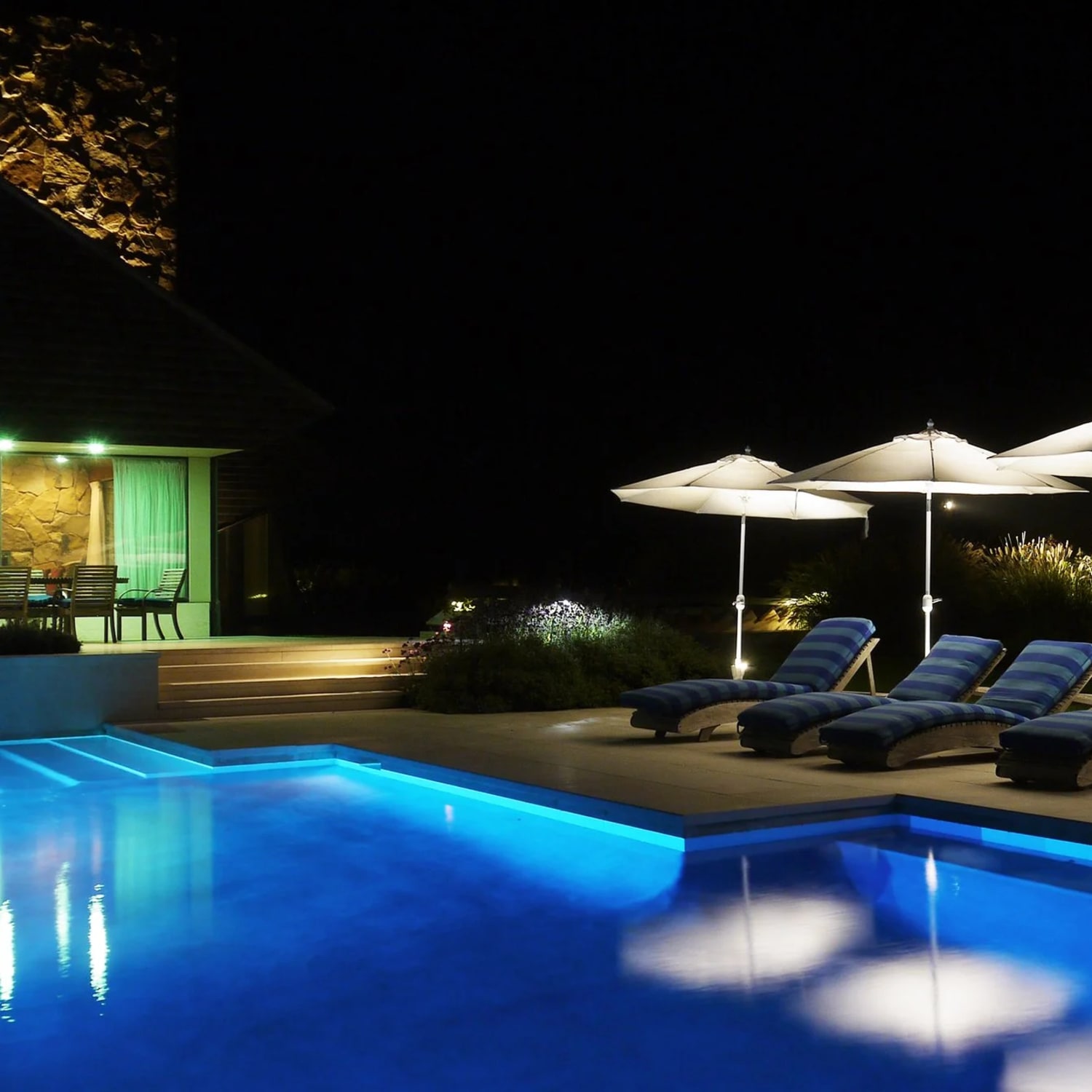


What a dedicated landscape-lighting design can address.
The exact scope is shaped around the property and project phase, from an existing landscape improvement to a full estate under construction.
Lighting design works best when it is coordinated early.
On new construction and major landscape projects, early involvement allows lighting infrastructure and fixture locations to be coordinated before planting, paving, irrigation, drainage, and finished surfaces make changes more disruptive.
We collaborate with homeowners, landscape architects, architects, interior designers, builders, electricians, and property teams to keep the lighting intent clear from concept through commissioning. The goal is a more resolved design, cleaner installation, and fewer avoidable conflicts in the field.
Landscape-lighting design questions.
What is included in a professional landscape-lighting design?
Scope varies by property, but a design may include a site study, lighting concept, fixture and performance specifications, proposed locations, zoning and control intent, infrastructure coordination, installation documentation, night aiming, and commissioning.
When should a landscape-lighting designer become involved?
For new construction or major landscape work, involvement during planning is ideal. It allows conduit, power, controls, fixture locations, planting, hardscape, and drainage to be coordinated before finished work is installed. Existing properties can also be assessed and redesigned in phases.
Why is a separate lighting design needed if there is already a landscape plan?
A landscape plan defines the physical environment. A dedicated lighting design addresses how that environment is perceived and used after dark, including visual hierarchy, beam control, glare, color temperature, scenes, power requirements, and final nighttime balance.
Can the design incorporate an existing lighting system?
Yes. Existing fixtures, wiring, transformers, and controls can be evaluated as part of the design. Components that remain useful may be incorporated while weak coverage, glare, failed equipment, or inconsistent lighting is addressed.
Does landscape lighting need to be adjusted as plantings mature?
Yes. Landscapes change over time. Growth can block beams, shift focal points, or expose fixtures. A well-planned system allows aiming, output, and placement to be refined as the property matures.
How do you avoid making a property feel overlit?
We use hierarchy, warm color, selective illumination, shielding, controlled beam spreads, and purposeful areas of darkness. The aim is to reveal the property—not to light every surface to the same level.
Bring clarity and intention to the entire property.
Tell us about the home, landscape, project phase, and the way you want the property to feel after sunset.