
Westchester County, New York | Exterior Lighting Design
Landscape Lighting for Westchester Homes & Estates
The best evening views feel considered, not illuminated for effect. Hamptons Landscape Lighting designs exterior lighting around Westchester architecture, mature trees, stonework, gardens, and the way a property comes to life after sunset.
Design with restraint
A more beautiful view of the property, after dark.
Westchester properties often have more than one story to tell: an established entrance framed by stone walls, a long drive under mature trees, a formal garden, or a terrace that feels connected to the landscape beyond it.
Our approach creates a clear visual hierarchy. We illuminate what deserves attention and allow other elements to remain in shadow. Each decision considers the experience from the road, the front door, outdoor gathering spaces, and the view through the home's windows.
Learn more about our landscape lighting design and installation process.
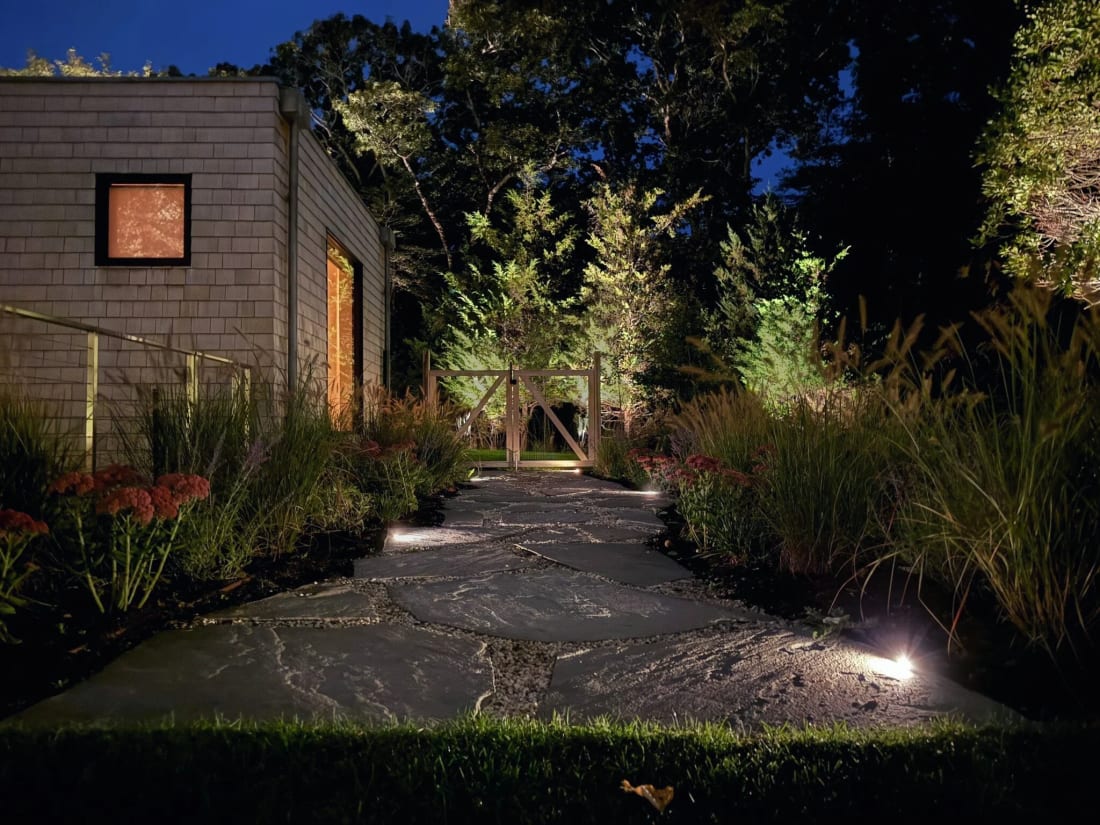
What we design
A complete nighttime composition, not a collection of fixtures.
Estate arrivals
Gates, long driveways, stone piers, entrances, and pathways planned as one welcoming sequence.
Architecture & stone
Measured illumination that reveals façade texture, steps, walls, and architectural details without glare.
Mature trees & gardens
Selective uplighting and downlighting that create depth while respecting planting and important interior views.
Outdoor living
Terraces, dining areas, pool surrounds, and garden rooms designed for comfort and atmosphere.
Controls & scenes
Appropriate lighting zones and schedules for arrival, entertaining, and quieter late-evening use.
Ongoing care
Service, nighttime realignment, and upgrades as trees mature and the property changes.
Across Westchester County
Different communities. Distinct landscapes.
We tailor the lighting plan to the architecture, site conditions, and priorities of each property, rather than applying one formula across the county.
Scarsdale
Traditional residences, layered gardens, stone walks, and carefully composed front arrivals.
Rye
Coastal-influenced homes, terraces, garden paths, and lighting that respects neighboring sightlines.
Bedford
Wooded properties, long drives, mature specimen trees, and broad estate landscapes.
Chappaqua
Sloping sites, wooded settings, and practical illumination around grade changes and outdoor rooms.
Bronxville
Architectural detail, smaller formal gardens, stonework, and discreet fixture placement.
Other Westchester communities
Including White Plains, Larchmont, Harrison, Mamaroneck, Armonk, and surrounding areas, subject to project scope.
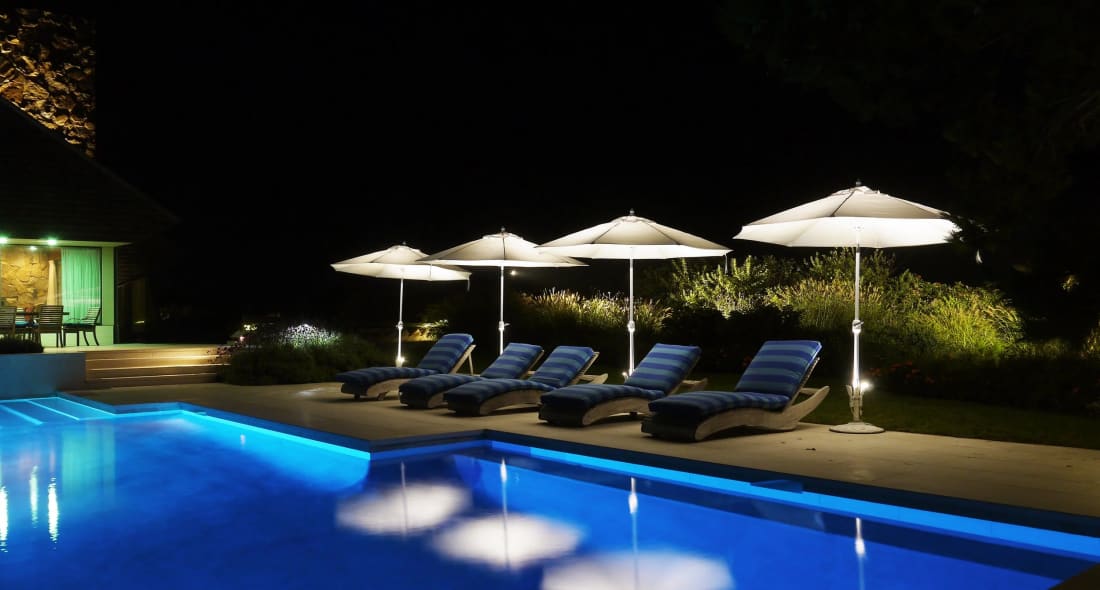
Established or newly designed properties
Lighting that works with the landscape, not against it.
On an established property, fixture concealment, existing plantings, irrigation, hardscape, and accessible wiring routes all influence the design. For a new construction or landscape renovation, earlier coordination can preserve opportunities before paving and planting are complete.
In either case, shielding and nighttime aiming matter. The most carefully specified fixture can still become distracting if its beam is directed toward a seating area, a neighboring window, or the view from inside the home.
Read about why thoughtful lighting design and engineering matter.
From concept to final adjustment
How the design comes together.
Discover
We review the property's architecture, approaches, circulation, garden composition, and views after dark.
Design
We establish focal points, fixture locations, beam direction, concealment, controls, and infrastructure needs.
Coordinate & install
We consider landscape professionals, builders, electricians, and other project partners when sequencing work.
Aim after dark
We evaluate real nighttime conditions and refine the balance, intensity, and direction of light.
Explore the details
More guidance for thoughtfully lit properties.
These related articles explain the choices that make an exterior lighting system comfortable, durable, and adaptable over time.
Why Thoughtful Lighting Design Matters More Than Ever
How design and engineering decisions made early influence nighttime results.
Read the articleWhy Landscape Lighting Is Never Really Finished
Why changing plantings, additions, and new uses call for lighting to evolve.
Read the articleExplore Our Landscape Lighting Advice
Browse guidance on ongoing service, design, installation, and outdoor lighting controls.
Visit the journalDesign that endures
A changing landscape deserves ongoing attention.
Plantings grow, garden beds shift, fixtures can move during maintenance, and seasonal conditions change the way light is experienced. A thoughtful system should accommodate these changes without losing the original design intent.
Our Brilliance Care maintenance program supports continued performance through inspections, cleaning, aiming adjustments, and system review. We also offer repair and service for existing outdoor lighting systems.
Frequently asked questions
Planning outdoor lighting in Westchester.
What does a professional landscape lighting design include?
Depending on project scope, it can include a site assessment, lighting concept, fixture placement, beam and shielding decisions, electrical coordination, controls, installation, and final nighttime aiming.
Can you improve lighting on an established property?
Yes. An existing property can be assessed for glare, uneven illumination, obscured fixtures, damaged components, and opportunities to better connect arrival areas, gardens, and outdoor living spaces.
How should estate driveways and entries be lit?
Lighting should guide movement and reveal important arrival features without creating excessive brightness. Gate details, trees, steps, planting, sightlines, and transitions from drive to door are considered together.
Can lighting work with a new landscape or renovation?
Yes. Early coordination helps align fixture locations, wiring, conduit, planting, and hardscape work. It can also make future additions easier to plan.
How is the system maintained as trees and gardens mature?
Periodic reviews can identify blocked beams, fixture movement, dirty lenses, wiring issues, and control updates. The aiming and balance can be adjusted as the landscape grows.