
Observing natural nighttime illumination
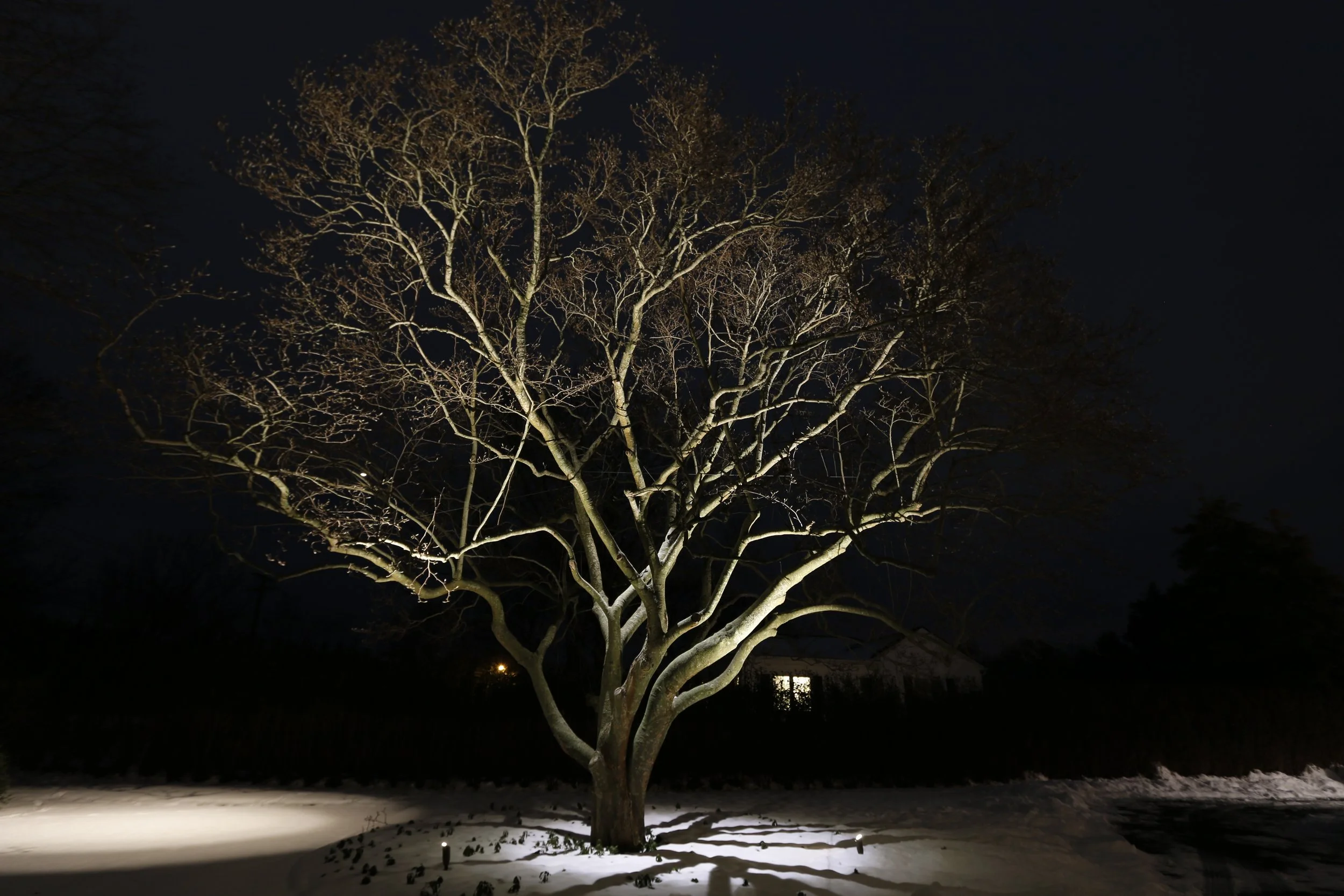
Moonlight as Our Inspiration
After
Hamptons-Style Outdoor Lighting
Moonlight-inspired outdoor lighting feels instinctively right in the Hamptons. Shingled homes, mature trees, bluestone terraces, pools, and carefully composed landscapes call for illumination that is quiet, natural, and timeless.
The objective is understated luxury. Lighting should enhance architecture and landscape without drawing attention to itself. Moonlighting—high, downward illumination that filters through tree canopies—achieves this balance, creating a calm, resort-like atmosphere for entertaining, poolside evenings, or quiet nights outdoors.
Why Moonlighting Works in the Hamptons
Moonlighting reinforces the region’s coastal character by delivering:
Soft, silvery light filtering through mature trees
Gentle shadow patterns across lawns, hedges, and drives
Natural illumination along bluestone paths and seating areas
A refined ambiance with minimal glare and no visible fixtures
Rather than isolating individual features, moonlighting reveals the landscape as a whole—much the way nature does.
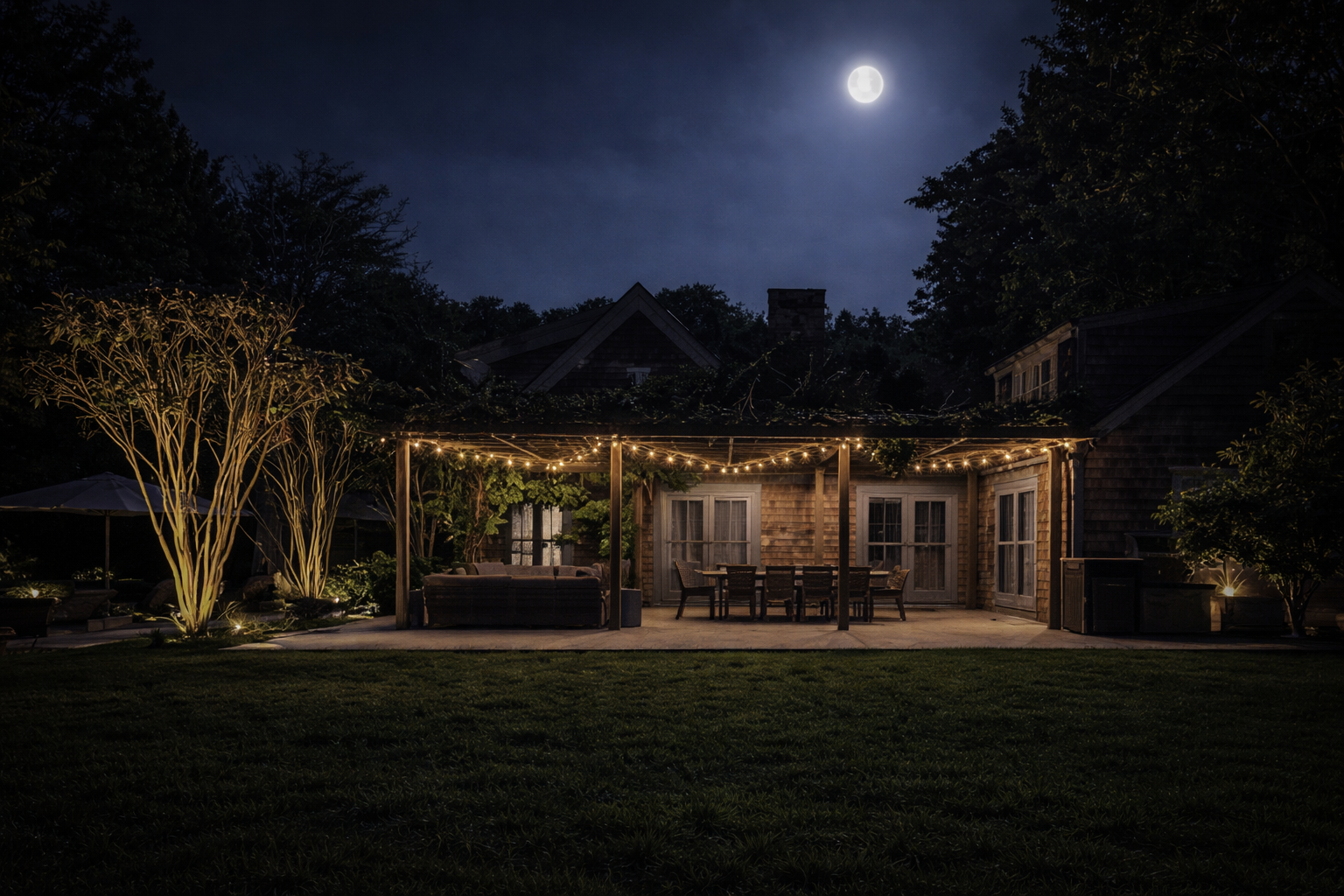
In this image, moonlight plays a quiet but critical supporting role, even though the scene is clearly enhanced by carefully designed landscape lighting.
Here’s how the moonlight is working:
Ambient fill light: The moonlight provides a soft, cool wash across the upper canopy and background foliage. This prevents the scene from feeling pitch-black beyond the artificial lights and gives depth to the garden.
Contrast with warm lighting: The cool tone of the moonlight contrasts beautifully with the warm, golden landscape lights. This contrast helps separate layers—trees, pathways, seating areas—making the space feel richer and more dimensional.
Natural realism: Moonlight subtly illuminates leaves, branches, and distant surfaces that are not directly hit by fixtures. This keeps the garden from looking overly theatrical and grounds the lighting scheme in a natural nighttime context.
Reflections and calm: The moonlight contributes to the gentle reflections on the water features, reinforcing the tranquil, meditative mood of the space rather than drawing attention to a single focal point.
Visual balance: While artificial lighting defines paths, seating, and architecture, moonlight softens edges and shadows, ensuring transitions between lit and unlit areas feel smooth and intentional.
In short, the moonlight isn’t the star—it’s the atmospheric glue that ties the entire lighting composition together, elevating the garden from well-lit to genuinely serene.
Design Principles for Hamptons Moonlighting
Elevated Placement
Fixtures are positioned high within mature trees to produce broad, diffused light that feels natural and unforced. Proper height eliminates harsh brightness and preserves the illusion of moonlight.
Balanced Color Temperature
Cooler tones provide a soft, silvery glow reminiscent of true moonlight. Warmer light is layered selectively near patios and gathering spaces to maintain comfort and warmth.
Architectural & Landscape Integration
Light is introduced from above to softly wash façades, pergolas, terraces, and steps. Path lighting is used sparingly and discreetly, guiding movement without visual clutter.
Layered Restraint
Moonlighting remains the primary source. Subtle accents—stone wall washes, concealed planter lighting, lantern-style glows—add depth without competing for attention. Elegance comes from restraint.
Flexibility for Use & Season
Dimming and control allow lighting levels to adjust for entertaining, seasonal changes, or naturally bright evenings. On larger properties, a limited number of well-placed fixtures can illuminate expansive lawns with remarkable efficiency.

Fixtures That Disappear Into the Landscape
Hamptons properties benefit from clean-lined, durable fixtures designed to blend into their surroundings rather than stand out. High-mounted downlighting, low-profile path lights, and discreet architectural accents are selected for longevity, coastal durability, and visual quiet. Low-voltage systems provide efficiency, reliability, and precise control.
Creating a Moon Garden
Planting choices can amplify moonlighting naturally. White blooms, silvery foliage, and reflective textures glow softly at night, adding depth and dimension without additional fixtures.
Clusters of light-toned plantings near paths and seating areas enhance visibility, fragrance, and atmosphere—allowing the landscape itself to participate in the lighting design.
Materials That Enhance the Effect
Light-reflective finishes support moonlighting by extending its reach:
Soft whites, pale grays, and coastal blue-grays on structures
Teak, whitewashed wood, and restrained dark metals in furnishings
Natural bluestone with lighter grout tones
Darker finishes are used selectively, as they tend to absorb light and diminish the overall effect.
Integrating Coastal Features
Pools: Reflected moonlight doubles the glow and softens the water’s edge
Views: Lighting frames ocean and dune vistas without competing with them
Pergolas & Terraces: Fixtures remain concealed, with warmth added only where needed
Controls: Lighting adjusts easily for moon phases, gatherings, or quiet evenings
The Result
When executed properly, moonlight-inspired lighting transforms a Hamptons property into a serene nighttime retreat—refined, natural, and quietly luxurious. It feels less like installed lighting and more like the landscape itself has learned how to glow.
Frequently Asked Questions
What is moonlighting?
Moonlighting is a landscape lighting technique that places fixtures high in trees or structures to cast soft, downward light that mimics natural moonlight and creates gentle shadowing.
Why is it well-suited to Hamptons homes?
Because it aligns with the region’s understated elegance. Moonlighting enhances mature landscapes and architecture without visible fixtures or excessive brightness.
Will it make my property too bright?
No. Proper moonlighting is intentionally subtle and diffused. The goal is atmosphere and depth, not illumination for its own sake.
Is it appropriate for pools and water features?
Yes. Moonlighting is especially effective near water, where reflections create movement and softness without overpowering the space.
Does moonlighting require professional installation?
Yes. Proper placement, aiming, and tree-safe mounting are essential to achieving the effect while protecting the landscape long-term.
LEARN MORE: OUR SERVICES
2026 LANDSCAPE LIGHTING TRENDS