
Dark Sky Landscape Lighting in the Town of Southold and the North Fork
The North Fork’s night sky is part of its identity.
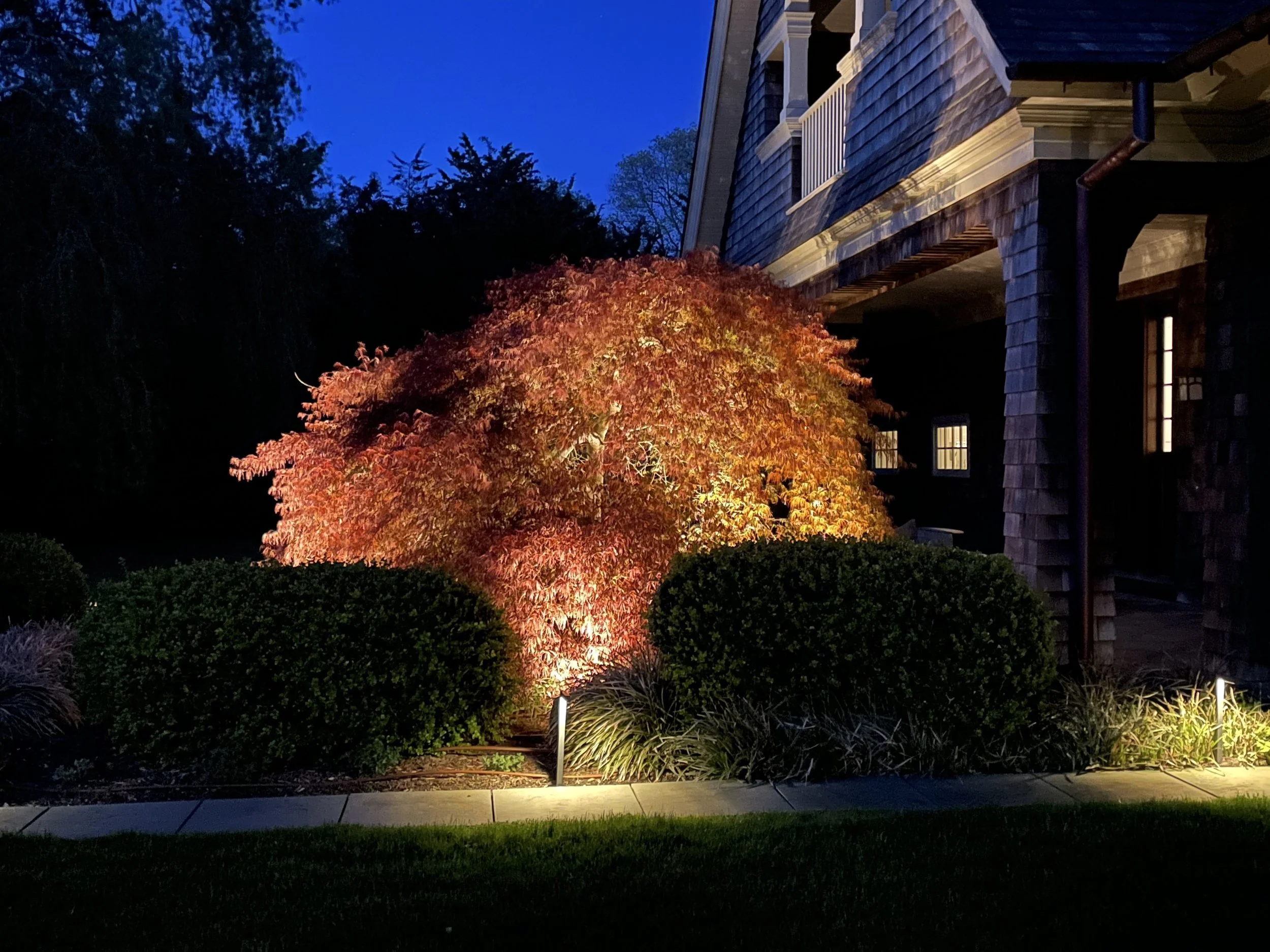
Dark sky landscape lighting in the town of Southold
Vineyards, farms, beaches, creeks, wooded properties, village centers, and waterfront homes all depend on a nighttime environment that feels different from a suburban commercial corridor.
The Town of Southold’s exterior-lighting code is designed to prevent excessive lighting, glare, light trespass, energy waste, and skyglow. Local dark sky advocates also encourage homeowners to go beyond minimum compliance by using warmer, lower-output lighting.
What the Southold Lighting Code Means
Southold’s standards generally address fixtures that are installed, replaced, repaired, or modified.
Important principles include:
Fully shielded, zero-uplight fixtures
Light sources no higher than 3000K, with warmer light preferred
Restrictions on uplighting trees, walls, fences, and foliage
Controls for nonessential exterior lighting
Strict limits on light crossing property lines
Shielding of motion-activated security lighting
Restrictions on sign and holiday lighting
Shutoff of nonessential business lighting after closing
For residential properties, the practical message is straightforward: keep the source concealed, keep light on the property, and do not illuminate more than the nighttime activity requires.
How HLL Designs on the North Fork
Hamptons Landscape Lighting generally specifies warmer light than the maximum permitted by code.
Depending on the application, we may use:
2200K near water, vineyards, farms, preserves, and natural areas
2400K for warm garden and pathway lighting
2700K as a general residential maximum
Fully shielded step, path, marker, and downlighting fixtures
Low-output lamps
No conventional tree or façade uplighting where prohibited
Automatic shutoff for decorative zones
Motion control for limited security applications
Professional nighttime verification of property-line conditions
This warmer palette complements the North Fork landscape and reduces the cool, commercial appearance associated with higher-color-temperature LEDs.
Designing Without Conventional Uplighting
Prohibitions on uplighting do not mean the landscape must disappear.
HLL can create depth using:
Downlighting from appropriate trees or structures
Shielded path lighting
Low-level cross-lighting that remains below the horizontal plane
Step and wall-integrated lighting
Concealed lighting within outdoor structures
Silhouetting from carefully controlled, downward-directed sources
Reflected light from low-output fixtures aimed at specific surfaces
These techniques can create a sophisticated composition without sending light into the sky.
Vineyards, Farms, and Open Properties
Light can travel long distances across open agricultural land.
For rural and vineyard-adjacent homes, we keep fixtures low and use narrow distribution patterns. Lighting is concentrated around entrances, circulation routes, and active outdoor areas rather than property boundaries.
We also evaluate views from neighboring roads and properties. A fixture concealed from the house may still be visible across an open field.
Waterfront Lighting
Along Peconic Bay, Long Island Sound, creeks, and inlets, HLL uses additional shielding and warmer color temperatures. Fixtures are aimed away from open water and positioned to prevent reflected glare.
The goal is to define safe circulation without turning the shoreline into a line of visible lamps.
Southold’s dark sky rules support a better form of landscape lighting—one that is warm, shielded, purposeful, and connected to the North Fork’s rural and maritime character.