
Seasonal Landscape Lighting Service: Preparing a Hamptons Property for the Year Ahead
Seasonal landscape lighting service is a planned schedule of inspections, cleaning, fixture adjustments, control updates, and repairs that keeps an outdoor lighting system performing properly as a Hamptons property changes throughout the year.
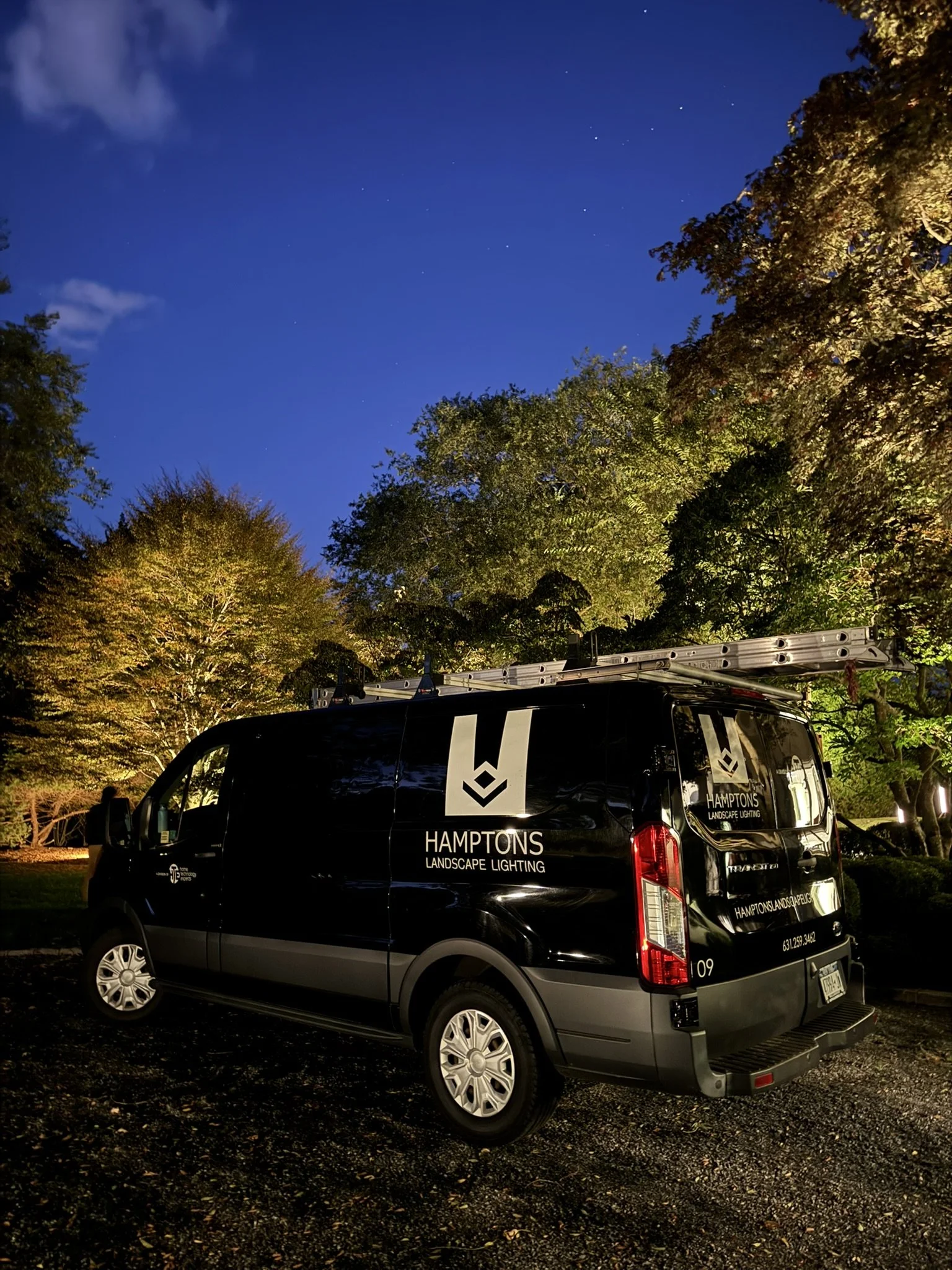
A landscape lighting system should change with the property it serves. Plant growth, coastal weather, shifting daylight, outdoor entertaining, irrigation, and periods of reduced occupancy all affect how a system performs and how the property feels after dark.
Seasonal landscape lighting service keeps the system reliable while preserving the visual balance it was designed to create. For Hamptons properties, a planned service schedule can prepare the landscape before summer, refine it through peak-use months, and protect the system as the property transitions into fall and winter.
Spring: Restore, Inspect, and Prepare
Spring is often the most comprehensive service visit of the year. Winter weather, windblown debris, frost movement, and early landscaping work can affect fixtures, connections, aiming, and wiring.
A spring visit should include a complete review of system performance, cleaning and inspection of fixtures, adjustment of beam direction, and testing of transformers, controls, timers, and programmed schedules. It is also the right time to identify corrosion, moisture intrusion, damaged components, or voltage issues before they become visible failures.
Spring service should be coordinated with the landscape plan. When planting beds, trees, pathways, terraces, pool areas, or outdoor living spaces are changing, lighting adjustments can be planned before the property is fully planted and furnished for the season.
“Hamptons Landscape Lighting services and maintains both systems we originally designed and installed and existing outdoor lighting systems installed by others. Our team evaluates the system as a whole—from fixtures, wiring, transformers, and controls to aiming, glare, and the way the lighting supports the property after dark—then recommends the appropriate adjustments, repairs, or upgrades.”
Early Summer: Fine-Tune the Evening Experience
As foliage fills in, a lighting design that appeared balanced in spring may become obstructed or softened. Trees leaf out, hedges grow, and planting beds change the way light moves through the landscape.
An early-summer adjustment restores focal points, improves pathway visibility, and confirms that dining, pool, terrace, and entertaining areas feel comfortable after dark. Fixtures may need to be repositioned, re-aimed, or raised above new plant growth to maintain the intended effect.
The goal is not simply to make the property brighter. It is to preserve a layered, welcoming atmosphere with clear circulation, thoughtful accents, and minimal glare.
Mid-Season: Correct Changes Before They Become Disruptions
During the busiest part of the season, even a well-designed system can be affected by normal activity. Landscape crews, irrigation repairs, construction work, furniture changes, and regular use can shift fixtures, obscure light, damage connections, or alter schedules.
A mid-season service visit addresses these smaller changes before they affect a homeowner’s arrival, a family gathering, or an outdoor event. It also provides an opportunity to review areas that are receiving more use than expected and make practical adjustments.
For estate managers, a service visit can include a clear record of work completed, conditions observed, and recommendations for repairs or future improvements.
Fall: Update Schedules and Prepare for Changing Use
As daylight shortens, lighting schedules should be reviewed and updated. Fall is also a valuable time to identify areas that felt underlit, overlit, or less functional during the summer season.
For properties that remain active year-round, scenes and schedules may need to reflect earlier sunsets and changing patterns of use. For seasonal residences, service may include reduced operating schedules, security-focused settings, and coordination with property-management routines.
This is also an ideal time to document improvements that can be completed during the quieter months, before the next summer season begins.
Winter: Plan Larger Improvements Before Spring
Winter is often the best time to evaluate larger lighting projects without competing with peak-season activity. Aging fixtures can be replaced, damaged wiring repaired, controls modernized, and new landscape areas incorporated into a more complete design plan.
Planning in the off-season gives homeowners, landscape architects, builders, and property managers time to coordinate work thoughtfully. It also helps ensure that improvements are complete before planting, furnishing, and entertaining begin again.
A Planned Service Schedule Protects the Investment
Seasonal service keeps landscape lighting from becoming reactive maintenance. Instead of waiting for a dark pathway, a failed fixture, or an important area to lose its visual impact, the system is reviewed and refined as the property changes.
Hamptons Landscape Lighting provides seasonal service for systems that need to remain reliable, balanced, and responsive to the way a property is used throughout the year. A planned schedule helps preserve the atmosphere the lighting was designed to create.
Contact Hamptons Landscape Lighting to discuss seasonal landscape lighting service for your property.
FAQs
How often should landscape lighting be serviced in the Hamptons?
Most properties benefit from at least an annual service visit, with additional seasonal adjustments recommended for heavily landscaped, coastal, or frequently used properties.What is included in seasonal landscape lighting service?
Service may include system testing, fixture cleaning, nighttime aiming, schedule updates, inspection of wiring and controls, and recommendations for repairs or upgrades.Why does landscape lighting need adjustment after spring?
Foliage growth, new planting, irrigation work, and outdoor activity can block, shift, or damage fixtures and change the original balance of the lighting design.Can Hamptons Landscape Lighting service a system it did not install?
Yes. The team can evaluate and service existing landscape lighting systems, then recommend appropriate repairs, adjustments, or modernization.When is the best time to plan lighting upgrades?
Fall and winter are often ideal for planning larger repairs, control upgrades, fixture replacement, and new lighting areas before the next outdoor season.