
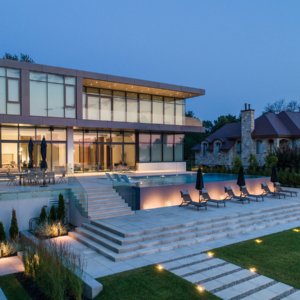
Landscape Lighting Design for East Hampton Waterfront Properties
The finest waterfront lighting does not compete with the view. It reveals the architecture, guides movement through the landscape, and leaves room for the quiet beauty of the water after dark.
From ocean-facing estates near Further Lane to properties overlooking Georgica Pond, landscape lighting in East Hampton calls for restraint, coastal-ready materials, and close attention to what homeowners see from both inside and outside the residence.
Light the landscape. Preserve the waterfront.
A waterfront estate is experienced as a sequence of views: the approach from the drive, the garden outside a living room, a terrace overlooking the water, and the route toward a dock or shoreline. Rather than illuminating everything, a considered design decides what deserves attention and what should remain in shadow.
Beautiful from the inside out
Exterior lighting should be designed around interior sightlines as carefully as the landscape itself. Shielded fixtures and thoughtful beam angles can illuminate trees, architecture, and paths without reflecting harshly in windows or diminishing the view beyond the glass.
Comfort without excess brightness
Water, pale paving, glass railings, and pool surfaces can amplify unwanted glare. Lower mounting positions, concealed sources, warm color temperatures, and carefully controlled optics help create a softer visual experience.
The purpose is not to make the property brighter. It is to make every illuminated view feel intentional.
Beautiful lighting must also endure.
Salt spray, wind-driven moisture, sandy soils, irrigation, and seasonal storms influence every waterfront lighting decision. A fixture that performs well inland may need different materials, mounting methods, and connection protection closer to the coast.
Coastal-suitable fixtures
Solid brass, copper, and properly specified corrosion-resistant components can be appropriate, depending on exposure and finish. Product suitability and manufacturer ratings matter more than the word “marine-grade” alone.
Connections and access
Weather-resistant connections, considered cable routes, appropriate transformer locations, and accessible service points help reduce avoidable failures and simplify future repairs.
Service through the seasons
Salt residue, plant growth, shifting soil, and storm exposure can change lighting performance. Periodic cleaning, inspection, and nighttime re-aiming help sustain the original design.
Explore HLL's design, installation, and ongoing-care approach.
Every outdoor space needs its own quality of light.
An effective lighting plan uses multiple, carefully related layers. The objective is to support movement and outdoor living while allowing the architecture, mature planting, and waterfront setting to remain the focal points.
Arrival & pathways
Gentle guidance along drives, walks, changes in grade, and steps creates a welcoming approach without a runway effect.
Architecture & gardens
Selective grazing and accent lighting reveal texture, specimen trees, stonework, and planting depth rather than washing the entire façade in light.
Terraces & dining
Comfortable ambient light and discreet task light support conversation, food preparation, and evening gatherings.
Pools & outdoor rooms
Glare-controlled illumination around circulation areas helps guests navigate comfortably while preserving the atmosphere around the pool.
Docks & waterfront access
Where lighting is permitted, low-profile, appropriately shielded fixtures can support navigation while limiting spill toward the water.
Views & privacy
Thoughtful placement avoids shining into neighboring properties, across reflective surfaces, or directly toward seating and interior windows.
For a fuller look at the design process, visit HLL's landscape lighting design service.
Lighting that changes with the evening.
A waterfront property may need one lighting scene for arrivals, another for dinner outdoors, and a quieter setting later at night. Zoned LED lighting and well-planned controls can provide flexibility without adding visual clutter.
Scenes that fit daily life
Astronomical scheduling, separate lighting zones, and compatible app-based or home automation controls can make evening transitions simpler. Systems should also provide an intuitive way for household staff and guests to operate essential lighting.
Less light when less is needed
Appropriate dimming, curfews, and selective switching can reduce unnecessary energy use and nighttime light spill. For waterfront and ecologically sensitive locations, these details should be considered at the start of the design.
Design before fixtures. Refine after dark.
At Hamptons Landscape Lighting, a design-first approach begins with the property itself. Architecture, landscape, circulation, existing electrical infrastructure, and waterfront exposure shape the plan before individual fixtures are selected.
- Review principal views from the residence and grounds
- Identify circulation, steps, and outdoor living priorities
- Evaluate exposure, fixture concealment, and service access
- Plan beam angles, output, and warm color consistency
- Coordinate with landscape, architecture, and electrical teams
- Fine-tune the completed system during nighttime aiming
The work continues after installation. HLL's Brilliance Care™ maintenance approach helps keep fixtures clean, properly aimed, and responsive to changes in planting and seasonal conditions. Particularly on coastal properties, ongoing care is part of protecting the design investment.
Waterfront landscape lighting, considered.
What makes waterfront landscape lighting different from inland installations?
Coastal exposure can affect fixtures, wiring, and connections. Waterfront sites also demand greater attention to reflected glare, views from the house, neighboring properties, and any applicable shoreline or environmental restrictions.
Can lighting be added near a dock or shoreline?
Sometimes, but location matters. Before specifying dock or shoreline fixtures, the design team should review property-specific requirements, permit conditions, ecological sensitivity, and the need to avoid light directed onto the water.
Can an existing waterfront lighting system be improved?
Often. An assessment can identify corroded components, failing connections, poor aiming, excess glare, or controls that no longer suit how the property is used. Some systems benefit from targeted upgrades; others require a more comprehensive redesign.