
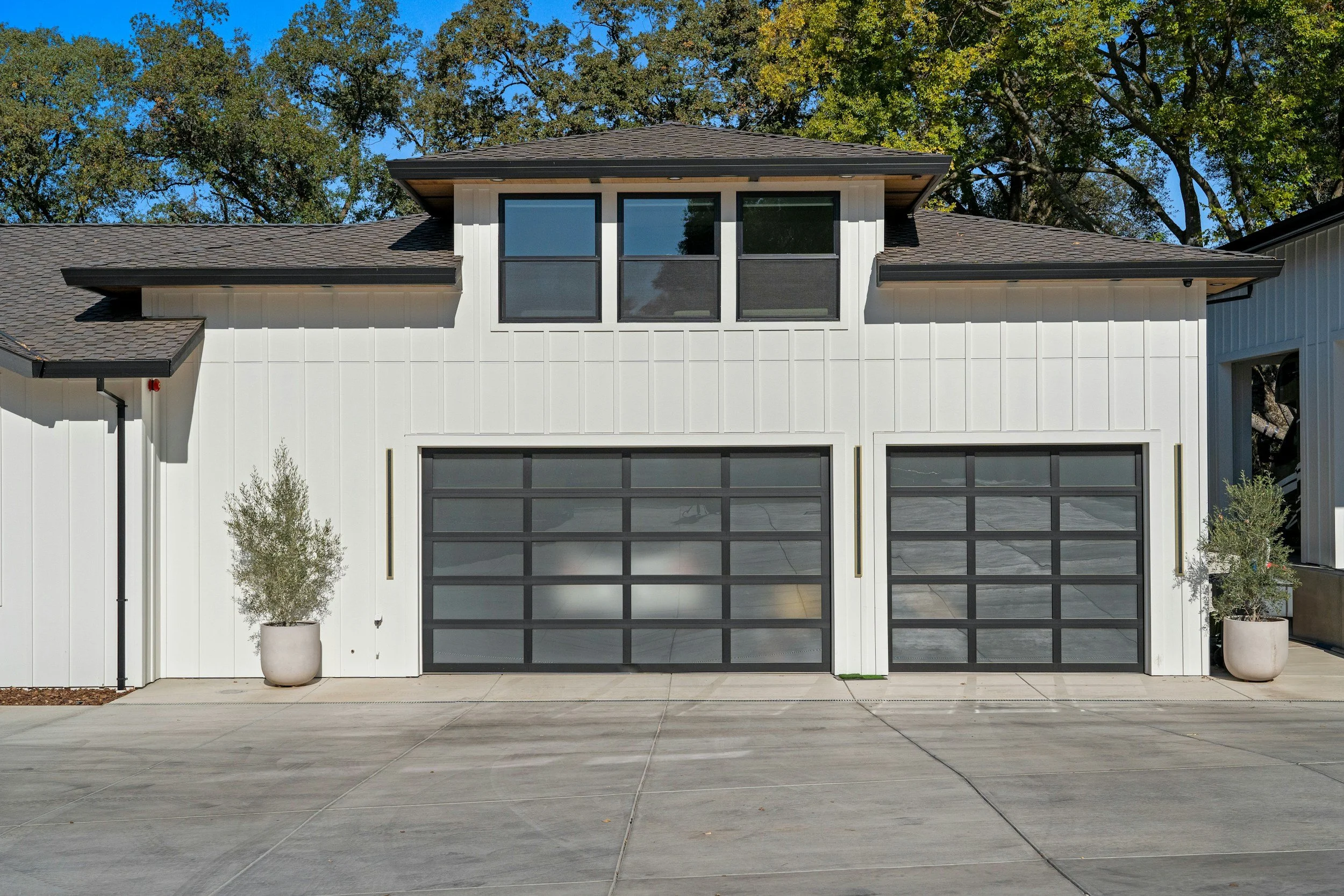
Outdoor Lighting Above the Garage Door: Function Without the Floodlight
Hamptons • Long Island • New York City • North Fork • Nassau County
Outdoor lighting above a garage door should make arrivals and departures easier while allowing the home, not the fixtures, to hold your attention. Shielded light, careful placement, and a warm, coordinated palette can illuminate the garage approach without flooding the facade.
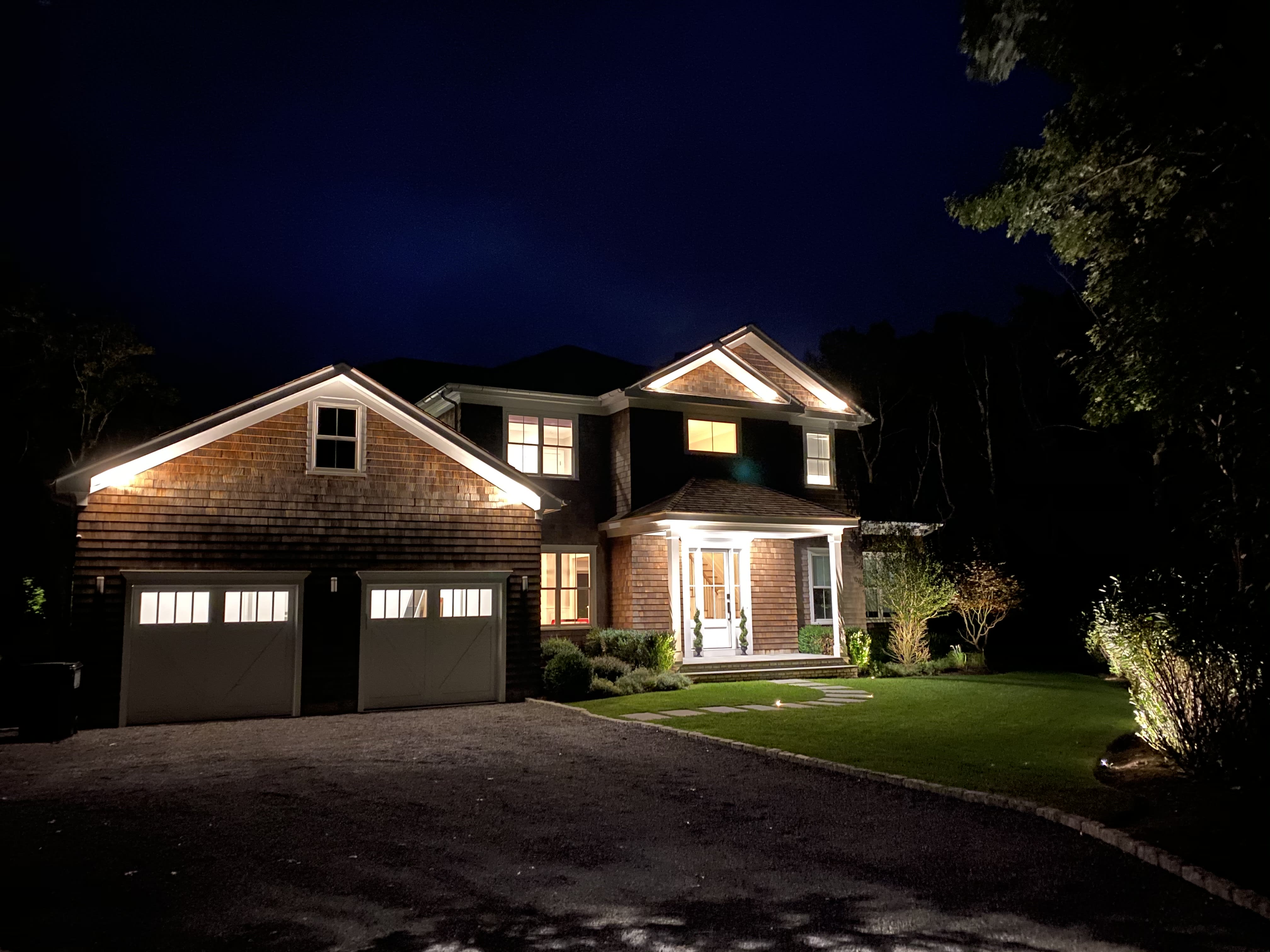
At Hamptons Landscape Lighting, we consider the garage alongside the driveway, entry, architecture, and landscape. The goal is a comfortable transition from the street to the home, with useful light where people need it and restraint everywhere else.
What should garage door lighting accomplish?
Garage lighting should help drivers identify the opening and give people enough visibility to move across the driveway apron and toward an entry. It should also fit the scale of the facade and connect visually with nearby pathway and architectural lighting.
Start by considering where a car approaches, where someone steps out, and which doors or changes in grade need attention. A garage does not need to be the brightest feature on the property to be useful. Our approach to architectural lighting design considers those practical needs within the overall composition.
Reduce glare instead of simply adding brightness
An exposed or poorly aimed fixture can shine directly into a driver's eyes, neighboring windows, or the street. Excessive brightness can also make the surrounding landscape appear darker by comparison.
A shielded, downward-directed fixture can place light on the garage apron while keeping the source less visible. Beam spread, mounting height, output, and aiming all matter. A floodlight is not automatically wrong, but an unshielded or outward-aimed floodlight can create the very glare it was intended to solve. Learn more about avoiding glare in outdoor lighting.
Choose placement for the garage and the approach
Above-door fixtures, wall sconces beside the garage, or lighting integrated into a suitable overhang can all work. The right choice depends on the architecture, available mounting locations, and where the light needs to land. A row of smaller fixtures may provide better distribution than one powerful source, but the number and spacing should be determined by the actual opening and fixture optics.
- Look from the driver's seat. Check whether the light source is visible when approaching or backing out.
- Consider people on foot. Illuminate the apron and the route to the entry without creating abrupt transitions into darkness.
- Check the whole facade. Align fixtures with architectural details and balance their brightness with the front entry.
- Review the result after dark. Nighttime aiming reveals glare and spill that can be difficult to judge during the day.
For a closer look at the decisions behind placement and beam control, explore fixture-by-fixture lighting plans and how we design landscape lighting.
Coordinate warm light and coastal materials
Warm white light often complements residential materials such as wood, stone, and siding. Compare the color temperature and appearance of garage fixtures with nearby entry and landscape lighting before choosing lamps. A consistent palette usually feels more cohesive than a mix of warm and noticeably cool sources.
For Hamptons properties, salt air, wind-driven rain, irrigation, and seasonal exposure also influence fixture selection. Choose finishes, housings, and installation methods appropriate to the specific location, and consider access for future maintenance. See how HLL evaluates outdoor lighting fixtures.
Make garage lighting part of an arrival scene
Compatible controls can coordinate garage lights with the driveway, entry, and landscape. An astronomical schedule can follow seasonal sunset changes, while a late-night scene can reduce light where dimming equipment and fixtures support it. Motion activation can be useful for occasional arrivals, provided the sensor is positioned and timed to avoid unwanted triggers.
Existing wiring, fixture compatibility, and the home's control system determine what is practical. Explore smart outdoor lighting and controls for more ideas.
Garage lighting questions
Should garage lights be above or beside the door?
Either location can work. Above-door fixtures can direct light onto the apron, while sconces beside a door can reinforce architectural symmetry. Mounting height, door width, available wiring, beam control, and the driver's view should guide the choice.
How bright should a garage exterior light be?
There is no single lumen figure that fits every garage. The fixture's optics, mounting height, surrounding light, and surface colors affect the result. Aim for useful visibility on the apron without a visible, uncomfortable source, then evaluate and adjust after dark.
Can existing garage floodlights be improved?
Sometimes. Depending on the fixture and wiring, adjustment, shielding, a compatible lower-output lamp, controls, or a replacement fixture may improve comfort. Have a qualified professional assess the equipment and any electrical changes.
Are motion sensors a good choice?
They can be helpful for occasional use or a temporary arrival scene. Placement, detection range, duration, and sensitivity matter, especially where passing cars or nearby activity could trigger the light. A modest scheduled level combined with motion activation may suit some properties.
Bring the arrival into balance
Whether you are refining a single garage approach or planning a complete property, Hamptons Landscape Lighting can help you consider visibility, architecture, and atmosphere together.