
Integrated Outdoor Lighting Systems
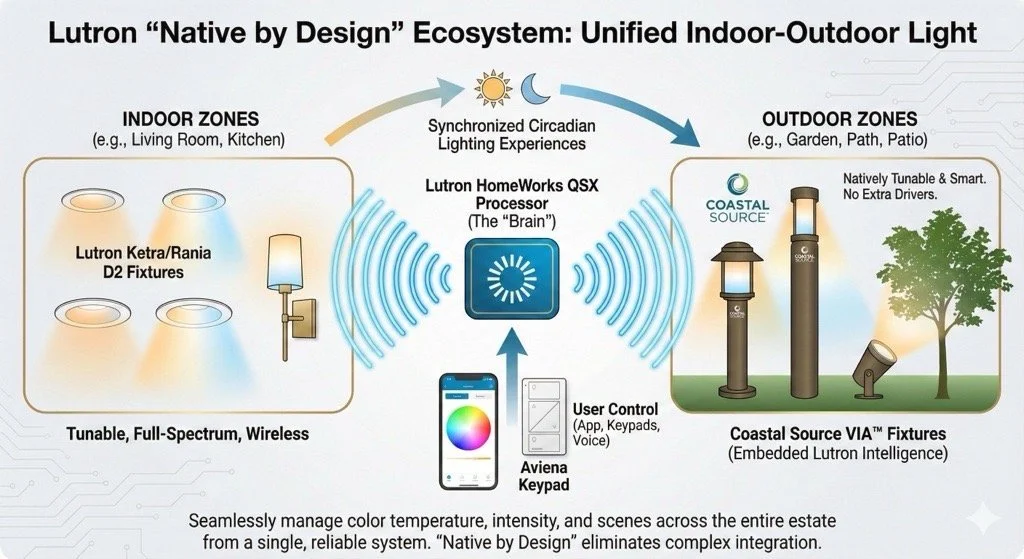
What “Native by Design” Means (Lutron + Coastal Source Explained)
If you’ve explored outdoor lighting or smart home systems, you’ve likely seen how quickly things become fragmented—multiple brands, separate controls, and added programming just to make it work.
“Native by Design” takes a different approach.
Instead of assembling systems after the fact, it brings fixtures, light output, and control together as one coordinated platform from the start. The result is a more predictable system, cleaner execution, and a lighting experience that feels consistent across the entire home.
What “Native by Design” Means
“Native by Design” refers to a lighting system where fixtures, light engines, and control are developed together—not integrated later.
In a Lutron + Coastal Source system:
The light engine is built directly into the fixture
The control system manages color, intensity, and scenes natively
There is no reliance on third-party integration layers
This creates a single, coordinated system—designed to work as one.
The Problem with Traditional Outdoor Lighting
Most outdoor lighting systems are assembled in parts:
Fixtures from one manufacturer
Controls from another
Integration handled through programming
Even when done well, this introduces:
Added complexity
Inconsistent performance
A disconnect between indoor and outdoor lighting
More points of failure over time
The result is often functional—but rarely cohesive.
How the System Works Together
At a system level:
Lutron manages control, dimming, scenes, and automation
Ketra provides tunable, full-spectrum light
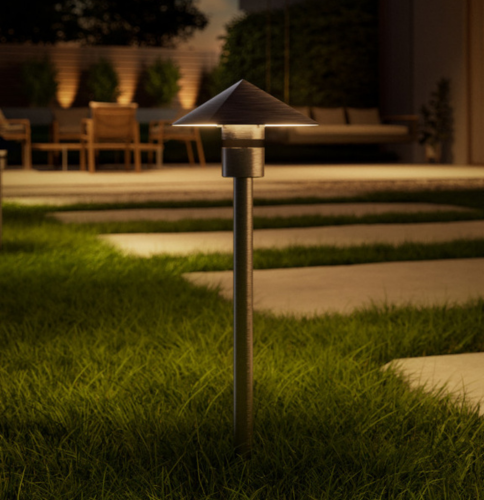
Coastal Source delivers durable outdoor fixtures
In a Native by Design approach:
Light engines are integrated into the fixtures
Control is handled natively across the system
Everything is designed to operate as a single platform
This reduces friction—both during installation and long-term use.
Why Integration Matters
1. One Continuous Lighting Experience
Indoor and outdoor lighting operate as a single system. Color temperature, intensity, and scenes remain consistent throughout the property.
2. Natural, Accurate Light
Full-spectrum lighting allows for more accurate color and more natural transitions throughout the day.
3. Predictable Performance
A coordinated system reduces variables. Fewer dependencies mean fewer issues over time.
4. Lighting as a Design Layer
Lighting moves beyond visibility. It supports architecture, landscape, and atmosphere in a more intentional way.
When This Approach Makes Sense
This type of system is best suited for:
New construction
Major renovations
Homes with strong indoor-outdoor connection
Projects where lighting is part of the design—not an add-on
Why Retrofitting Falls Short
Trying to recreate this level of integration later typically leads to:
More complexity
Higher cost
Limited functionality
Most importantly, it rarely achieves the same level of cohesion as a system designed this way from the beginning.
The HLL Approach
At Hamptons Landscape Lighting, lighting is treated as part of a complete system—not a collection of parts.
We design for:
Predictable performance
Coordinated execution
Long-term serviceability
The goal is simple: a system that works reliably, integrates cleanly, and holds up over time.
Next Steps
If you’re planning a new build, renovation, or outdoor lighting upgrade, this is the stage where system decisions have the most impact.
A well-designed, integrated lighting system will shape how your home feels and functions long-term.
If you’d like guidance early in the process, we’re available to coordinate with your team and help structure the system correctly from the start.