
Smart Outdoor Lighting: When Landscape Lighting Becomes Part of the Home
Outdoor lighting should do more than turn on at sunset.
A thoughtfully designed smart outdoor lighting system can respond to the time of day, support different ways of using the property, coordinate with the home’s interior lighting, and give homeowners simple control over an otherwise complex exterior environment.
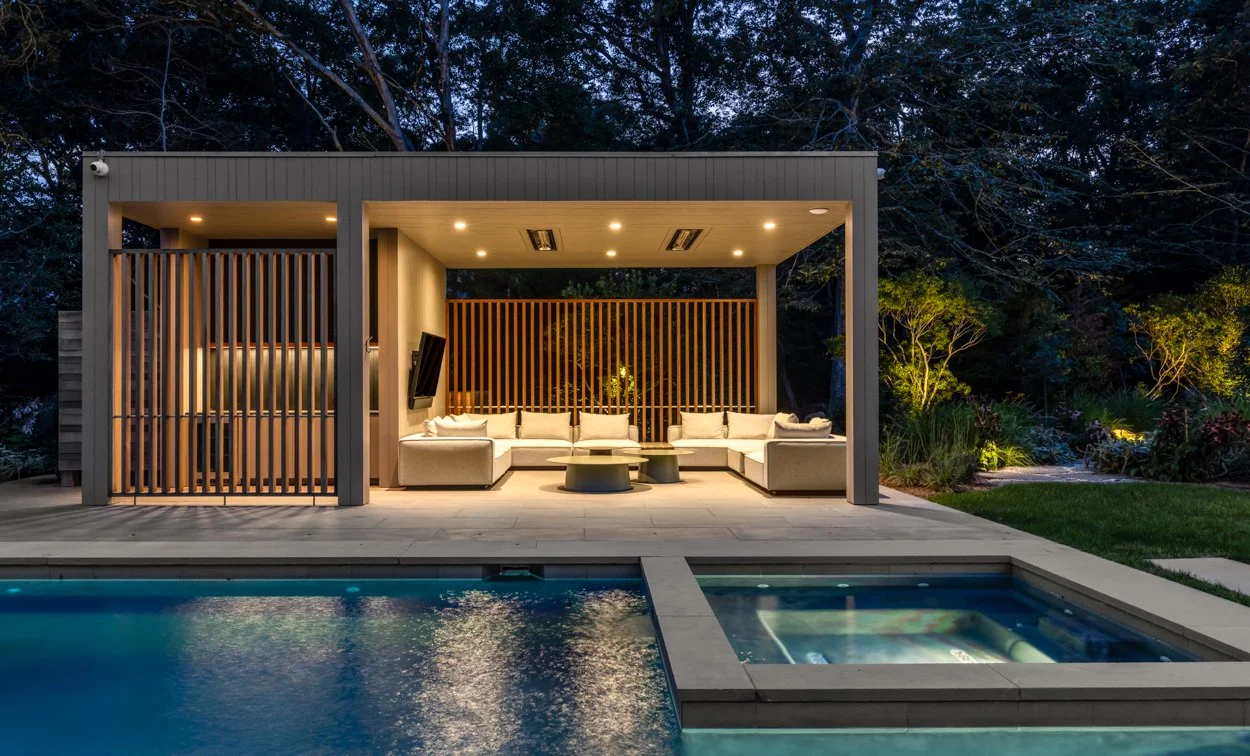
The technology matters—but smart outdoor lighting begins with design.
Hamptons Landscape Lighting designs the exterior lighting experience fixture by fixture. Home Technology Experts (HTE) provides the lighting-control equipment, automation platforms, programming, and integration expertise required to connect that design with the rest of the home.
Together, the two teams create intelligent outdoor lighting that feels cohesive, comfortable, and effortless to use.
What Is Smart Outdoor Lighting?
Smart outdoor lighting combines professional landscape-lighting design with automated controls.
Instead of operating the entire property from a single timer or switch, the lighting is divided into purposeful zones. Pathways, entrances, terraces, trees, gardens, architectural features, pools, driveways, and entertainment areas can be controlled independently or coordinated through scenes.
Depending on the system, homeowners may be able to control the lighting through:
A scheduled astronomical clock
A wall-mounted keypad
A smartphone or tablet
A whole-home automation system
Occupancy or motion sensors
A voice-control platform
Preset scenes and routines
The result is not simply remote-controlled lighting. It is an exterior environment programmed around how the property is actually used.
Smart Lighting Still Requires Good Lighting Design
Automation cannot correct an outdoor lighting system that was poorly designed.
If fixtures are too bright, aimed into windows, positioned within sightlines, or placed without considering the architecture and landscape, adding an app will not improve the visual experience.
HLL begins with the property itself.
We consider:
How the home is approached and entered
Which architectural and landscape features deserve emphasis
How exterior lighting appears from inside the home
Where glare could interfere with dining, entertaining, or relaxation
How people move between the residence, pool, terrace, guesthouse, dock, and other outdoor destinations
Which areas require functional illumination and which should remain quiet
How neighboring properties and dark-sky requirements affect the design
How coastal conditions influence fixture and connection specifications
These observations become a fixture-by-fixture lighting plan documenting fixture placement, beam direction, zoning, and scene intent.
The technology then supports the design—not the other way around.
Lighting Zones Create Greater Control
A professionally designed outdoor lighting system should not treat the entire property as one undifferentiated load.
Lighting zones make it possible to control different layers of the landscape independently. A property might include separate zones for:
Front entrance lighting
Architectural illumination
Specimen trees and gardens
Outdoor kitchen and dining spaces
Guesthouse or pool house surroundings
Dock, waterfront, or beach-access areas
This zoning gives homeowners more useful control while allowing the lighting designer to preserve visual hierarchy.
For example, pathway lighting can remain at a comfortable functional level while tree lighting dims later in the evening. The terrace can be illuminated for dinner without turning on the entire property. Arrival lighting can welcome guests while private garden areas remain dark.
Lighting Scenes Turn Zones Into Experiences
Zones determine what can be controlled. Scenes determine how those zones work together.
A lighting scene recalls a coordinated group of settings with one command. Instead of adjusting multiple outdoor areas individually, the homeowner selects an experience.
Useful outdoor lighting scenes may include:
Welcome Home
Driveway, arrival, entrance, and selected architectural lighting create a comfortable approach to the residence.
Outdoor Dinner
Lighting around the terrace, outdoor kitchen, pathways, and nearby landscape is balanced for visibility and atmosphere without placing glare in guests’ eyes.
Entertaining
Exterior lighting expands across the property, helping guests move comfortably between the house, pool, lawn, dining areas, and other gathering spaces.
Evening
The landscape is softly layered for everyday use, with important destinations illuminated and secondary areas held at restrained levels.
Late Night
Decorative lighting dims or turns off while essential pathways, entrances, and security areas remain illuminated.
Away
The system follows a simplified schedule that helps the property appear occupied without keeping every fixture on throughout the night.
Scenes can also connect exterior lighting to interior lighting, music, motorized shades, climate, security, and other home systems. HTE’s smart-home automation expertise makes this coordination possible through platforms such as Lutron, Control4, and Savant.
Interior and Exterior Lighting Should Feel Connected
The visual experience of a property does not stop at the glass.
At night, poorly controlled exterior lighting can create harsh reflections, overpower interior illumination, or make the landscape beyond the windows disappear. A more thoughtful approach considers the relationship between both environments.
As an evening scene begins inside, exterior lighting can transition with it. Interior lights may dim while terraces, trees, and garden features remain softly visible through the windows. When an entertainment scene is selected, outdoor lighting, audio, and other systems can respond together.
This creates a more complete experience: the interior feels visually connected to the property rather than surrounded by darkness.
HTE’s work in intelligent lighting control and whole-home automation allows the exterior lighting designed by HLL to become part of the home’s broader control strategy.
Automated Schedules Should Follow the Property
Basic outdoor lighting timers require seasonal adjustments because sunset changes throughout the year. Intelligent systems can use astronomical scheduling to respond automatically to local sunrise and sunset times.
But a good schedule should do more than switch the system on and off.
Different events can happen throughout the evening:
Arrival and architectural lighting activates around sunset.
Entertainment areas remain available during normal evening hours.
Decorative landscape zones dim later at night.
Nonessential lighting turns off at a designated curfew.
Essential pathways and entrances remain available where appropriate.
Seasonal or event scenes temporarily adjust the normal routine.
This staged approach can reduce unnecessary energy use, limit light spill, support local dark-sky goals, and avoid leaving the property excessively illuminated after it is no longer being used.
Smart Control Can Support Dark-Sky-Conscious Design
Smart outdoor lighting is especially valuable in communities where excessive brightness, uplighting, spill, or late-night illumination is restricted.
Compliance still begins with responsible fixture selection, shielding, output, placement, and aiming. Controls add another layer by allowing the system to dim or shut down selected zones at specific times.
HLL designs with restraint, glare control, visual comfort, and nighttime conditions in mind. The completed system is professionally aimed after dark so beam direction and output can be refined on the property—not estimated only during daylight.
HTE then programs the approved lighting behavior into the control system, helping the design perform consistently night after night.
Reliable Outdoor Lighting Requires the Right Equipment
Outdoor control equipment and lighting components must be selected for more than features. They must also perform reliably in a coastal environment.
Salt air, moisture, irrigation, temperature changes, and seasonal property conditions can quickly expose weak fixtures, connections, transformers, and enclosures. HLL specifies appropriate exterior lighting equipment and installation methods for the property, while HTE serves as the resource for the control hardware, system components, and integration platform.
HTE works with established lighting and automation technologies and can connect the outdoor system with Lutron lighting control, Control4, Savant, and other compatible home systems. Its broader outdoor-living integration capabilities can also coordinate lighting with outdoor audio, televisions, Wi-Fi, heaters, and entertainment settings.
This shared approach prevents the landscape lighting from becoming an isolated collection of fixtures or a separate app that the homeowner must manage.
HLL Designs the Light. HTE Connects the Experience.
Smart outdoor lighting requires two distinct areas of expertise.
Hamptons Landscape Lighting focuses on the exterior lighting design:
Fixture-by-fixture lighting plans
Beam direction and output
Lighting zones and scene intent
Glare control and visual comfort
Views from inside the home
Coastal-grade fixtures and connections
Professional nighttime aiming
Coordination with landscape architects, builders, pool contractors, and hardscapers
Long-term system care through Brilliance Care™
Home Technology Experts provides the technical infrastructure:
Lighting-control equipment and supplies
Lutron, Control4, and Savant integration
Automation programming
Keypads, apps, touchscreens, and voice control
Coordination with the home’s indoor lighting scenes
Integration with outdoor audio, video, Wi-Fi, security, and other systems
Ongoing technology support
The responsibilities are clear, but the outcome is unified: an exterior lighting system designed with intention and controlled as part of the home.
Smart Outdoor Lighting Should Feel Simple
The most intelligent outdoor lighting systems do not ask homeowners to think about technology every evening.
They illuminate the property at the right time. They create the appropriate atmosphere for dinner, entertaining, arrival, or late-night use. They preserve views, control glare, and turn off unnecessary light when the evening is over.
That simplicity requires careful planning behind the scenes.
HLL designs how the property should look and feel after dark. HTE supplies and integrates the controls that make the design easy to operate.
Bring Intelligent Outdoor Lighting to Your Property
Ready to make your outdoor lighting part of a more intelligent home?
Contact Home Technology Experts to discuss an intelligent outdoor lighting solution designed by Hamptons Landscape Lighting and integrated by HTE.
From fixture-by-fixture exterior lighting design to Lutron, Control4, or Savant programming, our teams can create a system that brings the landscape, architecture, and home together—beautifully and effortlessly.