
Natural vs. Staged Lighting
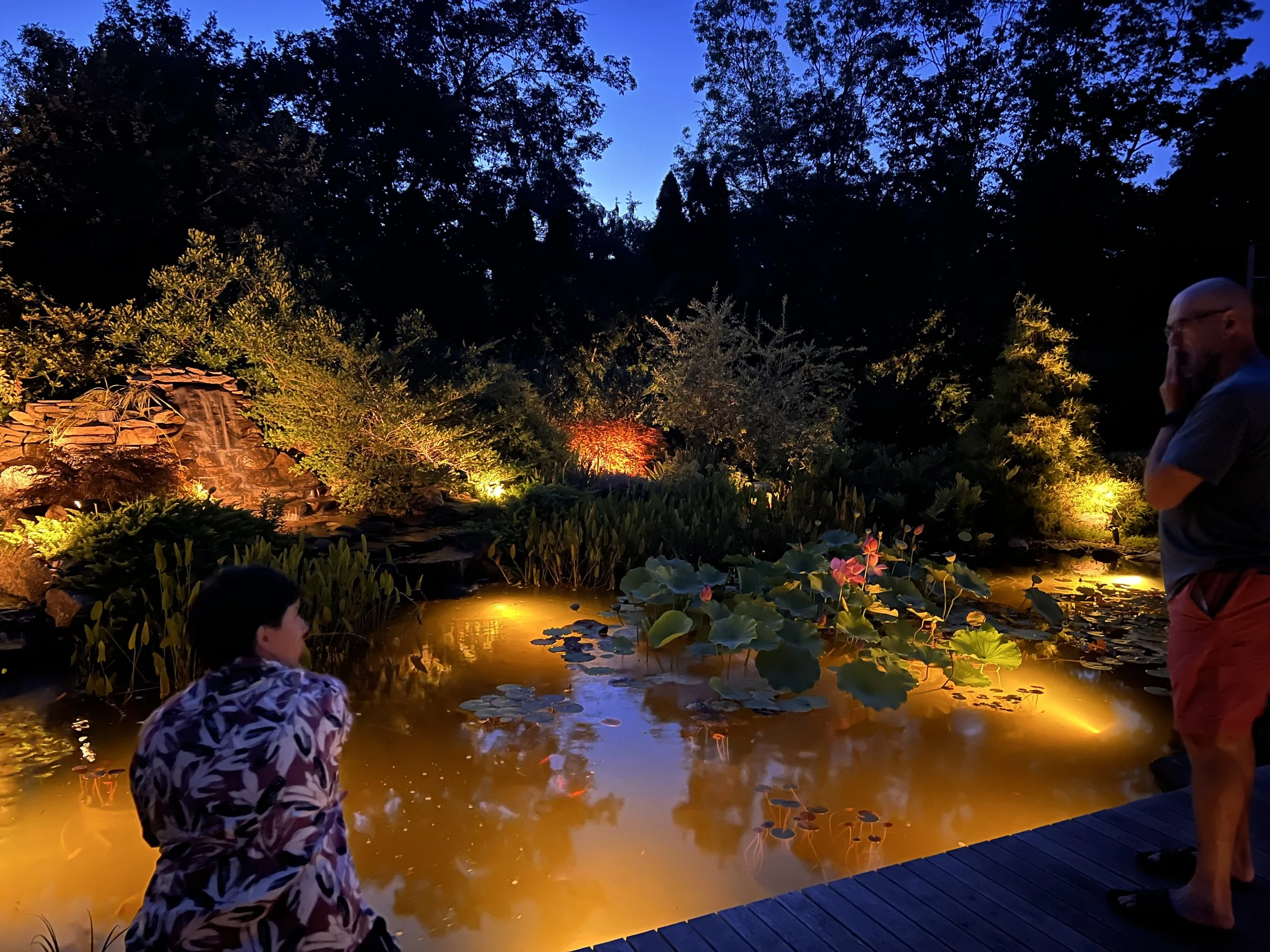
Natural vs. Staged Landscape Lighting: Why the Difference Matters
Not all landscape lighting creates the same experience after dark.
Some properties feel calm, refined, and naturally inviting at night. Others feel overly bright, theatrical, or visually distracting. The difference usually comes down to one design philosophy: natural landscape lighting versus staged lighting.
At Hamptons Landscape Lighting (HLL), this distinction shapes every lighting design we create. Understanding the difference helps homeowners recognize why certain outdoor spaces feel effortless and timeless—while others simply feel illuminated.
What Is Natural Landscape Lighting?
Natural landscape lighting is designed to feel integrated with the environment rather than imposed on it.
Instead of drawing attention to the lighting itself, it subtly reveals the architecture, plantings, textures, and pathways already present within the landscape. The result is balanced, comfortable, and visually cohesive.
Characteristics of Natural Lighting
Light appears soft and unassuming
Fixtures remain concealed or visually minimized
Illumination levels are layered and restrained
Shadows create depth and dimension instead of harsh contrast
The landscape remains the focal point—not the lighting effects
Natural lighting often incorporates techniques such as:
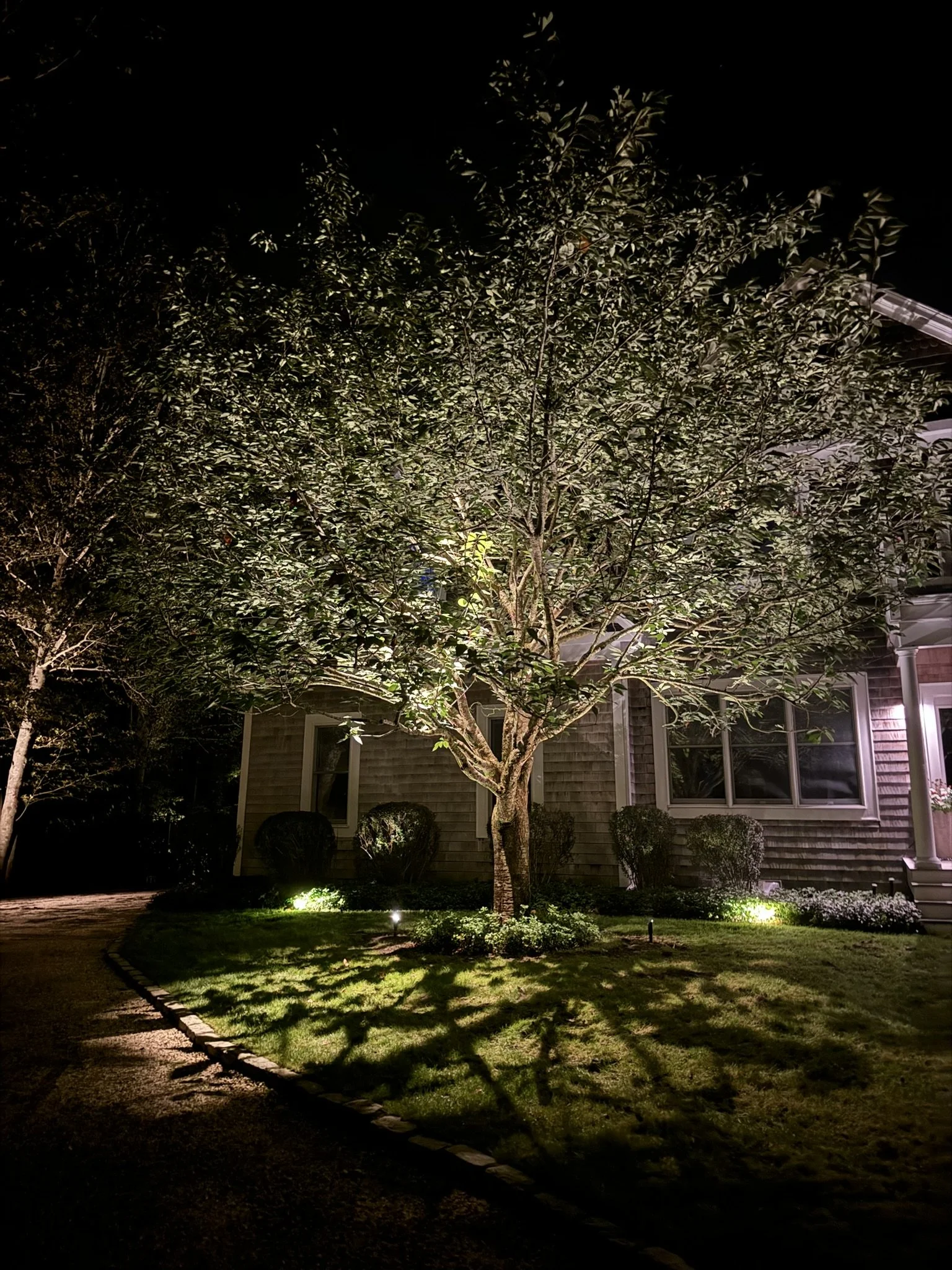
Soft downlighting through tree canopies
Subtle architectural grazing
Low-level pathway illumination
Layered lighting transitions between spaces
Warm color temperatures that mimic moonlight
The goal is not a spectacle. The goal is atmosphere, comfort, and continuity.
Example: Lighting a Garden Path
With natural landscape lighting, pathways are gently defined rather than aggressively outlined. Light softly pools onto the ground to guide movement safely without glare or visual clutter.
You notice the experience of the space—not the fixtures themselves.
What Is Staged Landscape Lighting?
Staged lighting is designed to be noticed immediately.
This approach often prioritizes brightness, dramatic contrast, and highly visible focal effects. Fixtures may remain exposed, beam spreads are more aggressive, and individual landscape elements are intentionally spotlighted.
While staged lighting can appear visually striking at first glance, it often lacks subtlety and long-term comfort—especially in residential settings.
Characteristics of Staged Lighting
Bright hotspots and sharp shadow contrasts
Visible fixtures and obvious light sources
Over-illumination of trees, facades, or focal features
Lighting effects that compete with the landscape itself
A theatrical or “showpiece” appearance
Staged lighting may work for hospitality environments, events, or temporary installations, but it can feel overwhelming in private residential landscapes over time.
Example: Lighting a Specimen Tree
In staged lighting, a specimen tree may be intensely uplighted from below with high-output fixtures. This can flatten natural texture, create harsh shadows, and emphasize the lighting effect more than the tree itself.
The landscape becomes a display instead of an environment.
Why Natural Landscape Lighting Creates Better Outdoor Environments
Natural lighting aligns more closely with how people naturally experience outdoor spaces at night.
Moonlight is rarely uniform, bright, or overly directional. Instead, it is layered, subtle, and imperfect. The most successful landscape lighting systems replicate those same qualities.
When outdoor lighting feels natural:
Spaces feel larger and more relaxed
The eye moves comfortably through the landscape
Architecture and plantings remain visually balanced
Outdoor living areas encourage lingering and conversation
The property maintains elegance instead of visual intensity
This becomes especially important on luxury residential properties and estates where homeowners want seamless continuity between daytime and nighttime aesthetics.
Natural vs. Staged Lighting: Side-by-Side Examples
Trees
Natural Lighting:
Soft downlighting filters through branches to create depth, movement, and realistic shadow patterns.
Staged Lighting:
Strong uplighting creates hotspots, harsh contrast, and exaggerated effects.
Architecture
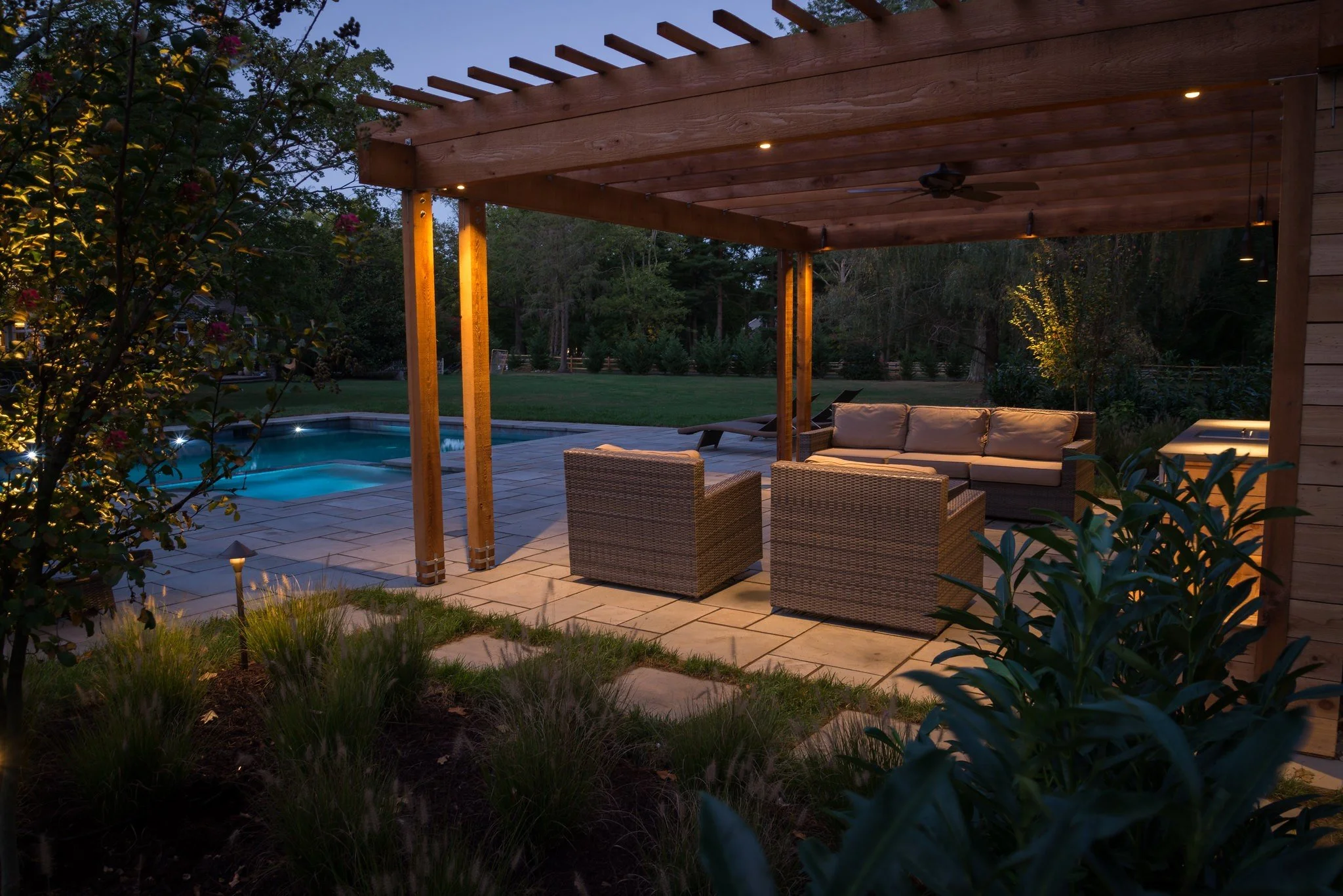
Natural Lighting:
Selective grazing highlights material texture and architectural detail with restraint.
Staged Lighting:
Broad lighting washes flatten surfaces and create unnecessary glare.
Outdoor Living Areas
Natural Lighting:
Low-level layered illumination supports comfort, conversation, and atmosphere.
Staged Lighting:
Overly bright focal lighting disrupts ambiance and dominates the environment.
Choosing the Right Landscape Lighting Approach
Staged lighting has its place in commercial displays, event environments, and temporary installations. But for residential properties designed to be lived in and enjoyed long-term, natural landscape lighting offers something far more valuable: timeless.
At Hamptons Landscape Lighting, we design with restraint, precision, and balance. Every fixture placement, beam angle, and lighting layer is carefully considered to support the landscape—not overpower it.
When landscape lighting is done well, it rarely calls attention to itself.
It simply makes the property feel right after dark.