Outdoor Lighting Design For Hamptons Estates
Estate Outdoor Lighting Design in the Hamptons
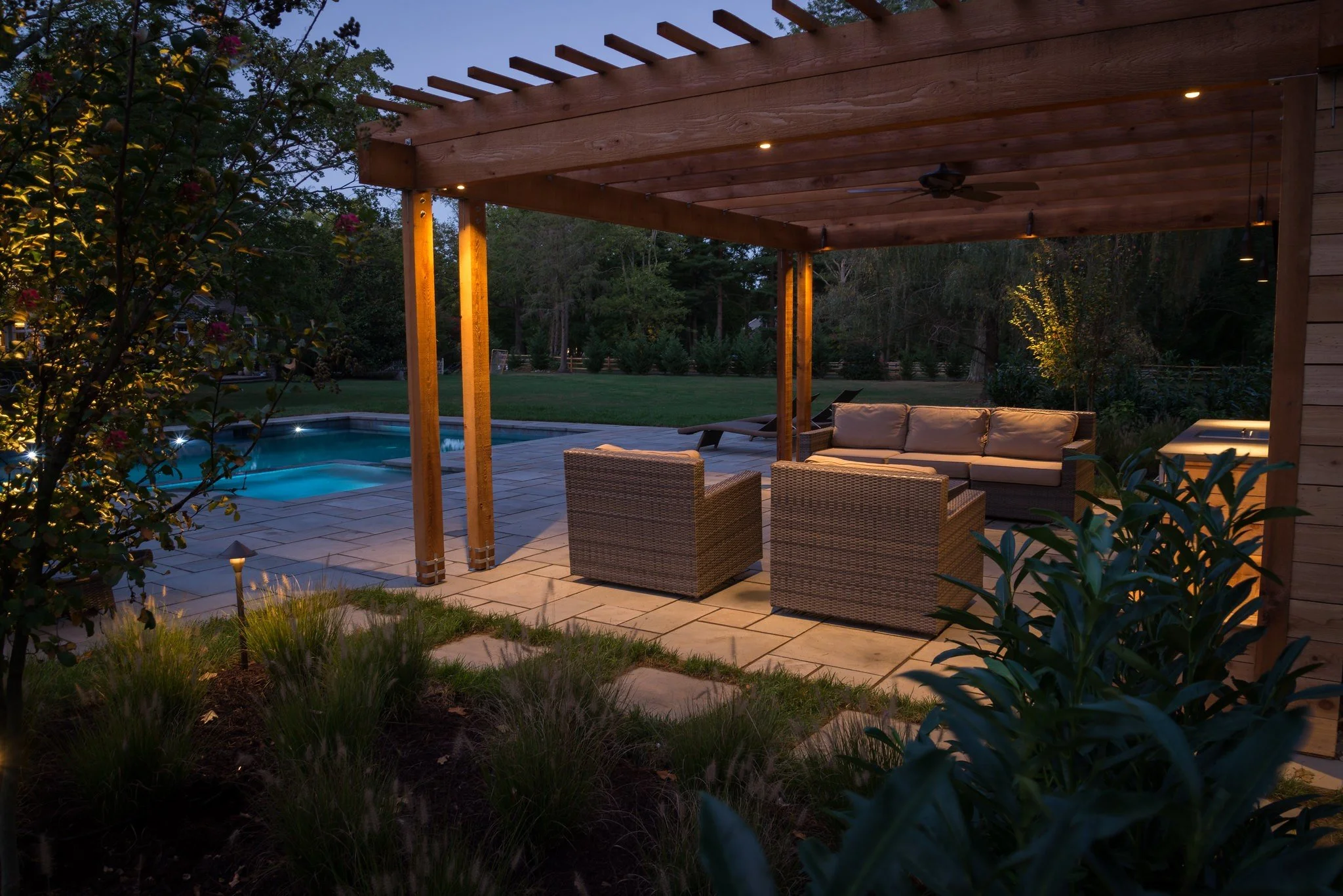
Estate lighting design brings arrival, architecture, gardens, outdoor living areas and views from inside the home into one calm, connected nighttime composition.
Large properties need a lighting strategy that sees beyond individual fixtures. An estate may include a long arrival sequence, several structures, terraces, pool areas, mature gardens, water, guest spaces and service routes. Professional estate lighting gives those areas an intelligible relationship after dark while preserving quiet, unlit space between them.
The goal is not to flood the property with light. It is to reveal what matters, support movement and make the property feel settled, welcoming and easy to use at night.
Begin with the whole property
Estate lighting begins with observation. HLL studies how the property is approached, which views matter from inside, where guests circulate, how landscape layers frame architecture and which areas should remain intentionally quiet. This establishes priorities before fixtures are selected.
Estate-scale planning may include: driveway and gate approach, paths and changes in elevation, primary and secondary entries, architecture, pool and terrace areas, garden rooms, specimen trees, water edges, guest structures, controls, transformer locations and future service access.
That approach is central to HLL’s lighting design service and its design-to-night-aiming process. It keeps a larger system coherent rather than making each part compete for attention.
Layer the experience without visual noise
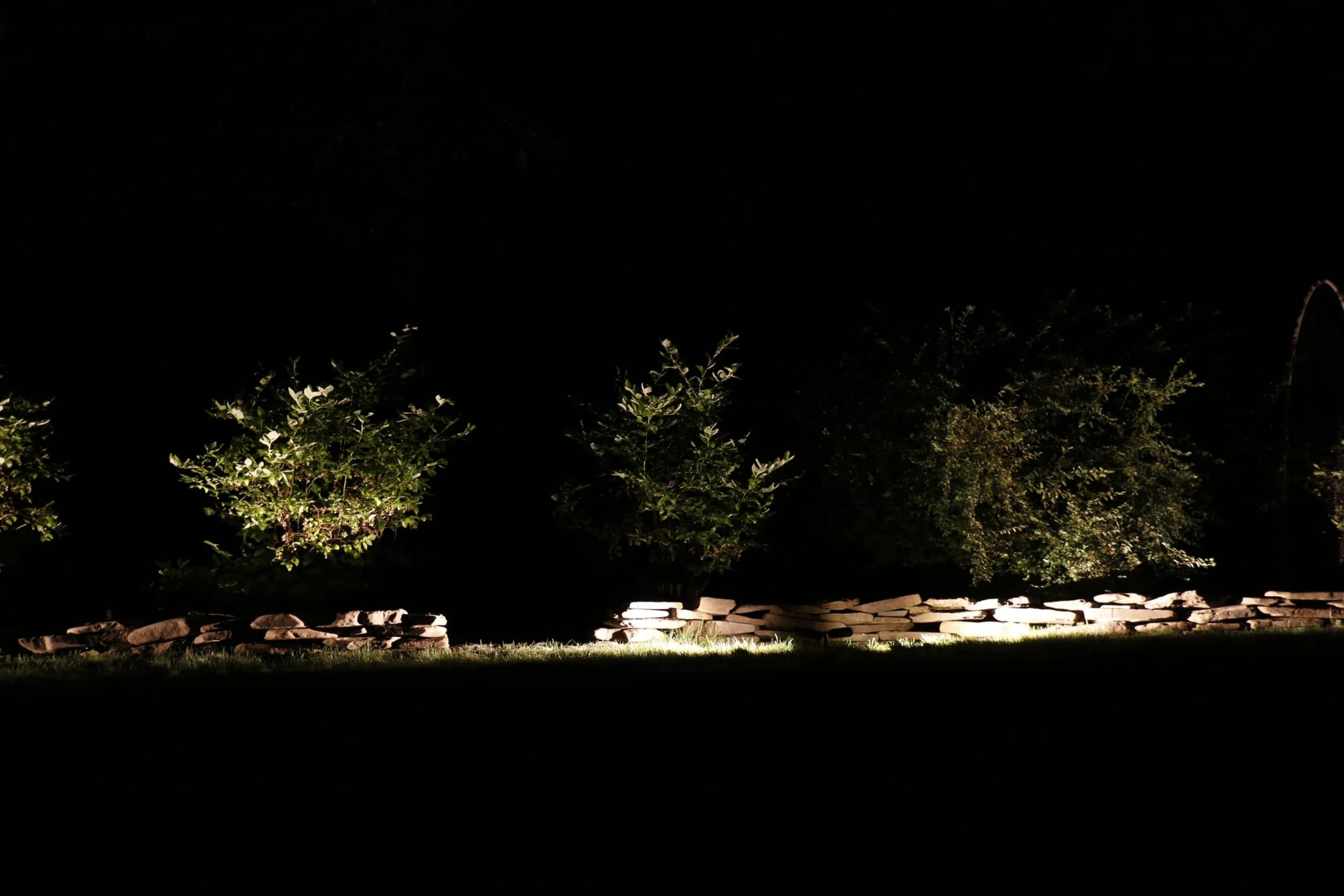
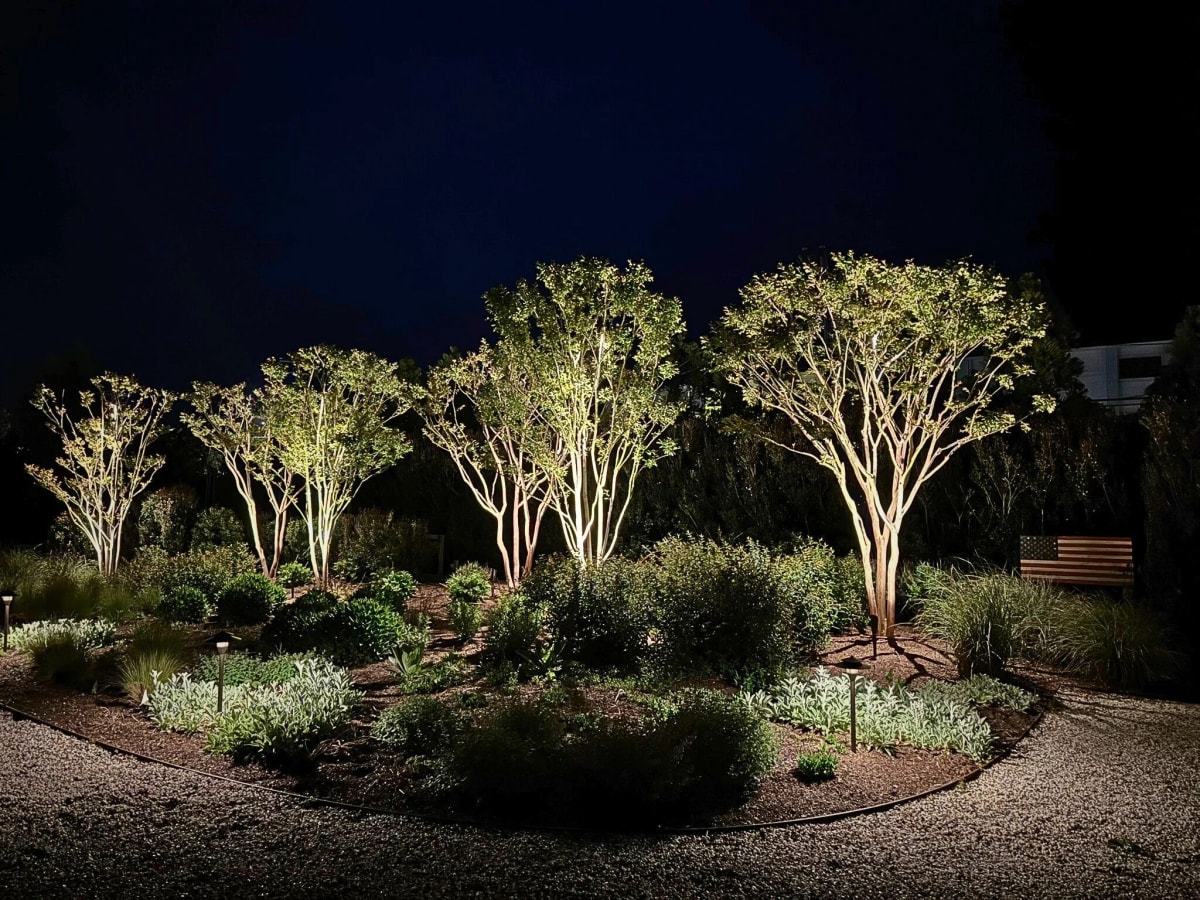
Estate lighting is layered, but it should not feel busy. Different techniques can play distinct roles: low-level guidance for movement, controlled uplighting for form, restrained washes for architecture and carefully placed downlighting that softens larger spaces.
- Arrival and circulation: driveways, paths, steps and transitions should feel clear without glare.
- Architecture and texture: selected stone, wood, façades and structural forms can gain depth through focused, controlled light.
- Garden and tree structure: mature trees, planting layers and focal points create dimension beyond the building.
- Outdoor living: terraces, pools and gathering areas need comfortable light levels that preserve atmosphere.
The right balance depends on the property’s scale, materials and intended use. Read more about designing from the interior view outward and avoiding glare in outdoor lighting.
Technical choices stay behind the experience
Estate lighting depends on decisions that are often invisible on opening night: appropriate fixture materials for exposure, protected connections, transformer and zone strategy, beam control, shielding and practical service access. Professional installation brings those decisions together in the field.
After dark, HLL fine-tunes each fixture’s angle, intensity and spread so the scene reads naturally across the grounds. Compatible controls can group zones into useful scenes for arrival, entertaining, evening and away time, while keeping the system straightforward to operate.
Design for change, not just installation day
Estate landscapes evolve: plantings fill in, trees mature, schedules change and coastal conditions affect exterior components. Brilliance Care provides an ongoing maintenance path that can keep fixtures clean, aimed and working as designed.
For existing properties, an estate lighting repair and service evaluation may identify whether routine care, targeted correction or a phased renovation is the best fit. A professional lighting checkup is also a useful starting point before a major renovation or summer season.
Related reading: professional landscape lighting in the Hamptons, coastal lighting and salt-air considerations, what to look for in a lighting service contract and how to design landscape lighting.
Estate lighting design FAQs
What makes estate lighting different from a standard landscape lighting project?
Estate lighting plans the entire property as one nighttime environment. It considers multiple structures, longer circulation routes, layered gardens, outdoor living spaces, interior views, control zones and long-term serviceability.
Should estate lighting be planned during construction or landscaping?
Early coordination is usually useful because it allows fixture locations, wiring paths, transformer placement, controls and service access to be resolved before finished surfaces and mature planting make changes more disruptive.
Can an existing estate lighting system be improved?
Yes. HLL can evaluate many existing systems and recommend maintenance, repairs, upgrades or a phased redesign based on the property’s current condition and goals.
Reveal the property with restraint.
Begin with a site conversation about how you want the estate to feel, function and connect after dark.