
Night-Aimed Perfection in Outdoor Lighting
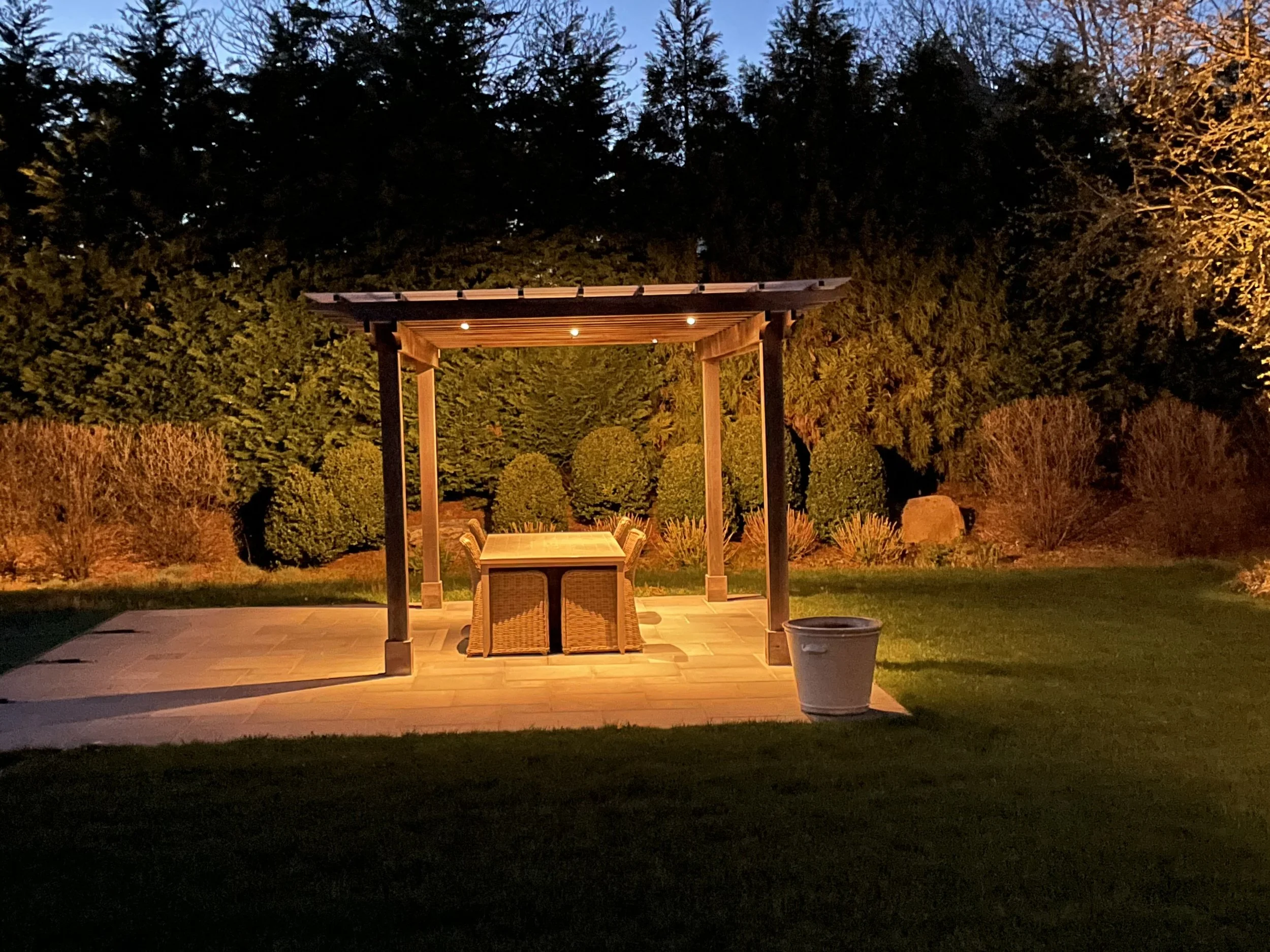
In high-end landscape lighting, the most important work doesn’t happen during the day—it happens after dark. Night-aimed perfection refers to the professional practice of returning to a project at night to precisely aim, adjust, and fine-tune outdoor lighting so the final result feels balanced, natural, and effortless.
Daytime installation establishes the structure. Nighttime aiming reveals the truth.
Why Daytime Installation Isn’t Enough
During the day, fixtures are mounted, wiring is completed, and rough aiming is set. This step is essential—but incomplete. Beam spread, glare, shadow patterns, and light spill can’t be accurately evaluated in daylight.
In landscape lighting—especially tree downlighting or moonlighting—the difference between acceptable and exceptional is only visible once the sun goes down.
What Happens During Night Aiming
When installers return after dark, every fixture is evaluated in real conditions and adjusted with intention:
Angle and orientation are refined to control where light falls
Beam spread is adjusted to eliminate hot spots and dark gaps
Intensity is balanced so no area feels overlit or flat
Focus is dialed in to create soft transitions and natural shadowing
Spill and glare are corrected to keep light on the property, not in the sky or a neighbor’s windows
This process is especially critical in tree-mounted fixtures, where even a small adjustment can dramatically change the effect on the ground below.
Moonlighting Demands Precision
Tree downlighting is one of the most unforgiving techniques in landscape lighting. The goal is to recreate the look of moonlight—soft, layered, and organic.
Too steep an angle creates harsh pools of light
Too shallow an angle washes out texture and depth
Poor aiming can expose the fixture or create distracting glare
Night aiming allows installers to tilt wide-beam fixtures just enough to produce dappled patterns through foliage, even coverage on walkways and lawns, and shadows that feel natural rather than staged.
When done correctly, the light source disappears—and the landscape feels quietly transformed.
Controlling Glare and Light Pollution
A key benefit of night aiming is restraint. Adjustments are made with Dark Sky principles in mind, ensuring light is directed downward and contained where it’s needed.
This not only improves aesthetics, but also:
Reduces light trespass
Protects night skies
Creates a calmer, more comfortable environment
Well-aimed lighting is often less noticeable—and far more effective.
The Night Reveal
For many projects, the final night aiming culminates in a “night reveal.” After careful adjustments, the property is experienced as it’s meant to be seen—balanced, inviting, and refined.
This moment often defines the difference between a system that simply functions and one that truly elevates the landscape.
The Hallmark of Professional Lighting
In luxury residential and commercial projects, night-aimed perfection is what separates professional installations from DIY or builder-grade lighting. Adjustable fixtures, experienced installers, and the patience to fine-tune after dark are what create lasting results.
At Hamptons Landscape Lighting, we consider night aiming an essential part of the process—not an add-on. It’s how lighting becomes invisible, natural, and enduring. Because great outdoor lighting shouldn’t announce itself. It should simply feel right.
Frequently Asked Questions
Why do you return at night after the installation is complete?
Outdoor lighting can only be properly evaluated after dark. Daytime installation allows us to mount fixtures, run wiring, and establish the structure of the system. Night aiming is when we refine the lighting so the landscape feels balanced, natural, and comfortable once the sun goes down.
What is night aiming?
Night aiming is the process of adjusting each fixture after dark. Angles, beam spread, and intensity are fine-tuned so light falls exactly where it should. This step allows us to eliminate glare, balance brightness across the property, and create natural-looking shadows and transitions.
Is night aiming really necessary?
Yes. Even small adjustments can dramatically change the way a space looks at night. Without this step, lighting can appear uneven, overly bright, or create distracting glare. Night aiming ensures the final result feels refined rather than mechanical.
Why is night aiming especially important for tree lighting?
Tree-mounted fixtures used for moonlighting must be carefully aimed to mimic the softness of natural moonlight. If the angle is slightly off, the effect can look harsh or artificial. Night adjustments allow us to create gentle, dappled light patterns that feel organic and balanced.
Does night aiming help reduce glare and light pollution?
Yes. Adjusting fixtures at night allows us to control where light goes—and where it doesn’t. Proper aiming keeps light directed downward and contained within the property, reducing glare, minimizing light trespass, and protecting the night sky.
What is a “night reveal”?
Once final adjustments are complete, many clients experience their landscape lighting for the first time during a nighttime walkthrough. This moment often reveals the full effect of the design—subtle, balanced, and welcoming.
How long does night aiming take?
Most adjustments can be completed in a single evening, though larger properties may require additional time. The goal is simple: every fixture is refined until the entire property feels cohesive and effortless.
Is night aiming included in your lighting installations?
Yes. Night aiming is a standard part of our process. It ensures the finished lighting feels intentional, balanced, and natural—not simply installed.