
Restrained Poolside Landscape Lighting: A Natural, Coastal Approach
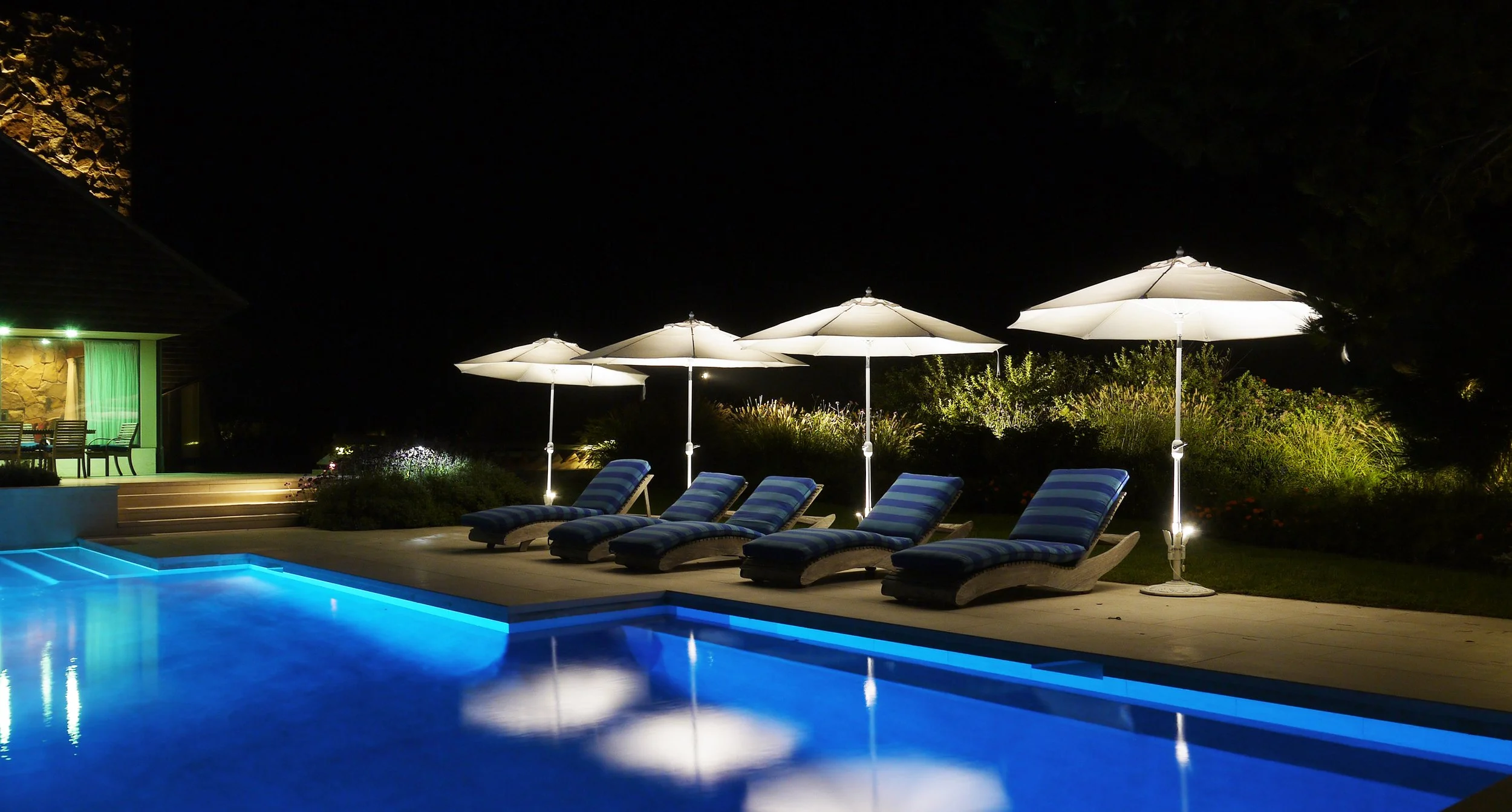
The most successful poolside landscape lighting does not call attention to itself. It quietly reveals paths, steps, planting, and architectural surfaces while preserving the darkness and atmosphere that make a Hamptons property feel distinctive after sunset.
This restrained approach is especially appropriate for coastal and waterfront homes. Around a pool, every decision about brightness, direction, and placement affects more than visibility. It influences reflections on the water, views from the house, comfort at nearby seating areas, and the way the surrounding landscape is experienced at night.
A considered landscape lighting design begins with those experiences—not with a predetermined fixture count.
Why Restraint Matters Around a Pool
Poolside lighting has several jobs to perform. It should help people recognize steps and changes in elevation, make circulation more comfortable, complement the architecture, and establish an inviting setting for evening use.
The answer is not to illuminate every surface equally. When a pool deck, surrounding lawn, trees, and planting beds are all treated at the same intensity, the landscape loses depth. The brightest elements begin competing with one another, and fixtures that were intended to help can introduce glare.
A more thoughtful design establishes a visual hierarchy. Areas that support movement receive the light they need. Selected landscape and architectural elements create depth. Other areas remain deliberately quiet.
Warm Light and Visual Comfort
Warm white light generally feels most natural around a Hamptons pool. It complements bluestone, wood, gravel, cedar shingles, ornamental grasses, and other materials commonly found in coastal landscapes.
Color temperature is only one part of the decision. Output and beam control matter just as much. A warm fixture can still feel uncomfortable if it is too bright, poorly aimed, or visible from a lounge chair, terrace, interior window, or the opposite side of the pool.
Shielding Light and Controlling Glare
Glare is particularly disruptive near water. Pools, windows, glass railings, pale stone, and wet surfaces can reflect light toward the viewer. Even a relatively modest fixture can become distracting when its source is exposed.
Shielded fixtures help direct illumination toward the intended surface while keeping the source out of common sightlines. Placement should be evaluated from the locations where the property will actually be experienced, including:
- Poolside seating and dining areas
- Primary paths and steps
- Interior rooms overlooking the pool
- Terraces, pergolas, and outdoor kitchens
- Views toward the water, garden, or night sky
This attention to sightlines is one reason fixture selection alone cannot produce a finished design. The success of the system depends on where fixtures are placed, how they are shielded, what they illuminate, and how they are adjusted after dark. HLL explores these principles further in its guide to glare-controlled outdoor lighting.
Using Layers Without Overlighting
A poolside lighting plan may use several techniques, but each one should have a clear purpose. Layering does not mean adding more light everywhere. It means assigning different lighting methods to different visual and practical tasks.
Downlighting and Moonlighting
Shielded fixtures placed high in mature trees or on appropriate architectural surfaces can cast soft light downward. When carefully positioned, this creates natural-looking shadow patterns across paving, planting, and lawn.
The fixture should remain visually quiet while the effect feels as though it belongs in the landscape. This technique is especially useful when a property has established trees and open views that should not be interrupted by rows of visible path lights. Learn more about HLL’s approach to moonlight-inspired outdoor lighting.
Path and Step Lighting
Paths and changes in elevation require clear visual cues, but they do not need to be outlined continuously. Low-profile path lights, recessed step lights, and discreetly integrated fixtures can guide movement with small, controlled areas of illumination.
Spacing is important. Fixtures placed too closely together can make a walkway resemble a runway. Thoughtful placement provides continuity without eliminating the natural transitions between light and shadow.
Selective Landscape Accents
One mature tree, a textured stone wall, or a carefully composed area of planting may deserve emphasis. Limiting these accents gives them greater visual importance and prevents the landscape from becoming a collection of competing focal points.
Balanced Pool Illumination
The light within the pool should be considered as part of the complete nighttime composition. If the water is significantly brighter or cooler than everything around it, it can dominate the view and make the surrounding landscape disappear.
Coordinating the pool illumination with the surrounding landscape helps the water retain its movement and reflective quality without becoming the only visible element in the scene. HLL’s guide to pool and pond lighting examines additional ways to work with reflections, edges, and adjacent planting.
Darkness Is Part of the Design
Darkness gives illuminated elements their definition. It creates separation between foreground and background, allows the eye to rest, and helps a property retain its connection to the surrounding nightscape.
This does not mean leaving important circulation areas unresolved. It means choosing where light adds value and allowing other portions of the property to remain naturally dark. The result is often more comfortable, more dimensional, and more visually coherent than a uniformly bright design.
Designing for Coastal Conditions
Pool environments expose equipment to moisture, irrigation, foot traffic, and landscaping activity. Hamptons properties add salt air, wind, humidity, storms, and freeze-thaw cycles to that list.
Fixtures, wiring, connections, transformers, and mounting methods should be selected for the conditions in which they will operate. A professional landscape lighting installation considers not only the initial visual effect, but also corrosion resistance, protected connections, service access, and long-term reliability.
Controls for Different Kinds of Evenings
The appropriate light level for a summer gathering may be different from the level needed for a quiet evening at home. Dimming and lighting controls allow the pool environment to respond without changing the underlying design.
Pathways and steps may remain consistently illuminated while decorative layers are lowered later in the evening. A well-planned control strategy can reduce unnecessary output and help the property transition more naturally into the night.
Why Night Aiming Is Essential
A lighting plan establishes fixture positions and intended effects, but the composition cannot be fully judged during the day. After installation, the system should be reviewed at night from the places where homeowners and guests will actually see it.
During night aiming, individual fixtures can be redirected, dimmed, shielded, or repositioned. Reflections can be evaluated from across the pool. Bright spots can be softened, and landscape accents can be balanced against the architecture and water.
This final adjustment is what moves a project from installed lighting to a finished nighttime composition.
Keeping the Design Balanced Over Time
Poolside lighting is not static. Plantings grow, branches alter beam patterns, fixtures shift, and salt or landscape debris collects on lenses. A system that looked balanced when installed may begin to feel uneven as the property changes.
Scheduled landscape lighting maintenance restores fixture positions, cleans lenses, corrects aiming, reviews controls, and helps preserve the original design intent through the seasons.
Frequently Asked Questions
How bright should poolside landscape lighting be?
Poolside lighting should be bright enough to reveal paths, steps, elevation changes, and gathering areas without flooding the entire landscape. The appropriate level depends on the property, surrounding ambient light, surface materials, and how the pool area is used.
What color temperature works best around a pool?
Warm white light generally creates the most comfortable and natural effect. The exact color temperature should coordinate with the home’s exterior lighting, surrounding materials, planting, and the illumination within the pool.
How can glare be reduced around a pool?
Glare can be reduced through careful fixture placement, shielding, aiming, and output selection. The design should be evaluated from seating areas, interior windows, pathways, and other common viewpoints around the property.
Can pool lighting support dark-sky goals?
Yes. Shielded fixtures, warm light, restrained output, downward-directed illumination, dimming, and appropriate operating schedules can reduce unnecessary light spill. Applicable requirements vary by location, so each design should account for the property’s jurisdiction and conditions.
Why is professional night aiming important?
Night aiming allows each fixture to be evaluated under real nighttime conditions. Beam direction, brightness, shielding, reflections, and glare can then be adjusted to create a balanced and comfortable result.
Can existing poolside lighting be improved without replacing everything?
Often, yes. An existing system may benefit from repositioned fixtures, added shielding, lower-output lamps, updated controls, repaired connections, or selective replacement of outdated components. A professional landscape lighting system assessment can determine what is worth preserving and what should change.
Lighting That Belongs in the Landscape
Thoughtful poolside lighting begins with understanding what should be illuminated, what should remain quiet, and how the entire property should feel after dark.
Schedule a Lighting Consultation