
Dark Sky Landscape Lighting in Sag Harbor
Sag Harbor Dark Sky Laws
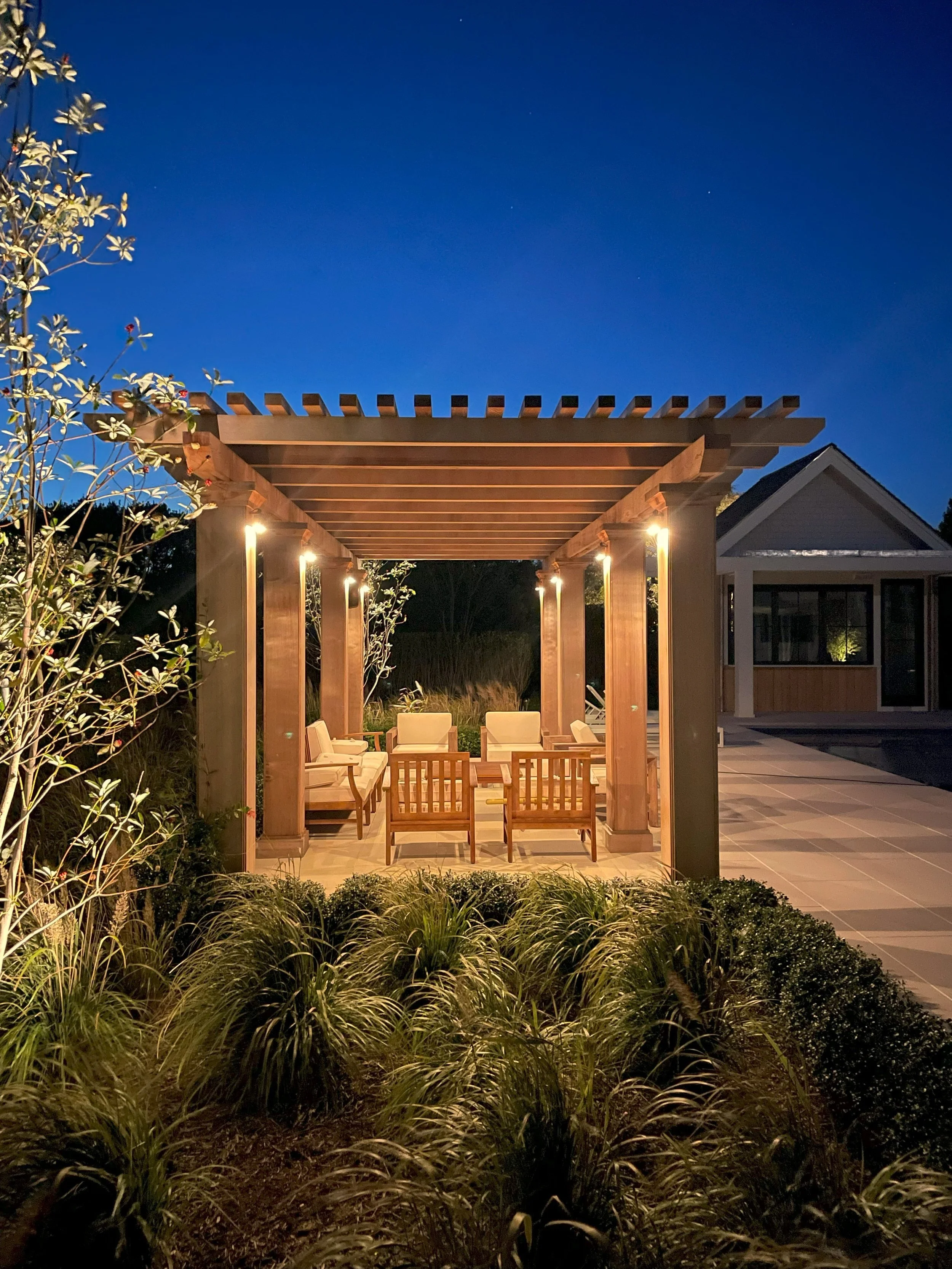
Sag Harbor presents a distinctive outdoor-lighting challenge. Historic streets, compact residential lots, waterfront properties, docks, narrow setbacks, and close relationships between neighboring homes leave little room for uncontrolled glare.
A fixture does not need to be especially bright to become intrusive. If the light source is visible across a property line, roadway, harbor, or other body of water, it can affect the surrounding environment.
That is why landscape lighting in Sag Harbor must begin with placement and shielding—not brightness.
What Sag Harbor’s Lighting Standards Address
Sag Harbor’s exterior-lighting provisions apply when lighting is installed, replaced, changed, repaired, or relocated.
The Village’s residential standards emphasize:
Minimizing glare and light trespass
Fully shielded lighting for new construction requiring a building permit
Preventing light sources from being visible beyond the property boundary
Aiming fixtures downward
Restricting dusk-to-dawn control of residential landscape lighting
Limiting the output of certain unshielded fixtures
Using light sources no higher than 2700K when outdoor fixtures are relamped
Carefully controlling dock lighting on waterfront properties
Residential dock fixtures must be fully shielded and illuminate only the dock surface. That distinction is critical in a harbor setting, where poorly aimed light can reflect across the water and affect boaters, neighbors, wildlife, and views from shore.
Designing for Smaller Lots and Historic Architecture
Sag Harbor lighting should feel integrated with the architecture and landscape rather than applied on top of them.
HLL commonly uses:
Shielded step lights at grade changes
Low-output marker lights along narrow walkways
Downlighting from carefully selected mounting locations
Recessed or shielded entry lighting
Warm, tightly controlled garden accents
Low-level dock and marine-area lighting
Timed zones for decorative landscape lighting
Motion-controlled lighting where short-duration illumination is appropriate
On compact lots, beam direction is especially important. A fixture aimed only a few degrees too high can become visible from the neighboring patio or second-floor bedroom. We select optics based on the feature’s size and the available distance, then verify the result during nighttime aiming.
Avoiding Dusk-to-Dawn Landscape Lighting
The Village restricts the use of dusk-to-dawn sensors for residential landscape lighting, except for lighting that illuminates a walkway.
HLL addresses this through purpose-based zoning. Entrance and circulation lighting can be separated from decorative garden, tree, or terrace lighting. The decorative zones can dim or turn off automatically while defined circulation lighting remains available when appropriate.
This produces a more useful system than leaving every fixture illuminated all night.
Waterfront Lighting Without Harbor Glare
For Sag Harbor waterfront properties, HLL considers the view from both directions.
We evaluate how the lighting appears from:
The house looking toward the water
The dock looking back toward the house
Neighboring docks and properties
Boats approaching from the harbor
Roads or public areas near the property
Dock lighting should define edges and changes in elevation without turning the dock into a visible strip of light. Fixtures are shielded, placed low, and aimed at the walking surface—not outward across the water.
HLL’s Documentation and Coordination Process
Our fixture-by-fixture plans can include fixture cut sheets, mounting heights, output, color temperature, shielding, beam spreads, aiming directions, and control schedules.
We coordinate with architects, builders, landscape architects, marine contractors, electricians, and the appropriate Village reviewing authorities when required.
After installation, we conduct professional nighttime aiming. This is where glare is corrected, beam spreads are refined, and reflections from windows, water, paving, and light-colored architecture are evaluated.
Sag Harbor’s dark sky standards do not prevent beautiful outdoor lighting. They encourage lighting that is more precise, more comfortable, and more appropriate to the Village’s intimate historic and waterfront character.