
Why Landscape Lighting Is Never Really Finished
What percentage of the landscape lighting projects we complete are additions to existing systems?
We do not have a formal percentage to share yet, but the answer is clear from our work: a significant number of our projects involve expanding, adapting, or improving landscape lighting that is already in place.
That is because a landscape is never truly static.
Trees mature. Gardens are redesigned. Pools, patios, pergolas, outdoor kitchens, fire features, gates, guesthouses, and walkways are added. Homeowners discover new ways to use their properties after dark. Even a beautifully designed lighting system may need to evolve as the property and the people living there change.
Landscape lighting is fluid—and a well-planned system should be ready to evolve with it.
The Property You Have Today May Not Be the Property You Have Tomorrow
A landscape lighting design begins with the property as it exists at that moment. But in the Hamptons, outdoor spaces are frequently refined over time.
A new landscape plan may introduce specimen trees, layered planting beds, hedges, ornamental grasses, or garden paths. A pool renovation may create new steps, seating areas, or architectural details. An outdoor kitchen or dining terrace may shift the center of evening activity to a previously quiet part of the property.
Other common additions include:
Pool houses, guesthouses, and accessory structures
Pergolas, pavilions, and covered terraces
Docks, boardwalks, and waterfront paths
New driveways, gates, and parking areas
Sculptures, fountains, and other landscape features
Pickleball, tennis, and other recreation areas
Expanded patios and outdoor entertaining spaces
Privacy plantings and perimeter landscaping
Changes to stairs, walls, walkways, and grade levels
Each addition changes the way the property should look, feel, and function after dark.
Sometimes the new area simply needs illumination. In other cases, the entire composition should be reconsidered so the addition feels connected to the original nightscape rather than visually attached as an afterthought.
Growth Alone Can Change the Lighting Design
A property does not need a major construction project to outgrow its original lighting.
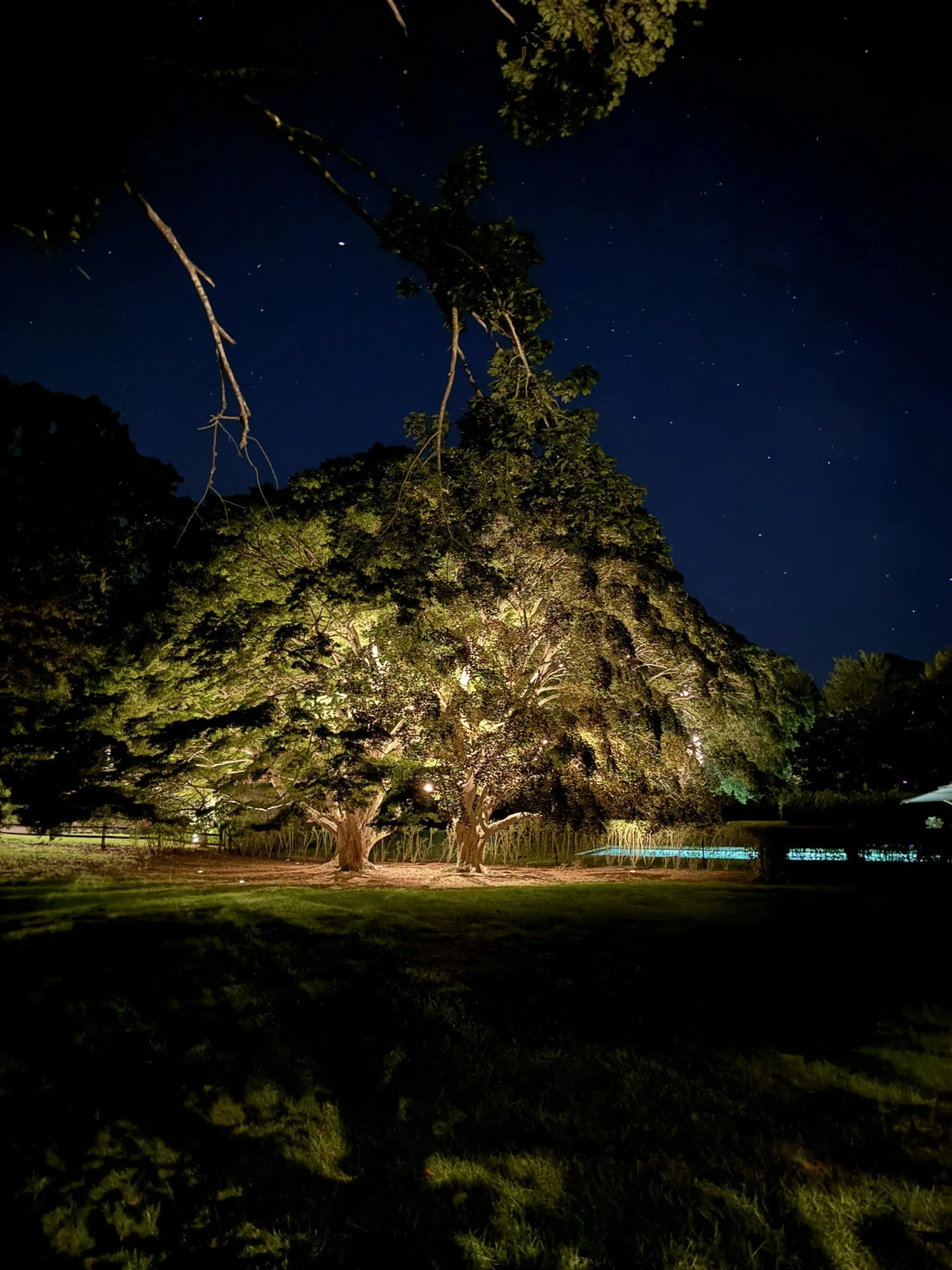
Plants that were small when the system was installed may become important architectural elements several years later. Tree canopies expand. Hedges become denser. Fixtures can become obscured by plant material, and beams that once reached their intended targets may be blocked or redirected.
At the same time, a maturing landscape can create new design opportunities.
A tree that was too young to feature when the original system was installed may now be ready for subtle uplighting. A mature hedge may become a beautiful textured backdrop. A garden that once needed simple pathway lighting may now benefit from more depth, shadow, and carefully controlled layers of light.
Landscape lighting should respond to the living landscape—not expect the landscape to remain frozen in time.
New Lighting Technology Creates New Possibilities
Lighting technology is evolving alongside the landscape.
Lutron’s VIA™ intelligent outdoor lighting brings more sophisticated control and design possibilities to exterior environments. It creates opportunities to coordinate outdoor lighting more closely with the home’s indoor lighting experience and to shape the property for different activities, seasons, and times of night.
A homeowner might want one scene for arriving home, another for dinner on the terrace, and a softer composition for enjoying the garden later in the evening. The lighting can support the experience without making the technology itself the focus.
Control4 Vibrant lighting also reflects the broader movement toward more flexible, scene-based illumination. While individual products must always be selected for their approved application, tools like VIA and Vibrant allow designers to think more creatively about the relationship between interior rooms, covered outdoor areas, transitional spaces, and the surrounding landscape.
The goal is not to add color or technology simply because it is available. It is to use new tools with restraint—introducing warmth, atmosphere, subtle seasonal variation, and more intuitive control where those qualities genuinely improve the property.
Designing Today’s System for Tomorrow’s Additions
At Hamptons Landscape Lighting, we thoughtfully plan the design and installation of every project to address the initial scope while preparing for likely changes later.
That preparation may include considering future electrical capacity, organizing the system into logical zones, identifying practical cable routes, preserving access to important connections, and documenting how the system was installed.
The objective is not to overbuild a system for additions that may never happen. It is to avoid decisions that make reasonable future changes unnecessarily disruptive.
When expansion has been considered from the beginning, adding lighting around a new patio, garden, pool house, or pathway can be more coordinated. The new work can complement the existing color temperature, light levels, beam direction, fixture finishes, and control strategy.
Without that planning, additions often become a patchwork of mismatched fixtures, inconsistent light, overloaded equipment, and disconnected controls.
A thoughtfully expandable system protects the integrity of the original design while giving the property room to grow.
Fall Is the Right Time to Look at Your Lighting Again
Now that we have all survived the official end of summer—and the revolving door of guests has finally slowed—it is a good time to walk the property after dark.
Fall changes how outdoor spaces are used. The sun sets earlier. Arrival lighting becomes more noticeable. Paths and steps are traveled in deeper darkness. Cooler evenings make fire features, covered terraces, outdoor kitchens, and quieter garden areas especially inviting.
This is also when the weaknesses in an existing system become easier to see.
Ask yourself:
Are important paths, stairs, and entrances comfortably illuminated?
Have mature plants begun blocking fixtures or beams?
Do newer landscape areas disappear after sunset?
Does the patio still feel inviting once the summer entertaining season ends?
Are there overly bright fixtures creating glare?
Does the property feel balanced when viewed from inside the home?
Would additional scenes make the lighting easier to use?
Could newer lighting technology improve control or flexibility?
Are fixtures properly aimed and in good physical condition?
Is the system prepared for additions you are considering next year?
The answers can reveal whether the system needs seasonal maintenance, nighttime aiming, a few carefully chosen additions, or a broader design update.
Extend the Outdoor Experience Beyond Summer
The end of summer does not have to mean the end of outdoor living.
Thoughtful landscape lighting can make a property feel warmer and more inviting as the evenings become cooler and darker. It can draw attention to changing foliage, guide movement between outdoor spaces, bring depth to the garden, and create a sense of quiet atmosphere long after the busiest part of the season has passed.
The most successful landscape lighting systems are not treated as one-time installations. They are cared for, adjusted, and expanded as the property evolves.
If your landscape, outdoor spaces, or expectations have changed, your lighting may need to change with them. Hamptons Landscape Lighting can evaluate the existing system, identify opportunities for improvement, and develop an upgrade plan that feels like a natural continuation of the original nightscape.