
Seasonal Lighting Care | Hamptons Landscape Lighting
Is Your Landscape Lighting Ready for Winter?
As the days shorten across the Hamptons, the character of a property changes. Guests arrive after sunset. Pathways and driveways experience longer hours of darkness. Bare branches reveal architectural forms that summer foliage once concealed.
For homeowners and estate managers, this seasonal transition is an opportunity to consider something often overlooked: whether the outdoor lighting system is still performing as it was intended to.
Beautiful landscape lighting should make a property feel welcoming, composed, and easy to navigate after dark. Winter readiness helps preserve that experience while identifying maintenance issues before they become more significant.
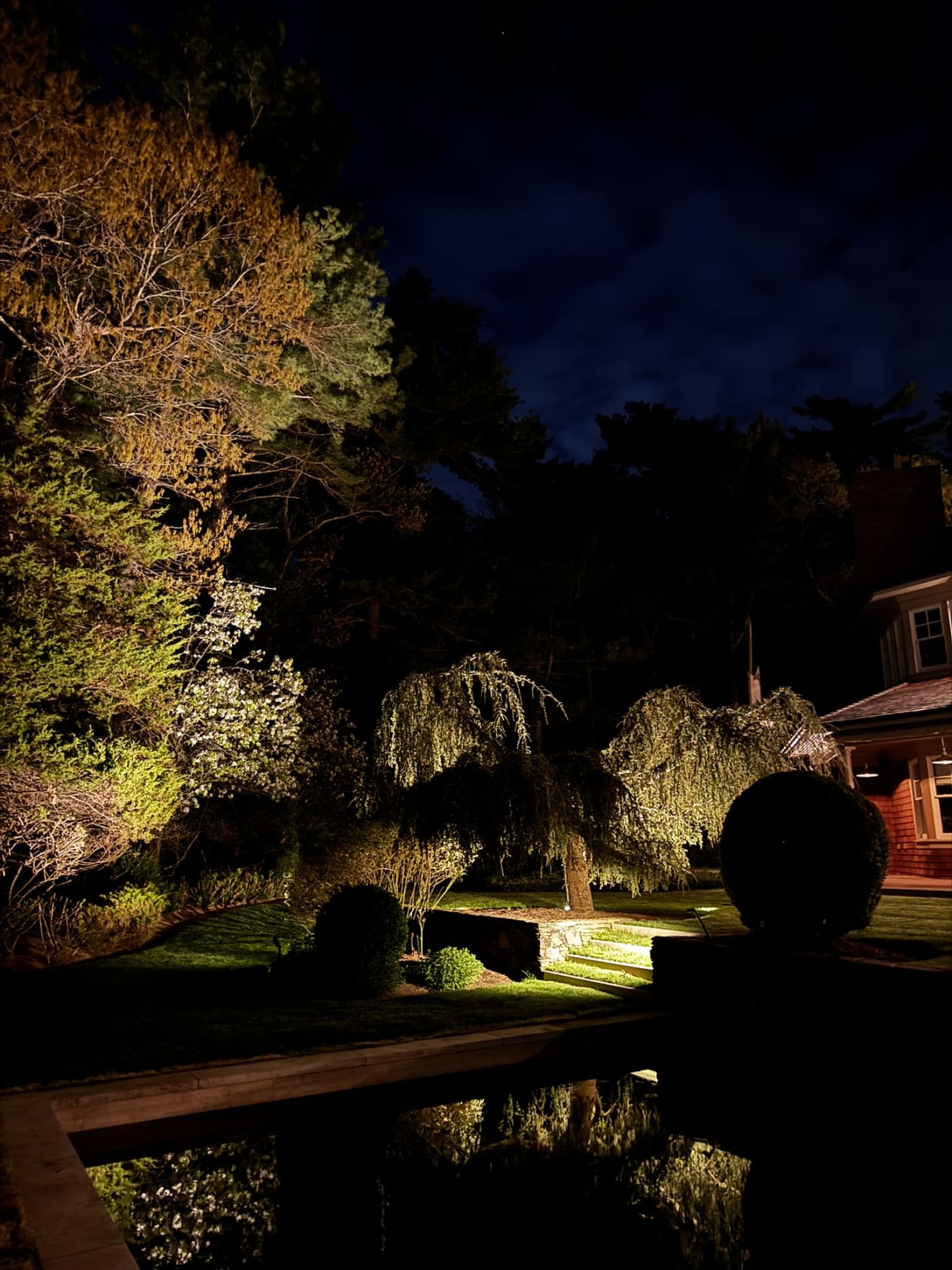
Shorter Days Change How a Property Is Experienced
With the seasonal clock change behind us, outdoor lighting is needed earlier in the evening. A lighting schedule that worked beautifully in August may no longer align with November or December arrivals.
Driveways, entrances, garden walks, steps, and transitional spaces deserve particular attention. These are the places where lighting must balance visual comfort and practical visibility.
The objective is not to make the entire property brighter. It is to place light where it has purpose, preserve natural darkness, and maintain a thoughtful progression from arrival through the landscape.
Five Ways to Prepare Landscape Lighting for Winter
1. Update Timers and Lighting Schedules
Outdoor lighting that relies on fixed schedules may turn on too late following the end of daylight saving time. Astronomical timers and connected control systems may adjust automatically, but settings, time zones, and programmed scenes still deserve verification.
Review arrival lighting, pathway lighting, evening scenes, and any overnight schedules. Second homes may benefit from different lighting behavior when occupied versus when the property is vacant.
Where supported, integrated controls can coordinate selected lighting scenes with property access or home automation systems.
2. Re-Aim Fixtures After the Leaves Fall
A tree illuminated in midsummer becomes a very different subject when its leaves have fallen. Light that once revealed a full canopy may now pass through branches or reach unintended surfaces.
Winter provides an opportunity to refine the composition. Carefully adjusted uplighting can reveal bark texture, branching patterns, stonework, and architectural detail.
Fixture angles may need to change. Some areas may benefit from reduced intensity, while others may require more precise placement.
Learn more about how seasonal landscape changes affect lighting design.
3. Inspect Fixtures, Connections, and Transformers
Outdoor lighting operates in challenging conditions throughout the year. Coastal moisture, salt exposure, irrigation, landscape work, and freeze-thaw cycles can expose weak points in aging systems.
A professional inspection may identify water intrusion, corroded connections, damaged fixtures, failing lamps, inconsistent light output, or wiring that needs attention.
Transformers, control enclosures, and exposed components should also be assessed for appropriate protection and performance.
Small maintenance corrections can help prevent the gradual deterioration of a lighting installation and preserve the original nighttime design.
4. Review Arrival Lighting and Exterior Visibility
For a second home, the experience of arriving after dark matters. A well-composed arrival sequence can make entrances, stairs, driveway transitions, and pathways easier to recognize without harsh glare or excessive illumination.
Property managers may also need appropriate visibility when performing evening inspections or preparing a home for an owner's arrival.
Exterior lighting can complement surveillance and access systems, but lighting alone does not guarantee security. Fixture placement, control behavior, and camera visibility should be coordinated when those functions are part of the broader property plan.
5. Understand What Happens During a Power Interruption
Winter weather can interrupt outdoor lighting just as it affects other property systems. When utility power is lost, conventional landscape lighting generally becomes unavailable unless the relevant equipment is supported by properly designed backup power.
Once power returns, timers, transformers, controls, and connected lighting systems should resume their intended operation. Depending on the equipment and configuration, some devices may require attention.
A seasonal review can identify which lighting functions should recover automatically, whether control settings are being retained, and whether a system has developed an intermittent fault.
Backup power for exterior lighting must be evaluated in the context of the property's electrical infrastructure, essential loads, and desired operating time.
Winter Lighting Care for Second Homes
Many Hamptons properties are occupied less frequently during the colder months. That does not make exterior lighting less important. It changes its purpose.
Lighting may now support occasional arrivals, authorized property visits, evening maintenance, and comfortable movement through essential outdoor spaces.
Owners and caretakers should confirm that schedules match actual property use and that the lighting system is not operating at unnecessary intensity throughout the night.
Winter Landscape Lighting Checklist
- Verify that timers reflect the current sunset and seasonal schedule.
- Inspect pathway, driveway, entrance, and step lighting.
- Re-aim fixtures affected by seasonal foliage loss.
- Check for damaged, buried, tilted, or obstructed fixtures.
- Evaluate transformers, connections, and exposed wiring.
- Confirm lighting zones and controls respond as intended.
- Identify any settings or devices affected by a power interruption.
- Review maintenance needs before extended winter absences.
Maintenance Protects More Than the Fixtures
Landscape lighting is a designed composition. As the landscape changes and equipment ages, the visual result can drift away from the original intention.
One fixture may shift. A lens may become clouded. Plant growth may block another beam. A timer may no longer match the season. Individually these changes appear small, but together they can alter how the property feels after dark.
HLL's BrillianceCare™ maintenance program is designed around ongoing inspection, cleaning, re-aiming, and performance reviews.
For existing installations, a seasonal evaluation can also identify where selective improvements make more sense than replacing an entire system.
When Winter Reveals an Opportunity for Better Lighting
The loss of foliage often reveals areas of a property that deserve different lighting attention. A previously hidden architectural detail may become a focal point. An entry path may need better definition. A garden may benefit from a more restrained nighttime composition.
These discoveries can inform a thoughtful lighting refresh, improved zone control, or a longer-term design plan.
The ideal outcome is a lighting system that adapts gracefully to the seasons, without sacrificing the natural character of the landscape.
A More Welcoming Property, Even in the Quiet Season
Winter landscape lighting should feel intentional rather than excessive. It should support safe movement, reveal the beauty of the architecture and bare landscape, and provide appropriate illumination where people actually need it.
Whether a property is used throughout winter or visited only occasionally, a seasonal lighting review helps protect the quality, performance, and dependability of its nighttime environment.
Keep Your Property Beautiful After Dark.
From seasonal adjustments and maintenance to control refinements and targeted upgrades, HLL can evaluate how your landscape lighting is performing as winter approaches.
Request a Seasonal Lighting Review