
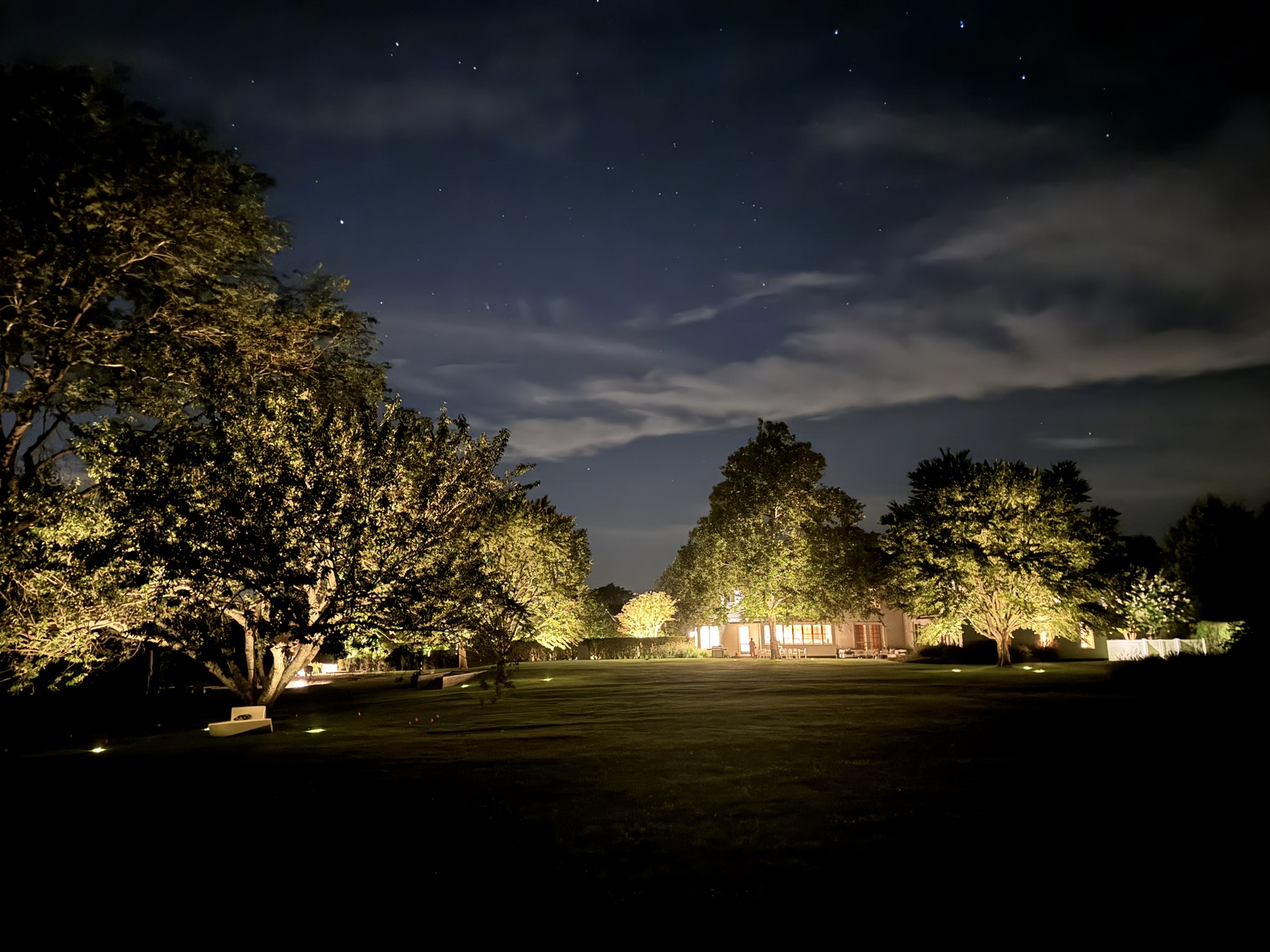
Refining Arrival and Garden Light in Water Mill
A quieter, more connected nighttime experience for the driveway, parking areas, paths, and garden beyond.
The first phase established an arrival sequence that guided without taking over.
At a Water Mill residence, Hamptons Landscape Lighting approached the landscape lighting design in two considered phases. Phase One established the arrival sequence across the driveway, parking areas, paths, and surrounding landscape. Phase Two used a nighttime review to refine the backyard composition around the homeowner's preferences.
The first phase centered on how the property feels and functions after dark. Guidance along the drive needed to remain quiet and clear. Parking areas needed useful illumination without visible source glare. Mature trees and layered planting offered an opportunity to create greater depth and balance.
A softer, more legible arrival
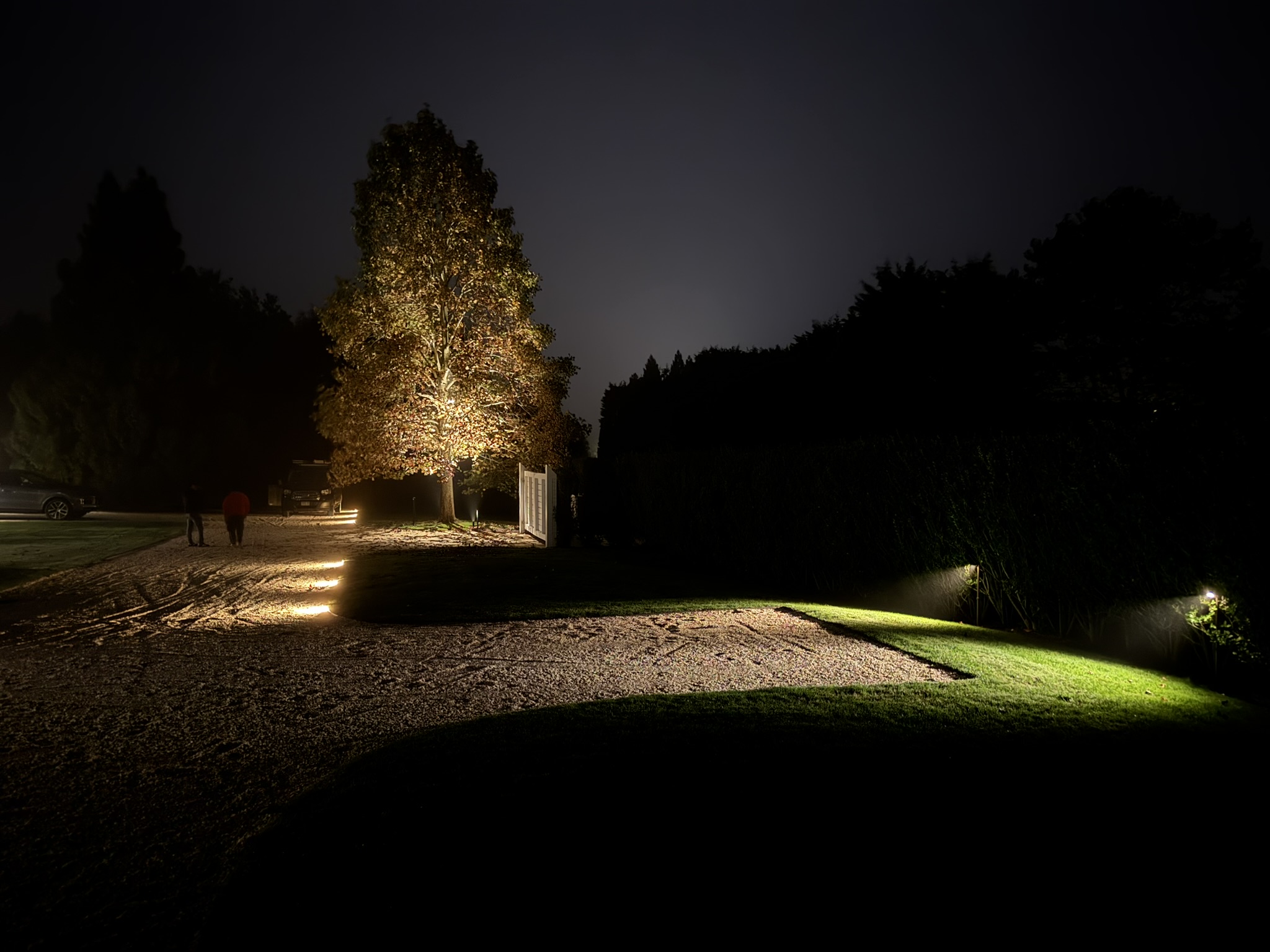
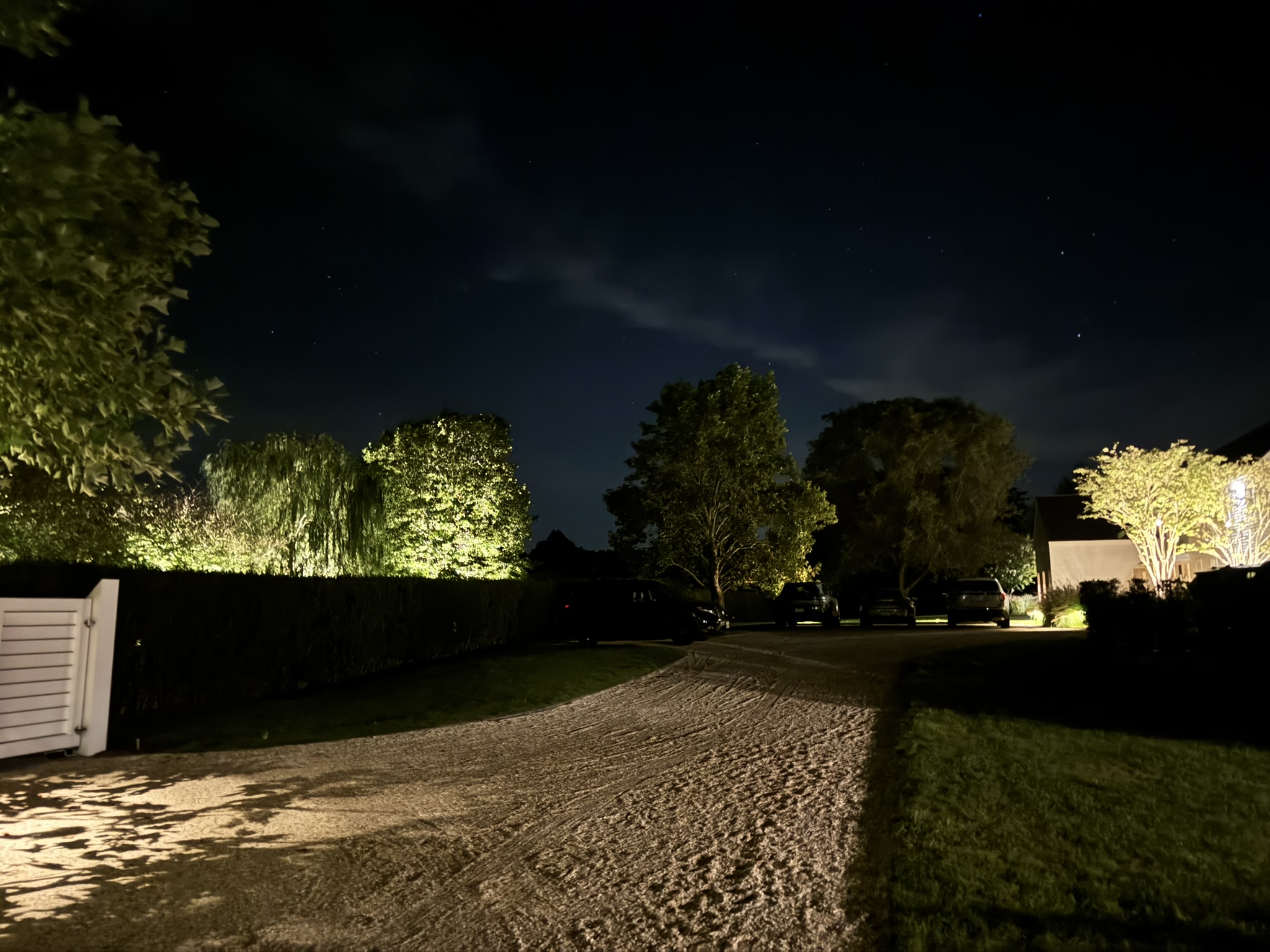
Arrival begins before guests reach the home. At this Water Mill property, the long drive, its edges, and the transition into parking needed to feel clear after dark without becoming a bright visual corridor.
Without the marker lights, the drive recedes quickly into darkness. The goal was not to eliminate that darkness, but to introduce a measured sequence of cues that makes the route easier to understand.
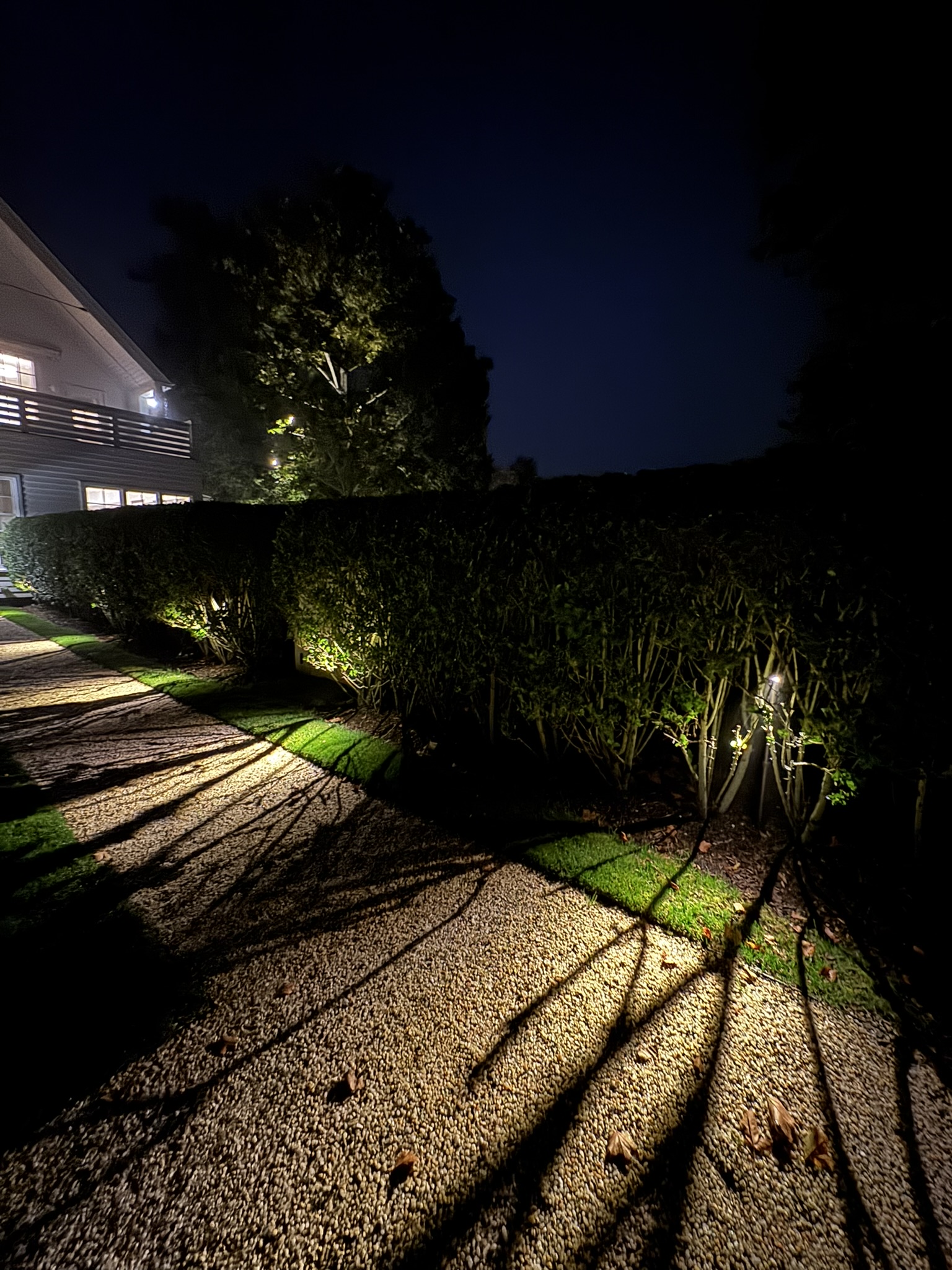
Along straight sections of steel driveway edging, discreet marker lights with frosted lenses provide gentle driveway lighting. Their placement establishes an even rhythm through the approach, helping drivers and guests recognize the route while preserving the quiet character of the landscape.
Parking and turning areas were illuminated from protected locations within hedges and planting beds. Directional fixtures were carefully positioned, adjusted in height, and aimed to reveal corners and circulation areas while allowing the surrounding landscape to remain the focus.
Driveway and parking-area lighting provides useful definition while keeping the fixtures and light sources visually restrained.
Guidance at the right height
The walkways needed a clearer layer of illumination without producing a low, scattered pattern of light across the ground.
Increasing the mounting height of selected path lights helped extend the useful light across the walking surface while keeping the fixtures integrated with the planting. The adjustment improves how the path reads after dark and supports movement through the garden without competing with the trees and larger landscape composition.
It is a small change with a meaningful effect: the route feels more comfortable, and the lighting works as part of the whole rather than as a series of isolated points.
Lighting integrated into the landscape
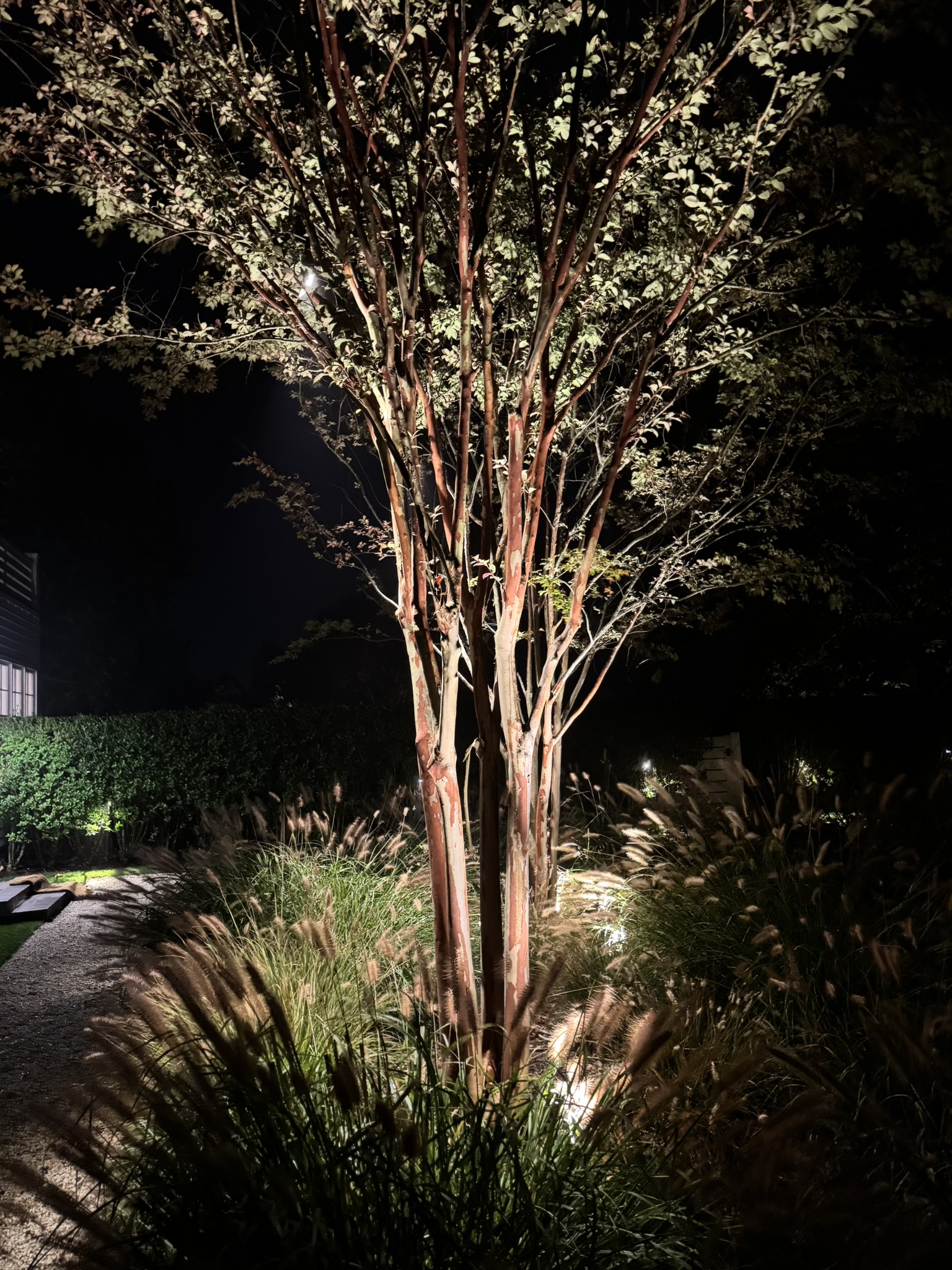
Every placement considered the planting around it. Fixtures were concealed where possible, with beam direction and mounting height adjusted to work with the scale and future growth of the landscape.
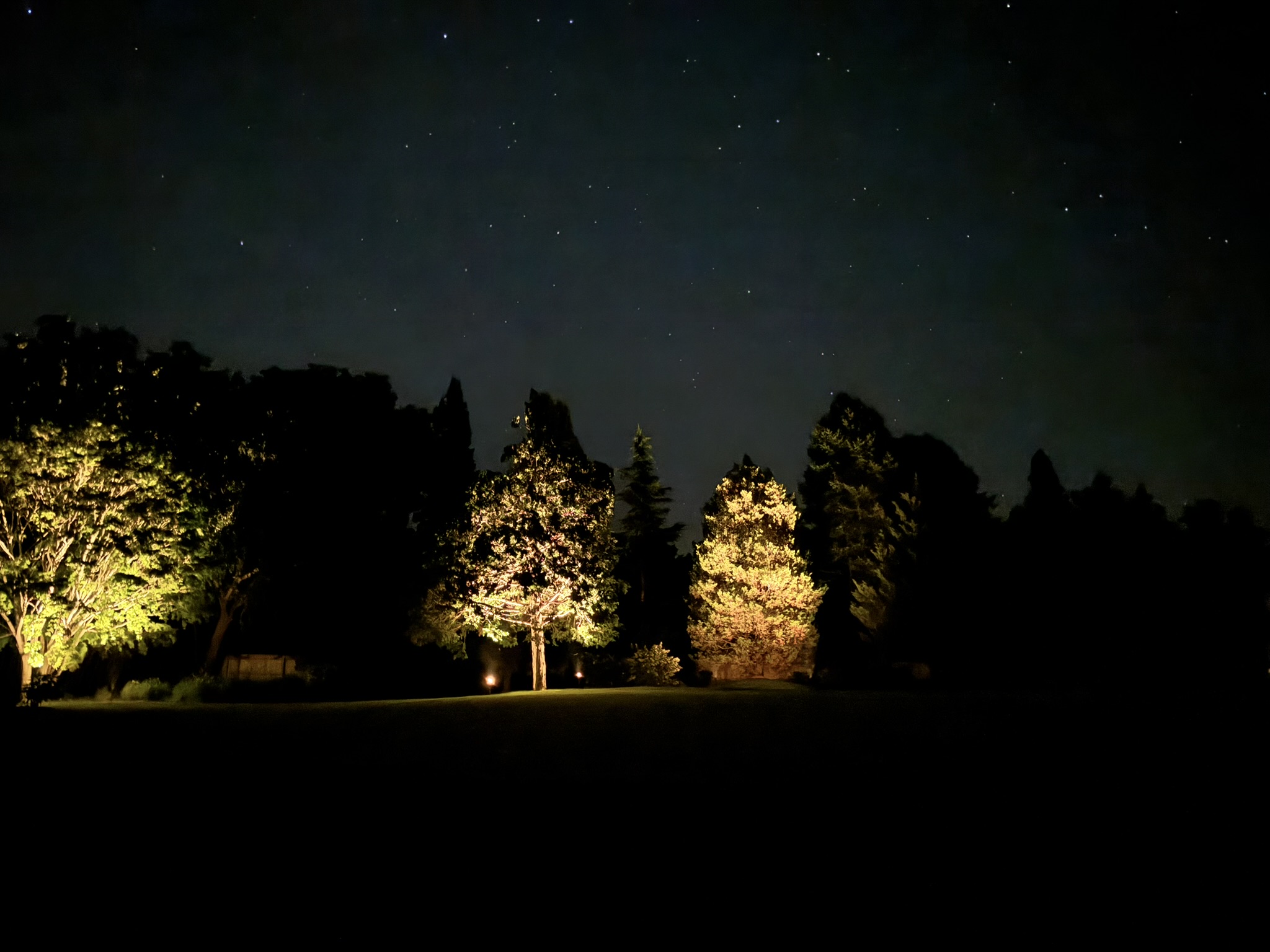
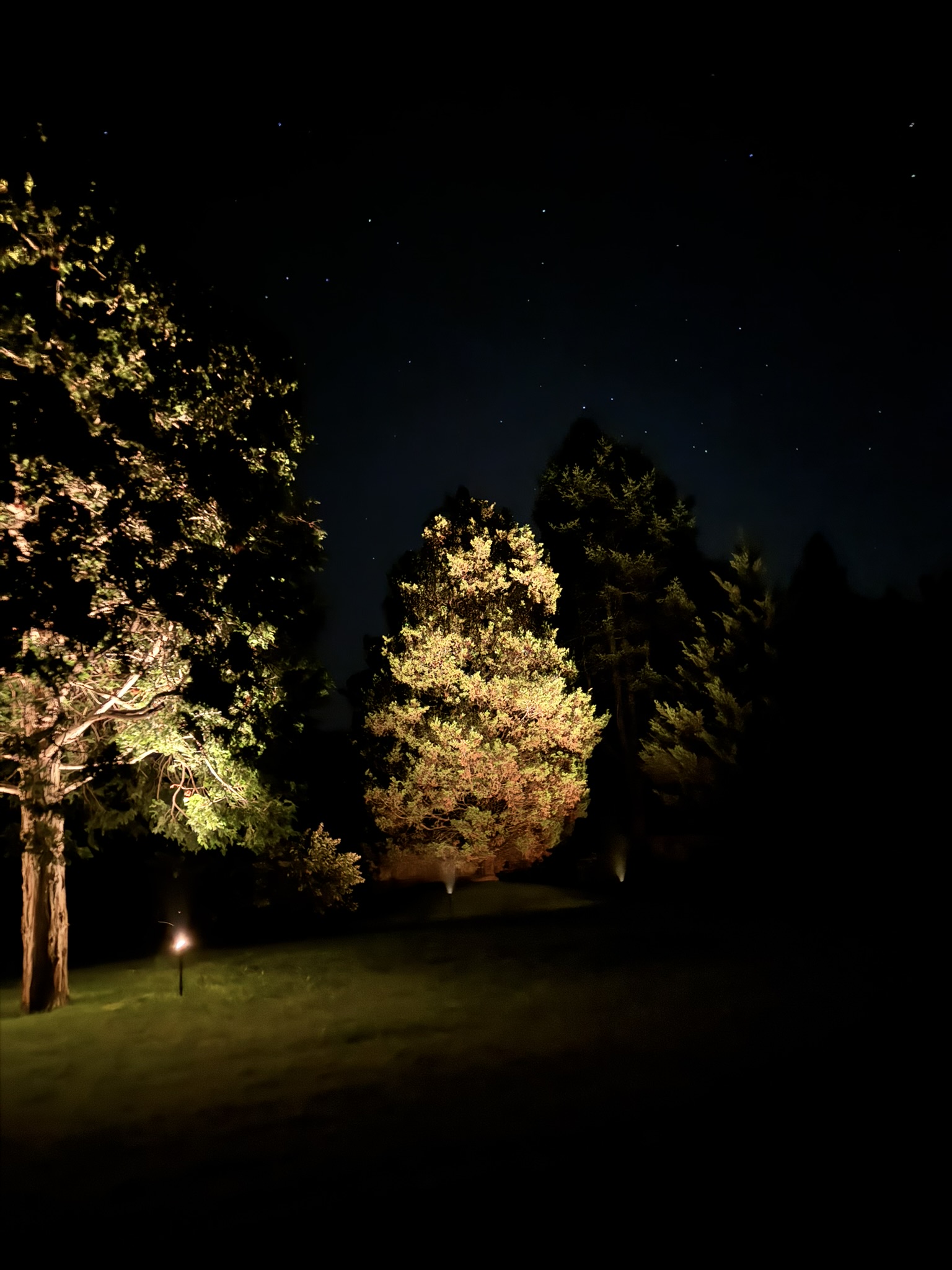
Perimeter lighting and taller-tree illumination extend the visual field beyond the immediate driveway and paths. The garden develops depth in the background, giving the property a more complete nighttime presence without exposing a row of visible fixtures or creating unnecessary glare.
The result is a nighttime environment where the trees, hedges, planting layers, and circulation routes remain legible, while darkness continues to play an important role in the composition.
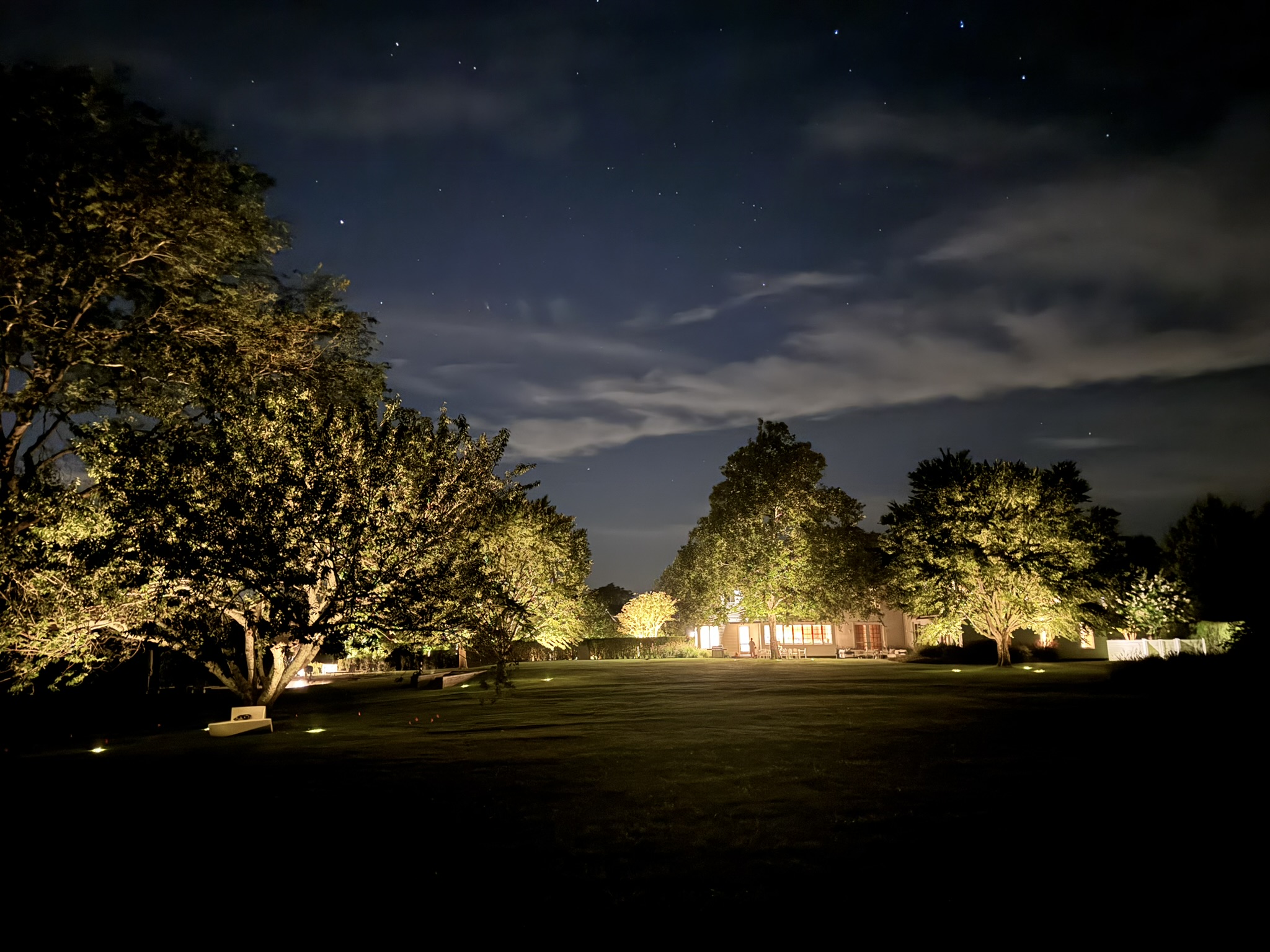
A backyard composition refined around the homeowner
With Phase One in place, the Water Mill property gained a composed nighttime presence from the first approach through the driveway and into the garden beyond.
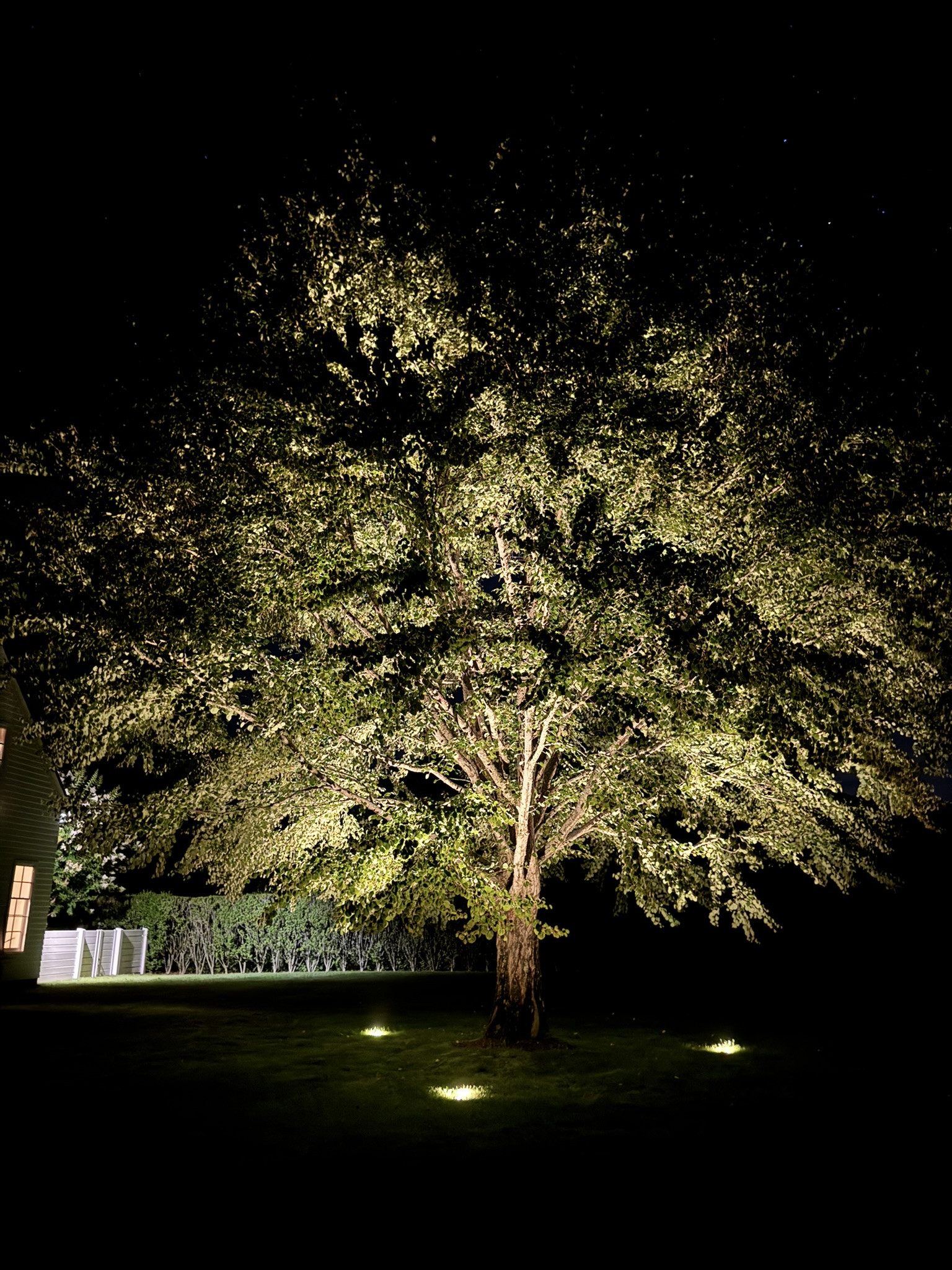
Phase Two began during the homeowner's nighttime review. The team revisited the backyard with the completed system in use and refined the final work around how the space felt after dark. Certain in-ground fixtures no longer felt right for the garden, so they were relocated into the trees and supported by smaller additions throughout the backyard.
This second phase changed the experience of the space. Light could come from within the canopy rather than from the ground, creating a softer composition that reflected the homeowner's preference for how fixtures were integrated into the landscape.
Two thoughtful phases, with room for the landscape to keep evolving.
Phase One created a clear and connected foundation. Phase Two refined its backyard expression. As planting grows and the property changes, Brilliance Care can help preserve the composition through ongoing inspection, aiming, cleaning, and thoughtful seasonal adjustments.