
LED Deck Lighting: Transform Your Hamptons Deck After Dusk
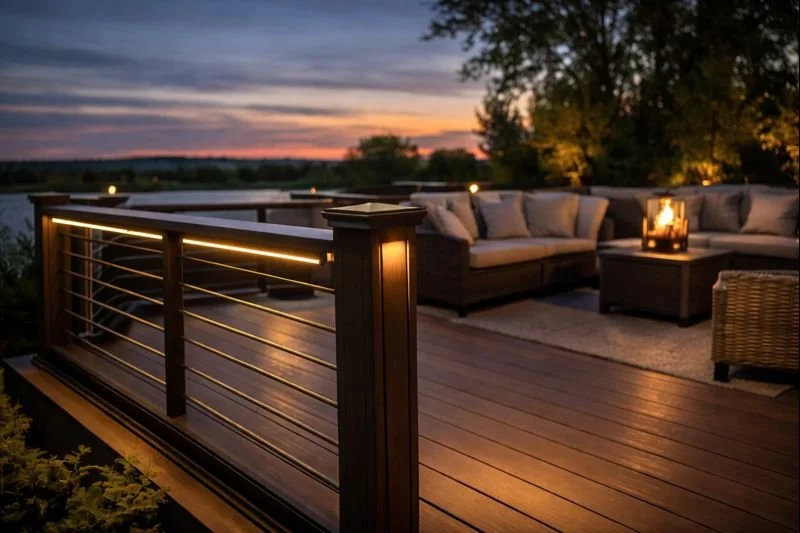
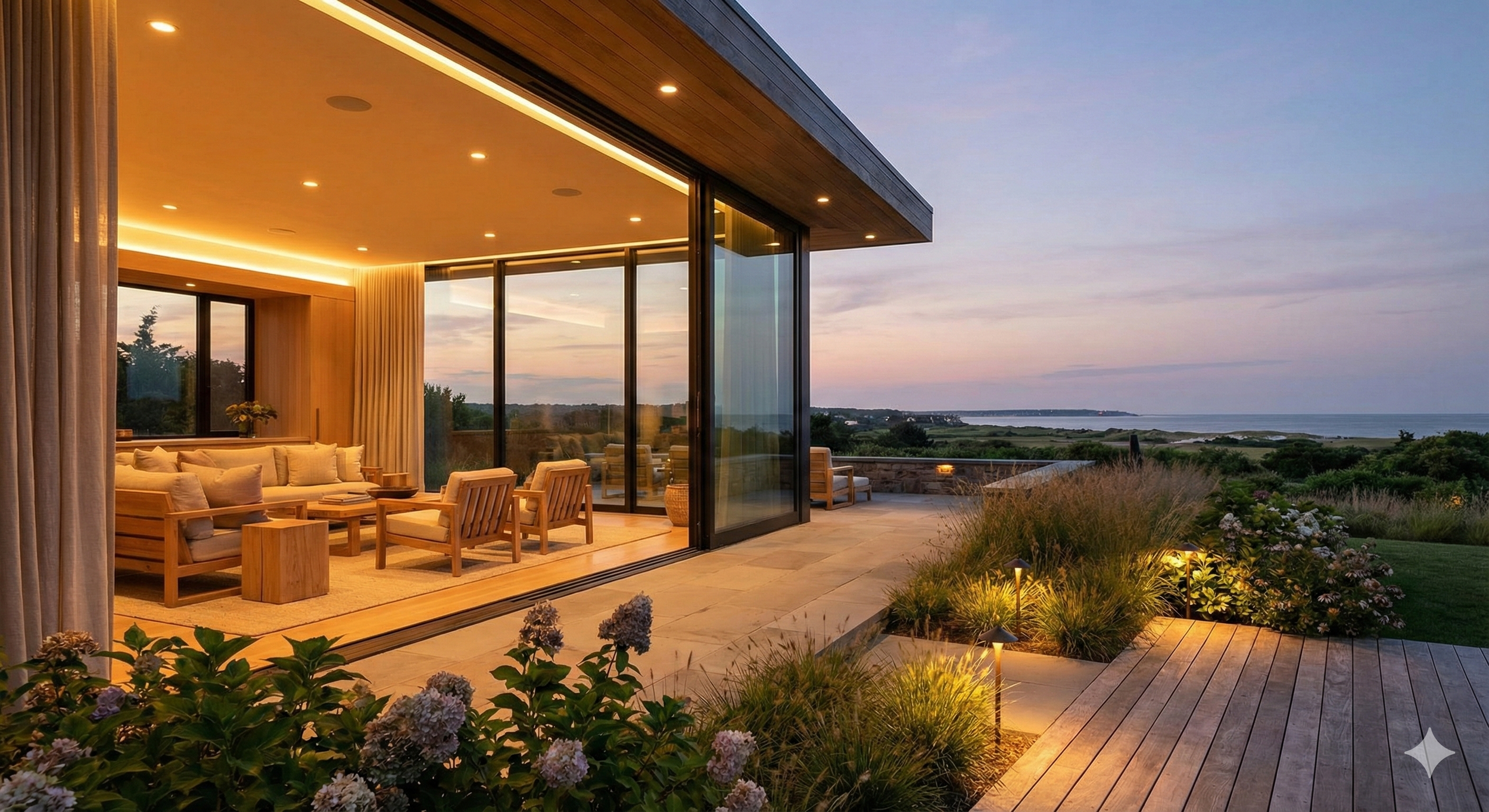
A well-lit deck turns a beautiful Hamptons summer evening into a luxury experience — safe, elegant, and made to be enjoyed long after the sun goes down. LED deck lighting offers an elegant and energy-efficient way to enhance outdoor living spaces. Providing soft, ambient illumination, it improves safety by clearly defining deck edges and steps while creating a warm, inviting atmosphere for evening gatherings. Durable and long-lasting, LED lights require minimal maintenance and can be seamlessly integrated into a variety of deck materials and designs, making them a smart choice for luxury outdoor lighting in the Hamptons and Manhattan.
Today, LED technology makes deck lighting more efficient, lower-maintenance, and more design-flexible than ever. In this guide we’ll walk through the best LED fixtures for decks, placement and design tips, control options, installation and maintenance considerations, and realistic cost ranges so you can plan your project with confidence.
Why LED Is the Smart Choice for Deck Lighting
Energy efficient — LEDs use far less electricity than incandescent equivalents, saving energy over the long term.
Long life & low maintenance — many LEDs last 25,000–50,000 hours, meaning fewer bulb changes.
Better color options — warm color temperatures (2700K–3000K) create welcoming evenings while high CRI LEDs keep colors true.
Compact, versatile fixtures — tiny strip lights, recessed pucks, and discrete step lights fit almost anywhere.
Dimmable & smart compatible — integrate with timers, dimmers, and home automation for scene control.
Because the Hamptons are coastal, choose fixtures rated for salt air and moisture (stainless finishes, marine-grade housings, IP65 or higher).

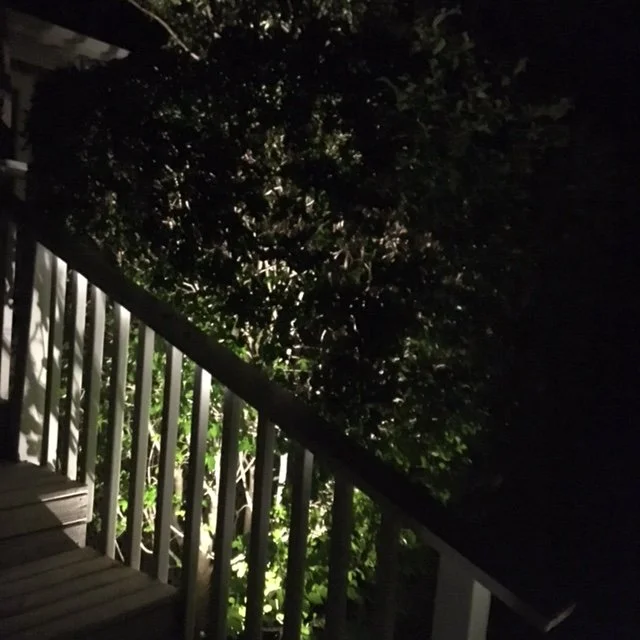
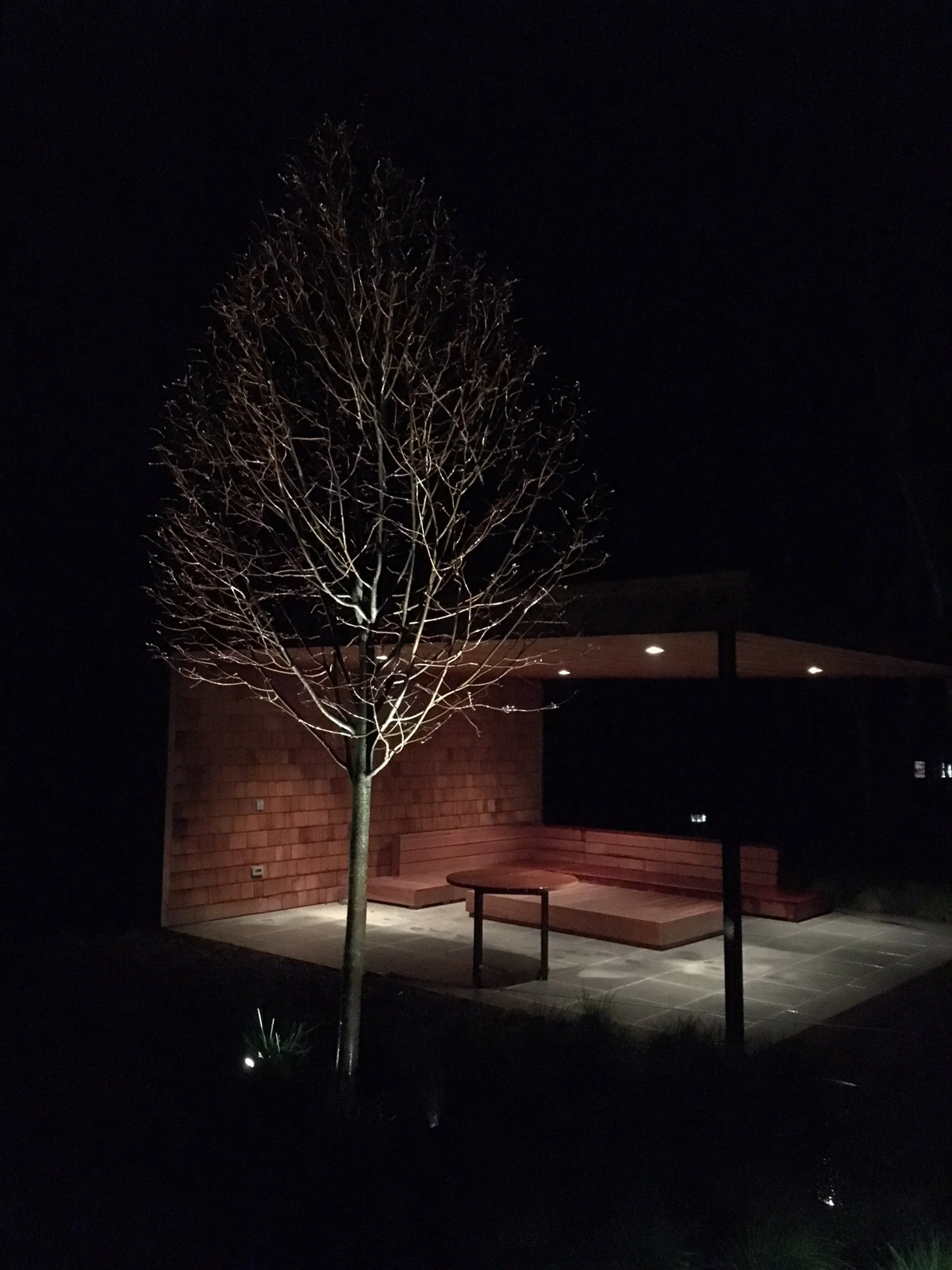
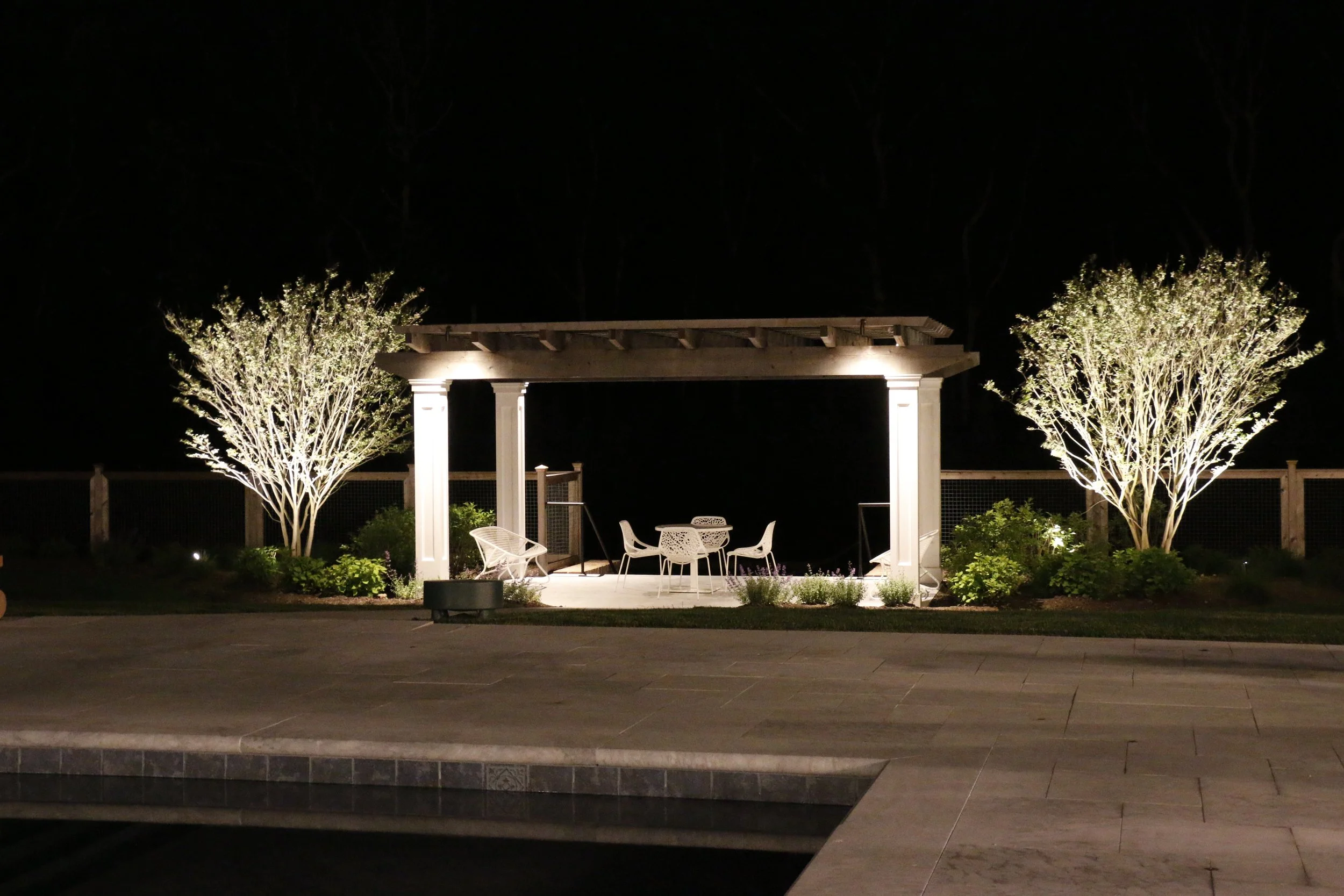
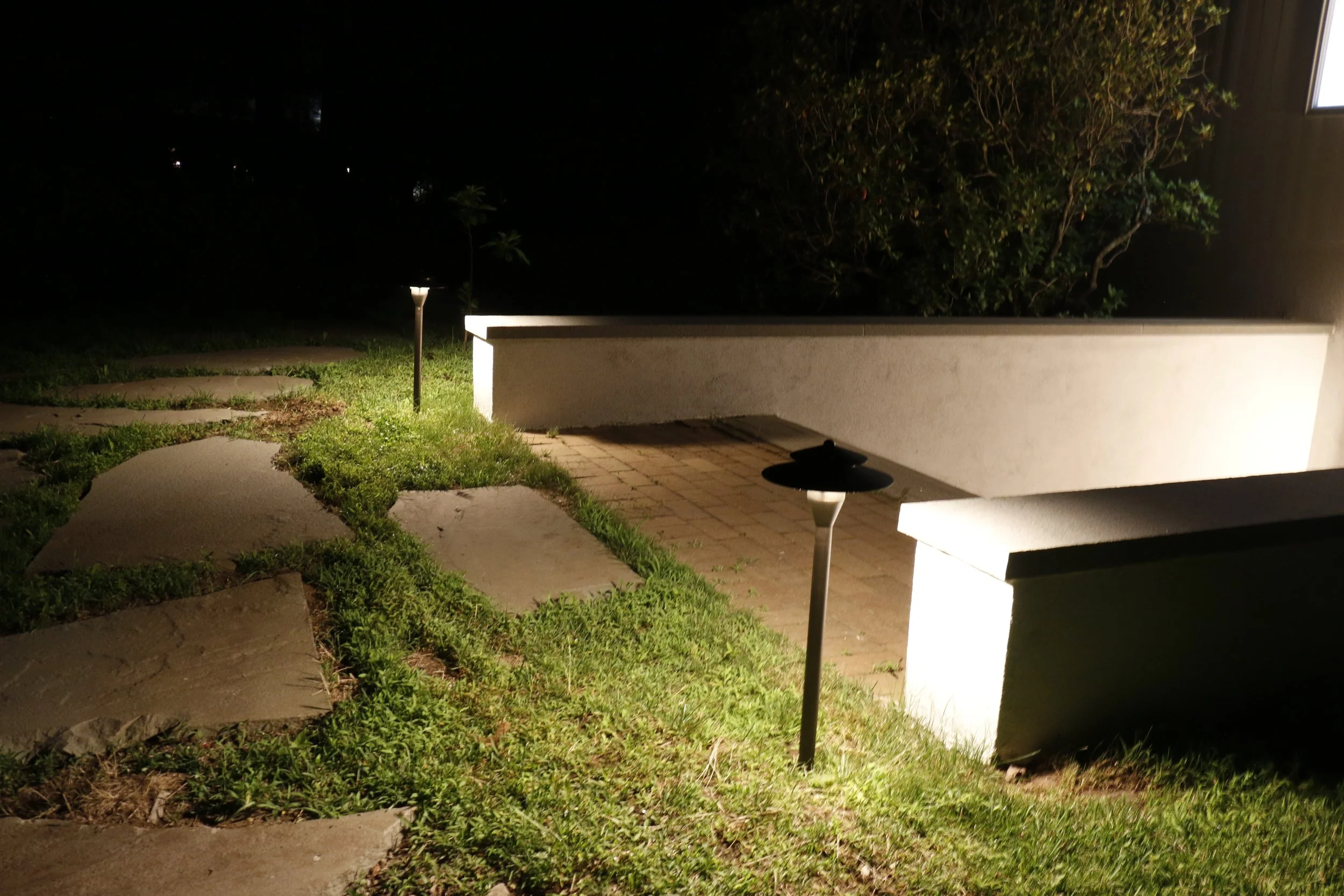
Popular LED Deck Lighting Fixtures & Uses
Recessed deck lights (puck lights): Installed flush in deck boards for soft, low-glare ambient light. Great for outlining edges and stairs.
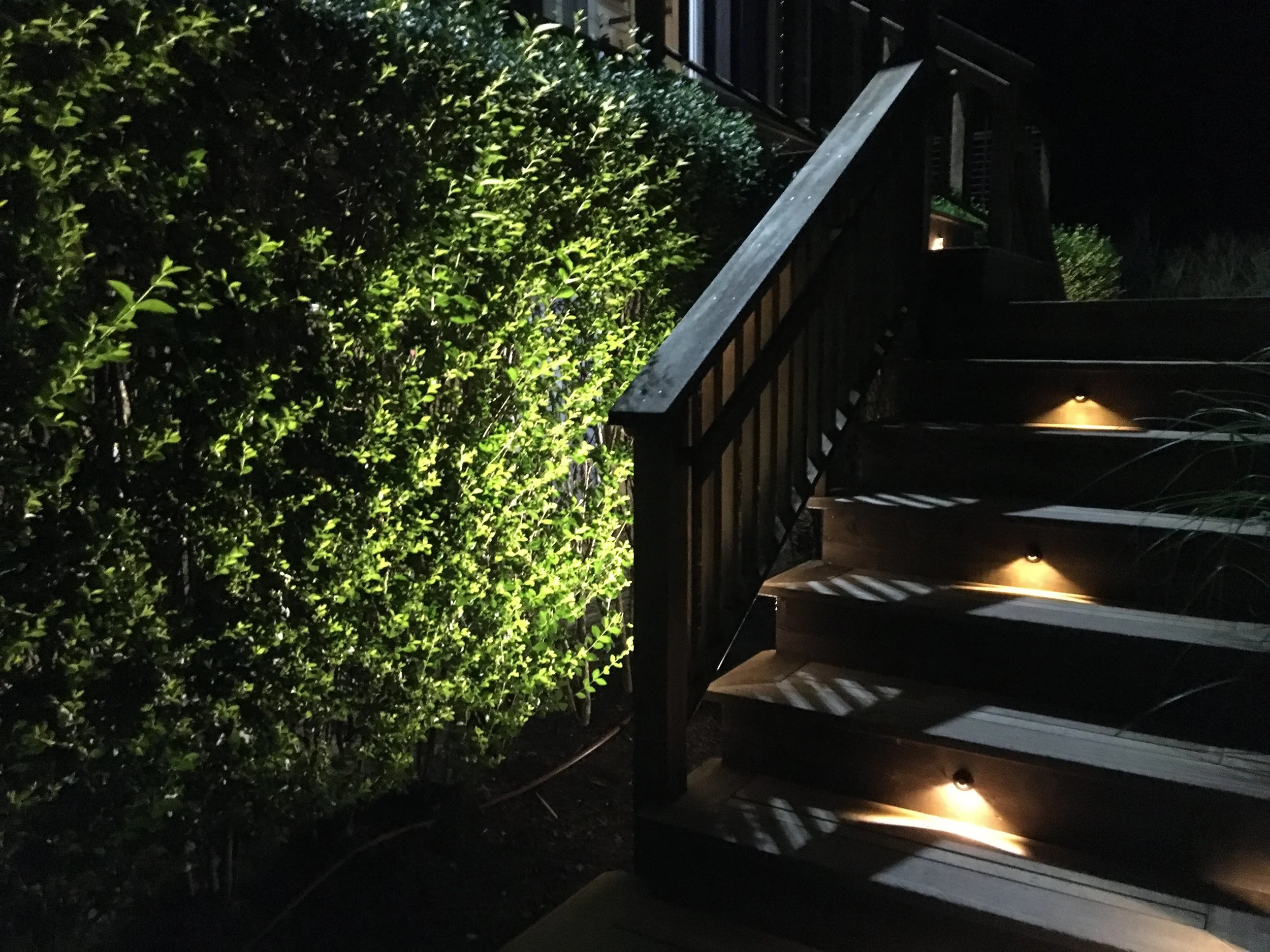
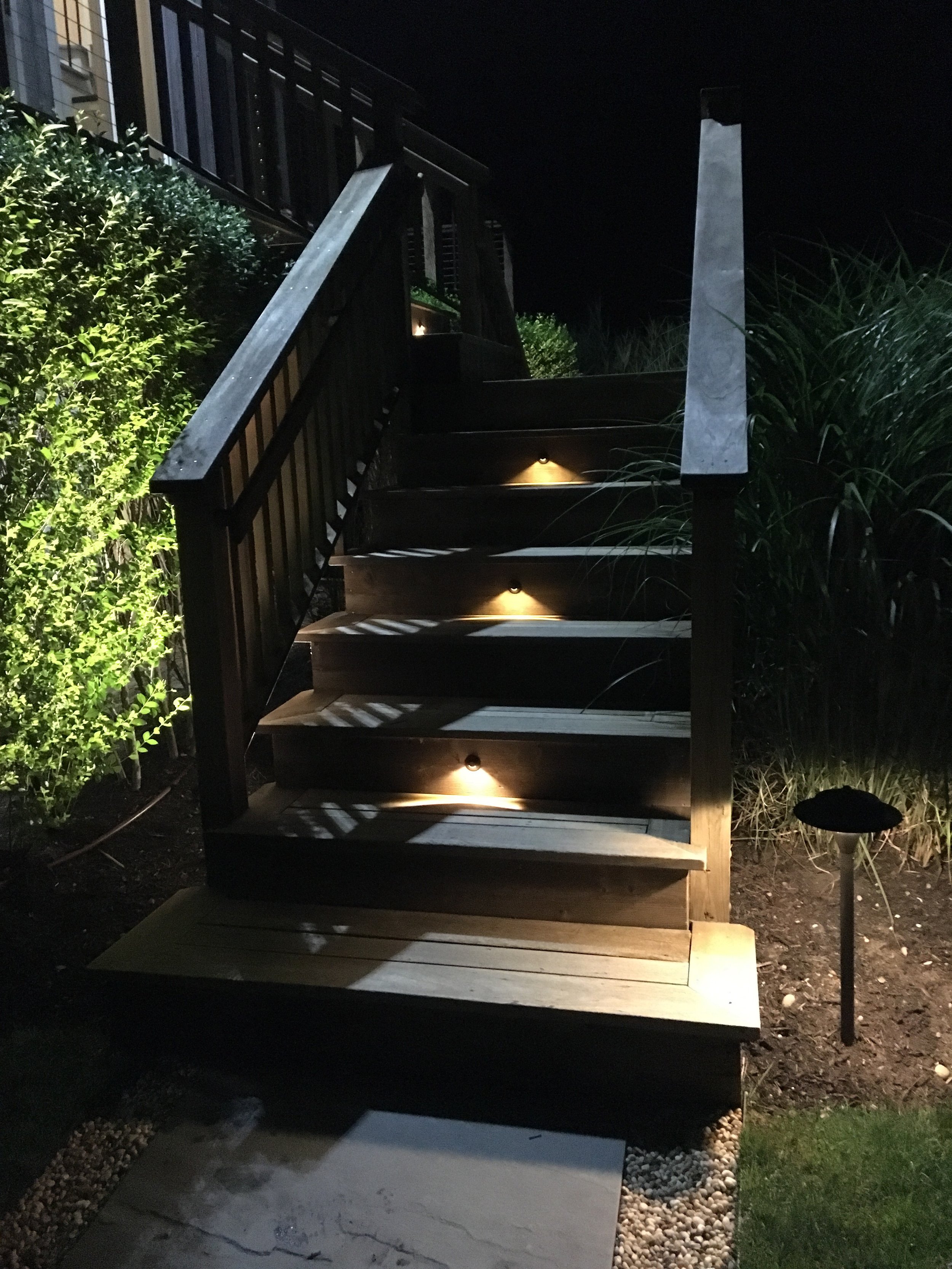
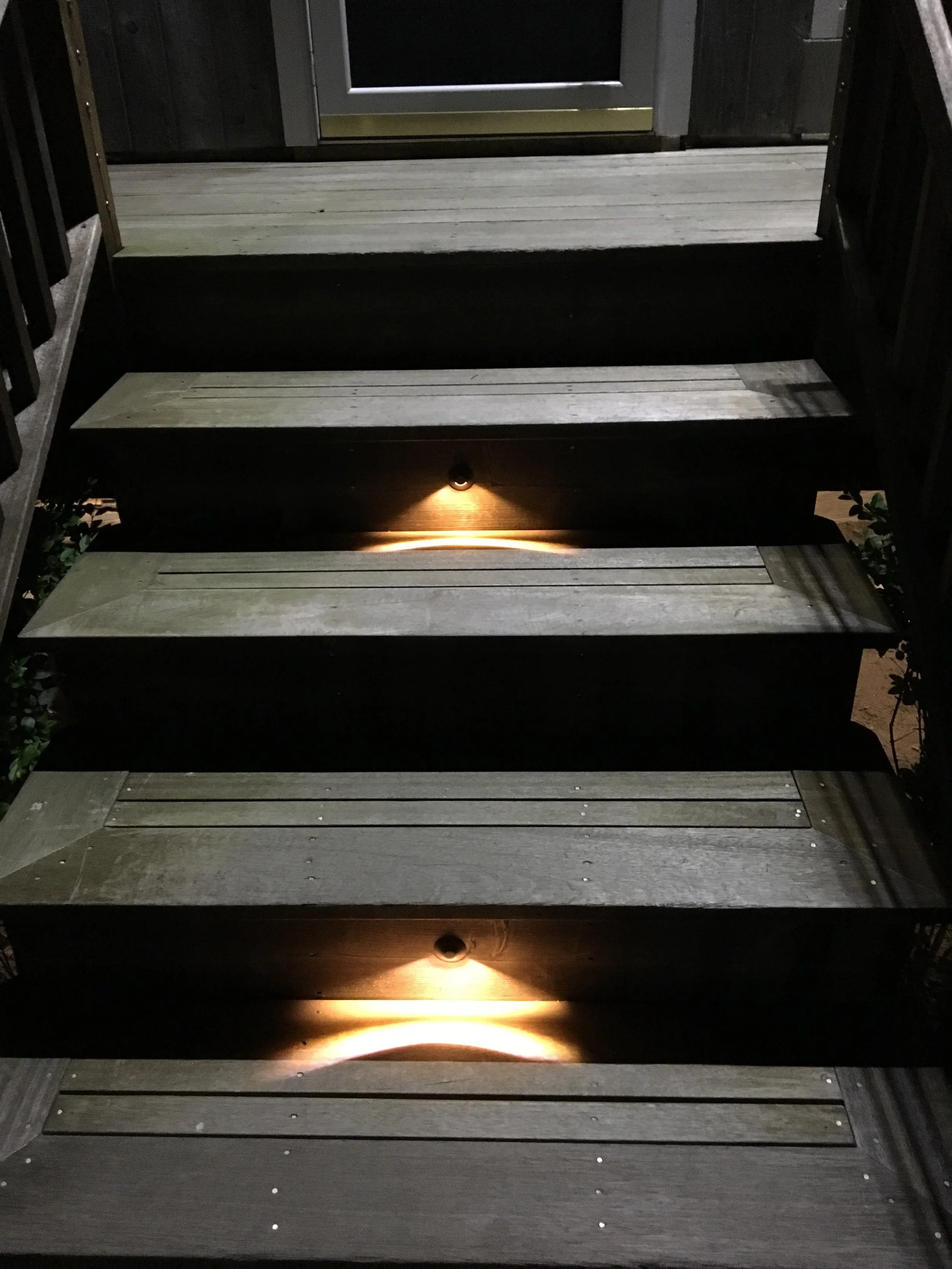
Step & riser lights: Increase safety on multi-level decks. Place centered on risers or beneath nosing.
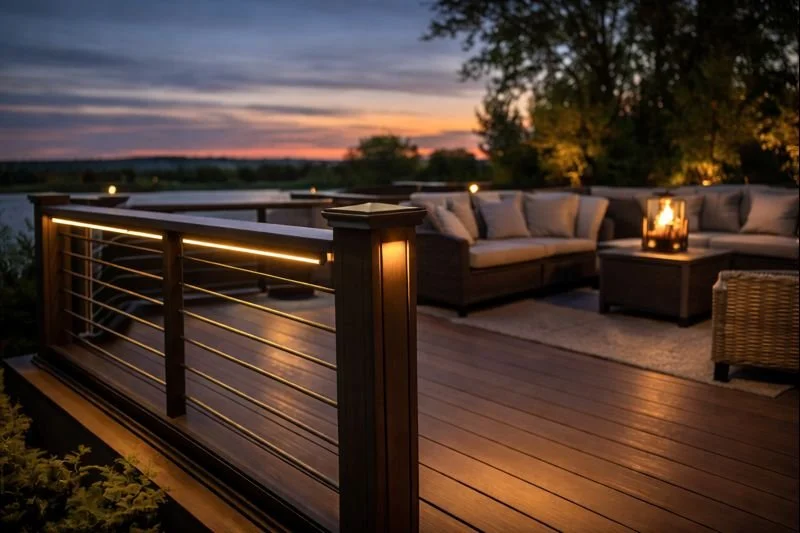
Post-cap lights: Decorative and functional — provide a luxury pool of light around posts and railings.
Rail/under-rail lights: Low, concealed illumination along railings to accent lines without glare.
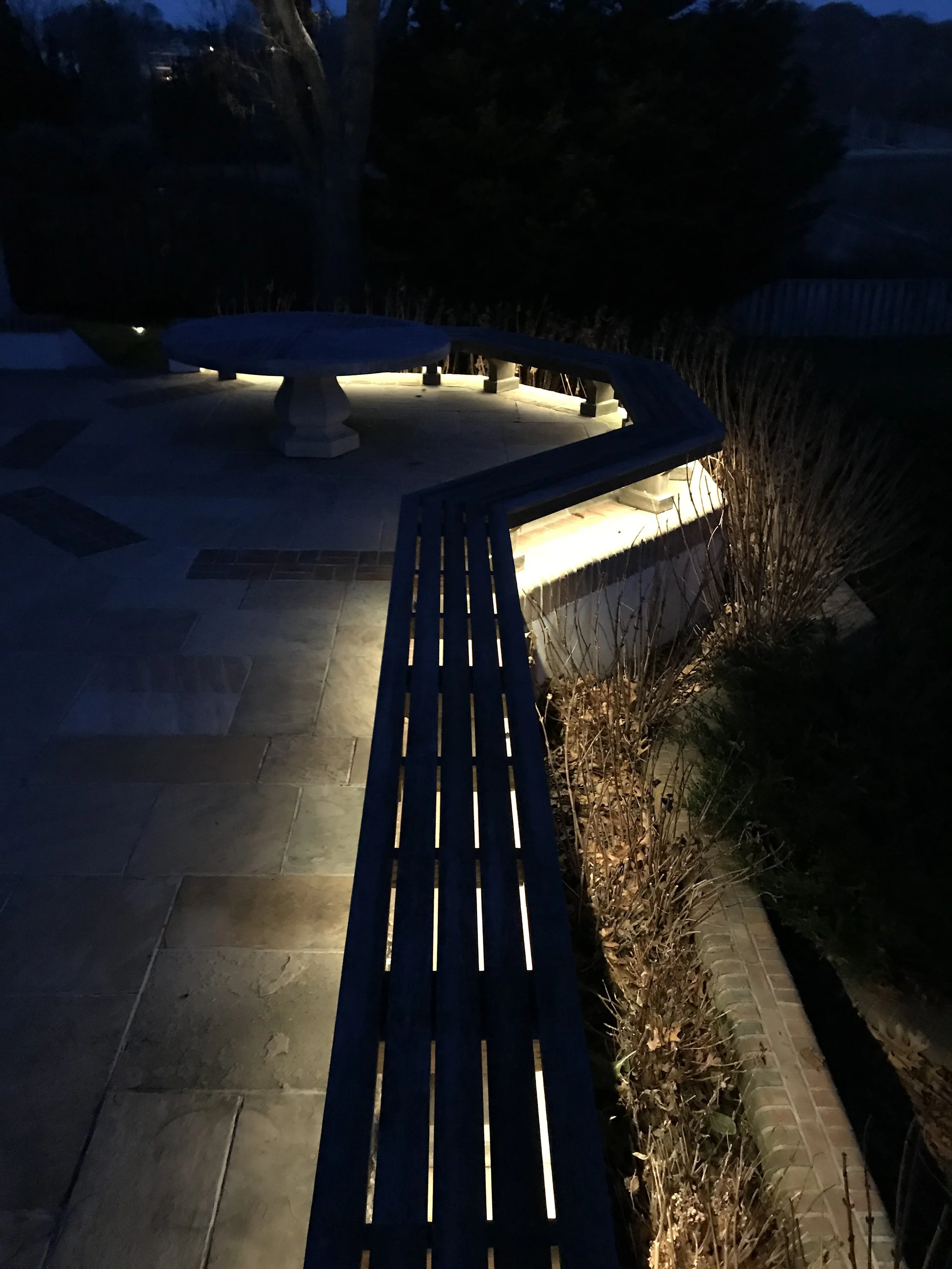
Strip/rope LEDs: Flexible for under benches, beneath steps, or beneath counters — provide even wash lighting.
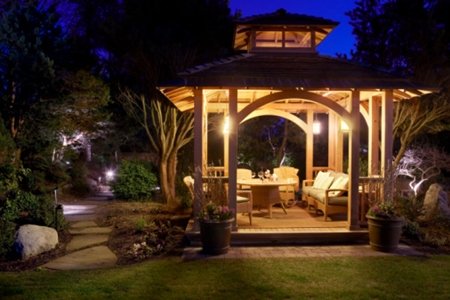
Spot/accent lights: Highlight planters, sculptural elements, or seating nooks. Use narrow beams and lower lumen outputs to avoid overpowering the scene.
Floods / area lights: For large entertaining decks; use carefully with dimming to control brightness.
Tip: For decks near water (docks, pools) use fully sealed, marine-rated fixtures and stainless hardware.
Design & Placement Best Practices
Layer your lighting: Combine ambient (recessed, strip), task (step/rail), and accent (spots) to build depth.
Warm color temperature: 2700K–3000K produces a cozy, Hamptons-appropriate glow; consider 2200K amber for very warm “dusk” looks.
Control glare: Aim fixtures downward or use shields. Conceal sources and avoid placing bright lights at eye level.
Spacing & lumen guidance: Small recessed pucks: 100–250 lumens each (spacing 3–6 ft depending on beam). Step lights: 50–150 lumens. Accent spots: 150–400 lumens with narrower beams. (Adjust to taste.)
Consider beam angles: Narrow beams (15°–30°) for accents; wider beams (60°+) for area wash.
Follow the deck lines: Illuminate seating areas, stairs, and access paths first. Accent furniture and planters second.
Respect neighbors & dark sky: Aim light inward/downward, use dimming, and avoid excessive spillover.
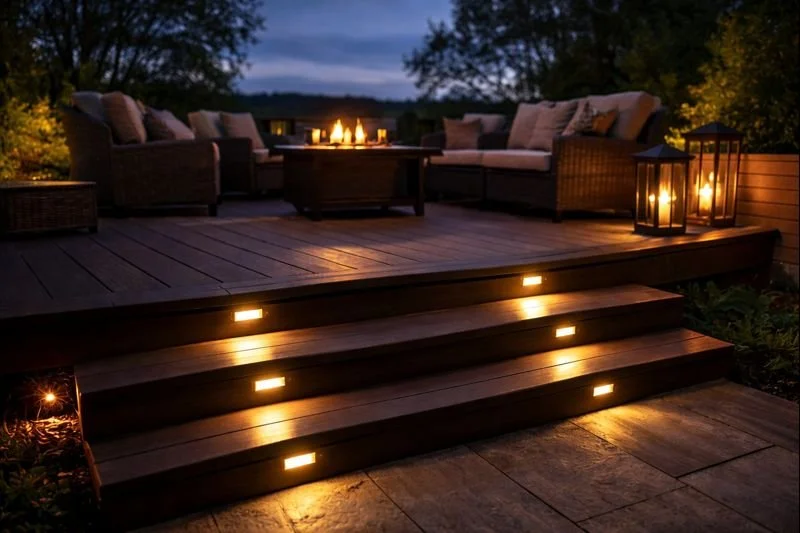
Stair lighting
Power & Control Options
Low-voltage 12V systems: Most common for deck lighting — safer, flexible, and compatible with many fixtures. Require a transformer sized for total fixture load.
Line voltage: Rare for embedded deck fixtures — mostly used for larger flood/area lights.
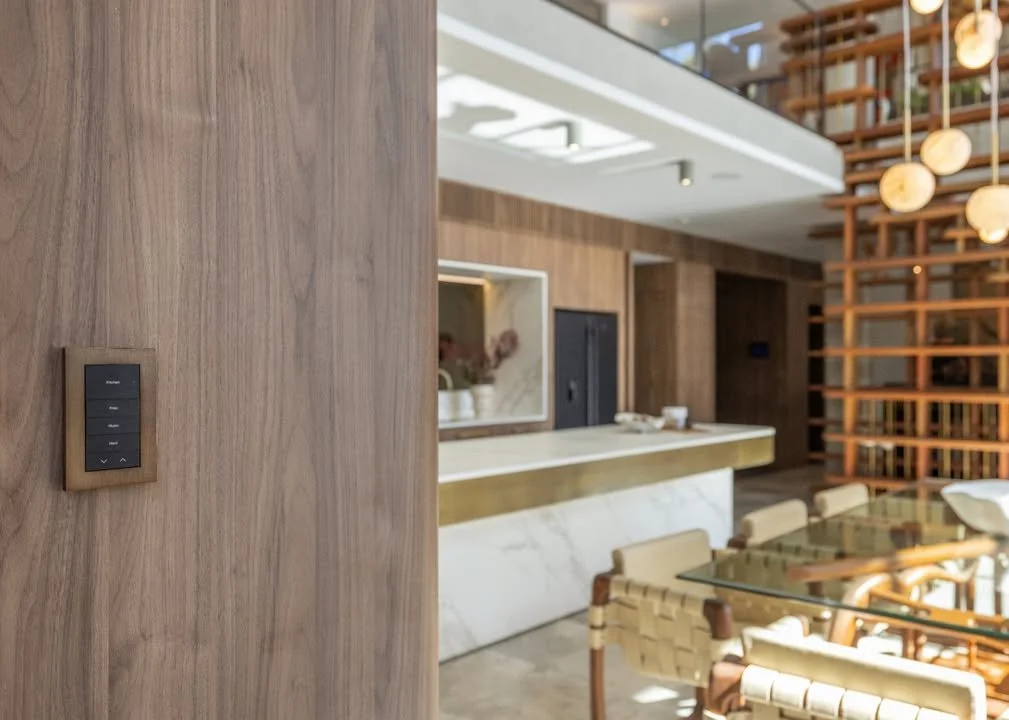
Smart controls: Wi-Fi or Z-Wave dimmers, scheduling, and scene control allow you to set “entertain” and “relax” modes.
Timers & sensors: Timers for automatic dusk-to-dawn operation; motion sensors for safety or security lighting.
Battery/solar: Useful for temporary or remote installs, but lower light output and reliability vs hardwired LEDs.
Note:
Home automation integration (Control4, Savant, and Josh AI) is frequently compatible with LED drivers and dimmers, providing seamless control and customization. This feature is especially beneficial for upscale Hamptons properties, offering sophisticated lighting solutions that enhance both ambiance and convenience. Integrating luxury outdoor lighting with smart home systems enables homeowners to tailor lighting scenes, schedule operations, and adjust brightness remotely, ensuring an elegant and effortless outdoor environment.
