
Refined restraint in lighting
Good outdoor lighting rarely calls attention to itself.
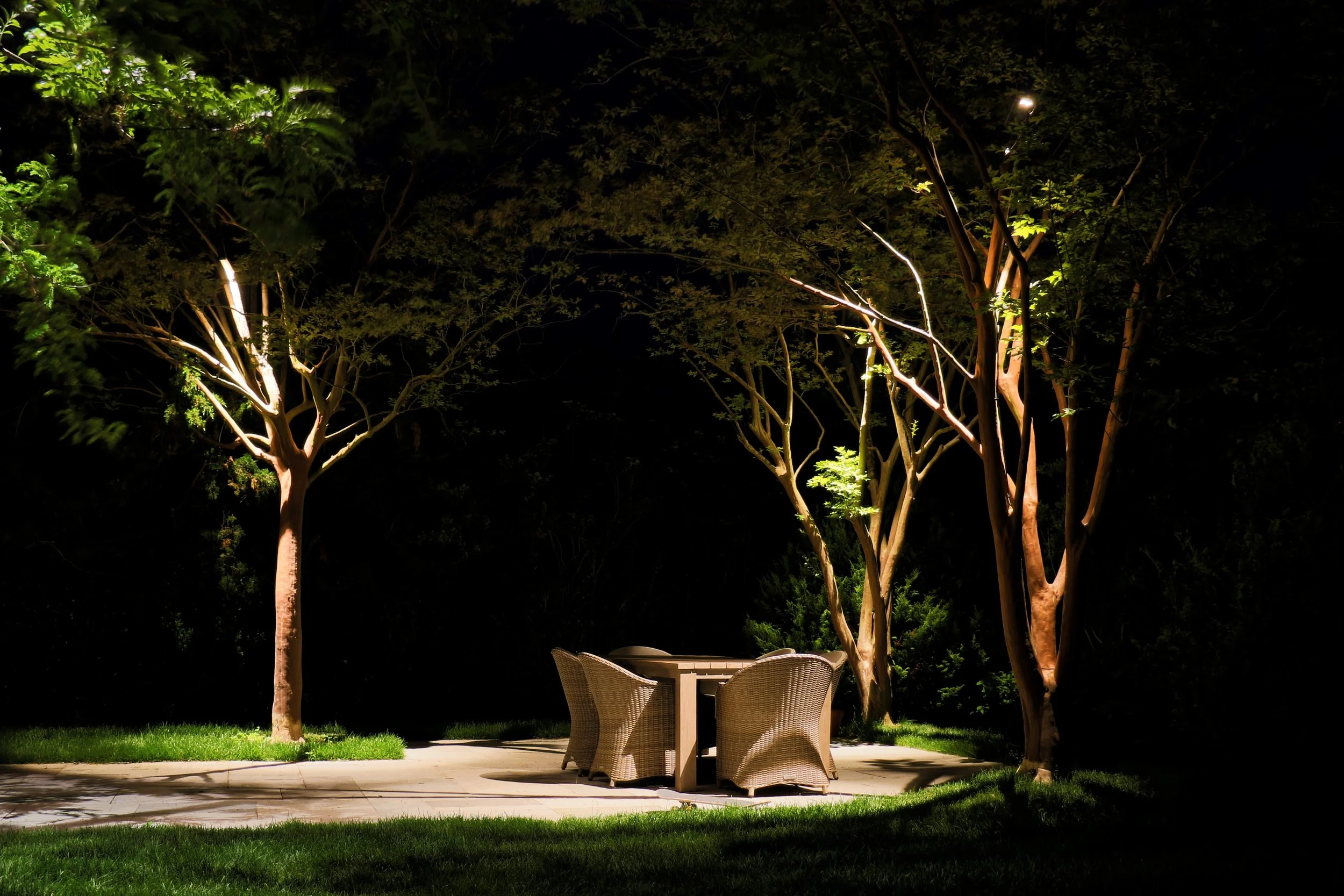
The most successful landscape lighting feels natural — soft paths, quiet architectural accents, subtle warmth in the trees, and a property that feels more comfortable and inviting after dark without appearing overly lit.
At Hamptons Landscape Lighting, restraint is part of the design process. We focus on balance, atmosphere, and long-term reliability rather than excessive brightness or dramatic effects that quickly feel dated.
That same philosophy extends to how systems are built behind the scenes.
Through our relationship with sister company Home Technology Experts (HTE), lighting systems are designed with careful attention to transformer sizing, voltage management, wire routing, and long-term serviceability — details that directly affect how the system performs over time.
The result is outdoor lighting that feels effortless night after night:
• Consistent light levels
• Clean fixture placement
• Reliable operation
• Minimal maintenance
• A calm, polished nighttime appearance
When done properly, outdoor lighting should enhance the property without competing for attention.
That balance is what we aim for in every installation.
Frequently Asked Questions About Landscape Lighting Design
What makes outdoor lighting feel high-end?
High-end landscape lighting is usually defined by what you do not immediately notice.
The most successful systems feel balanced, quiet, and natural after dark. Rather than overwhelming the property with brightness, thoughtful lighting creates atmosphere through subtle layering, soft transitions, and carefully controlled focal points.
Well-designed outdoor lighting should make a property feel more inviting, more comfortable, and easier to navigate at night without drawing attention to the fixtures themselves.
In most cases, restraint creates a more timeless result than dramatic effects or excessive brightness.
Why do some landscape lighting systems look harsh or overdone?
Many outdoor lighting systems are designed around fixture quantity or brightness rather than composition and balance.
Common problems include:
Excessive uplighting
Uneven brightness throughout the property
Poor beam control
Overexposed architectural surfaces
Glare visible from windows or walkways
Lighting every tree or planting equally
Inconsistent fixture color temperatures
These systems may appear impressive initially but often become visually tiring over time.
A more refined approach focuses on selective lighting, contrast, and atmosphere instead of maximum illumination.
What is the goal of landscape lighting?
The goal is not simply to make the property brighter.
A well-designed lighting system should support how the property feels and functions after dark.
That often includes:
Creating warmth around gathering areas
Improving nighttime navigation
Highlighting architectural details
Adding depth to landscaping
Extending the usability of outdoor spaces
Improving overall comfort and security
Good lighting supports the property quietly without competing for attention.
How bright should outdoor lighting be?
In most residential environments, less light usually produces a better result.
Outdoor lighting should feel comfortable to the eye, not overly illuminated. Excessive brightness can flatten the landscape, create glare, and reduce the sense of depth that makes nighttime environments feel inviting.
The most effective systems use controlled light levels with intentional contrast between illuminated and non-illuminated areas.
A property should feel naturally balanced at night rather than uniformly bright.
Why is fixture placement so important?
Fixture placement directly affects how natural the lighting appears.
Even high-quality fixtures can produce poor results if they are installed without careful consideration for beam spread, viewing angles, plant growth, or architectural sightlines.
Thoughtful placement helps achieve:
Softer light distribution
Reduced glare
Better visual balance
Cleaner nighttime composition
More discreet fixture visibility during the day
In many cases, proper placement matters more than fixture quantity.
What areas of a property should typically be illuminated?
Every property is different, but common lighting priorities include:
Entry paths and walkways
Driveways and arrival areas
Architectural accents
Mature trees and landscaping
Outdoor entertaining spaces
Perimeter transitions
Not every area needs illumination. Leaving certain spaces darker often creates a more refined nighttime experience.
Should every tree or architectural feature be lit?
No.
Selective lighting usually creates a stronger visual result than illuminating everything equally.
Part of thoughtful landscape lighting design involves deciding what should remain visually quiet so that focal areas feel intentional and balanced.
Over-lighting every feature often reduces depth and visual hierarchy across the property.
What color temperature is best for landscape lighting?
Most high-end residential landscape lighting systems use warmer color temperatures because they feel more natural and comfortable in outdoor environments.
Warm lighting typically complements:
Natural stone
Wood textures
Plant material
Traditional architecture
Coastal properties
Outdoor entertaining spaces
Cooler color temperatures often feel overly harsh or commercial in residential settings.
The goal is to create warmth and atmosphere rather than clinical brightness.
Why does transformer sizing matter in outdoor lighting?
Transformer sizing plays a major role in long-term system reliability and lighting consistency.
An improperly sized transformer can lead to:
Uneven brightness
Premature fixture failure
Reduced LED lifespan
Expansion limitations later
At Hamptons Landscape Lighting, systems are designed with careful attention to transformer capacity, load balancing, and future serviceability to help maintain consistent performance over time.
What is voltage drop in landscape lighting?
Voltage drop occurs when electrical power weakens over long wire runs, causing fixtures farther from the transformer to appear dimmer or perform inconsistently.
Without proper system planning, voltage drop can negatively affect both appearance and reliability.
Managing voltage properly requires thoughtful:
Transformer sizing
Wire selection
Load distribution
Circuit planning
Fixture grouping
These infrastructure details are often invisible to homeowners but significantly affect long-term system quality.
Why does wire routing matter in a landscape lighting system?
Wire routing affects both performance and serviceability.
Well-planned wire paths help:
Maintain consistent voltage
Protect wiring from damage
Simplify future maintenance
Reduce troubleshooting complexity
Support future landscape changes
Poorly planned systems may become difficult to service or modify over time.
A clean lighting design should also include clean infrastructure behind the scenes.
How long should a professionally designed lighting system last?
A properly designed and maintained landscape lighting system should perform reliably for many years.
Long-term performance depends on factors such as:
Fixture quality
Environmental conditions
Transformer sizing
Installation methods
Voltage management
Ongoing maintenance
Systems designed with long-term serviceability in mind tend to age more gracefully and require fewer corrective adjustments over time.
Does landscape lighting require maintenance?
Yes — although well-designed systems generally require minimal maintenance compared to poorly planned installations.
Typical maintenance may include:
Fixture adjustments
Lens cleaning
Trimming surrounding plant growth
System inspections
Timer or control updates
Occasional fixture replacement
Outdoor environments naturally change over time, especially as landscaping matures.
Periodic maintenance helps preserve the original lighting intent and overall balance of the property.
Can outdoor lighting be integrated with smart home systems?
Yes.
Landscape lighting can often be integrated into broader home automation and control systems for scheduling, remote access, scene control, and seasonal adjustments.
Through our relationship with Home Technology Experts (HTE), outdoor lighting systems can be coordinated alongside:
Architectural lighting
Outdoor audio systems
Security systems
Motorized shading
Smart home controls
Property-wide automation systems
The goal is coordinated operation without unnecessary complexity.
Is brighter outdoor lighting more secure?
Not necessarily.
Excessive brightness can actually create glare and deep shadows that reduce visibility.
A more effective approach combines:
Balanced illumination
Layered perimeter lighting
Strategic focal lighting
Consistent visibility around key transitions
Good security lighting should feel intentional and controlled rather than overwhelming.
What makes a landscape lighting system feel timeless?
Timeless lighting usually comes from restraint.
Systems that rely heavily on trends, dramatic color effects, or excessive brightness often feel dated relatively quickly.
A more enduring approach focuses on:
Warmth
Balance
Architectural clarity
Natural nighttime atmosphere
Subtle visual layering
Consistent light quality
The goal is for the lighting to continue feeling appropriate and comfortable for years to come.
Why does early planning matter for outdoor lighting?
The best landscape lighting systems are typically planned early alongside architecture, landscaping, hardscaping, and electrical infrastructure.
Early coordination allows for:
Cleaner fixture integration
Better wire routing
Improved transformer placement
Reduced visual clutter
More cohesive nighttime composition
Easier long-term serviceability
Lighting performs best when it is treated as part of the overall property design rather than an afterthought.
What is the difference between decorative lighting and professional landscape lighting design?
Decorative lighting often focuses on fixtures themselves.
Professional landscape lighting design focuses on the nighttime experience of the property as a whole.
That includes:
Visual composition
Balance and contrast
Fixture concealment
Long-term reliability
Environmental integration
Ease of maintenance
Real-world usability
The fixtures are simply tools used to shape the atmosphere.
Why does Hamptons Landscape Lighting emphasize restraint in design?
We believe outdoor lighting should support the property quietly and naturally.
A restrained approach tends to produce a more elegant and timeless nighttime environment while avoiding the visual fatigue that often comes from over-lighting.
Our focus is on:
Atmosphere over brightness
Balance over excess
Reliability over unnecessary complexity
Long-term performance over short-term visual impact
When done properly, landscape lighting should feel effortless night after night.
Final Thoughts
The best outdoor lighting systems are rarely the ones demanding attention.
They are the systems that quietly improve how a property feels after dark — creating warmth, comfort, depth, and usability through thoughtful design and disciplined execution.
At Hamptons Landscape Lighting, we approach every project with careful attention to atmosphere, infrastructure, and long-term reliability so the lighting remains calm, polished, and consistent for years to come.