
How We Design Landscape Lighting: From the View Inside to the Final Nighttime Aiming
A successful landscape-lighting system is not simply a collection of fixtures placed around a property. It is a carefully planned composition—one that considers architecture, landscape, movement, views, atmosphere, control, and long-term performance.
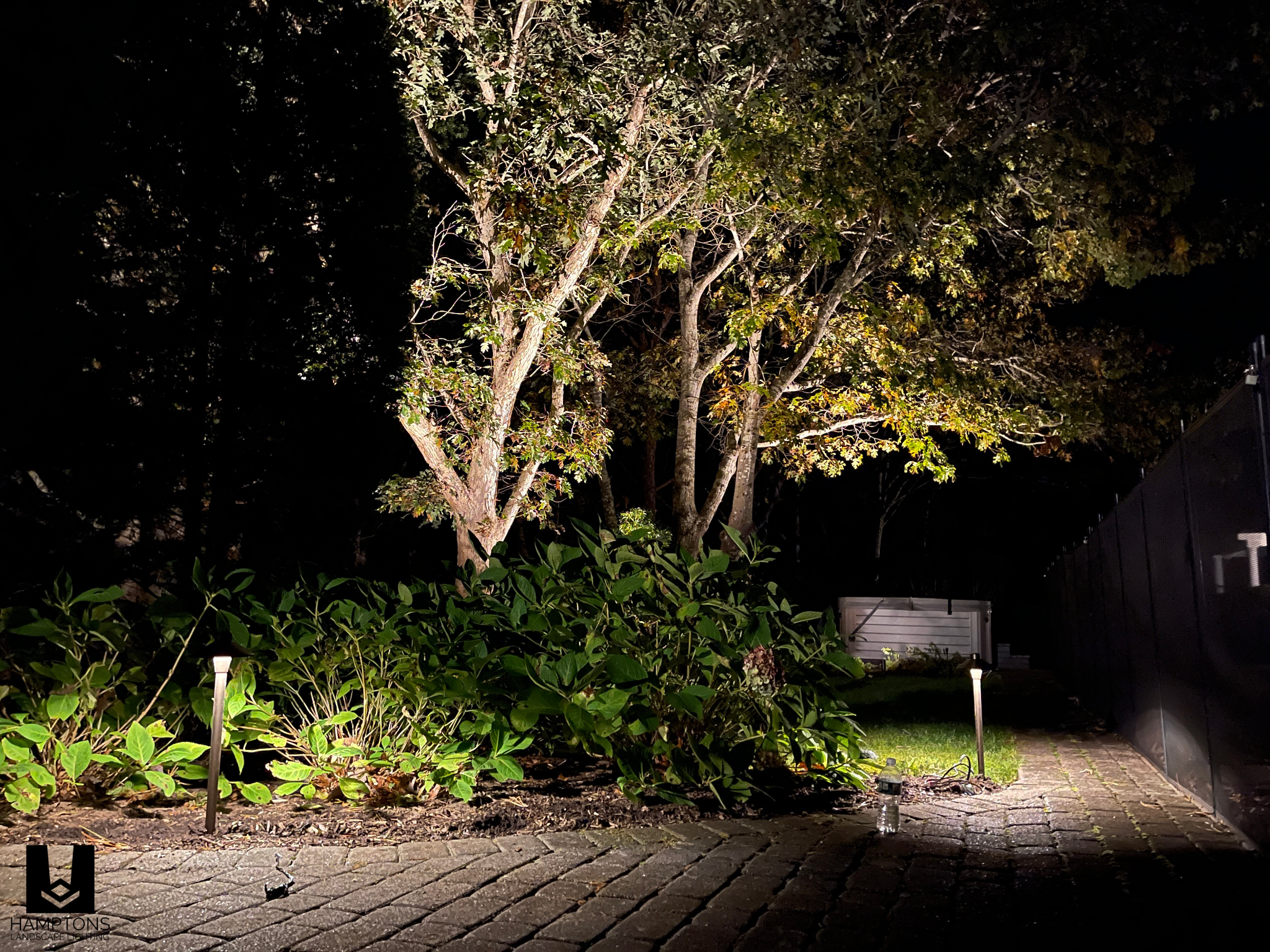
At Hamptons Landscape Lighting, we approach outdoor lighting as its own design discipline. The process begins well before installation and continues after every fixture has been placed. We study how the property is experienced, document how the light should behave, coordinate with the broader project team, and refine the finished system after dark.
The objective is not to make a property brighter. It is to reveal what matters, soften what does not, and create an exterior environment that feels comfortable, cohesive, and effortless to live with.
Landscape Lighting Is a Design Discipline
Landscape lighting is sometimes treated as a final landscaping task: select fixtures, place them near important plantings, connect a transformer, and turn the system on.
That approach may illuminate the property, but it does not necessarily create a considered nighttime experience.
Dedicated landscape-lighting design asks a different set of questions:
What should be visible from the main rooms of the home?
Which architectural and landscape elements should establish the visual hierarchy?
How should guests move from the driveway to the entrance?
Where could glare interfere with a seating area or interior view?
Which areas require functional light, and which should remain quiet?
How should the property feel during an intimate evening versus a large gathering?
How will the design change as the landscape matures?
The answers guide every decision that follows. Lighting is planned around how the property is seen and used—not simply around where fixtures can be installed.
We Begin With the Property, Not the Fixtures
Before specifying equipment, we study the relationship between the home, landscape, outdoor living spaces, and surrounding views.
A waterfront property in Southampton may call for restrained lighting that protects the darkness beyond the shoreline. A wooded East Hampton property may depend on carefully layered tree lighting to create depth. A Sag Harbor garden may require discreet path illumination and precise glare control because outdoor spaces are experienced at close range.
We consider arrival sequences, entrances, terraces, pools, gardens, specimen trees, sculptures, pathways, steps, docks, and property boundaries. Just as importantly, we identify areas that should not be illuminated.
Darkness is part of the design. It creates contrast, preserves atmosphere, and allows the illuminated elements to feel intentional.
“What sets HLL apart is that we approach landscape lighting as a true design discipline; not just placing fixtures, but thoughtfully shaping how the architecture, landscape, and property are experienced at night cohesively with every detail intentionally designed for that specific home and customized to how our clients live.”
Designing From Inside the Home Out
One of the most overlooked parts of landscape-lighting design is the view from inside the home.
Large windows and glass doors turn the landscape into a nighttime backdrop. Without exterior lighting, those windows can become dark reflective surfaces after sunset. With poorly planned lighting, occupants may see exposed lamps, uncomfortable glare, or isolated bright spots without a cohesive view.
We evaluate important sightlines from kitchens, living rooms, dining rooms, bedrooms, hallways, and primary entertaining spaces. Then we use exterior light to extend the visual experience beyond the glass.
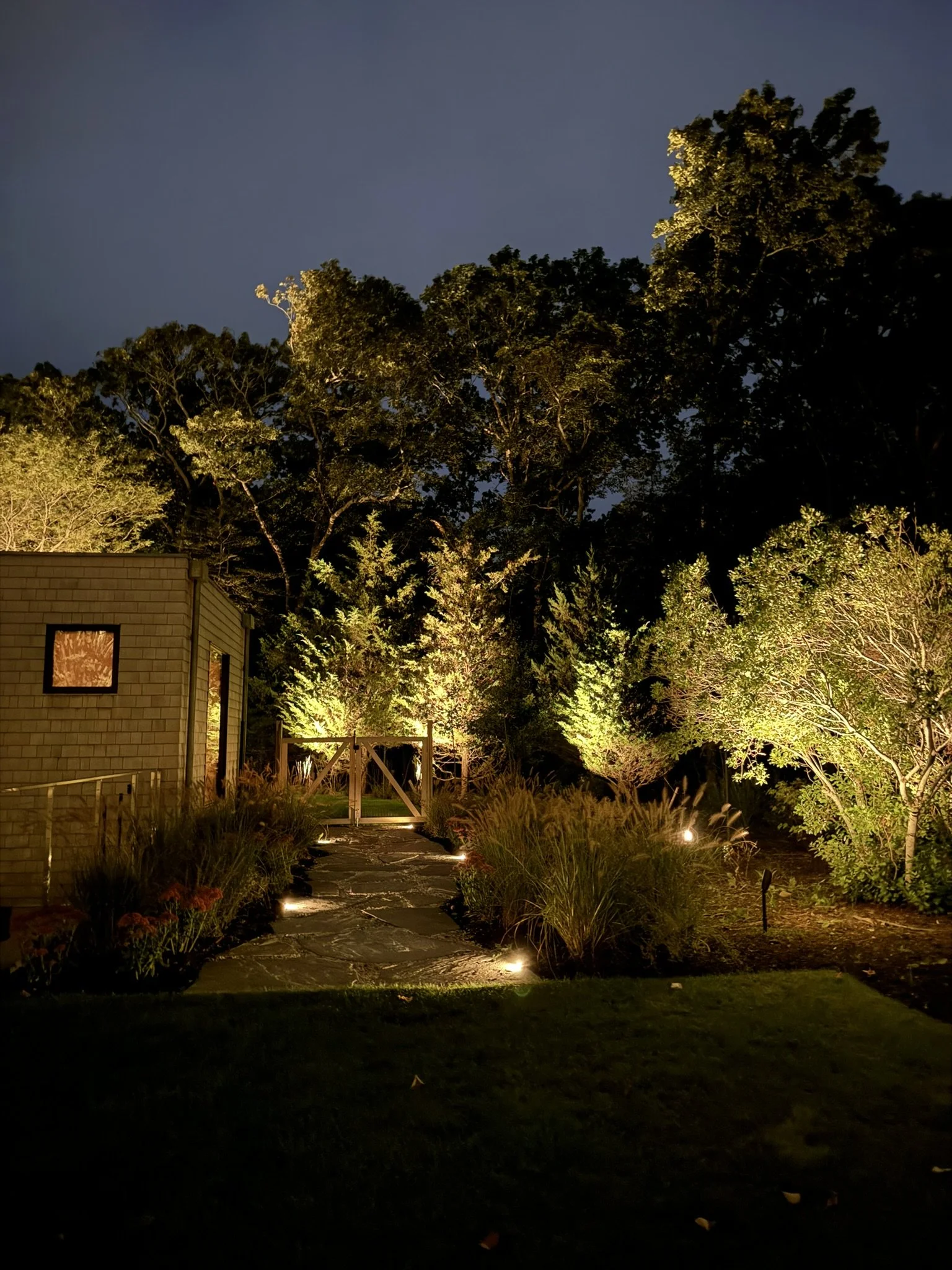
A well-composed view might include:
a softly illuminated tree establishing a distant focal point,
low planting layers creating depth near the home,
subtle architectural lighting revealing texture,
restrained path lighting supporting movement,
and darker areas allowing the composition to breathe.
The exterior should feel connected to the interior—not like a separate system that begins at the back door.
Planning the System Fixture by Fixture
Once the design direction is established, we develop the lighting plan in detail.
A fixture-by-fixture lighting plan documents the intended role of each light within the larger composition. It allows the design team, installation team, and other trades to understand not only where a fixture belongs, but what it is meant to accomplish.
Depending on the project, the plan may address:
fixture location,
fixture type and finish,
beam spread and direction,
intended focal point,
mounting method,
control zone,
scene participation,
transformer and power requirements,
conduit or wire routing,
and coordination requirements.
This level of documentation creates clarity before installation begins. It also helps protect the design when landscape layouts, hardscape details, pool plans, or construction conditions evolve.
The purpose is not documentation for its own sake. It is to create a more predictable installation and a finished result that reflects the design intent.
Beam Direction Shapes the Experience
Choosing a fixture is only part of the decision. The direction, width, intensity, and cutoff of its beam determine how the light interacts with the property.
A narrow beam may emphasize the vertical form of a tree or architectural column. A wider distribution may softly reveal layered planting. Cross-lighting can bring dimension to sculpture or masonry, while carefully positioned downlighting can produce a natural moonlight effect.
Beam direction also determines what remains outside the light.
We plan each beam to reduce spill, protect important views, and avoid sending unnecessary light toward windows, neighboring properties, or the night sky. This precision is especially important on waterfront properties and in communities where exterior-lighting regulations place limits on glare and light trespass.
The most refined lighting often comes from controlling where the light stops.
Glare Control and Visual Comfort
A fixture can be technically correct and still feel uncomfortable.
Glare occurs when the source of the light becomes more noticeable than the surface or object it is intended to illuminate. It can distract from a view, make a pathway harder to navigate, or create a harsh atmosphere in an otherwise elegant outdoor space.
We consider glare from several perspectives:
people seated on terraces and around pools,
guests approaching the property,
occupants looking through windows,
drivers entering or leaving the driveway,
and neighboring properties.
Shielding, placement, mounting height, beam angle, fixture selection, and output level all influence visual comfort. In some locations, the best solution is not a dimmer fixture but a different lighting position or technique.
The goal is for people to notice the landscape and architecture—not the equipment producing the effect.
Zoning, Scenes, and Control Documentation
A large property should not have to operate as one undifferentiated field of light.
We organize lighting into logical zones based on how the property is used. Arrival areas, architectural lighting, gardens, pathways, terraces, pools, and perimeter areas may each need independent control.
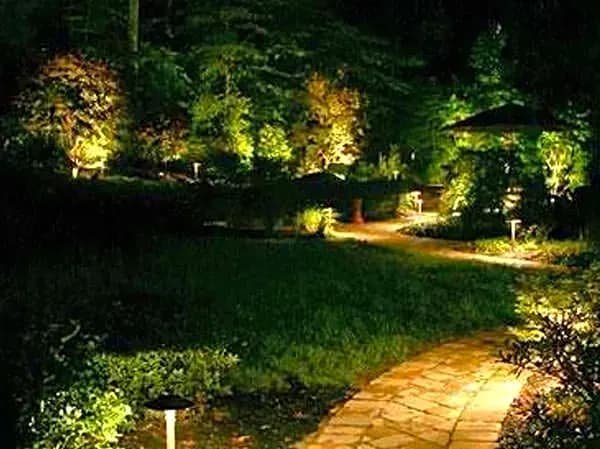
Those zones can then support scenes designed around real activities, such as:
Welcome Home
Evening Entertaining
Dinner Outdoors
Poolside
Late Night
Security
All Off
Scene documentation records which zones participate in each setting and how they should behave. This helps ensure that the finished control system reflects the intended experience rather than leaving the homeowner with a collection of unclear buttons or schedules.
For properties using Lutron, Savant, or Control4, exterior lighting can also be coordinated with interior lighting, motorized shades, audio, security, and other home systems. A single command might prepare the house and landscape for entertaining, while a late-night scene can reduce exterior lighting to a quieter level without leaving circulation areas unsupported.
Integration should simplify the experience. The technology remains in the background while the property responds naturally.
Coordination With the Project Team
Landscape lighting intersects with nearly every part of an exterior project. Successful execution therefore depends on early and clear coordination.
We work with landscape architects, architects, builders, electricians, pool contractors, hardscapers, and property-care teams to address details such as:
fixture locations within planting plans,
sleeves beneath driveways and hardscape,
conduit routes and electrical requirements,
drainage and grade changes,
pool and spa clearances,
mounting details,
access for future service,
plant growth and seasonal maintenance,
and construction sequencing.
Early coordination can prevent visible wires, unnecessary surface-mounted conduit, disturbed hardscape, compromised fixture locations, and other avoidable changes.
It also allows each trade to understand how its work affects the finished lighting. A small change in a planting bed, retaining wall, or pool deck can significantly alter where a fixture can be concealed and how its beam reaches the intended target.
Equipment Designed for Coastal Conditions
The Hamptons environment places unusual demands on outdoor systems. Salt air, moisture, irrigation, freeze-thaw cycles, soil conditions, and seasonal property use can all affect performance.
For that reason, we consider the complete installation—not only the visible fixture.
Coastal-grade housings, appropriate finishes, sealed connections, suitable enclosures, properly located transformers, careful wire management, drainage, and service access all contribute to the longevity of the system.
A beautiful fixture cannot compensate for a vulnerable connection underground. Long-term reliability depends on treating every component as part of an engineered exterior system.
Professional Nighttime Aiming
Drawings and specifications establish the design, but landscape lighting cannot be fully judged during daylight.
After installation, we return after dark to aim, balance, dim, and refine the system. This is when the composition becomes visible as a whole.
During professional nighttime aiming, we evaluate:
whether focal points are receiving the intended emphasis,
whether beams are too wide, narrow, high, or low,
whether adjacent fixtures are competing,
whether glare is visible from important positions,
whether pathways feel comfortable and intuitive,
whether interior views are balanced,
and whether the control scenes feel distinct and useful.
Fixtures may be repositioned or re-aimed, outputs adjusted, shields added, and scenes refined. The objective is not maximum brightness. It is visual hierarchy, balance, comfort, and atmosphere.
This nighttime refinement is one of the most important parts of the process. It is where an installed system becomes a designed experience.
Designing for the Landscape as It Changes
A landscape is never static.
Plants grow, trees fill in, seasonal foliage changes, and outdoor spaces evolve. Even a carefully aimed system will require adjustment as branches extend and planting beds mature.
Fixtures can also shift because of frost, irrigation, landscaping work, storms, or normal activity around the property. Lenses accumulate debris. Connections and enclosures remain exposed to the coastal environment. Control schedules may need to change with the seasons.
Through Brilliance Care™, we provide long-term maintenance intended to preserve both the performance of the system and the original design intent. Service may include cleaning, re-aiming, system inspection, timer and control review, and documentation of changing conditions.
Maintenance is not separate from good design. It is how the design continues to perform as intended.
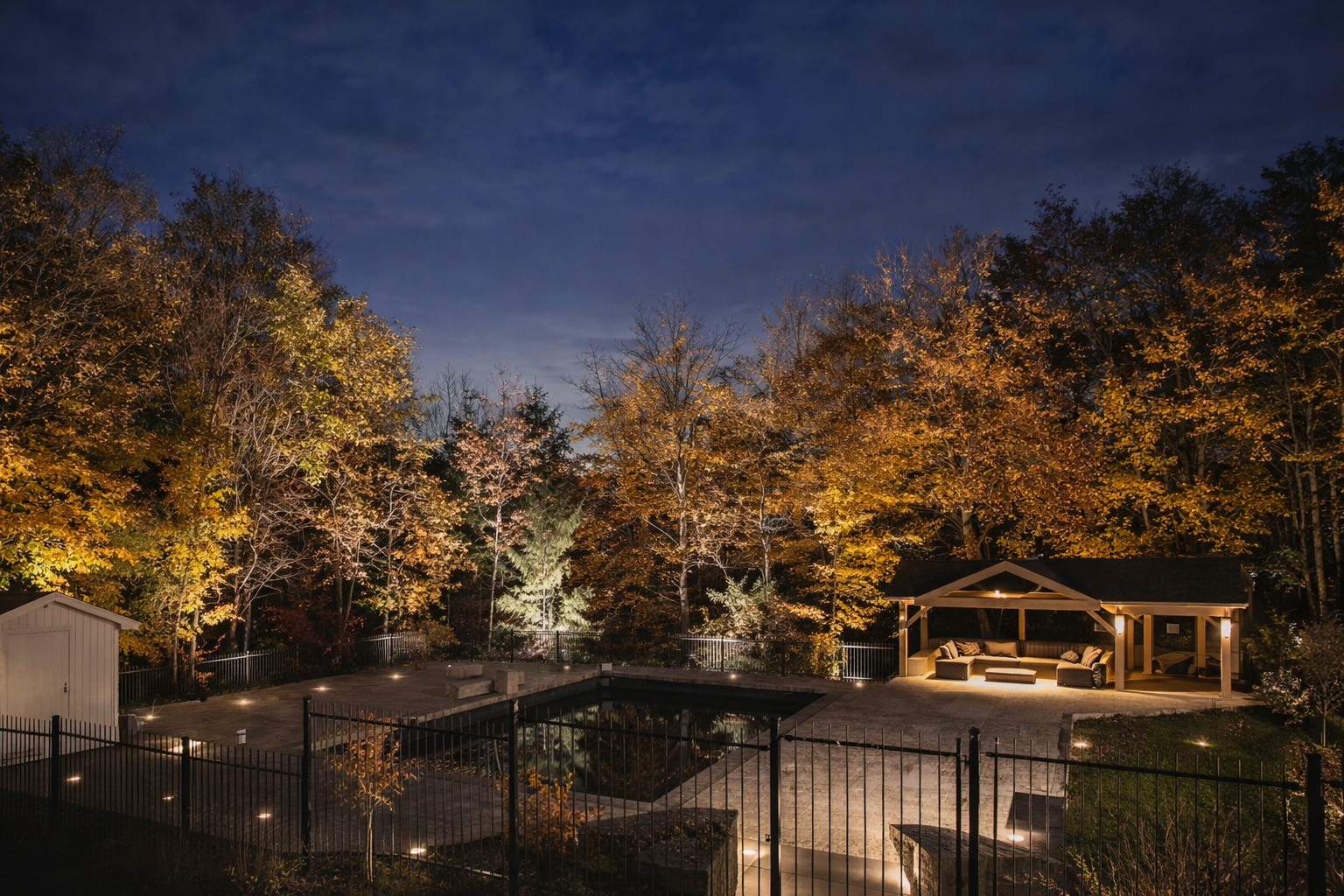
A Property Designed for After Dark
The most successful landscape lighting feels inevitable—as if the property simply becomes a quieter, more dimensional version of itself after sunset.
Achieving that effect requires more than attractive fixtures. It requires a dedicated design process, detailed planning, beam and glare control, nighttime refinement, thoughtful integration, coordination between trades, coastal-grade installation practices, and continued care.
At Hamptons Landscape Lighting, we bring those elements together to create outdoor environments that are refined, comfortable, and designed around the way each property is actually experienced.
The result is not simply a brighter landscape. It is a property that feels complete after dark.
Ready to See Your Property Differently?
Whether you are planning a new landscape, renovating an outdoor living area, coordinating a major construction project, or improving an existing lighting system, the best results begin with a clear design.
Schedule a consultation with Hamptons Landscape Lighting to discuss the property, the project team, and the experience you want to create after dark.
Frequently Asked Questions About Landscape Lighting Design
How is professional landscape lighting designed?
Professional landscape lighting begins with an evaluation of the property’s architecture, landscape, outdoor living areas, circulation paths, and important views from inside the home. The designer then develops a layered lighting plan that considers fixture placement, beam direction, glare control, control zones, scenes, coastal conditions, and future maintenance. After installation, the system is professionally aimed and refined at night.
What does a landscape-lighting designer do?
A landscape-lighting designer determines how a property should look, feel, and function after dark. The designer identifies focal points, plans fixture locations and lighting techniques, controls glare, considers interior and exterior sightlines, documents zones and scenes, coordinates with the project team, and oversees nighttime aiming. The designer’s role is broader than selecting or installing outdoor fixtures.
How do you plan landscape lighting fixture by fixture?
A fixture-by-fixture lighting plan identifies the intended location and purpose of each light. Depending on the project, it may document the fixture type, finish, beam spread, direction, focal point, mounting method, control zone, scene participation, power requirements, and installation details. This helps the design and installation teams preserve the intended effect throughout construction.
How can landscape lighting reduce glare?
Glare can be reduced through careful fixture placement, shielding, beam selection, mounting height, aiming, and output control. Fixtures should direct light toward the intended surface without exposing the source to people seated outdoors, walking through the property, driving into the property, or looking outside from the home. Professional nighttime aiming provides the opportunity to identify and correct glare under real conditions.
How should outdoor lighting look from inside the home?
Outdoor lighting should create a balanced, layered view beyond the windows rather than a collection of isolated bright spots. A thoughtfully designed system may illuminate foreground plantings, architectural features, specimen trees, or distant focal points while preserving areas of darkness. It should also prevent exposed lamps and reflected glare from interfering with the view.
Why is nighttime aiming important for landscape lighting?
Landscape lighting cannot be fully evaluated during daylight. Professional nighttime aiming allows the designer to assess beam direction, brightness, visual balance, focal points, glare, shadow, and the relationship between fixtures. Lights can then be repositioned, shielded, dimmed, or re-aimed until the property feels cohesive and comfortable after dark.
What equipment is best for coastal landscape lighting?
Coastal landscape lighting should use equipment and installation methods selected for exposure to salt air, moisture, irrigation, soil conditions, and seasonal temperature changes. Important considerations include durable fixture materials and finishes, sealed connections, appropriate enclosures, protected transformers, drainage, wire management, and access for future service. The reliability of the connections and infrastructure is just as important as the visible fixtures.
Can landscape lighting integrate with Lutron, Savant, or Control4?
Yes. Landscape lighting can be integrated with Lutron, Savant, or Control4 when the system is designed with appropriate zones, controls, and documentation. Integration can coordinate exterior lighting with interior lighting, motorized shades, audio, security, and other home systems. Homeowners can activate scenes such as Welcome Home, Evening Entertaining, Poolside, Late Night, or All Off from a keypad, touchscreen, app, schedule, or automated routine.
How do landscape architects and lighting designers work together?
The landscape architect establishes the broader landscape vision, including planting, grading, hardscape, circulation, and outdoor spaces. The landscape-lighting designer develops the nighttime composition and supporting lighting system. Collaboration helps coordinate fixture locations, planting growth, sleeves, conduit routes, mounting details, pool clearances, hardscape construction, power requirements, and future service access.
The lighting designer may also coordinate with architects, builders, electricians, pool contractors, hardscapers, and property-care teams to protect the design throughout construction.
How often should a landscape-lighting system be maintained?
Most landscape-lighting systems should be inspected and adjusted at least once a year. Properties with extensive planting, coastal exposure, frequent landscaping activity, or heavy seasonal use may benefit from more frequent service.
Maintenance can include fixture cleaning, professional re-aiming, lamp and connection inspection, transformer and control review, schedule adjustments, and evaluation of landscape growth. Brilliance Care™ provides ongoing maintenance intended to preserve the system’s performance and original design intent over time.
LEARN MORE:
LANDSCAPE LIGHTING REPAIR
LANDSCAPE LIGHTING INSTALLATION
LANDSCAPE LIGHTING DESIGN