
Tree Downlighting
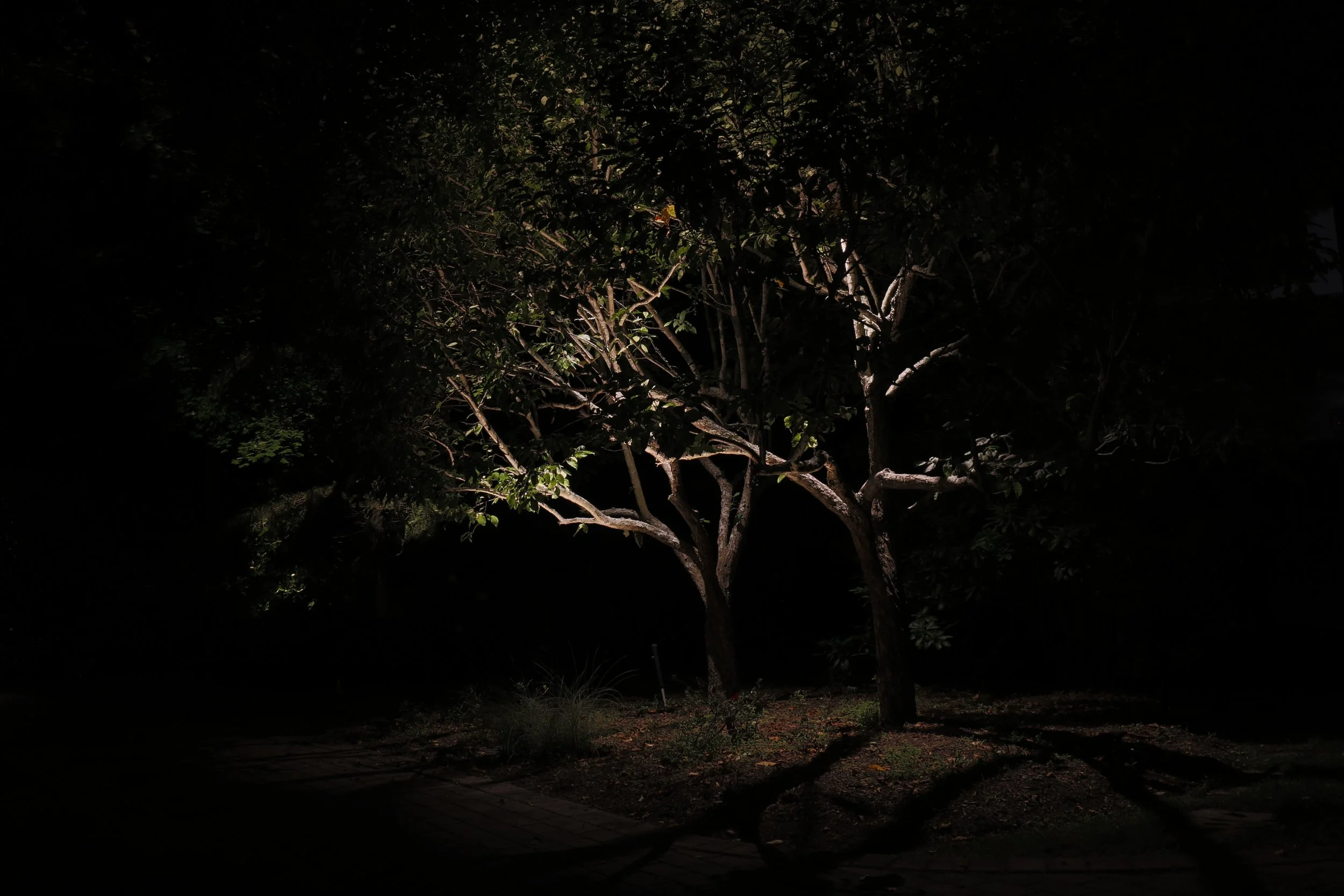
Tree Downlighting (Moonlighting): Natural Light, Thoughtfully Applied
Moonlighting in Technology-Integrated Home Outdoor Lighting
Tree downlighting—often called moonlighting—is one of the most refined techniques in technology-integrated home outdoor lighting. By placing fixtures high in a tree canopy, light is cast gently downward through branches and leaves, creating an effect that feels natural, calm, and inviting.
For commercial properties and high-end residential environments alike, this approach aligns with curated home technology outdoor lighting in trees, bringing together atmosphere, visibility, and restraint. The light is felt more than seen, and the fixtures remain largely out of view.
Why Tree Downlighting Works
Unlike uplighting, which creates strong visual emphasis from below, downlighting is designed around the experience of the space at ground level. It supports how people move, gather, and feel outdoors after dark—especially within a technology-integrated home lighting control system.
Natural Atmosphere
As light filters through leaves and branches, it creates soft texture and shadow. The result feels organic rather than artificial—an ideal expression of intelligent living outdoor lighting.
Better Visibility
Downlighting can illuminate walkways, patios, and gathering areas with a softer, more comfortable quality of light. Integrated into a home lighting control system, it improves usability without introducing harsh glare.
Visual Restraint
Because the fixture is mounted above the sightline, attention stays on the landscape and the overall nightscape—not on the hardware. This is a hallmark of curated home technology lighting control systems.
Downlighting vs. Uplighting
Both techniques are useful, but they serve different purposes within a technology-integrated home outdoor lighting strategy.
Uplighting draws attention upward. It highlights trunks, limbs, and canopies, often creating stronger contrast and a more dramatic effect.
Downlighting is quieter. It supports circulation, comfort, and atmosphere by washing the ground plane with a more natural pattern of light—often preferred in whole-home automation lighting control systems designed for everyday use.
How Wiring Is Handled
One of the first questions people ask about tree-mounted fixtures is where the wiring goes—and how it is installed without distracting from the landscape or harming the tree.
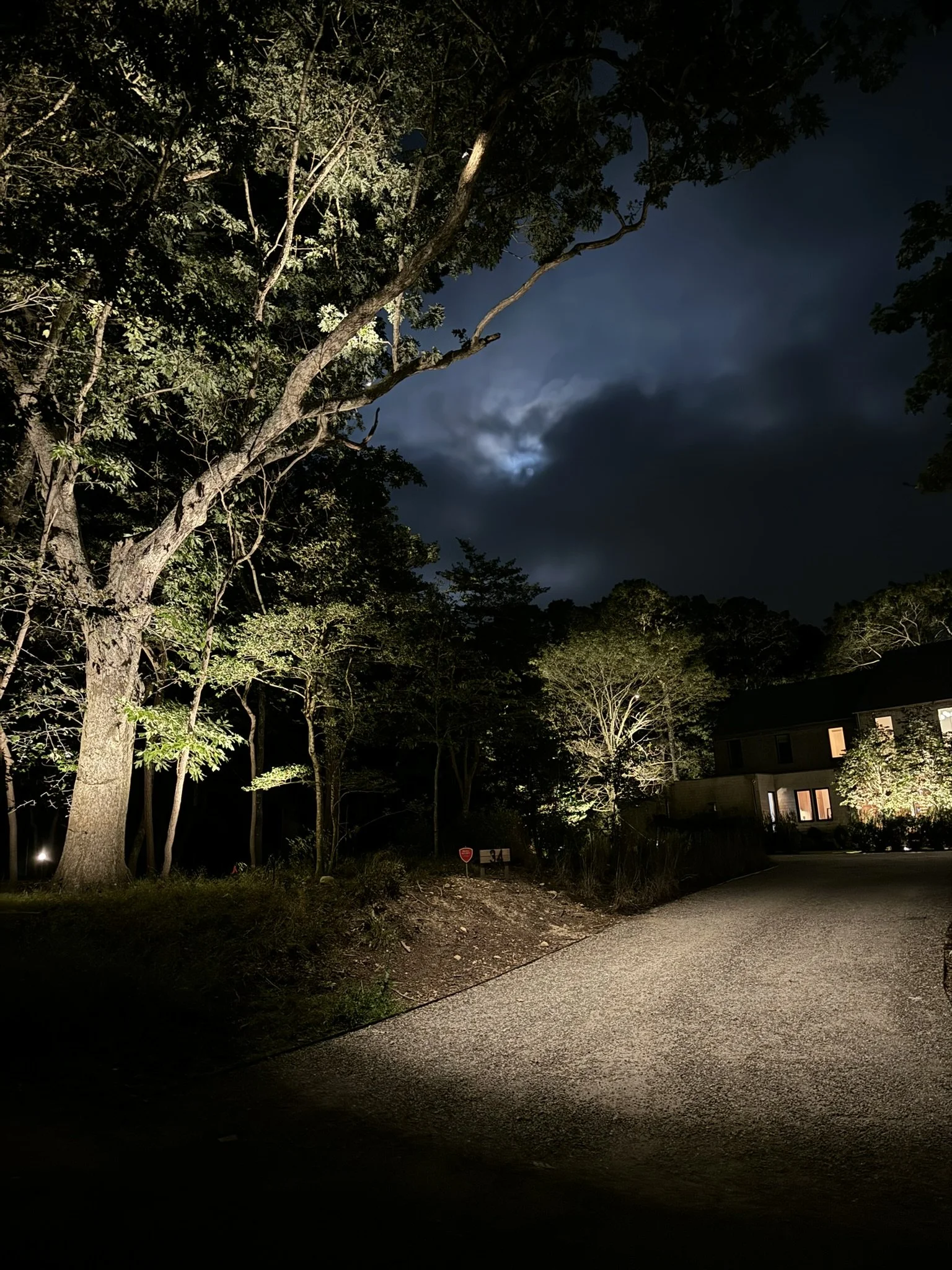
The answer is careful planning and proper installation by our experts. They use stainless steel materials that penetrate the trees and prevent harm. The wire is expertly positioned to be out of view, typically running up the tree from the backside.
Low-Voltage Systems
Most tree downlighting systems use low-voltage LED fixtures. This supports safer installation and seamless integration into integrated home technology lighting automation systems.
Cable Routing
Cables are typically run along the least visible side of the trunk, away from primary viewing angles. They are secured with tree-conscious methods that allow for future growth—supporting long-term performance in curated home technology lighting control systems.
At the Base of the Tree
Extra slack is typically left at the base to allow for growth and future adjustment. From there, wiring can be concealed beneath mulch, planting beds, or along hardscape edges—maintaining the clean look expected in high-end integrated home technology environments.
System Integration
Fixtures connect into a broader integrated home control system technology layout. On larger properties, discreet junction points support multiple fixtures efficiently while maintaining a cohesive whole-home lighting control system.
Long-Term Performance Matters
Tree downlighting should be installed with the long term in mind. Trees grow and change, and lighting systems need to evolve alongside them.
Periodic inspection ensures compatibility with integrated home technology systems, while adjustments maintain lighting intent as the canopy expands. In more complex projects, coordination with professionals supports both the landscape and the technology-integrated home system investment.
A Quiet Way to Improve Outdoor Spaces
Tree downlighting is one of the most effective ways to bring clarity, comfort, and atmosphere to an outdoor environment without overwhelming it. When thoughtfully designed and integrated into a whole-home automation outdoor lighting home control system, it enhances safety and usability while preserving the beauty of the landscape.
For properties that need to feel welcoming, composed, and usable after dark, moonlighting offers a natural and highly restrained solution—fully aligned with intelligent living lighting control systems.
Planning lighting for a technology-integrated home or commercial landscape? A well-designed downlighting system—built into a curated home technology lighting control system—can improve visibility, support how a space is used, and keep the landscape itself at the center of the experience.
Frequently Asked Questions: Tree Downlighting & Outdoor Lighting Systems
What is tree downlighting in a technology-integrated home?
Tree downlighting—also known as moonlighting—is a technique used in technology-integrated home outdoor lighting where fixtures are mounted high in trees to cast light downward. When integrated into a home lighting control system, it creates a natural, layered lighting effect that enhances both visibility and atmosphere.
How does tree downlighting work with a lighting control system?
Tree downlighting is typically connected to a technology-integrated home lighting control system, allowing users to adjust brightness, timing, and zones. As part of an integrated home technology lighting automation system, it can be scheduled or automated to respond to time of day or occupancy.
Is tree downlighting better than uplighting?
It depends on the goal. Downlighting is ideal for creating a soft, natural feel and improving usability at ground level, especially within a whole-home automation lighting control system. Uplighting, by contrast, is more dramatic and highlights vertical elements like trunks and architectural features.
Can tree downlighting be part of a whole-home automation system?
Yes. Tree downlighting is often integrated into a whole-home automation outdoor lighting home control system, allowing it to work seamlessly with other exterior and interior lighting zones. This supports a fully integrated home technology system.
How is wiring handled in tree lighting installations?
Wiring is carefully concealed and installed using tree-safe methods. In a curated home technology lighting control system, low-voltage wiring is routed discreetly along the trunk and integrated into the broader integrated home control system technology layout.
Does tree downlighting require special maintenance?
Minimal maintenance is required, but periodic checks are important. As trees grow, fixtures may need adjustment to maintain performance within an integrated home technology lighting control system.
Is tree downlighting suitable for residential and commercial properties?
Yes. Tree downlighting works well in both settings. It is commonly used in curated home technology outdoor lighting in trees for residential properties and in larger-scale technology-integrated outdoor lighting systems for commercial environments.
What are the benefits of integrating outdoor lighting into a smart system?
Integrating outdoor lighting into a technology-integrated home system provides:
Centralized control through a home lighting control system
Improved energy efficiency
A more cohesive and elevated outdoor experience
Can tree downlighting improve safety?
Yes. When incorporated into a whole-home lighting control system, tree downlighting improves visibility along walkways, patios, and gathering areas without harsh glare—enhancing both safety and comfort.