
Why Proper Wire Depth Matters in Landscape Lighting
The most visible part of a landscape lighting system is the effect it creates after dark. Some of the most important work, however, is hidden beneath the ground.
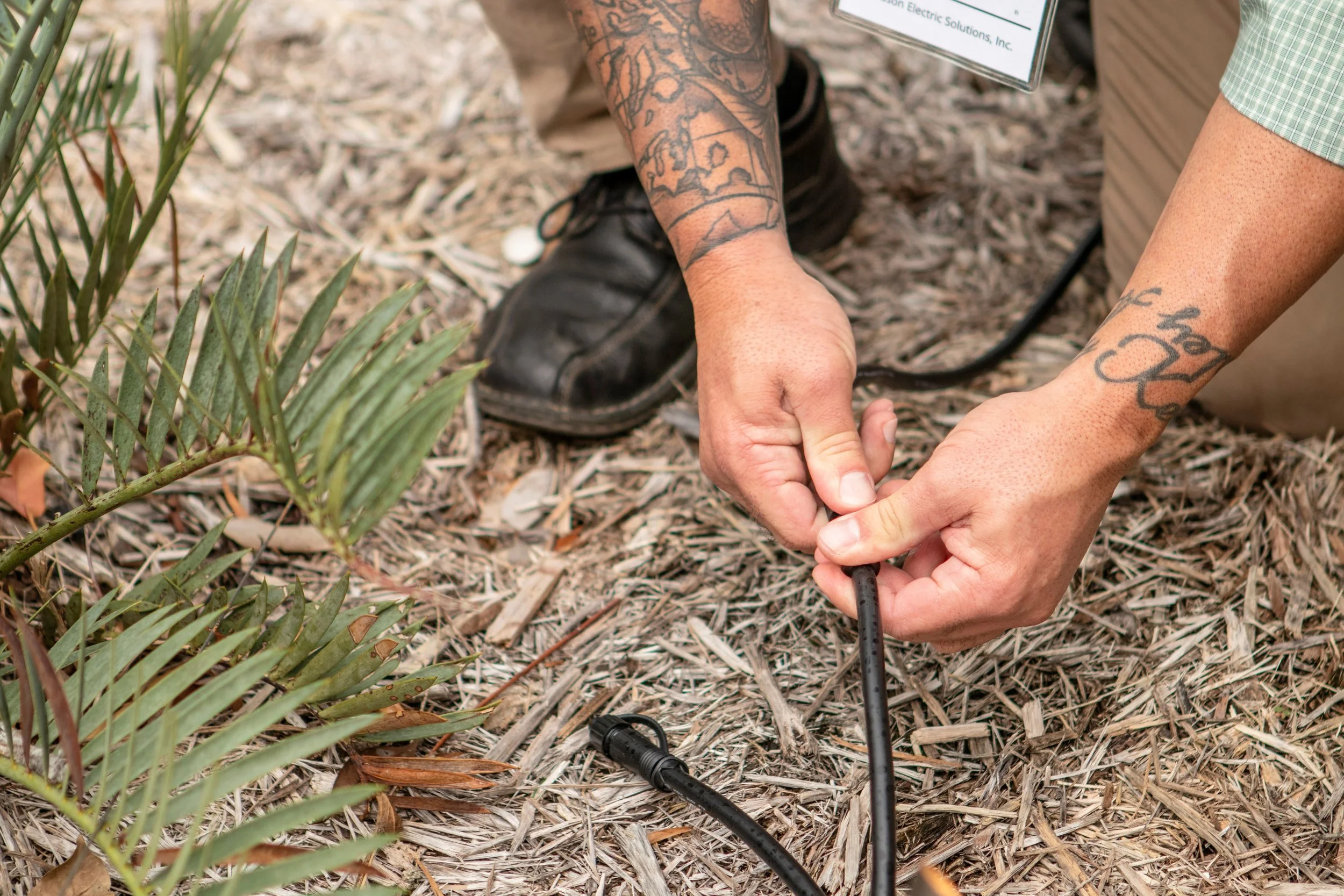
Proper wire depth helps protect landscape lighting infrastructure from gardening, edging, aeration, irrigation repairs, new planting, and routine property maintenance. Combined with thoughtful wire routing, durable connections, and careful documentation, it supports a system that is safer to work around, easier to maintain, and more reliable over time.
It is a detail homeowners may never see—but one that can influence how well their outdoor lighting performs for years.
Low-Voltage Does Not Mean Low-Importance
Most professionally designed landscape lighting systems use low-voltage wiring. That does not mean the cable can simply be laid beneath mulch or tucked just below the soil.
Landscape beds are active environments. Gardeners divide plants, crews redefine edges, irrigation lines are repaired, and new shrubs or trees are introduced. Wire installed too close to the surface can be pulled up, nicked, severed, or displaced during otherwise routine work.
A professional installation considers how the property will actually be used and maintained—not only how it looks on installation day.
Protection From Everyday Landscape Work
Many landscape lighting failures begin with accidental underground damage.
Common risks include:
Bed edging and spade work
Lawn aeration and dethatching
Irrigation installation or repair
Seasonal planting and transplanting
Root growth and soil movement
Landscape renovations
Utility and drainage work
Appropriate burial depth reduces the likelihood that ordinary maintenance will disturb the lighting cable. The correct approach depends on the location, soil conditions, applicable requirements, landscape activity, and the other systems already below grade.
Depth is not a universal number applied everywhere. It should be part of a site-specific installation plan.
Wire Routing Matters, Too
Burial depth is only one part of protecting a landscape lighting system. The path the wire follows is equally important.
Thoughtful routing keeps cable away from likely planting zones, high-activity maintenance areas, sharp materials, and locations where water regularly collects. At driveways, walkways, masonry, and other difficult crossings, sleeves or conduit may be appropriate to protect the wire and make future replacement easier.
Whenever practical, wire paths should also be documented. A clear record helps future service technicians understand the system without unnecessary digging or guesswork.
Better Connections Support Better Performance
A deeply buried cable will not compensate for poor connections.
Outdoor splices and connections must be selected and installed for below-grade conditions. They should be positioned thoughtfully, protected from moisture intrusion, and kept accessible enough to support future service.
When cabling, connections, transformers, fixtures, and voltage planning are treated as parts of one system, the result is more consistent performance and fewer avoidable failures.
Coastal Properties Require Additional Care
Hamptons properties present their own installation challenges. Sandy soils, salt air, irrigation, seasonal moisture, shifting landscapes, and regular property improvements can all affect outdoor infrastructure.
Waterfront and coastal properties may also require lighting systems to navigate extensive gardens, dunes, terraces, pool areas, driveways, and multiple outdoor living spaces. These conditions make careful routing, durable materials, protected connections, and accurate installation planning especially important.
A reliable system begins with an understanding of the property—not a one-size-fits-all trench.
Proper Installation Reduces Future Disruption
Wire that is too shallow or poorly routed can lead to intermittent outages, damaged circuits, recurring service calls, and unnecessary disturbance to established landscapes.
Correcting those problems later may require technicians to trace undocumented cable, open planting beds, lift materials, or reroute portions of the system. Planning the underground infrastructure carefully from the beginning helps reduce this disruption.
It also makes future renovations and upgrades more manageable. A well-organized system can adapt as gardens mature, outdoor living areas change, or additional lighting zones are introduced.
What Professional Installation Should Include

Hamptons Landscape Lighting
A carefully installed landscape lighting system should account for:
Site-appropriate burial depth
Planned cable routes
Protected below-grade connections
Sleeves or conduit where conditions warrant them
Separation from vulnerable maintenance areas
Proper wire sizing and voltage planning
Logical zoning and circuit organization
Documentation for future maintenance and upgrades
Coordination with landscape, irrigation, masonry, and construction teams
These details are largely invisible once the project is complete. Their value becomes clear through dependable performance and easier long-term care.
The Best Landscape Lighting Feels Effortless
Beautiful outdoor lighting should reveal architecture, guide movement, create atmosphere, and make the landscape feel natural after dark. The infrastructure supporting that experience should remain quietly out of sight.
At Hamptons Landscape Lighting, we approach lighting design and installation with long-term ownership in mind. That means considering not only fixture placement and nighttime effects, but also the wiring, connections, controls, and service strategy behind them.
Because lasting landscape lighting is not defined only by what you see. It is also defined by how thoughtfully everything you do not see was installed.
Ready to plan a landscape lighting system designed for beauty, reliability, and long-term care? Contact Hamptons Landscape Lighting to schedule a consultation.
Frequently Asked Questions
How deep should low-voltage landscape lighting wire be buried?
There is no single depth that is appropriate for every part of every property. The installation should reflect applicable requirements, manufacturer guidance, soil conditions, landscape activity, and the risk of future disturbance. Areas near lawns, planting beds, walkways, driveways, and construction zones may require different protection strategies.
Can landscape lighting wire be placed under mulch?
Wire should not simply be left loose beneath mulch. Mulch shifts and is regularly disturbed, leaving shallow cable vulnerable to gardeners, animals, weather, and landscape maintenance. Cable should be routed and buried appropriately for the conditions.
Does deeper wire prevent moisture problems?
Burial depth alone does not prevent moisture intrusion. Reliable performance also depends on cable quality, properly rated below-grade connections, careful splice installation, drainage conditions, and appropriate fixture and transformer selection.
When should conduit or sleeves be used?
Additional protection may be advisable beneath or near driveways, walkways, patios, masonry, retaining walls, and other areas that would be difficult to reopen later. Sleeves can also make future cable replacement or system expansion less disruptive.
Can existing landscape lighting wire be reburied?
Sometimes. The existing cable and connections should first be inspected for cuts, deterioration, corrosion, undersizing, and undocumented repairs. If the infrastructure is still sound, portions may be rerouted or reburied. A system with widespread damage may benefit more from a planned renovation.
Why do landscape lighting wires keep getting cut?
Repeated wire damage often indicates that cable was installed too close to the surface, routed through active planting areas, or left undocumented. Frequent landscape changes and poor coordination among service providers can also contribute to the problem.
Should wire locations be documented?
Yes. A record of cable routes, connections, zones, and crossings can make troubleshooting, landscape renovations, and future lighting additions much easier. Documentation is especially valuable on large or frequently maintained properties.
Can a landscape lighting system be expanded later?
A professionally planned system often can be expanded, but transformer capacity, wire sizing, voltage drop, zoning, and existing cable routes must be evaluated first. Planning for likely future additions during the original installation can simplify that process.