
Montauk Dark Sky Landscape Lighting for Coastal and Waterfront Homes
Montauk’s nighttime environment is shaped by the ocean, bluffs, dunes, ponds, preserves, wooded areas, working waterfronts, and expansive coastal views.
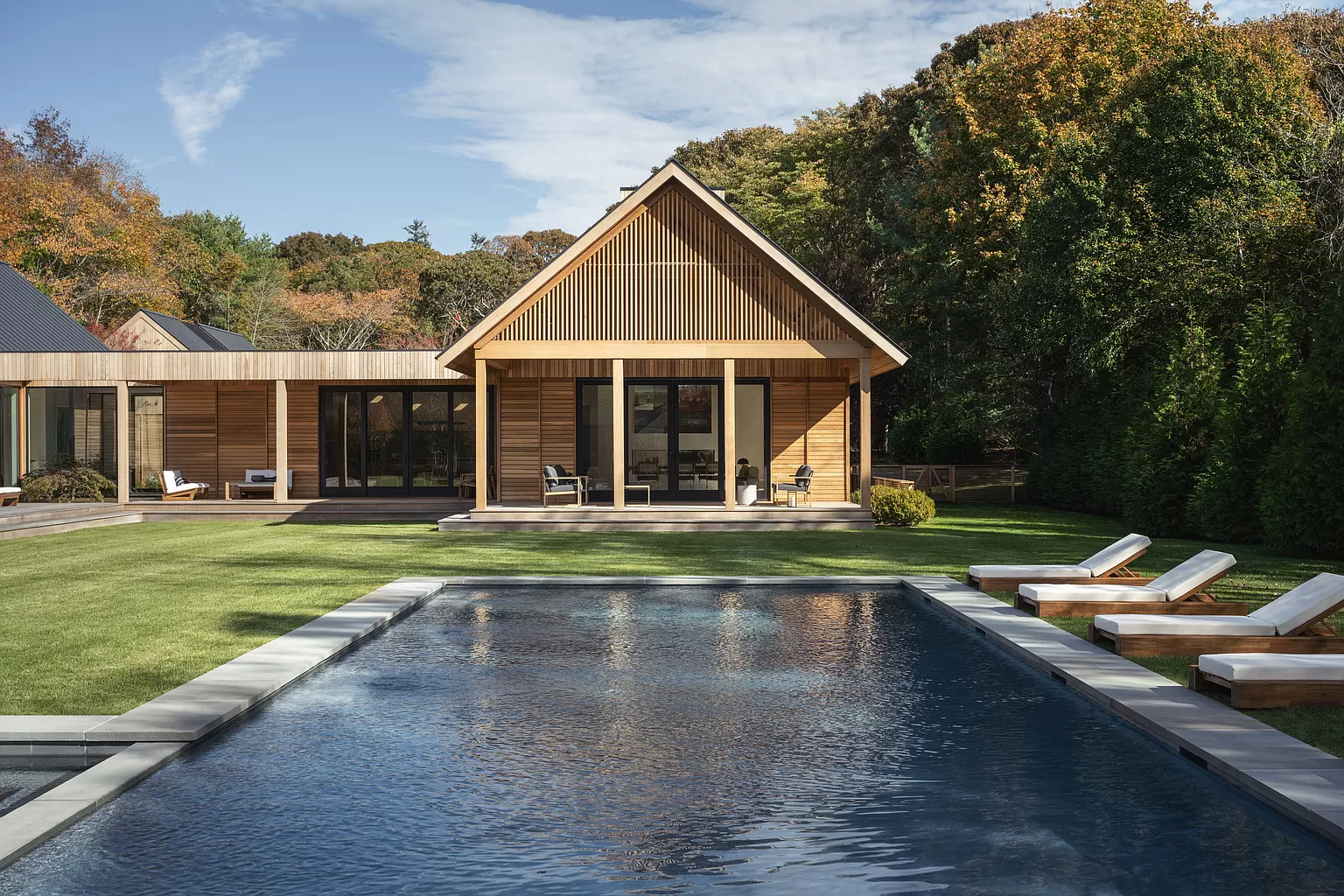
These conditions make poorly controlled lighting especially visible. A bright fixture can be seen across open land or reflected across water. Wind and salt can shift or degrade equipment. Sparse landscaping may provide little visual screening between a fixture and a neighboring property.
Montauk generally follows the Town of East Hampton’s exterior-lighting requirements, but waterfront, wetland, preserve-adjacent, or environmentally sensitive properties may also require additional review.
What the Town Standards Mean in Montauk
For residential landscape lighting, homeowners should plan around requirements that address:
Individual fixture output
Visibility across property lines
Visibility from roads and bodies of water
Restrictions on broad uplighting
Controls on tree illumination
Shutoff of nonessential landscape lighting by 11:00 p.m.
A waterfront property may also be affected by environmental permits, trustee jurisdiction, private association rules, deed restrictions, or conditions imposed during an earlier approval.
The lighting plan should therefore begin with the parcel—not a generic Montauk specification.
HLL’s Coastal Dark Sky Design Approach
Hamptons Landscape Lighting uses a conservative baseline for Montauk:
2700K or warmer throughout
2200K to 2400K near dunes, water, preserves, and natural areas
Low-output shielded fixtures
No visible lamp source from the ocean, harbor, pond, road, or neighboring property
Minimal uplighting
No broad beams projected toward open sky
Automatic 11:00 p.m. shutoff for nonessential landscape lighting
Lower late-evening scenes before full shutoff
Coastal-grade equipment and connections
The objective is not to make the property visible from a distance. It is to provide comfortable visibility for the people using it.
Lighting for Bluffs, Steps, and Changes in Grade
Montauk properties can have complex elevation changes.
The instinct may be to use bright area lights, but high output can flatten the terrain and create deeper shadows beyond the illuminated area. HLL instead uses a sequence of low-level step, path, and marker lights to identify changes in grade.
Fixtures are positioned to illuminate walking surfaces without projecting light over the edge of a bluff, toward the water, or into the viewer’s eyes.
Waterfront Views Should Remain Dark
The water should not become the recipient of light intended for the property.
We evaluate lighting from inside the home, from outdoor seating areas, from the shoreline, and—when relevant—from the dock or water. Fixtures are aimed away from open water, and reflective surfaces are considered during nighttime adjustment.
This preserves the experience of looking out into darkness rather than seeing reflected lamps and bright pools of light.
Coastal Durability Supports Long-Term Compliance
Salt, irrigation, sand, frost movement, and landscape maintenance can alter a lighting system.
A corroded shield or shifted fixture can create glare long after the original installation. HLL uses coastal-grade fixtures, sealed connections, stable mounting methods, and serviceable system architecture.
Through professional nighttime aiming and Brilliance Care™, we maintain the intended beam direction, shielding, output, and control schedule.
In Montauk, a dark sky–friendly design is not an aesthetic compromise. It is the most natural response to a landscape defined by water, open horizons, and darkness.