
Designing With Light, Shadow & Restraint
A layered landscape-lighting design reveals mature trees, garden destinations and outdoor gathering spaces—while allowing darkness to remain part of the composition.
Bring landscape lighting into the project conversation early.
HLL coordinates design intent, infrastructure, installation and nighttime aiming around the way the property will be experienced after dark.
Compose the landscape. Do not illuminate everything.
For this Quogue property, the goal was to decide what deserved to be seen—and what should remain in shadow.
The landscape offered an unusually rich canvas: mature oaks, ornamental trees, garden rooms, a pergola, sculpture garden, pool, outdoor fireplace, screen porch and a network of paths connecting them. Giving every feature equal emphasis would have diminished the character of the whole.
Hamptons Landscape Lighting developed the property as a sequence of nighttime scenes. Mature trees became visual anchors. Garden destinations emerged beyond darker transitional spaces. Path lighting supported movement without becoming the dominant feature. The approach reflects the same design-first process HLL uses across the Hamptons.
For local context, read our guide to dark-sky-friendly landscape lighting in Quogue.
Side Garden Entrance → West Oak Garden → Pergola → Sculpture Garden → Pool Landscape → Outdoor Entertaining Areas
Designing the property as a journey
The lighting follows the way the property is actually experienced after dark. Each destination has enough visual identity to stand on its own while remaining connected to the larger composition.
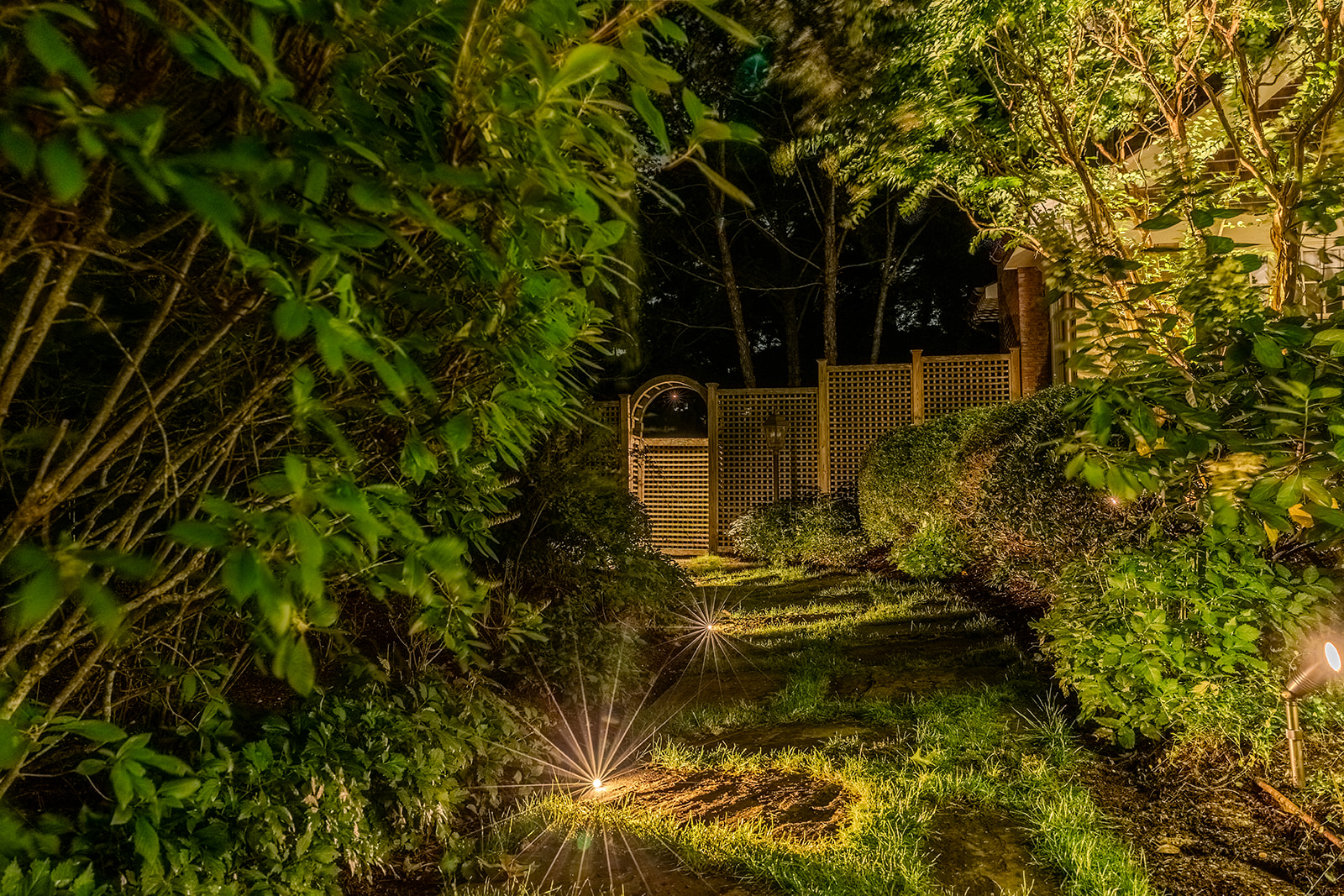
At the side garden entrance, a hanging fixture marks the gate while low-level lighting supports navigation along the irregular stone path. Trees and surrounding plantings are illuminated selectively, creating an inviting first view without revealing the entire landscape.
Darker passages direct attention toward the next tree, artwork or garden destination. The contrast gives each illuminated moment room to register.
Mature trees establish the visual structure
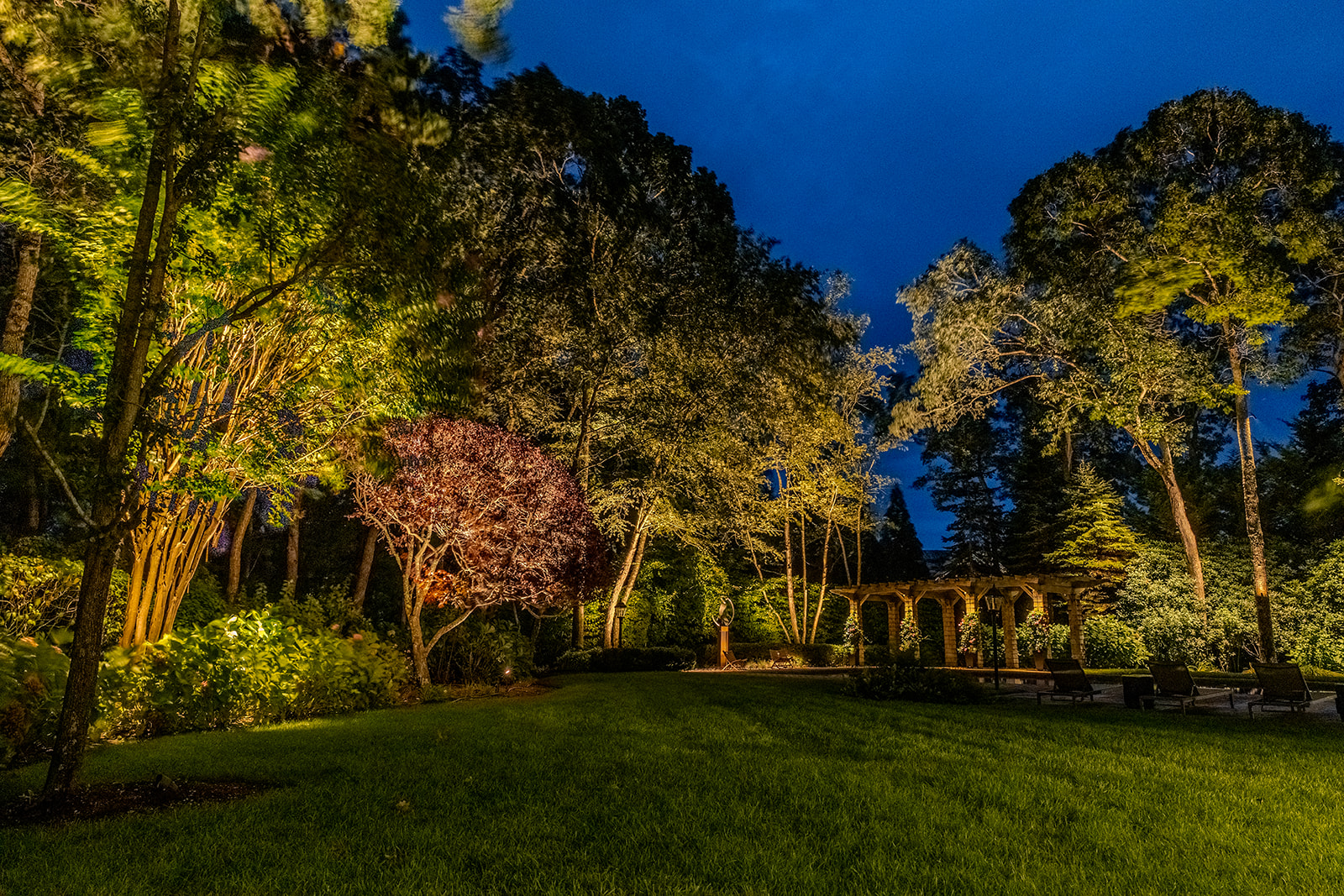
The oak canopy became the backbone of the composition. Tree-mounted fixtures introduce light from above, revealing branching structures and allowing softer illumination to filter toward the landscape below.
Selective uplighting reinforces important trunks and specimen plantings from the ground. Together, these layers create vertical depth without requiring every planting bed to be illuminated.
The objective is not maximum brightness. It is hierarchy.
Building one focal point from three layers
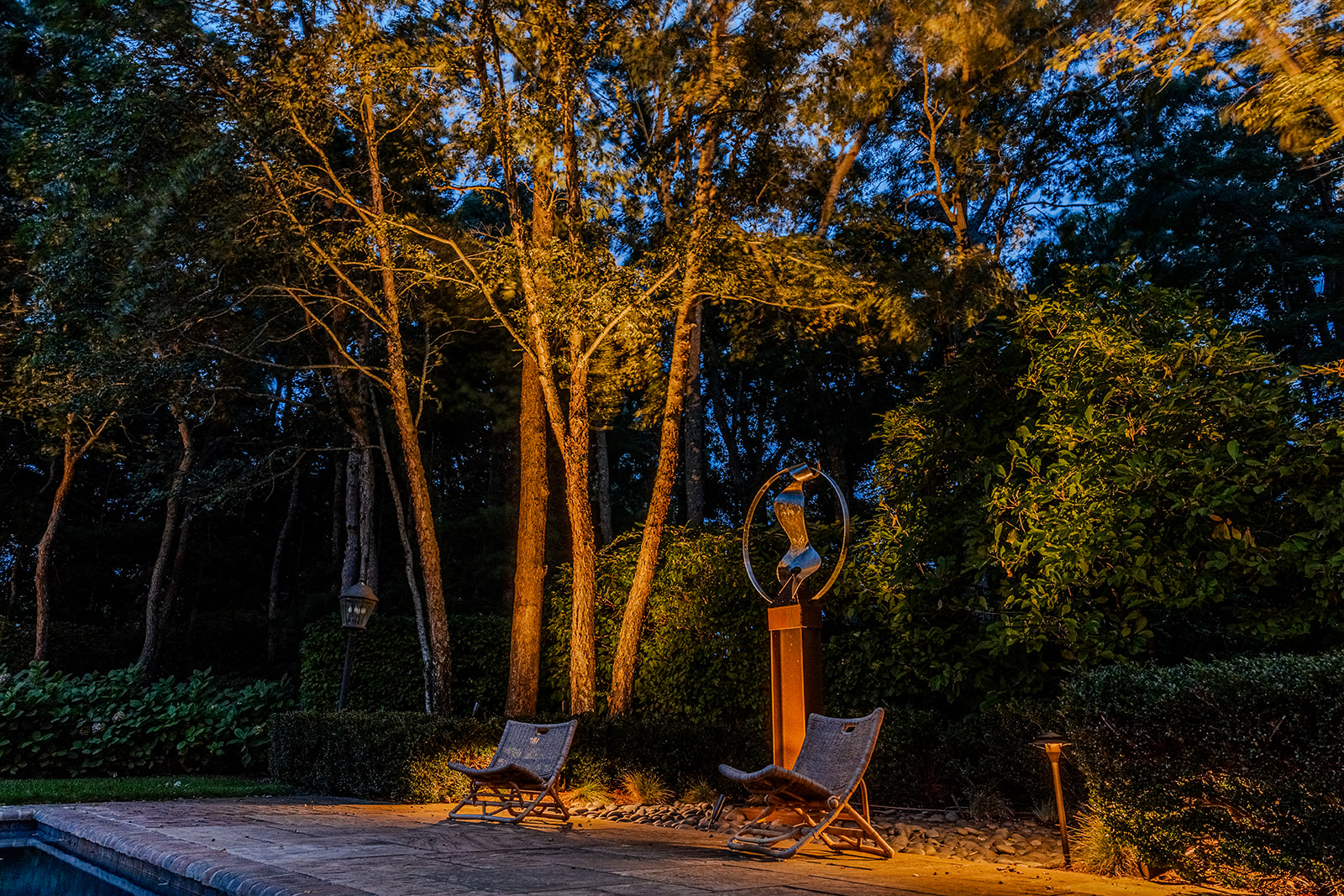
Illuminated trees establish the backdrop. A dedicated accent gives the artwork a clear visual presence. Restrained path lighting supports movement through the garden without competing with the sculpture.
Because each layer performs a different role, the scene feels dimensional rather than overly bright. The sculpture remains the focal point while the trees and path establish context around it.
Connecting outdoor destinations through reflected light
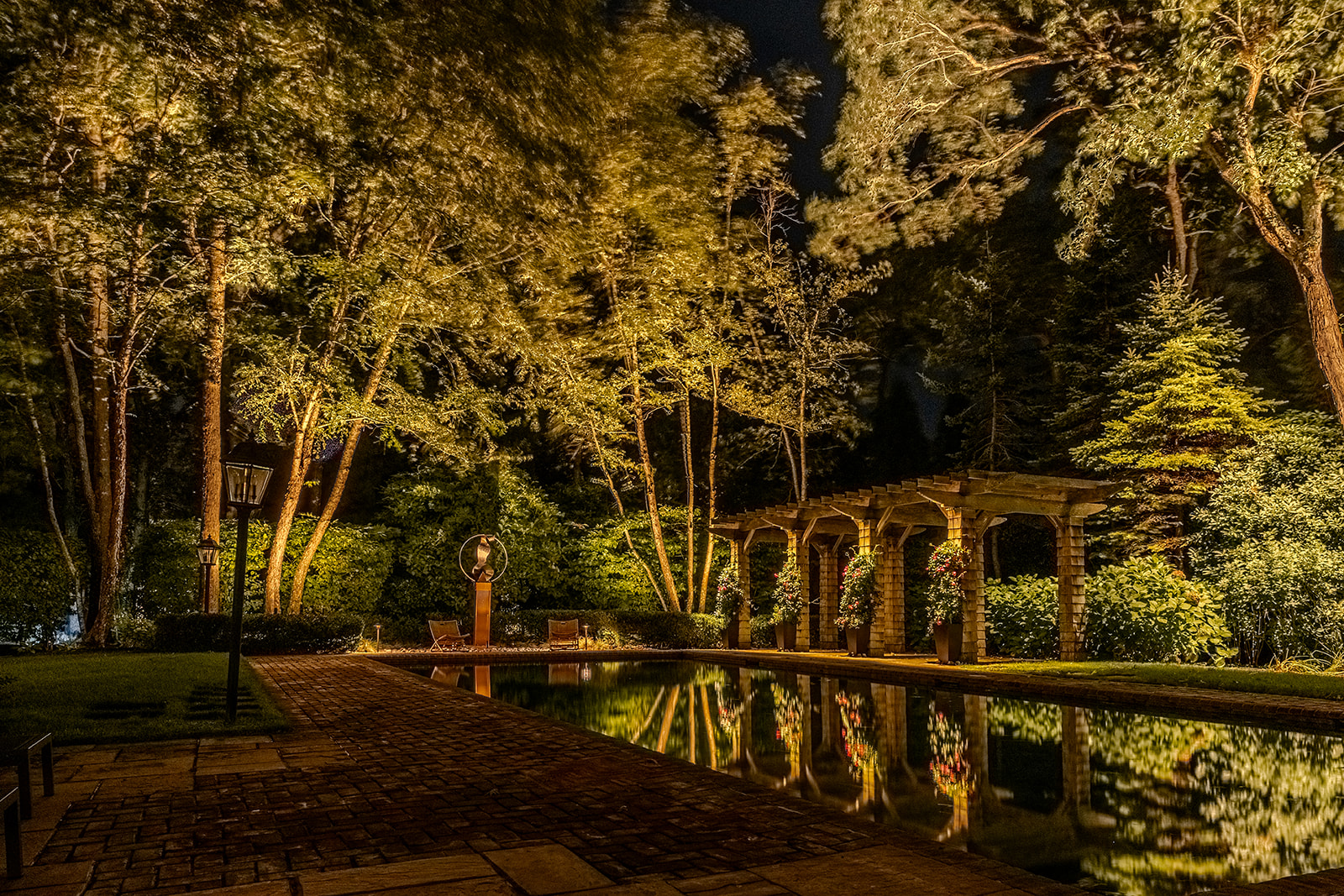
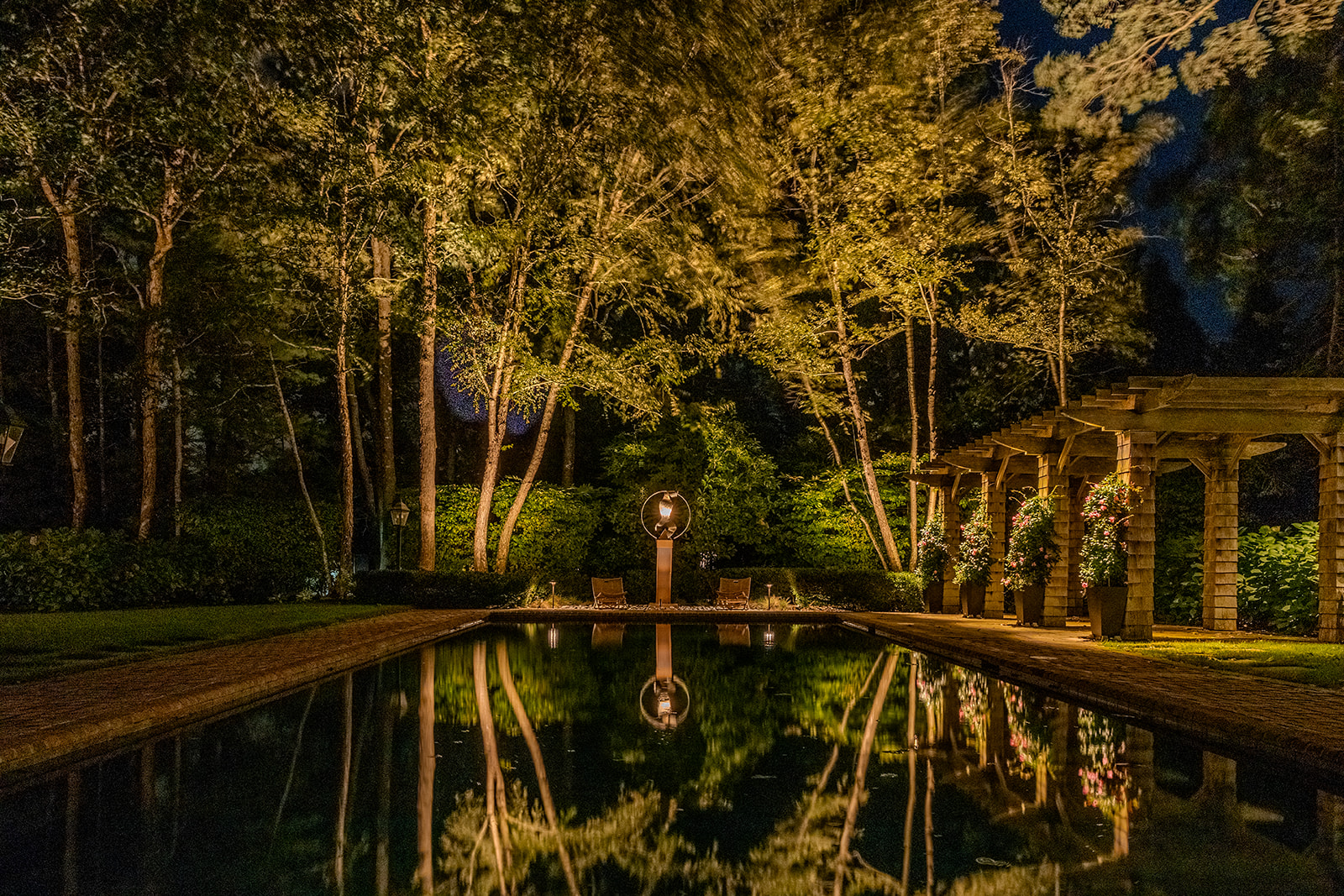
HLL focused on the landscape surrounding the pool rather than simply tracing the water's edge. Layered uplighting and tree-mounted illumination give the garden a sense of depth and enclosure.
Reflections carry the composition across the water, while the illuminated pergola becomes a warm destination at the far side of the scene. Discreet surface-mounted fixtures integrate light into the structure without allowing the equipment to compete with the architecture.
Refining the investment without losing the design
Rather than applying a uniform reduction, HLL reviewed the lighting plan according to visual priority. The final documented project reduced the original design by $11,602.15 while protecting the elements responsible for the primary nighttime experience.
- Mature oak canopy
- Major specimen trees
- Sculpture garden
- Pergola and pool landscape
- Essential circulation routes
- Principal garden rooms
Secondary layers were reduced, substituted or deferred. Several trees originally designed with two elevated fixtures were revised to one. Some secondary uplights were removed, rear-oak lighting became a future enhancement, and path-light quantities were tightened where comfortable navigation could still be maintained.
The pergola moved in the opposite direction—from two fixtures to three—because the composition required more complete coverage there.
The budget changed. The design hierarchy did not.
A system planned for an evolving landscape
Behind the visible composition is a distributed low-voltage system designed to support the current plan and respond as the property changes.
The final proposal included three 300-watt transformers and approximately 3,000 feet of 12/2 low-voltage cable. This foundation allows future enhancements to be considered as plantings mature or the client's needs evolve.
Learn more about HLL's landscape-lighting design process, from fixture-by-fixture planning through final nighttime aiming.
Completing the design in the conditions that matter
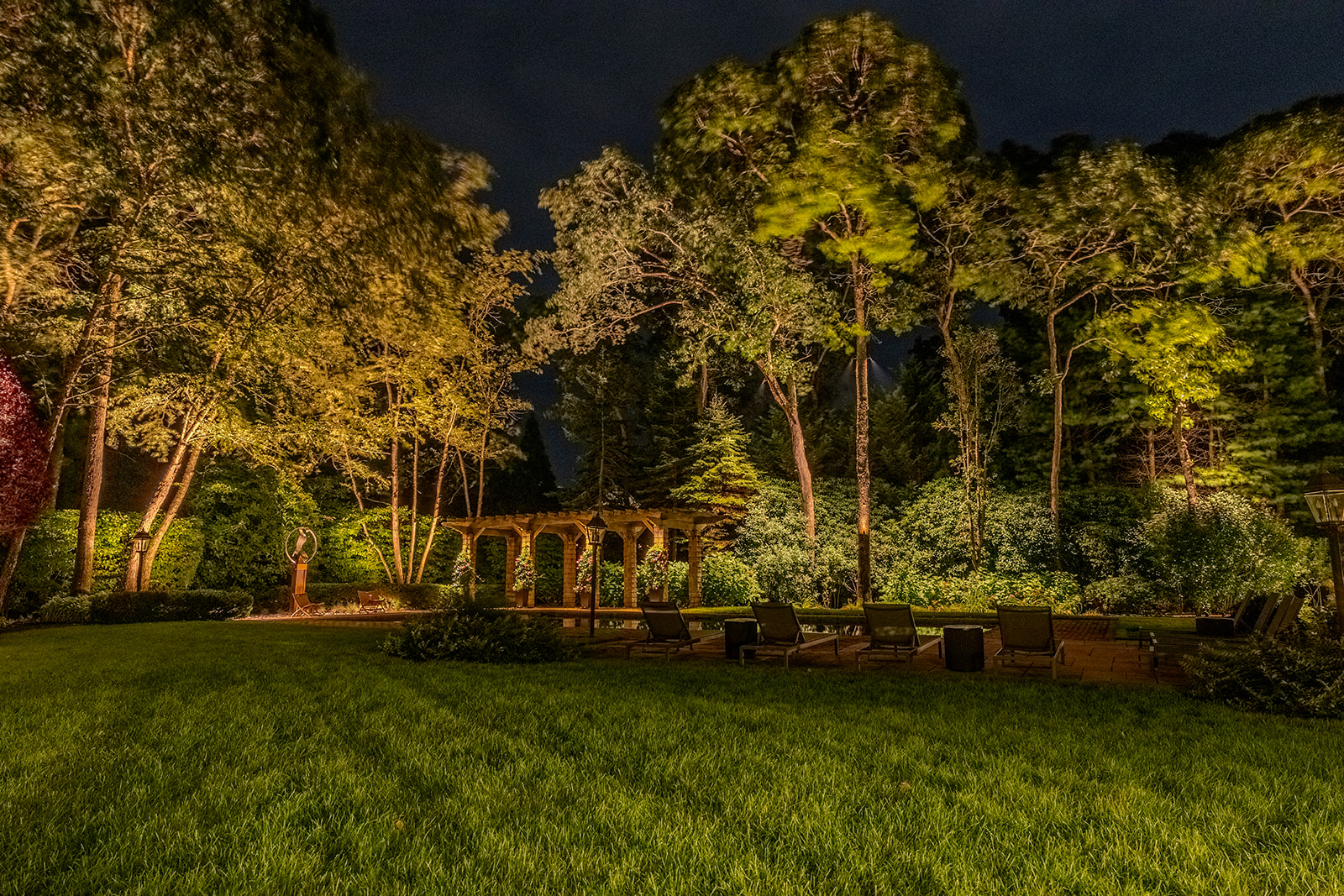
Installation was not the final step. During the nighttime review, the team experienced the composition under the conditions for which it was designed. This final tuning is part of HLL's professional landscape lighting installation process.
The review identified opportunities to reposition a fixture near the southeast maple, strengthen the rear-oak section with future uplighting and soften the pergola illumination. These refinements become visible only when the landscape is evaluated after dark.
Professional night aiming allows HLL to adjust beam direction, intensity, glare and visual balance so each fixture supports the complete view.
A landscape defined by what is revealed
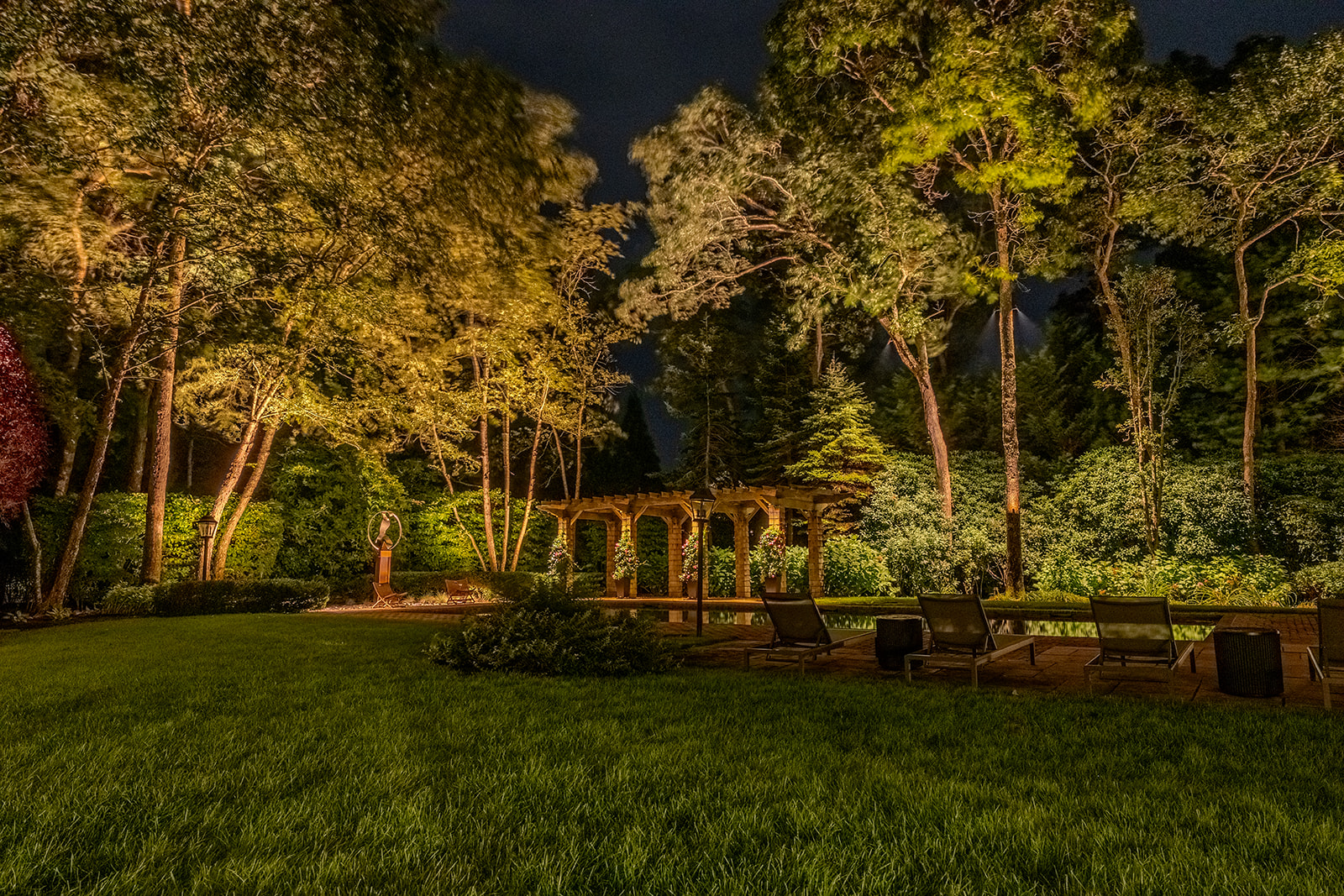
The completed design allows the Quogue property to unfold gradually after sunset. Mature trees establish its visual structure. Garden lighting creates focal points. Paths provide quiet guidance. The sculpture, pergola, pool landscape and entertaining areas appear as connected destinations rather than isolated features.
Darkness supplies contrast and gives those moments their meaning. This project demonstrates that fixture count is a poor measure of thoughtful landscape lighting. The real work lies in understanding where light should originate, which views deserve emphasis, how one scene should lead to another—and when darkness should be left alone.
As the garden changes, ongoing landscape-lighting service helps protect the aiming, balance and reliability of the original design.
Design the nighttime experience before the first fixture is installed.
Bring HLL into the project early enough to coordinate the lighting with the architecture, landscape and way the property will be lived in after dark.