
Exterior Lighting Design | The Hamptons
Exterior Home Lighting Ideas: Beauty, Safety & Atmosphere
The best exterior home lighting does more than make a house visible after sunset. It guides guests, reveals architectural character, brings depth to the landscape, and creates an inviting sense of arrival.
A thoughtful exterior lighting plan combines functional illumination with carefully controlled architectural and landscape accents. The result is a home that feels welcoming, comfortable, and beautifully composed without unnecessary brightness.
How Should You Light the Exterior of a House?
Begin with the way people experience the property. Consider the approach from the driveway, the route to the front door, pathways connecting outdoor spaces, and the views of the landscape from inside the home.
Then build the design in three complementary layers:
- Task lighting makes steps, entries, paths, and outdoor activity areas easier to navigate.
- Ambient lighting introduces a comfortable level of light for outdoor dining, relaxation, and gathering.
- Architectural and landscape lighting reveals selected materials, trees, planting, and features that give the property character.
Design principle: More light is not necessarily better. A refined exterior lighting plan preserves darkness between illuminated elements, allowing the eye to move naturally through the property.
This layered approach is central to how Hamptons Landscape Lighting designs a complete nighttime environment.
1. Illuminate Pathways Without Creating Glare
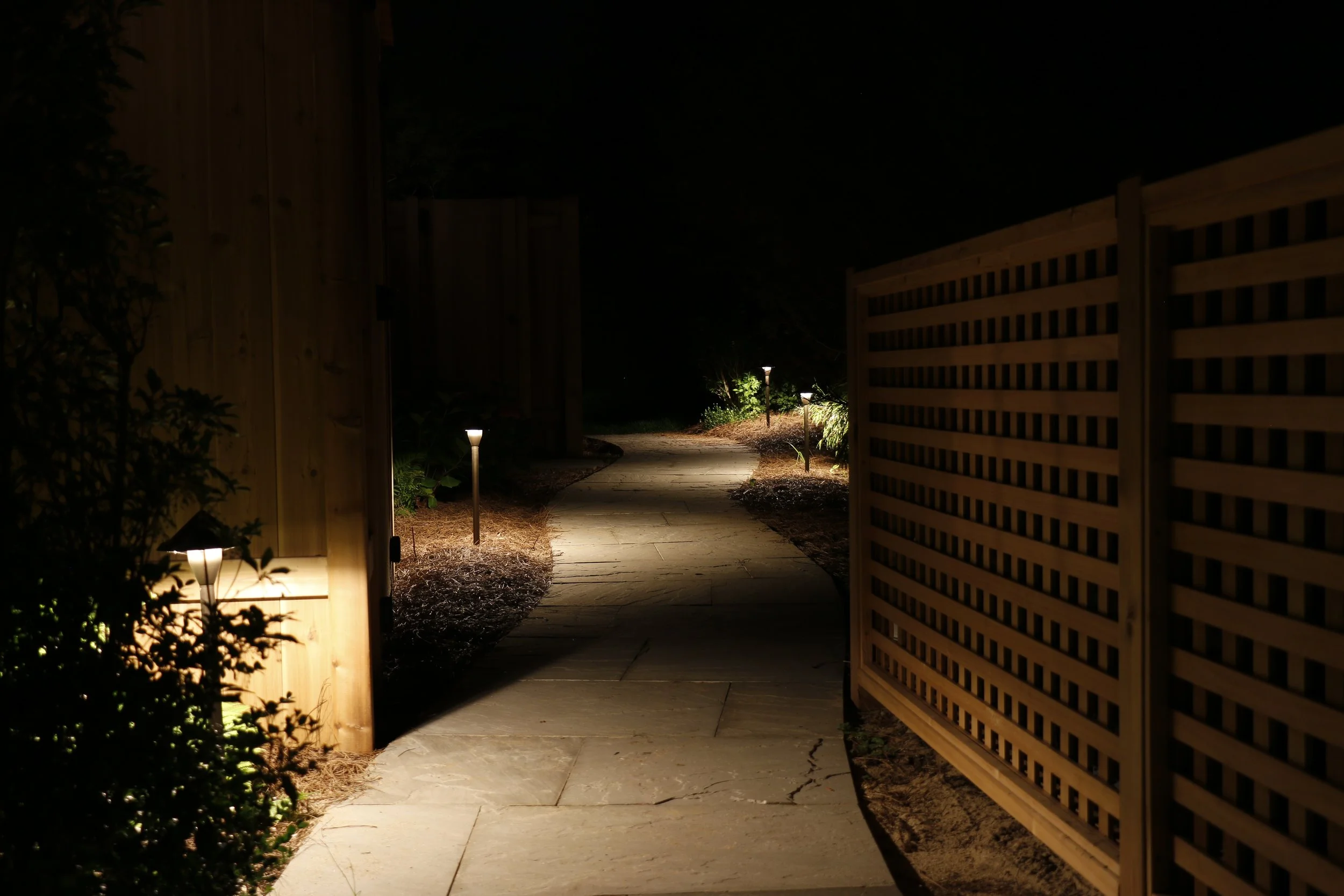
Pathway lighting is among the most useful exterior home lighting ideas because it serves both function and appearance. Guests should be able to identify the walking surface, turns, and changes in direction without looking into bright exposed lamps.
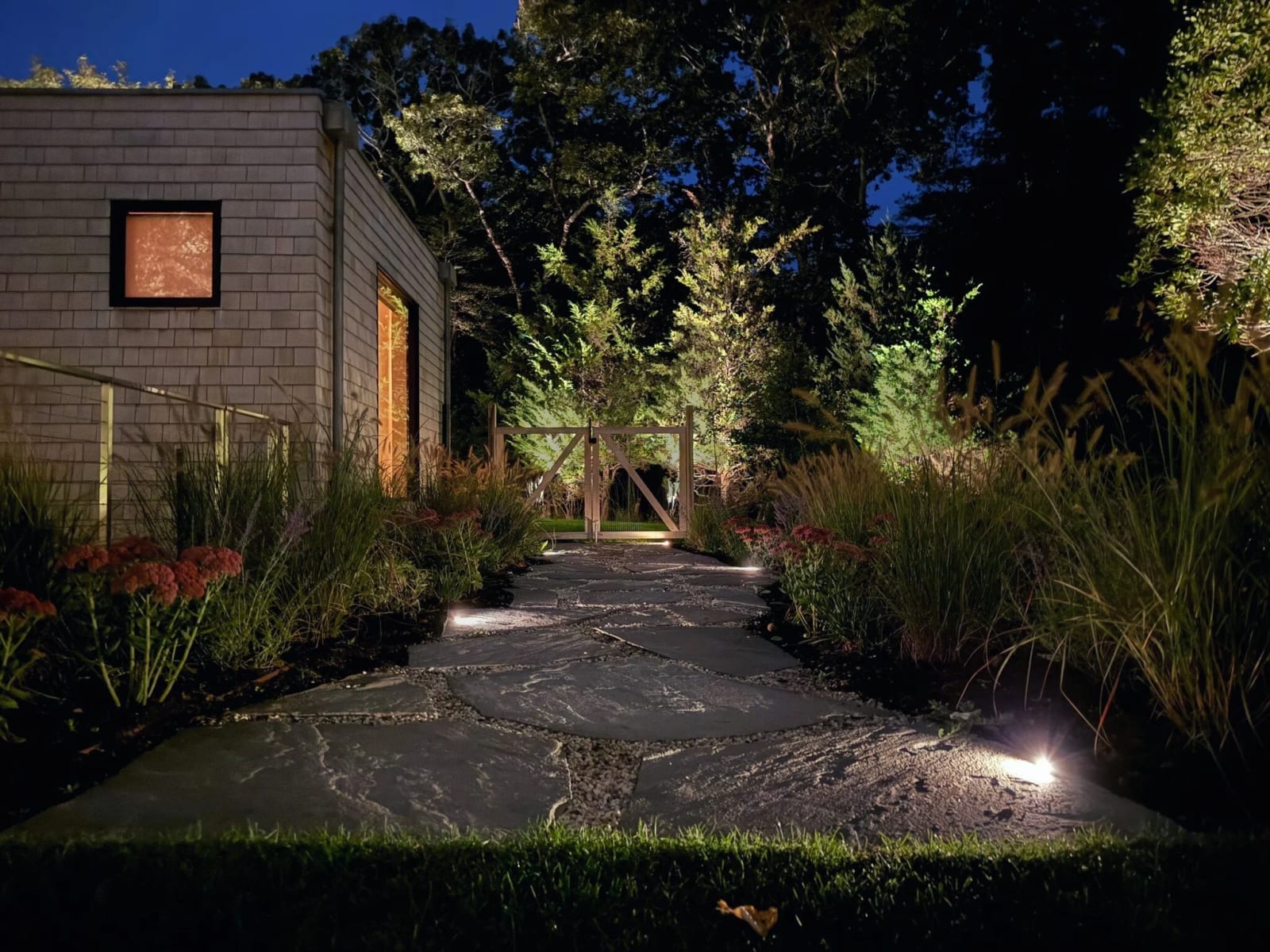
Low-profile fixtures, shielded path lights, and soft downlighting can guide movement through gardens and along front walks. Instead of positioning identical fixtures at rigid intervals, vary spacing according to the route, planting, and light distribution.
What works particularly well?
- Staggered pathway fixtures that create a natural rhythm.
- Recessed lighting at steps and changes in elevation.
- Soft illumination from nearby trees that also reaches walking surfaces.
- Discreet fixtures that remain visually quiet during daylight.
Explore HLL's approach to path and walkway lighting, including arrival walks, garden routes, and secondary access paths.
2. Make the Entrance Feel Welcoming
The entrance should be visually clear without feeling excessively bright. Front doors, thresholds, house numbers, and nearby steps benefit from carefully positioned light.
Wall lanterns and architectural sconces may provide decorative character, while recessed downlights or concealed fixtures can add functional illumination where needed.
Consider the entire arrival sequence. Light from the driveway, garden, front walk, and entry should feel connected, rather than appearing as unrelated points of brightness.
Design detail: Evaluate entry lighting from a guest's eye level. If a fixture creates glare when approaching the door, repositioning or shielding it may be more effective than simply reducing brightness.
3. Reveal the Architecture, Not the Fixtures
Exterior architectural lighting helps reveal a home's proportions, materials, and distinctive details. It can draw attention to natural stone, columns, timber, shingle textures, and carefully selected facade elements.
Uplighting
Controlled uplighting can emphasize vertical surfaces, columns, and selected architectural features. Beam width, placement, and brightness should be adapted to the scale of the home.
Grazing
Light placed close to a textured surface can reveal the character of stone, brick, or other architectural materials. This technique works best when the fixture position is carefully considered to prevent distracting glare.
Downlighting
Discreet downlighting can create a welcoming pool of light beneath a porch, overhang, or architectural projection. It is often useful where an additional visible fixture would compete with the design.
For additional inspiration, explore modern outdoor lighting for Hamptons homes.
4. Use Landscape Lighting to Create Depth
A beautifully lit garden should not appear flat or uniformly bright. Thoughtful landscape lighting establishes focal points at different distances, allowing the property to retain visual depth after dark.
Specimen Tree Lighting
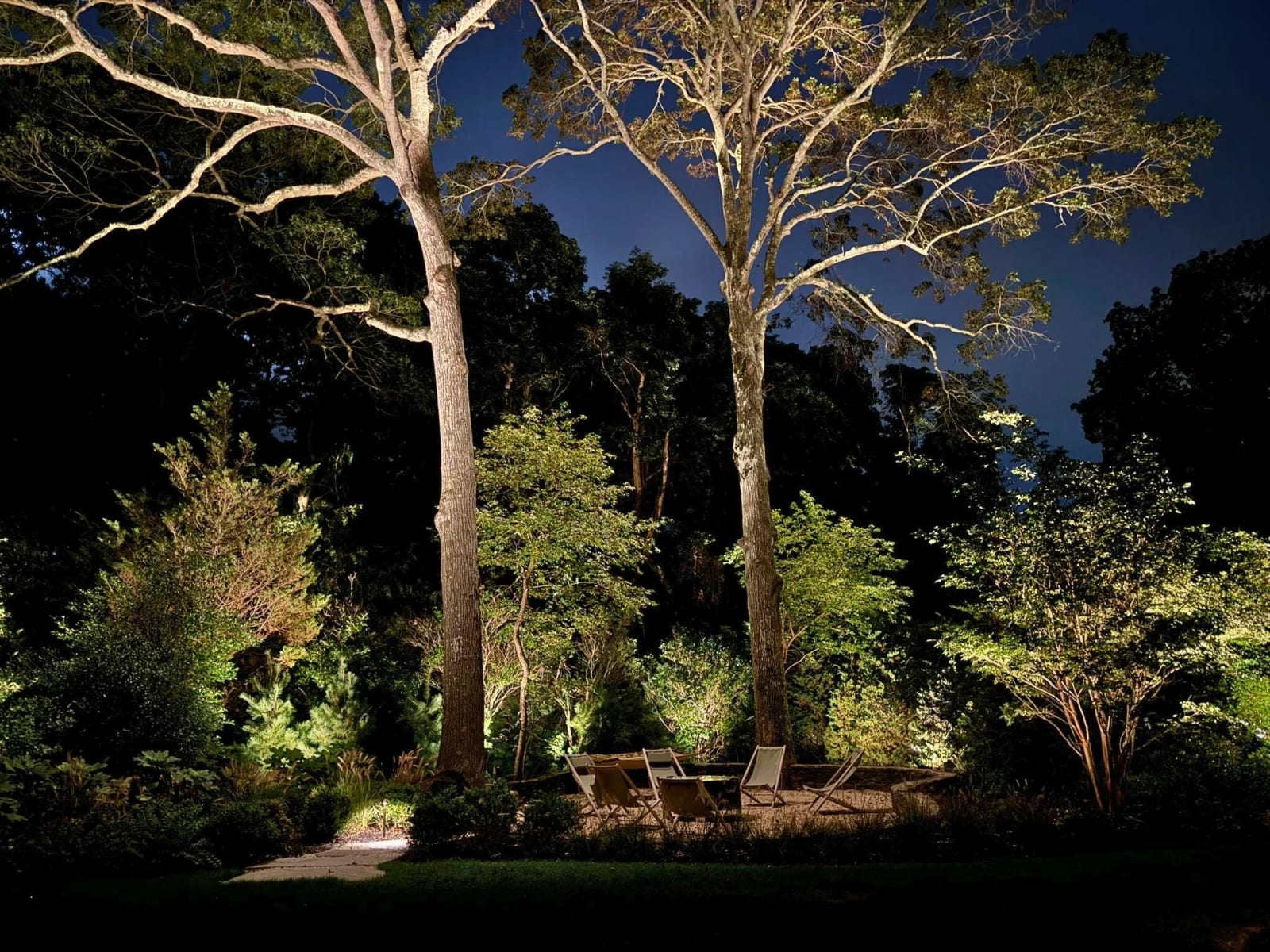
Select trees can become elegant nighttime focal points. Depending on their form, canopy, and surrounding landscape, uplighting or high-mounted downlighting may provide the most natural effect.
Garden and Planting Bed Lighting
Carefully aimed accents can reveal ornamental grasses, hedges, flowering plantings, or sculptural landscape elements without illuminating every plant equally.
Views From Inside the House
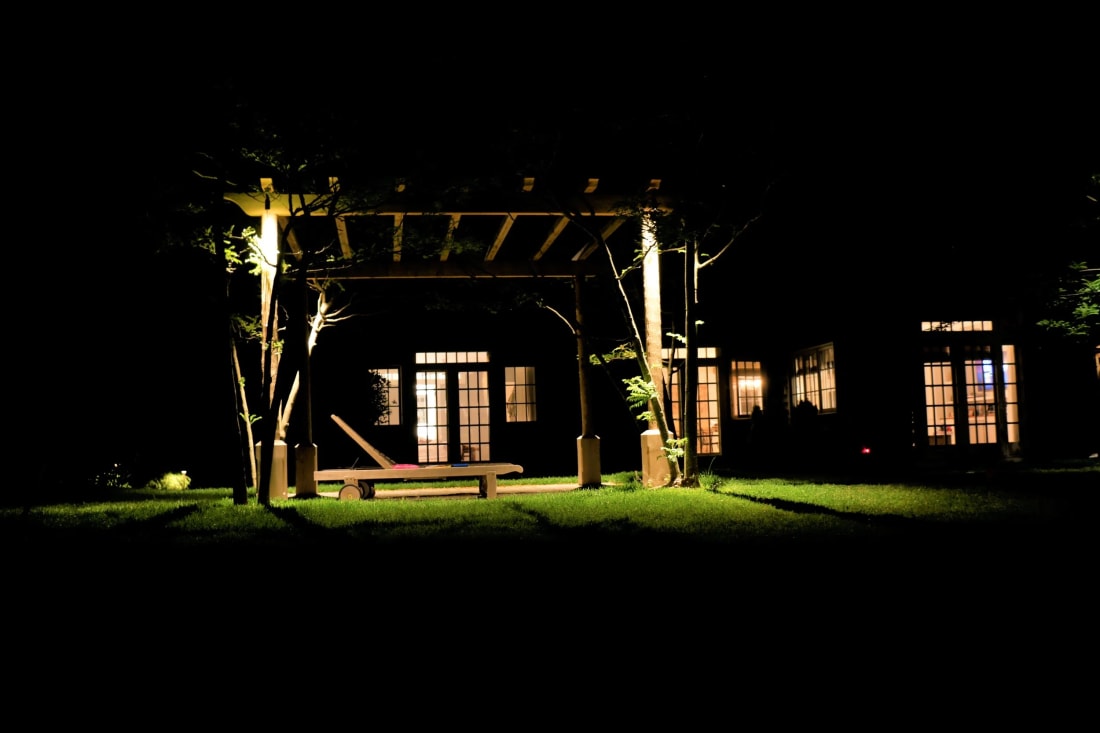
Exterior lighting should also be evaluated through the home's windows. A softly illuminated garden can create a beautiful sense of depth beyond the glass, particularly in rooms used after sunset.
Discover how customized outdoor lighting scenes bring these layers together.
5. Create Comfortable Outdoor Living Spaces
Patios, dining terraces, outdoor kitchens, and seating areas benefit from light designed around the activities taking place within them.
Dining areas may need soft, warm illumination that allows guests to see one another comfortably. Outdoor kitchens require more focused task lighting for food preparation and cooking surfaces.
Lanterns, decorative pendants, and carefully placed bistro lighting can contribute atmosphere. However, they should complement a dependable lighting system rather than serve as its only source of illumination.
Explore more ideas for outdoor lighting designed around entertaining in the Hamptons.
6. Choose Light That Feels Warm and Natural
Color temperature plays an important role in how an exterior lighting design feels.
Warm white light, often around 2700K to 3000K, is commonly used for residential exterior lighting. Warmer choices can complement natural materials, garden plantings, and inviting outdoor spaces.
The correct specification depends on the surface, desired atmosphere, surrounding ambient light, and overall composition.
Just as important are beam control, fixture shielding, and aiming. Even warm light can feel harsh when the source is directly visible to guests or neighbors.
Learn more about avoiding excessive glare in outdoor lighting.
7. Make Exterior Lighting Easy to Live With
Beautiful exterior lighting should not require constant homeowner attention. Thoughtful control makes lighting predictable, comfortable, and adaptable.
Timers and Astronomical Scheduling
Lighting schedules can respond to sunset and seasonal changes, reducing the need for manual adjustments throughout the year.
Lighting Zones and Scenes
Separate zones allow a homeowner to select lighting appropriate for arrival, entertaining, late-night circulation, and other activities.
Selective Motion Activation
Motion-activated lighting may be appropriate for certain service areas or occasional-use routes. It should be configured carefully so sudden brightness does not disturb the property's nighttime atmosphere.
8. Plan for Coastal Durability and Long-Term Care
In Southampton, East Hampton, Sag Harbor, and other coastal communities, exterior lighting must withstand environmental conditions that can affect long-term performance.
Salt air, moisture, irrigation, drainage conditions, and seasonal temperature changes all influence fixture selection and installation.
A professional lighting plan considers appropriate fixture materials, protected connections, transformers, wiring, drainage, and future access for maintenance.
Landscape growth also matters. A fixture that beautifully illuminates a young tree may need repositioning or re-aiming several seasons later.
Regular inspections, cleaning, and nighttime adjustments help maintain the original design. Learn about HLL's Brilliance Care maintenance program.
Common Exterior Lighting Mistakes to Avoid
Illuminating Everything Equally
Uniform brightness removes visual hierarchy. Instead, emphasize important features and allow quieter areas to remain dark.
Using Too Many Visible Fixtures
A collection of decorative fixtures can create clutter. Select equipment according to the lighting effect it should produce.
Overlooking Glare
Exposed lamps can interfere with walking, seating, and views. Shielding and careful nighttime aiming are essential.
Relying on Solar Fixtures for Core Lighting
Solar products can be useful for temporary or decorative applications, but their performance depends on sunlight, battery condition, and installation conditions. Professionally wired systems are generally more appropriate for consistent, carefully controlled lighting.
Skipping Nighttime Adjustments
A design that looks correct on paper should still be evaluated after dark. Beam direction, output, glare, and overall composition often require final adjustments on site.
Exterior Home Lighting: Frequently Asked Questions
What is the best way to light the exterior of a house?
Start with pathways, steps, and entrances, then introduce selected architectural and landscape accents. Use warm, controlled illumination and preserve areas of darkness to create depth and comfort.
What color temperature is best for outdoor residential lighting?
Warm white light around 2700K to 3000K is a common residential choice. The best selection depends on the materials, landscape, desired atmosphere, and surrounding lighting.
How far apart should pathway lights be placed?
There is no universal spacing rule. Fixture output, beam spread, path width, planting, and changes in direction determine the layout. Staggered, carefully aimed fixtures often look more natural than evenly spaced rows.
Should exterior lighting stay on all night?
Not necessarily. Separate zones and schedules allow decorative lighting to dim or turn off later while selected circulation and functional areas remain illuminated when needed.
Is professionally installed lighting better than solar lighting?
Solar lighting may suit simple, temporary, or decorative uses. A professionally designed wired system generally offers more predictable illumination, coordinated controls, and greater flexibility for larger residential properties.
Why should exterior lights be adjusted after installation?
Nighttime aiming reveals how illumination actually interacts with architecture, plantings, walking surfaces, and outdoor seating areas. Adjustments help balance focal points and reduce glare.
Related Reading
Continue exploring design techniques and practical lighting considerations:
Hamptons Landscape Lighting
Beautiful Exterior Lighting Begins With a Thoughtful Plan
From the first impression at your driveway to the final view across your garden, every layer of light should have a purpose. Hamptons Landscape Lighting designs and installs exterior lighting around the architecture, landscape, and way you live.
Schedule a Lighting Consultation