
Outdoor Lighting for Hamptons-Style Entertaining
Outdoor entertaining is an essential part of life in the Hamptons. Terraces, gardens, pool areas, and covered patios become natural extensions of the home, creating settings for dinners, gatherings, and long summer evenings.
The right outdoor lighting allows these spaces to remain welcoming after sunset without competing with the relaxed coastal character of the property. Instead of relying on bright, uniform illumination, Hamptons outdoor lighting typically favors a soft, layered composition that reveals the architecture and landscape while keeping the fixtures themselves discreet.
The most successful plans consider the complete nightscape: the view from inside the home, the atmosphere around dining and seating areas, the deck’s character, safe movement between spaces, and the balance between illumination and darkness.
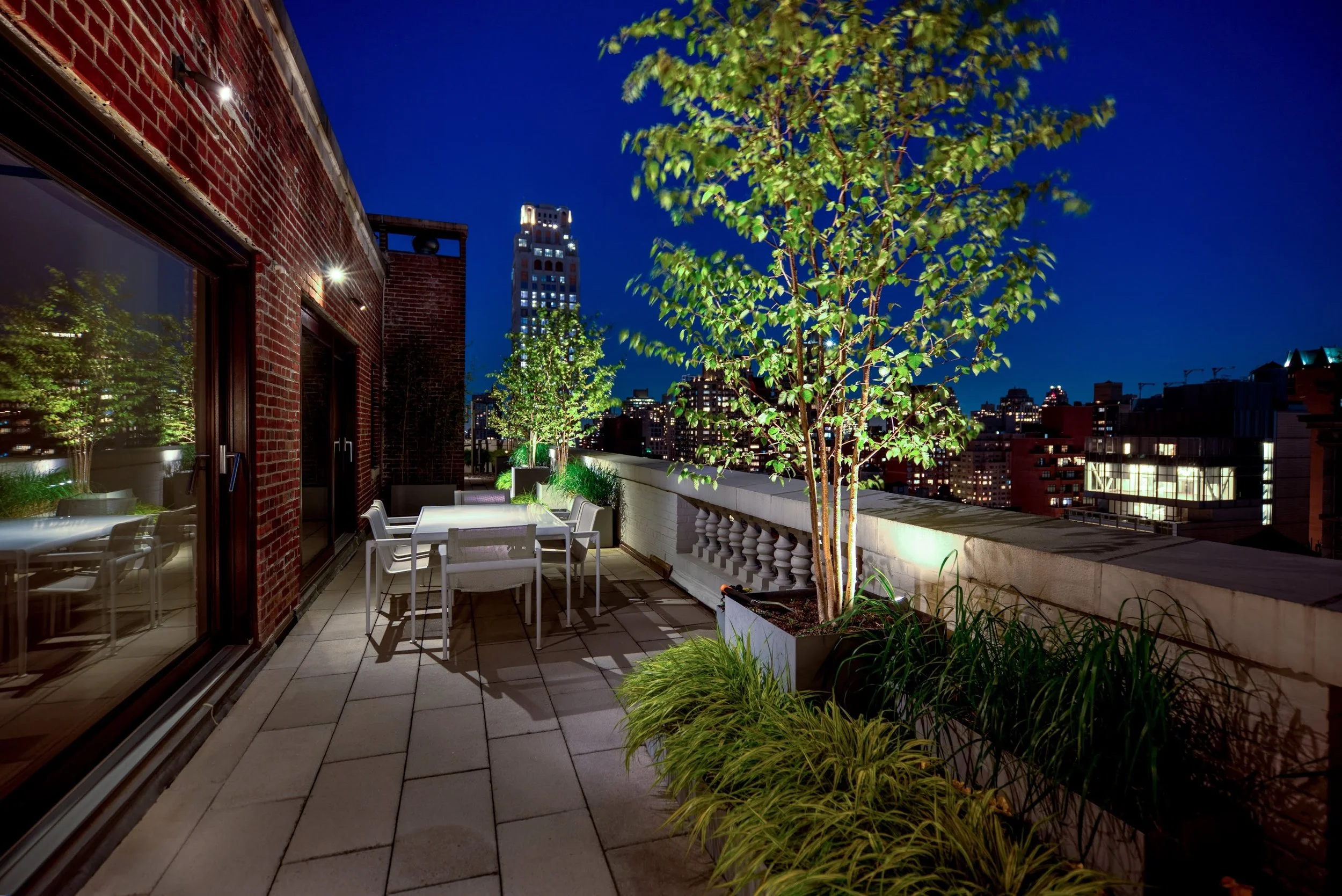
From New York City’s terraces and rooftops to the Hamptons relaxed coastal character, Hamptons Landscape Lighting designs and installs lighting for the perfect evening of outdoor entertainment.
Principles of Hamptons Outdoor Lighting
Create Layers of Light
Effective outdoor lighting combines several types of illumination. Soft ambient light establishes the overall atmosphere, focused task lighting supports dining and circulation, and accent lighting brings selected trees, plantings, and architectural details into view.
These layers should work together rather than appear as separate effects. The goal is a cohesive nighttime environment that feels composed from every important vantage point.
Choose Warm, Comfortable Light
Warm, carefully controlled light generally creates the most comfortable atmosphere for outdoor dining and conversation. It complements natural materials, softens architectural surfaces, and contributes to the sense of warmth expected in a Hamptons setting.
Brightness matters as much as color. Overly intense light can create glare, flatten the landscape, and diminish the intimate character of an outdoor space. Dimming and lighting controls make it possible to adjust the atmosphere for a quiet evening, a dinner party, or a larger gathering.
Specify Materials for Coastal Conditions
Salt air, humidity, wind, and seasonal exposure place particular demands on outdoor lighting. Fixtures, finishes, wiring methods, and installation details should all be selected for the conditions of the property.
High-quality brass, bronze, stainless steel, and properly finished aluminum may be appropriate depending on the location and application. Material selection is only one part of long-term performance; fixture construction, placement, installation, and ongoing maintenance also matter.
Complement the Architecture
Lantern-style fixtures, understated sconces, and clean-lined pendants can complement many traditional and contemporary Hamptons homes. The most appropriate choice depends on the home’s architecture, material palette, and relationship to the surrounding landscape.
Decorative fixtures should feel integrated rather than added as an afterthought. Quiet elegance is usually more effective than visual excess.
Lighting Outdoor Entertaining Areas
Dining and Seating Areas
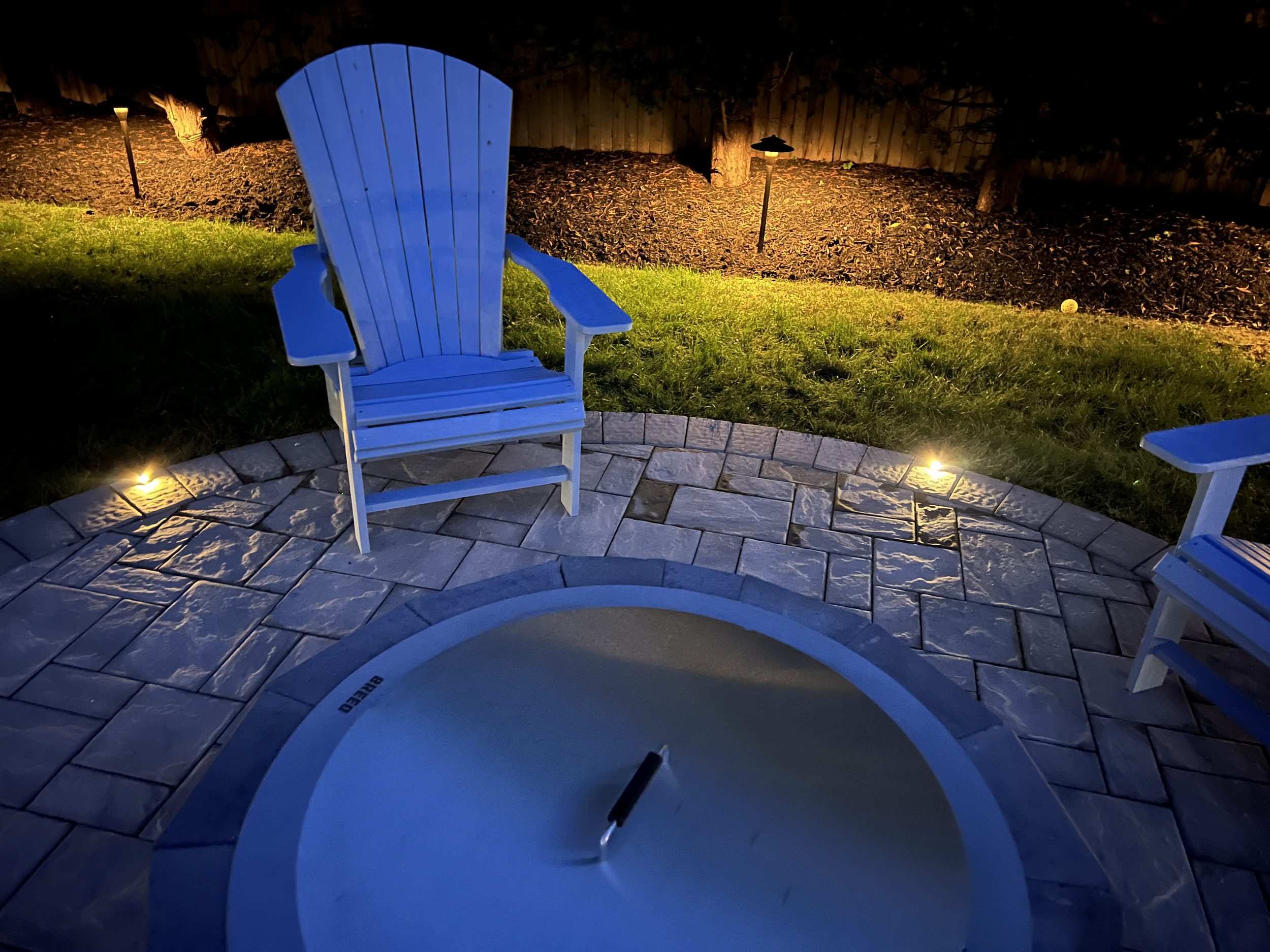
Discover how layered outdoor lighting creates warm, inviting patios, terraces, gardens, and pool areas for entertaining in the Hamptons
Outdoor dining areas need enough light for guests to see comfortably without creating the feeling of a brightly lit interior room. Light directed toward the table, combined with softer illumination around the surrounding landscape, creates a sense of intimacy while preserving visual depth.
Seating areas may require even less direct light. Subtle illumination from nearby plantings, architectural surfaces, lanterns, or concealed sources can create warmth without placing a bright fixture in the guest’s field of view.
Overhead and Café Lighting
In the right architectural setting, café lighting can add warmth above a pergola, courtyard, or terrace. Spacing, suspension, brightness, and sightlines should be carefully controlled so the installation feels intentional rather than temporary or visually busy.
For covered patios and pergolas, pendant lighting can provide useful illumination above a dining table or seating arrangement. The size, height, and output of the fixture should be coordinated with the scale of the structure and the other lighting layers.
Lanterns and Wall Sconces
Wall-mounted lanterns and sconces can illuminate doors, covered patios, and transition areas while reinforcing the architecture of the home. Their placement should support circulation and ambiance without creating excessive brightness or glare through nearby windows.
Portable table lanterns can add another layer of warmth during dinners and gatherings. Used selectively, they bring a candlelit quality to the setting without overwhelming the overall composition.
Landscape and Tree Lighting
Lighting selected trees, planting layers, and architectural elements draws the eye beyond the immediate entertaining area. This creates depth and allows the surrounding landscape to remain part of the evening experience rather than disappearing into darkness.
Not every tree or garden feature needs to be illuminated. A curated approach—choosing a limited number of focal points and preserving areas of shadow—often creates a more natural and compelling nightscape.
HLL works with the landscaper to design outdoor lighting that compliments, not detracts from the natural plantings and beauty.
Path and Step Lighting
Walkways, stairs, and changes in elevation require careful illumination so guests can move safely between the house and outdoor spaces. Low, discreet fixtures and concealed light sources can provide visual guidance without turning circulation routes into dominant features.
The objective is not to illuminate every inch of a path. It is to reveal edges, transitions, and changes in level clearly enough for comfortable movement.
Pool and Water-Feature Lighting
Pools and water features can become calm visual anchors after dark. Underwater lighting, subtle perimeter illumination, and carefully selected reflections can contribute to a resort-like atmosphere while connecting the water to the surrounding landscape.
Glare control is especially important near water, glass, and pale architectural surfaces. Fixtures should be positioned and aimed so guests experience the effect of the lighting without looking directly into a bright source.
Small Details That Shape the Nightscape
Some of the most effective lighting is barely noticed. Concealed illumination beneath benches or railings, soft light within planting beds, carefully placed table lanterns, and restrained highlights on trees can add warmth and subtle drama.
These details are most successful when they support the larger composition. Too many isolated effects can make a property feel visually busy, while a small number of carefully chosen moments can create effortless elegance.
Plan Lighting With the Architecture and Landscape
Outdoor lighting works best when it is coordinated with the architecture, landscape, and intended use of each space from the beginning. Circulation, dining, gathering areas, focal points, and views from inside the home should be considered together.
Hamptons Landscape Lighting designers walk the property with the homeowner, discuss the intended use, analyze the existing architecture and form, identify ideal specimens of trees for uplighting and downlighting, and design an outdoor lighting plan that creates an extension of the house long after the sun sets.
Early planning also allows fixtures, wiring, controls, and mounting locations to be integrated more discreetly. This is particularly valuable during a new landscape installation, pool project, renovation, or outdoor-living addition.
When thoughtfully designed, outdoor lighting does more than extend the usable hours of a patio or garden. It creates a complete nightscape—one that brings warmth and depth to the property, supports relaxed entertaining, and allows the architecture and landscape to be experienced in an entirely different way after sunset.
Planning an outdoor entertaining space in the Hamptons? Hamptons Landscape Lighting can create a curated lighting plan that brings atmosphere, visual depth, and effortless elegance to your property after dark.
Frequently Asked Questions
What is the best lighting for an outdoor entertaining area?
The best outdoor entertaining lighting uses several coordinated layers. Dining and seating areas need soft, comfortable illumination, while pathways and steps require discreet lighting for safe movement. Selected trees, plantings, and architectural details can then be illuminated to add depth and atmosphere to the surrounding nightscape.
What color temperature works best for outdoor lighting?
Warm light is generally the most comfortable choice for outdoor dining, conversation, and relaxation. It complements natural materials and creates an inviting atmosphere without making the space feel overly bright. The appropriate color temperature may vary by application, so consistency and coordination across the property are important.
How can an outdoor dining area be illuminated without creating glare?
Glare can be reduced through careful fixture placement, shielding, aiming, and dimming. Guests should experience the effect of the lighting without looking directly into bright sources. This is especially important near dining tables, seating areas, glass doors, pools, and reflective architectural surfaces.
Are café lights appropriate for every Hamptons property?
Café lights can add warmth to pergolas, courtyards, and terraces, but they are not appropriate for every architectural setting. Their spacing, suspension, brightness, and relationship to the surrounding landscape should feel intentional. On some properties, concealed lighting, lanterns, or understated pendants may provide a more cohesive result.
Which outdoor lighting materials perform well in coastal environments?
Coastal properties require fixtures and finishes selected for exposure to salt air, moisture, and seasonal weather. High-quality brass, bronze, stainless steel, and properly finished aluminum may be suitable depending on the location and application. Construction quality, installation methods, fixture placement, and maintenance also affect long-term performance.
How should pools and water features be illuminated?
Pools and water features benefit from restrained underwater and perimeter lighting that supports safe movement while creating calm reflections. The lighting should connect the water to the surrounding landscape without producing excessive brightness or glare. A balanced approach allows the pool to become part of the complete nightscape.
When should outdoor lighting be planned?
Ideally, outdoor lighting should be considered during the early stages of a landscape installation, pool project, renovation, or outdoor-living addition. Early coordination makes it easier to integrate fixtures, wiring, controls, and mounting locations discreetly. Existing properties can also be improved with a carefully planned lighting design.
Can Outdoor Lighting Be Designed With Strict Dark Sky Laws?
Yes, Hamptons Landscape Lighting stays on top of the requirments from town to town and village to village. Hours of operation, mounting heights, respect for nature and neighbors are all considered when designing and installing Hamptons entertainment lighting.
Why work with a professional landscape lighting designer?
A professional lighting designer considers more than individual fixtures. The process accounts for architecture, landscape, circulation, gathering areas, important sightlines, glare control, coastal conditions, and the desired nighttime atmosphere. The result is a curated nightscape that feels balanced across the entire property.