
Landscape Lighting That Grows With Your Garden
Trees grow, planting beds fill in and outdoor spaces evolve. A well-planned landscape lighting design anticipates those changes rather than fighting them.
A newly planted Hamptons garden and the same garden five years later can look remarkably different. Trees gain height and character. Hedges become denser. Planting beds soften paths, terraces and architectural edges.
The best landscape lighting design accounts for that progression from the beginning. Rather than lighting only what exists on installation day, it considers how changing foliage, sightlines and outdoor uses will affect the nighttime composition.
At Hamptons Landscape Lighting, designing for a maturing landscape means choosing focal points carefully, leaving fixtures serviceable, planning for future adjustments and assessing the result after dark. The goal is a design that can be refined as the property grows, rather than repeatedly rebuilt.
Design for the landscape it will become.
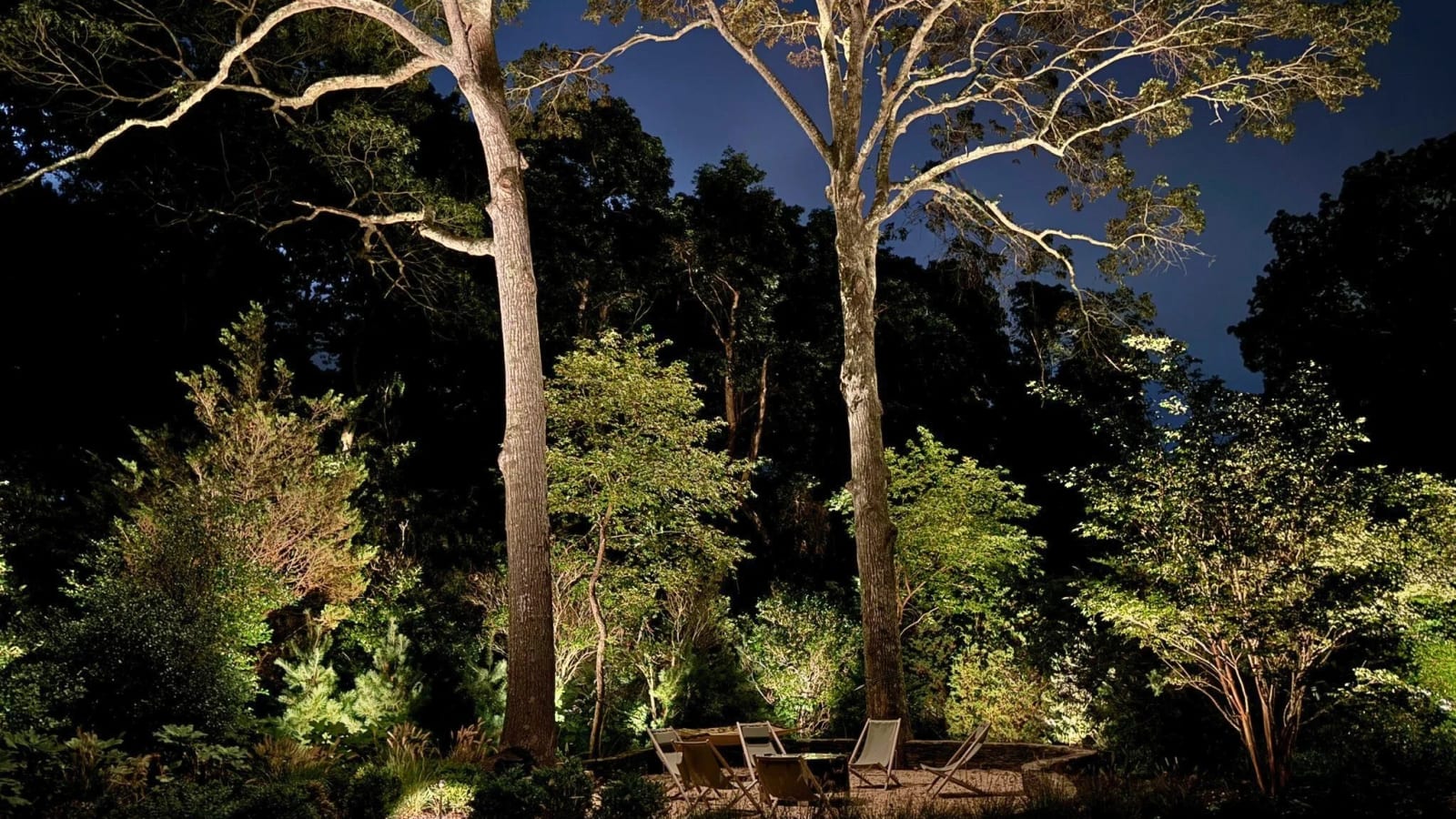
Every planting plan contains a future landscape. A young tree may eventually spread a broad canopy. A hedge may become dense enough to block an uplight. New perennials may grow around path fixtures, changing how a walkway looks and feels after dark.
Lighting designed only for current plant sizes may lose its effect as those changes unfold. Before installation, the lighting designer should review the landscape plan, ask about expected mature sizes, consider the principal views from inside and outside the home, and coordinate fixture placement with the landscape team. Cable routes, connections and fixtures should remain reasonably accessible for service, with appropriate allowance for future refinements.
For specimen trees, the beam that beautifully reveals a trunk today may need to be repositioned as the canopy spreads. A thoughtful plan recognizes that possibility from the beginning. See our guide to lighting mature and specimen trees for more on how different techniques reveal structure and depth.
Five decisions that make lighting easier to adapt.
A future-ready landscape lighting plan does not require predicting every change. It does require making a few practical decisions early.
- Review mature planting sizes: Coordinate with the landscape architect or designer so fixtures are not placed where shrubs or roots will eventually obstruct them.
- Protect key sightlines: Check the approach, entry, terraces, garden walks and views through the home's windows, not just the view from the street.
- Keep fixtures reachable: Accessible locations make cleaning, re-aiming and selective replacement easier as beds fill in.
- Plan lighting zones thoughtfully: Separate functional paths and entrances from garden accents or entertaining areas when the design calls for different schedules or scenes.
- Evaluate after dark: Nighttime aiming reveals glare, overly bright focal points and unexpected shadows that cannot be judged in daylight.
These are the details that allow a design to evolve without losing the character of the original plan.
Restraint is what lasts.
The strongest outdoor lighting designs rarely depend on illuminating everything. They choose the elements that deserve attention, then let the eye travel comfortably between them.
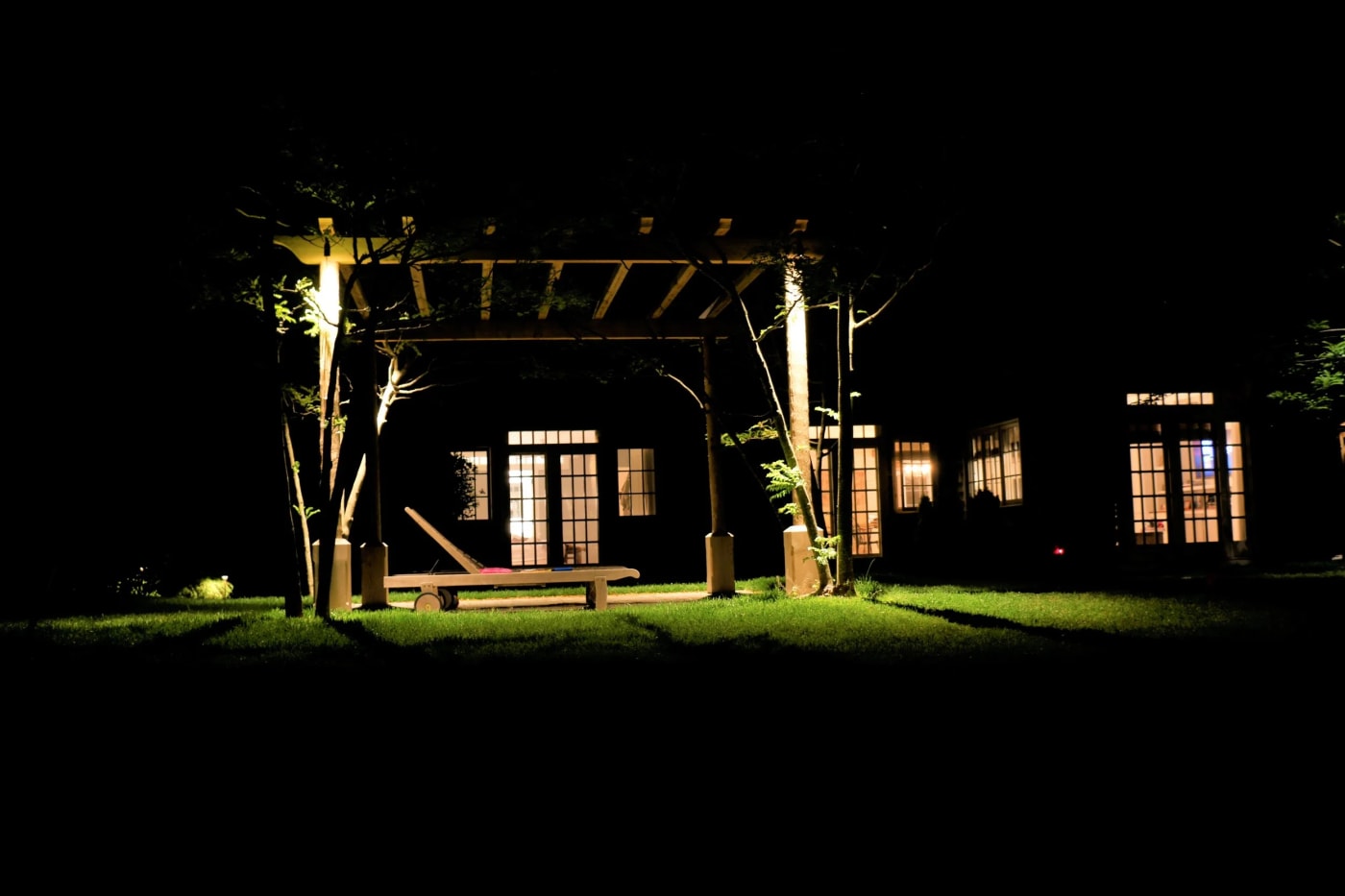
A mature oak, a stone wall and the turn of a garden path do not need to compete. Their relationship becomes more compelling when there is a clear hierarchy of light. Warm color, carefully controlled beams and intentional darkness can create a more enduring result than a property illuminated at the same brightness throughout. Thoughtful aiming also helps limit spill light toward neighbors and unnecessary illumination of surrounding habitat.
This is why professional nighttime aiming and design review matter so much. Light should be considered from the front approach, the terrace, the garden walk and especially the views from inside the home. An effect that looks appealing beside a fixture may create distracting glare from a bedroom window.
Thoughtful lighting leaves room for the landscape itself to become the focal point.
When the garden changes, the lighting can respond.
Not every change calls for more fixtures or an entirely new design. Often, measured adjustments restore the balance of an established nighttime landscape.
- Growing trees: Re-aiming an uplight may reveal a broader trunk or new branching structure without introducing more brightness.
- Filling planting beds: Moving or raising a fixture can prevent foliage from blocking its beam.
- Changing outdoor uses: A terrace that becomes a favorite evening gathering space may benefit from a more carefully balanced scene.
- New paths or landscape features: A limited, well-planned addition can maintain the visual rhythm of the original installation.
- Seasonal transitions: Leaf-on and leaf-off conditions can alter the feeling of an illuminated canopy, making a periodic review valuable.
The point is continuity rather than perpetual renovation. An established scheme can remain recognizable while being refined for the landscape that exists today. When more significant work is appropriate, understanding the difference between repair and an upgrade helps homeowners make a considered decision.
Annual maintenance preserves the intention.
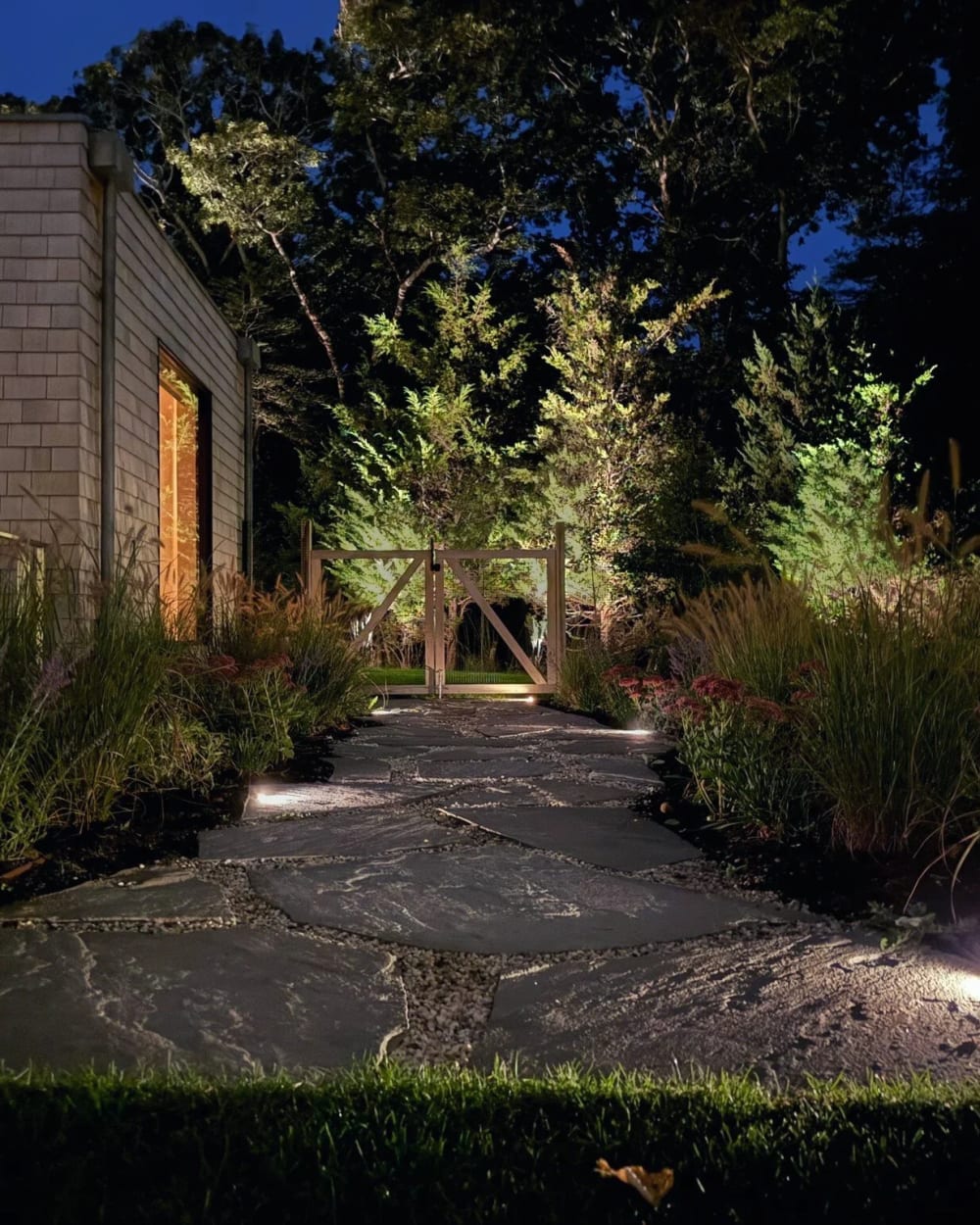
A beautifully designed landscape lighting system still lives outdoors. Wind, irrigation, soil movement, growing roots and routine garden work can shift fixtures. Lenses gather debris. Timers need seasonal adjustments. Along the coast, salt air and moisture add their own demands.
That is why an annual professional lighting review is a sensible starting point, even for a system that appears to be working normally. A knowledgeable technician can inspect components, clean lenses, correct fixture positions, check control schedules and look at the design as a whole after dark.
For larger estates, rapidly growing gardens and waterfront properties, more frequent visits may be appropriate. Our BrillianceCare maintenance plans offer one, two or four scheduled visits per year, allowing homeowners to choose a service rhythm suited to their landscape and exposure.
A useful yearly question: Does the property still feel right after dark?
A maintenance visit should do more than identify failed fixtures. It should consider whether trees are still being revealed as intended, pathways remain comfortably illuminated and glare has appeared where it did not exist before. The goal is to preserve the design, not simply restore power to each light.
For a closer look at upkeep in coastal conditions, read our landscape lighting maintenance guide. It explains the practical checks that protect visual balance and system performance.
A beautiful landscape deserves a long view.
Landscape lighting is part of a larger relationship between architecture, planting, movement and the experience of home. Its success is not measured solely on installation day. It is visible in the years that follow, as the garden fills in and the lighting continues to feel deliberate.
By choosing the right focal points, allowing for future adjustment and tending to the system at least annually, homeowners can preserve a nighttime landscape that feels natural rather than dated.
For homeowners, landscape architects and garden designers planning a new property or updating an established landscape, early collaboration makes a difference. Thoughtful lighting design and installation establishes the composition. Periodic nighttime review helps it remain true to the property as it matures.
Frequently asked questions.
How do you design landscape lighting for growing trees and shrubs?
Start with the planting plan and expected mature sizes. Position fixtures where they can be accessed and re-aimed, consider key views from the house and garden, and choose a balanced composition that does not rely on lighting every plant.
How often should landscape lighting be reviewed as a garden matures?
An annual professional review is a useful starting point for many properties. Rapidly growing gardens, large estates and coastal sites may benefit from more frequent checks to clean lenses, correct fixture positions, inspect equipment and review the nighttime composition.
Should outdoor lighting be redesigned as trees grow?
Not necessarily. Re-aiming or repositioning existing fixtures can often restore the desired effect. Additional fixtures or a partial redesign make sense when growth or changes to the property create a genuinely new lighting need.
Can an older landscape lighting system be improved without replacing everything?
Often, yes. A design review can distinguish maintenance issues from areas that would benefit from selective upgrades. Condition, compatibility and existing infrastructure determine what can be retained.