
Seasonal living | The Hamptons
A seasonal Hamptons home does not need to be brightly illuminated throughout the night. It needs a thoughtful exterior lighting plan that supports arrivals, safe movement, and property oversight while preserving the natural character of the landscape.
Whether a residence is occupied every weekend, visited occasionally during winter, or cared for by a property manager between stays, its lighting needs change with the season.
Security-conscious landscape lighting focuses on the places where visibility matters most: driveways, gates, entrances, paths, steps, service areas, and transitions between buildings. The objective is useful illumination, not constant brightness.
At Hamptons Landscape Lighting, we approach these requirements as part of the property's overall nighttime design. A successful system brings together architectural character, landscape composition, appropriate controls, and ongoing maintenance.
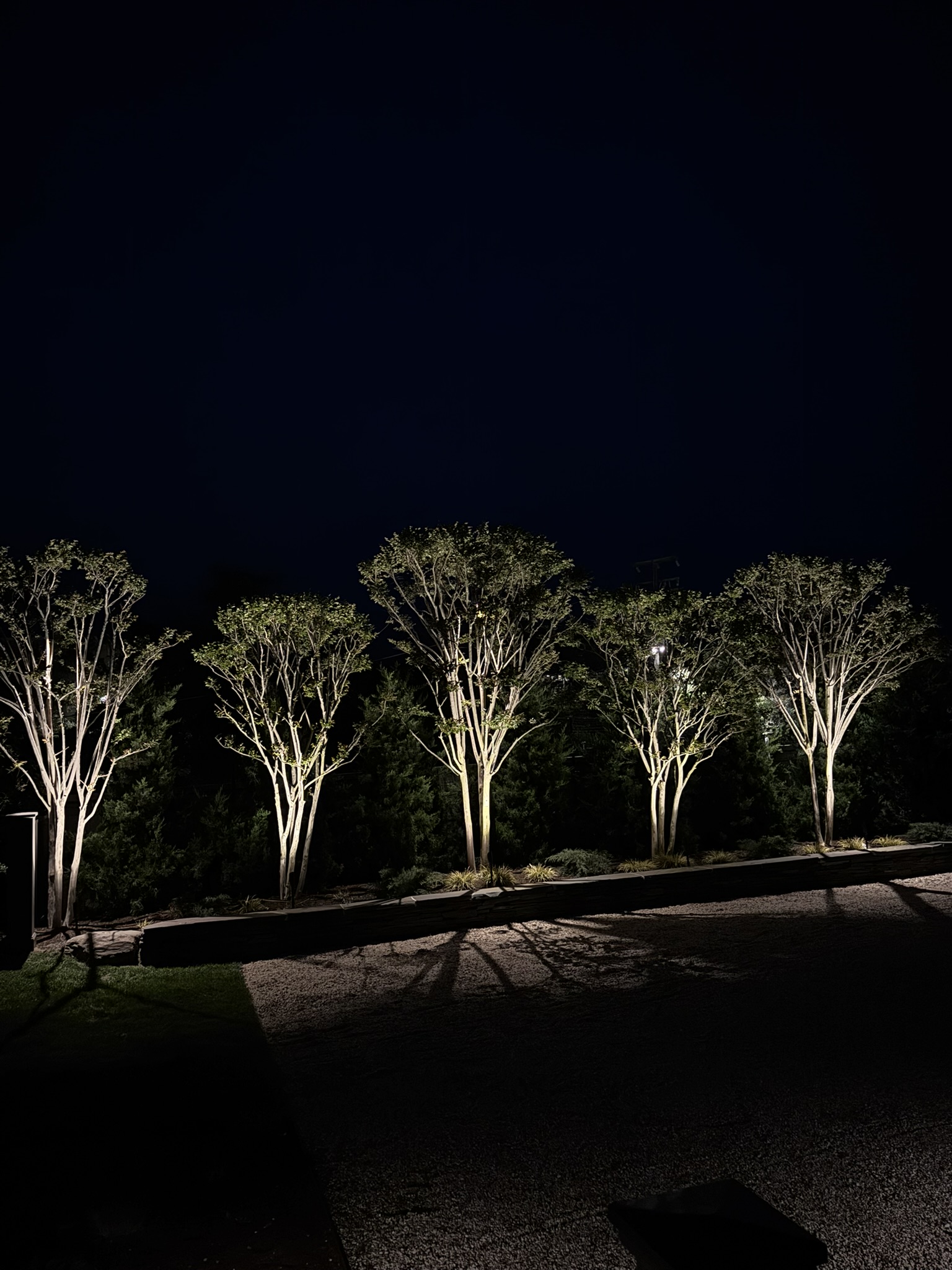
Begin with the arrival experience
For a seasonal residence, arrival is often the most important lighting sequence. A homeowner may arrive after sunset, a guest may be unfamiliar with the grounds, or a service professional may need to reach a secondary entrance.
Well-designed arrival lighting makes the route understandable without exposing guests to harsh floodlights or excessive contrast.
Priority areas commonly include the entrance gate, driveway turns, parking and arrival courts, front walks, steps, and the transition from the landscape to the front door.
For larger estates in Southampton, Bridgehampton, Sagaponack, East Hampton, and surrounding communities, long approaches and secondary buildings may call for multiple lighting zones.
Our approach to path and walkway lighting uses carefully positioned, shielded fixtures to reveal edges, changes in grade, and the natural movement through the landscape.
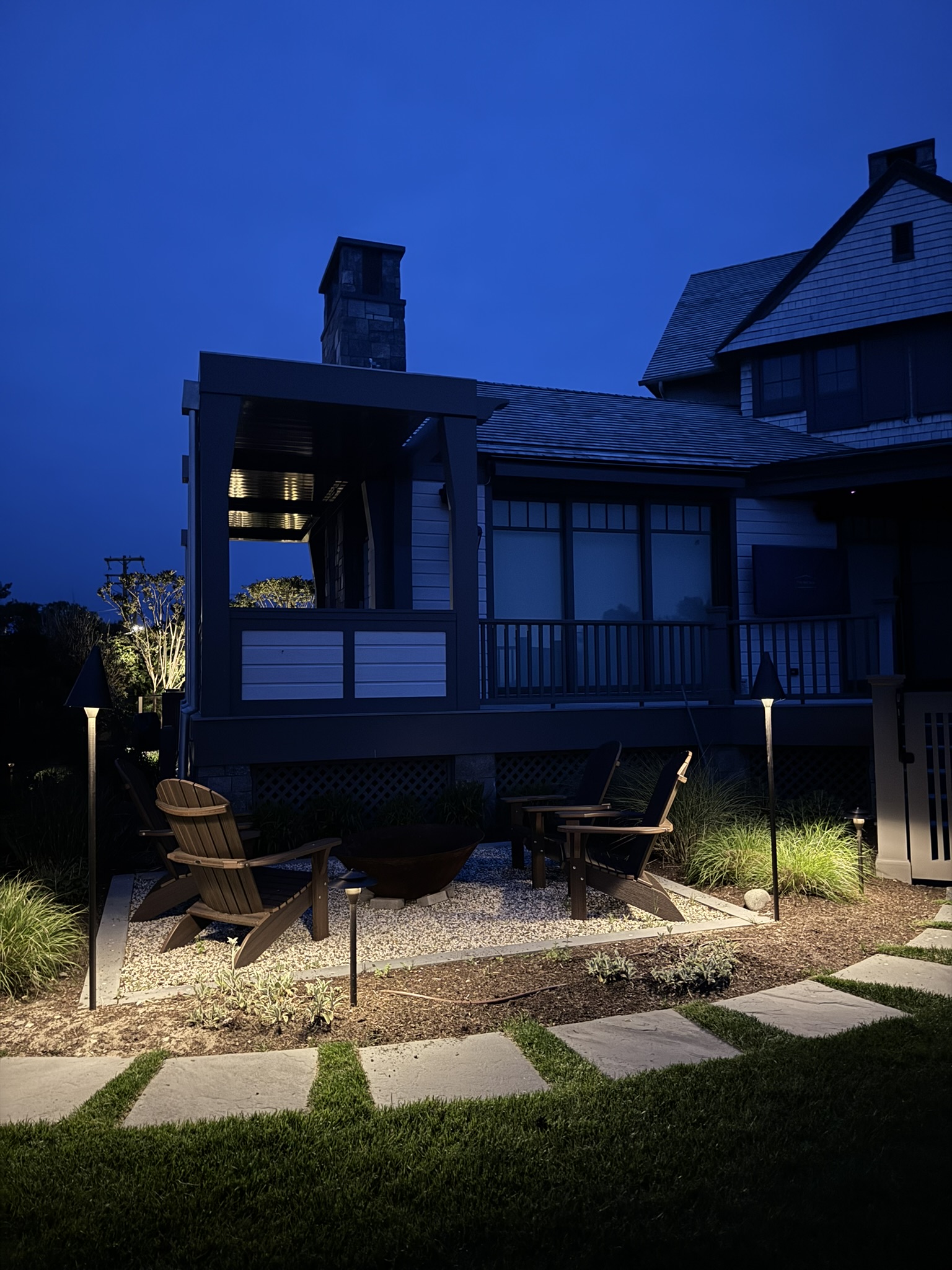
Design different lighting scenes for occupied and unoccupied periods
One lighting schedule rarely serves a seasonal home throughout the year.
A house hosting summer guests requires a different nighttime experience from one that is unoccupied through much of January.
When the home is occupied
An arrival scene can illuminate the driveway, main entry, and immediate pathways. Additional lighting layers may support terraces, gardens, outdoor dining, and movement between buildings.
As the evening progresses, decorative zones can dim or turn off while essential circulation lighting remains available where appropriate.
When the home is unoccupied
A simplified away schedule may maintain selected entry, service-route, or orientation lighting while decorative areas remain off.
Appropriate schedules depend on the property, homeowner preferences, local requirements, and any broader property-management plan.
Astronomical timers, appropriately specified lighting controls, and scene-based automation can help accommodate sunset changes and different usage patterns.
The important distinction is that a programmed lighting scene is a convenience and visibility feature. It is not a substitute for intrusion detection, surveillance, access control, or professional property management.
Support visibility without creating glare
More light does not necessarily produce better visibility. An unshielded fixture can shine directly into a person's eyes, create uncomfortable contrast, or cause reflections near windows.
Security-conscious lighting should reveal relevant surfaces and transitions without creating isolated, excessively bright areas surrounded by deep shadows.
This is especially important around gates, side entrances, narrow paths, outbuildings, and service routes.
When exterior cameras are present, the lighting design should also consider their fields of view. Poorly positioned fixtures can cause reflections, flare, or overexposed portions of an image.
Hamptons Landscape Lighting focuses on the illumination layer. Broader technology needs, including surveillance, access control, and integrated automation, can be coordinated with qualified specialists such as Home Technology Experts .
For additional guidance, explore our security lighting design services .
Respect the Hamptons nighttime environment
A security-conscious lighting plan should not make a seasonal property appear continuously illuminated from the road or neighboring homes.
The East End's residential character, mature landscapes, waterfront environments, and local outdoor lighting requirements all favor thoughtful control over excessive illumination.
Appropriate fixture shielding, warm light, careful beam direction, selective zoning, and sensible operating schedules help preserve the atmosphere of the property.
Specific requirements vary by municipality. Lighting plans should be reviewed against applicable local rules, particularly when they affect fixture direction, light spill, brightness, or nighttime operation.
The goal is a property that feels composed and usable after dark, not a landscape that competes with the night.
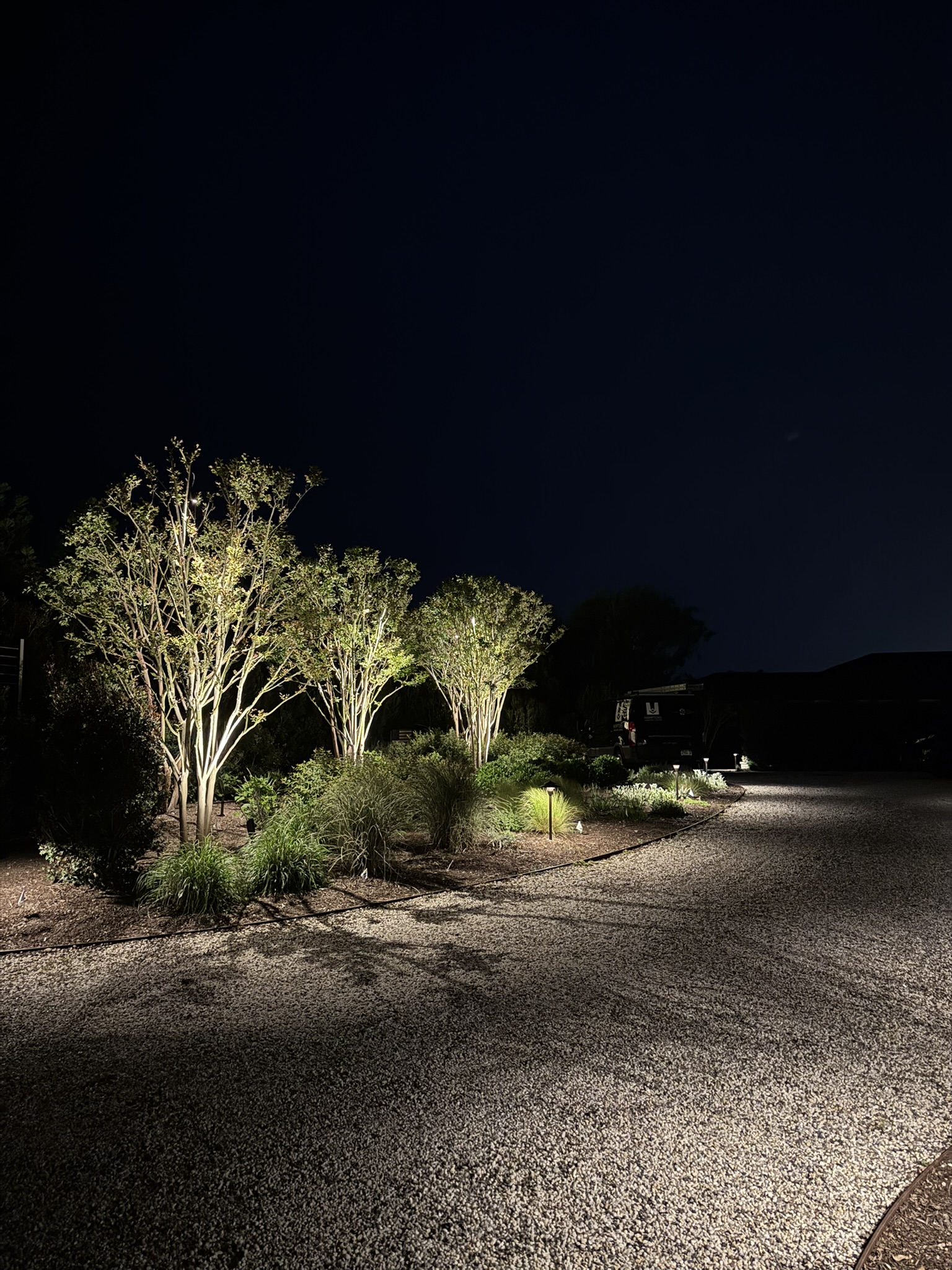
Plan for seasonal maintenance and unexpected changes
Lighting that performed beautifully in August may need attention by November. Growing hedges, fallen leaves, frost movement, storms, irrigation work, and changes in landscaping can affect fixture position and light distribution.
A professional seasonal check is particularly valuable when a residence will remain largely unoccupied for several months.
Before an extended absence, a review may include:
- Testing essential entry and circulation zones.
- Cleaning fixtures and checking for moisture or corrosion.
- Confirming timers, astronomical settings, and programmed schedules.
- Checking for obstructed, damaged, or poorly aimed fixtures.
- Reviewing exposed or accessible components for service needs.
- Documenting recommended repairs or future improvements.
For existing lighting systems, HLL's Brilliance Care™ maintenance program offers scheduled service that helps preserve the original lighting design as the landscape and seasons change.
A planned visit also gives homeowners and property managers an opportunity to confirm which areas should remain illuminated during periods of reduced occupancy.
Can an existing landscape lighting system be adapted?
Often, yes. Improving nighttime visibility does not always require replacing an entire landscape lighting system.
An assessment may reveal opportunities to reposition fixtures, correct glare, add missing path illumination, separate lighting into more useful zones, or update scheduling.
The best solution depends on the condition of the current wiring, transformers, fixtures, controls, and the way the property is used.
Larger changes, including new gates, guesthouses, garden paths, or outdoor living areas, may call for a more comprehensive lighting design review.
Read more about updating and expanding an existing landscape lighting system as the property evolves.
Frequently asked questions
Should a seasonal Hamptons home leave its outdoor lights on all night?
Not necessarily. A selective schedule that prioritizes useful entry and circulation lighting is often more appropriate than leaving every decorative fixture illuminated. The right approach depends on occupancy, local requirements, and the property's management and security plan.
Can landscape lighting improve security at a seasonal property?
Thoughtful outdoor lighting can improve visibility and help occupants, guests, and service personnel navigate the property. It may also support surveillance camera views when properly coordinated. Lighting alone does not prevent intrusion or guarantee security.
Can outdoor lighting change automatically when the home is unoccupied?
Yes. Depending on the controls installed, different schedules and scenes can be programmed for occupied, entertaining, arrival, and away conditions. Available capabilities vary by system.
Does security lighting have to be bright?
No. Carefully directed illumination can make important surfaces and routes easier to see without excessive brightness, exposed light sources, or uncomfortable glare.
When should seasonal exterior lighting be inspected?
A review before an extended absence or major change in occupancy is sensible. Additional attention may be needed after storms, landscape work, or observed system problems.
Thoughtfully prepared for the season ahead
Make your property feel ready whenever you arrive.
From a discreetly illuminated entrance to a thoughtfully programmed seasonal lighting plan, HLL can help refine the way your property looks and functions after dark.