
Lighting controls
Motion-Activated Outdoor Lighting: Where It Helps—and Where It Creates Glare
Motion response can be useful at a gate, side entry, or service route. It is not a substitute for a well-considered lighting plan.
Motion-activated outdoor lighting works best when it serves a specific, short-duration purpose. A carefully aimed response can help define a side entry or service path when someone is present. Broad motion floodlighting, by contrast, can produce glare, disturb neighbors, and turn a quiet property into an unpredictable nighttime environment.
HLL plans controls as part of a wider security-conscious lighting layer: essential overnight zones, scheduled arrival lighting, and limited response where the property actually calls for it.
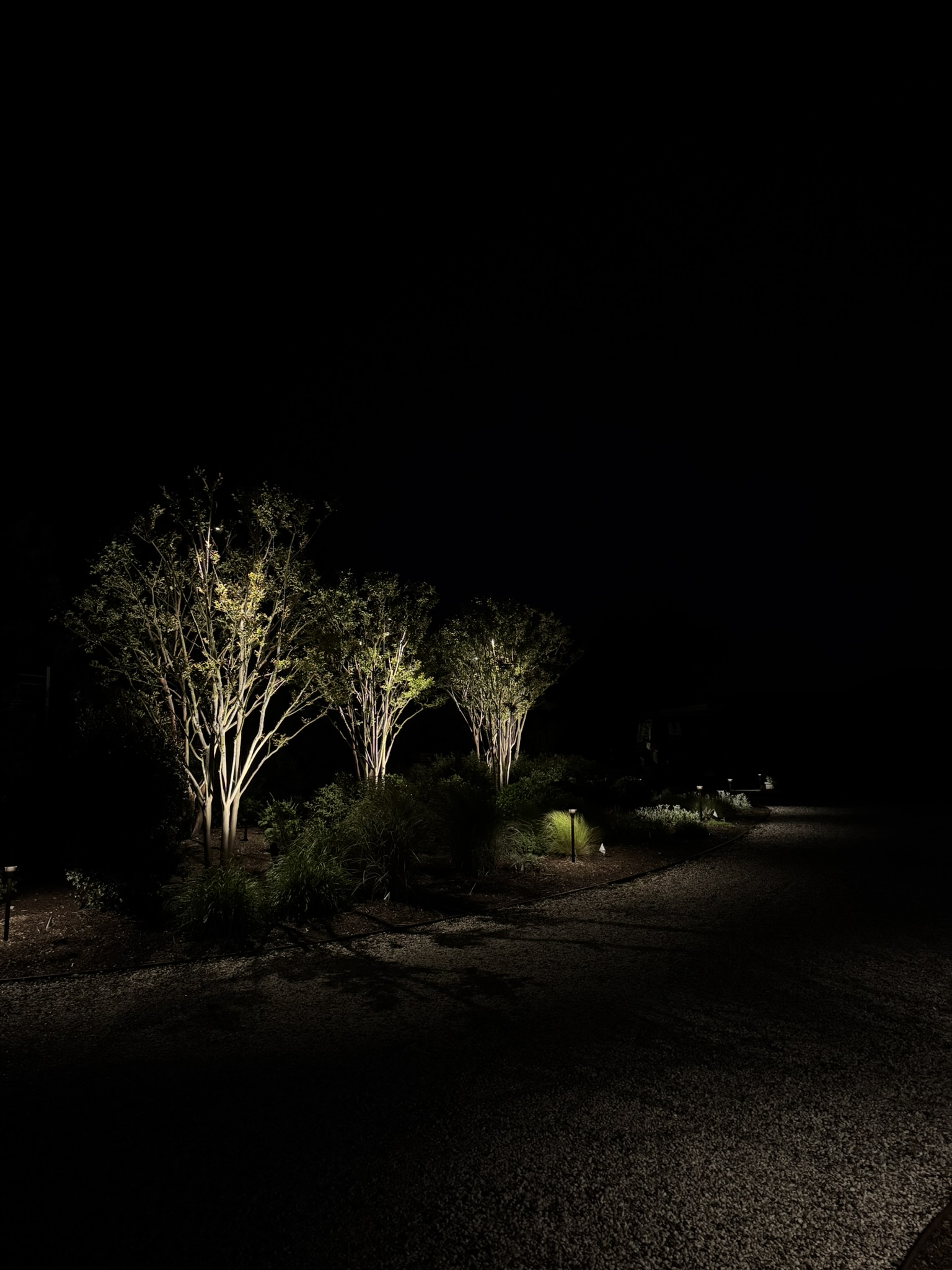
Where a limited response can be useful
Consider routes that are not used constantly but need reliable definition when they are: side entries, service approaches, gates, carriage houses, and discrete transitions between buildings. The response should be contained, warm, and aimed at the task—not into windows, across a drive, or into the street.
For the built environment around the property, our driveway, gate, and estate-entry lighting page shows how arrival zones and controls fit together.
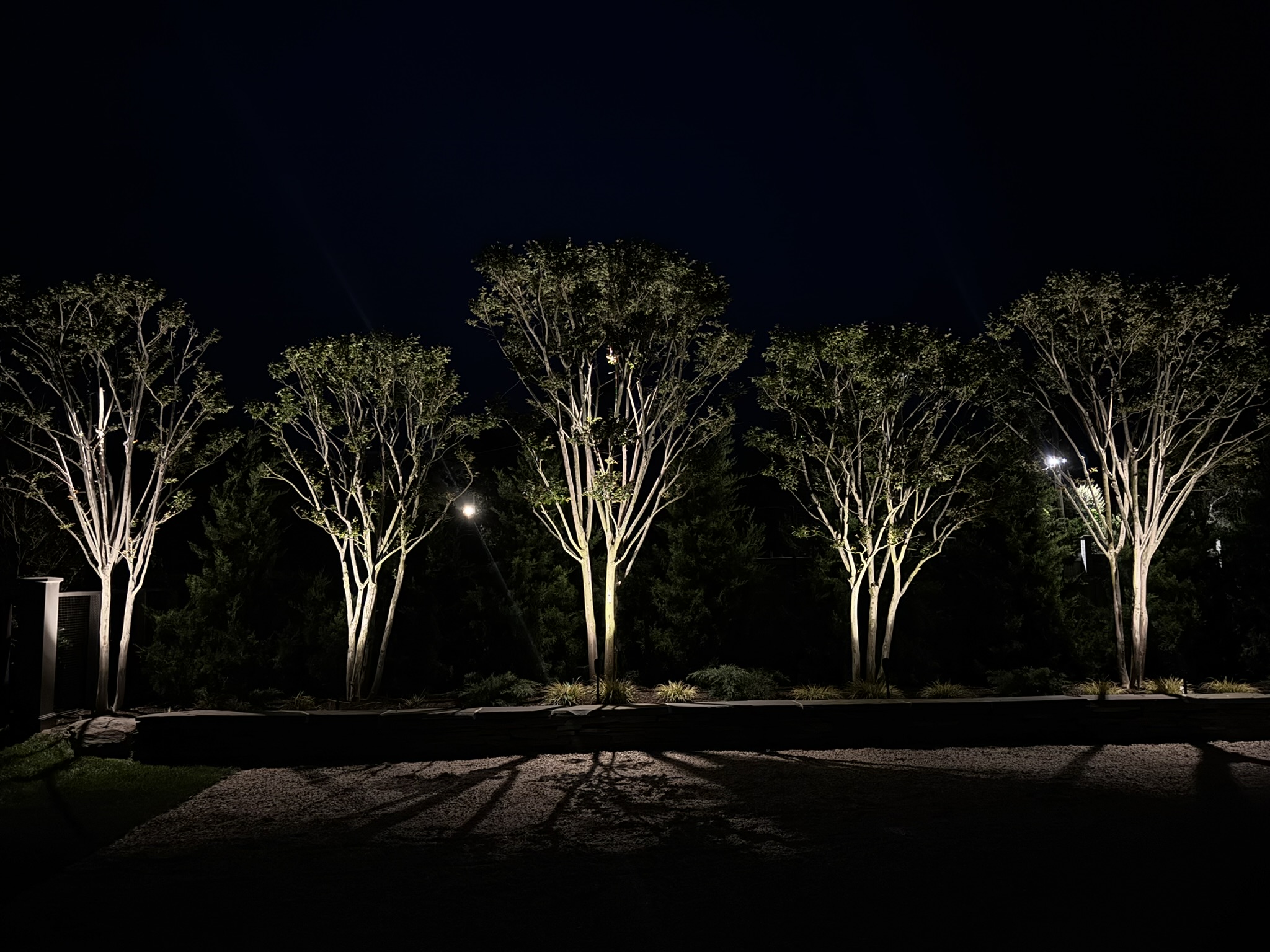
Why control is more important than output
Too much sudden light can interrupt the eye’s adaptation to darkness and create sharp contrast around the property. The best outdoor lighting uses beam control, shielding, dimming or scheduling when appropriate, and professional nighttime aiming to keep the scene legible.
That approach also supports dark-sky restraint. In the North Fork, applicable rules address shielding for motion lighting and limits on spill; see HLL’s Southold dark-sky article for a practical explanation.
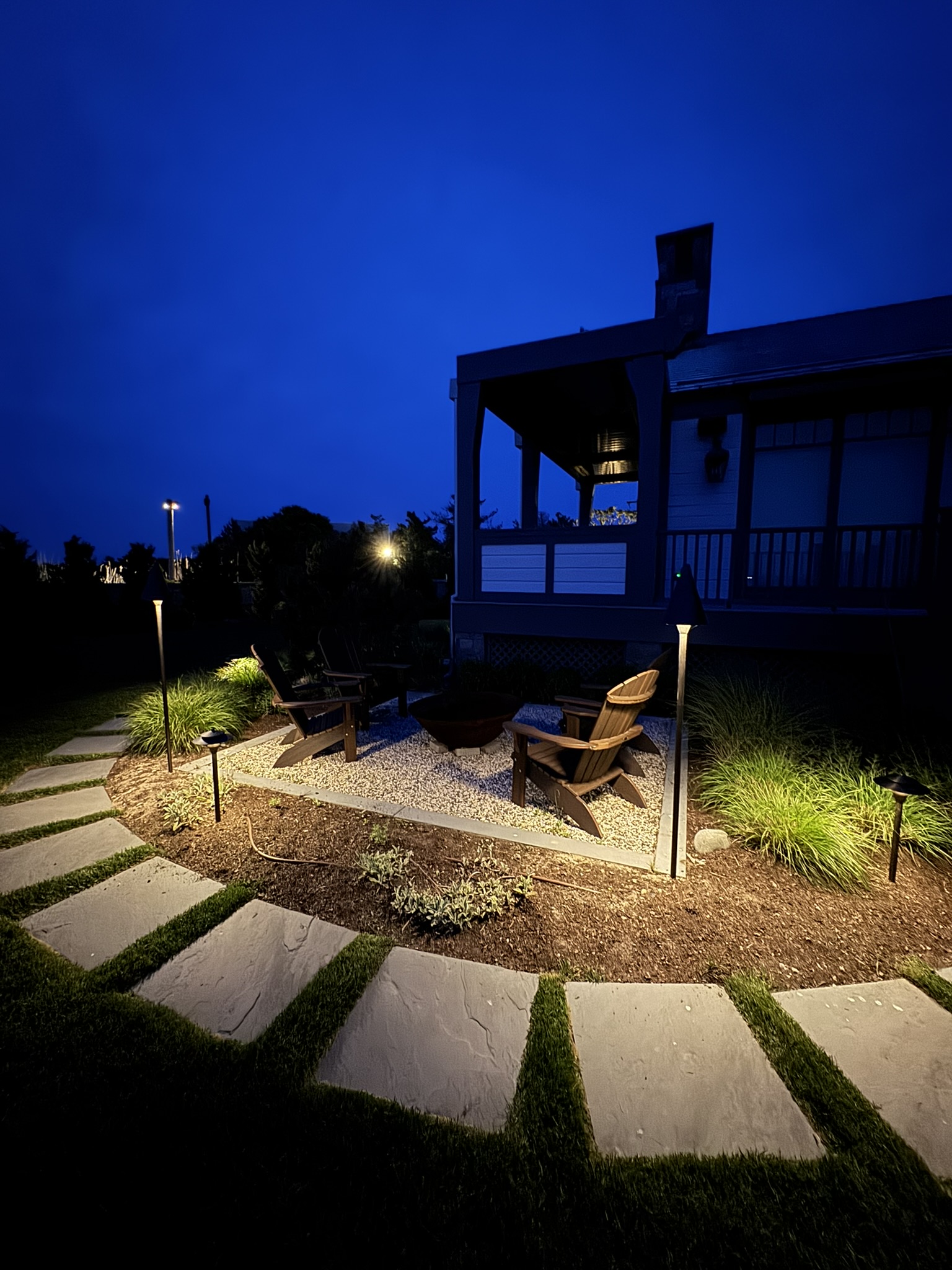
Set the right lighting behavior for the property.
Start with how routes, entries, and outdoor spaces are actually used after dark.
Discuss Your PropertyExplore Related Services