
The Afterthought Lighting Tax: Why Exterior Lighting Should Be Designed, Not Added
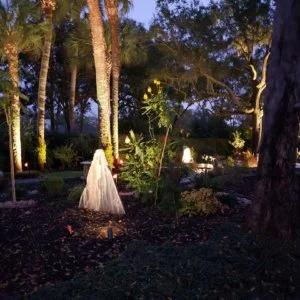
Exterior lighting is often discussed late in a residential project, after the architecture has been resolved, the hardscape has been selected, and the landscape is approaching installation. At that point, the question tends to be: Where should the fixtures go?
The more useful questions should have been asked earlier.
How should the property reveal itself as someone arrives? Which architectural materials deserve emphasis? What should be visible through the windows after sunset? How should guests move from the house to the pool, terrace, garden, or guest house? Where should equipment and wiring live so they remain discreet and serviceable? Which areas should remain intentionally dark?
These are design questions, not fixture questions.
When exterior lighting is treated as a finishing accessory, the project inherits what we call the afterthought lighting tax: the added labor, restricted choices, visible compromises, and lost design opportunities that appear when lighting must be fitted around a property that is already complete.
Exterior lighting is most successful when it enters the project as a design discipline—not a finishing accessory.
What is the afterthought lighting tax?
The phrase does not refer to a literal tax or a predetermined surcharge. It describes the consequences of postponing exterior lighting decisions until the conditions needed for a clean installation have begun to close.
Those consequences may include:
- Opening or working around finished paving and hardscape
- Fishing wire through areas that were not prepared for it
- Settling for less discreet transformer or equipment locations
- Losing concealed mounting opportunities within architectural details
- Disturbing established or newly installed planting
- Adding control zones after electrical and automation plans are complete
- Placing fixtures where access remains possible rather than where the light performs best
- Correcting glare, brightness, or uneven transitions after fixtures have already been selected
- Coordinating multiple trades late, when each has less flexibility
Retrofitting is often possible. It is simply less likely to offer the same freedom as planning while the architecture, landscape, and infrastructure can still respond to one another.
A fixture plan is not the same as a lighting design.
A fixture plan can identify products and locations. A complete exterior lighting design goes further: it defines what the property should feel like after dark and establishes the relationships needed to create that experience.
The composition may begin at the road or gate, continue along a drive, reveal the entry, frame views from inside, connect paths and steps, and settle into lower, quieter scenes around outdoor living areas later in the evening.
That requires hierarchy. Not every tree needs to be illuminated. Not every surface should carry the same brightness. Not every path needs a visible row of fixtures. The strongest nightscapes use light and shadow together, allowing a few carefully selected elements to establish depth, orientation, and atmosphere.
Adding fixtures one dark area at a time can solve isolated problems. It rarely gives a large property one coherent reading after sunset.
Learn more about HLL’s approach to full-property lighting design.
What early exterior lighting design protects.
1. Architectural intent
Exterior light changes how materials, proportions, texture, and depth are perceived. Beam direction and brightness should support the architecture rather than flattening it or pulling attention toward the fixture.
Early coordination can also preserve opportunities for concealed mounting, clean penetrations, integrated details, and fixture locations that feel native to the architecture. Once façades, walls, ceilings, gates, and hardscape are complete, some of those opportunities may no longer be available without rework.
2. The landscape composition
Planting changes across seasons and over years. A successful lighting plan accounts for mature canopy, new growth, focal specimens, garden layers, irrigation, maintenance access, and the way light will move through foliage.
Coordination with the landscape architect or designer allows fixture intent to respond to the planting plan before the property is installed. It also reduces the likelihood that a fixture, wire path, or beam will conflict with planting, grading, drainage, or irrigation.
3. Circulation and arrival
Driveways, gates, entries, paths, steps, and thresholds should read as a connected sequence. The objective is not maximum brightness. It is enough visual information to move comfortably while the property retains a calm nighttime character.
When circulation lighting is added late, individual areas may be addressed without considering how brightness changes from one zone to the next. Early design allows those transitions to be composed as part of the arrival experience.
Explore how HLL approaches path and walkway lighting.
4. Interior views
Exterior lighting is experienced from inside the home as well as outside it. A brightly illuminated fixture, reflected hotspot, or poorly aimed beam can become the dominant feature in an otherwise considered room.
Planning from important windows and interior sightlines helps frame gardens, architecture, water, and distant landscape elements after dark. It also helps keep visible light sources and reflected glare away from the views the architecture was designed to create.
5. Infrastructure and serviceability
Transformers, conduit, wiring routes, sleeves, loads, switching, and mounting conditions are easier to coordinate while related construction decisions remain open.
This does not mean filling the project with technical complexity. It means giving the builder, electrician, landscape team, and lighting designer a shared set of requirements before paving, pools, walls, and finished landscapes restrict access.
A well-planned system should also remain understandable and serviceable. Documentation, accessible equipment, sensible wiring, and defined zones matter long after the installation crew leaves.
6. Controls and scenes
A property does not need the same lighting condition all evening. Arrival, entertaining, quiet use, and late-night security can call for different combinations and brightness relationships.
When exterior zones are coordinated early, they can be organized around how the property is actually used and, where appropriate, related to compatible whole-home controls and schedules. Added late, exterior lighting may be limited to whatever switching and wiring relationships are still practical.
See how HLL coordinates outdoor lighting automation and controls.
7. The final nighttime composition
Even a careful plan must be evaluated after dark. Drawings and fixture schedules establish intent, but they cannot fully predict how a beam will interact with natural material, foliage, weather, neighboring properties, and real sightlines.
Professional nighttime aiming is where the installation becomes a composition. Beam direction, spread, brightness, glare, shadow, and transitions are adjusted under the conditions in which the system will be experienced.
Read more about why professional nighttime aiming matters.
When should the exterior lighting designer become involved?
The most useful answer is: while meaningful choices are still available.
During concept design
The lighting designer can identify key views, focal points, arrival sequences, outdoor rooms, circulation needs, and areas that should remain deliberately dark. This establishes intent before the project becomes a collection of products and locations.
During design development
Architecture, landscape, hardscape, power, controls, fixture locations, transformer locations, and concealed mounting opportunities can be reviewed together. The exact scope depends on the property and project team, but the objective is consistent: one coordinated nighttime plan.
Before close-in and finished exterior work
Conduit, sleeves, wiring routes, penetrations, equipment locations, and other dependencies should be confirmed before walls, paving, pools, and planting make access more difficult.
During installation and after dark
Design intent must carry through field conditions, installation, commissioning, and final aiming. Coordination should continue when site realities require adjustments so that necessary changes do not erode the larger composition.
HLL’s architectural landscape lighting design process can support design-only coordination or a turnkey path through installation and nighttime aiming, depending on the project.
Who should be part of the conversation?
Exterior lighting sits at the intersection of several disciplines. Clear responsibilities help preserve the design and prevent duplicated or missing scope.
- The architect leads the building, spatial organization, material language, and overall architectural intent.
- The landscape architect or designer leads planting, grading, hardscape, exterior circulation, and the landscape composition.
- The lighting designer defines light and shadow, focal hierarchy, fixture intent, beam direction, glare control, zoning, and nighttime balance.
- The builder and electrician coordinate sequencing, construction conditions, power, and applicable electrical work.
- The lighting installation team carries the approved intent through installation, commissioning, and aiming when the project is delivered on a turnkey basis.
The objective is not to add another voice for the homeowner to manage. It is to give the project team clear lighting intent early enough to coordinate it cleanly.
What if construction is already complete?
A finished property is not a lost cause. Existing systems can often be improved through re-aiming, selective fixture replacement, revised output, control updates, focused expansion, or a more comprehensive redesign.
The right starting point is an after-dark review. That allows the designer to distinguish among several different problems: insufficient light, excessive brightness, exposed sources, poor beam placement, aging equipment, plant growth, disconnected zones, or a system that was never composed as a whole.
The goal is not automatically to replace everything. It is to determine which changes will make the property feel calmer, clearer, and more intentional.
For completed properties, explore HLL’s landscape lighting repair and upgrade services.
Design the property that appears after sunset.
A home, landscape, and outdoor-living plan may be resolved beautifully in daylight and still feel unfinished at night. Exterior lighting determines what remains visible, how people move, where the eye rests, and whether the separate parts of the property read as one place.
Planning early protects more than wiring routes. It protects the opportunity to use less light more intelligently, conceal the infrastructure, coordinate the trades, and shape a nighttime experience that feels inseparable from the property itself.
If you are planning a Hamptons estate, renovation, or new home, bring HLL into the conversation while the architecture, landscape, and infrastructure can still be coordinated cleanly.
Request an Architectural Lighting Design Consultation
Explore Our Lighting Process
Frequently asked questions
What is architectural landscape lighting design?
Architectural landscape lighting design coordinates exterior illumination with a home’s architecture, landscape, circulation, interior views, infrastructure, and controls. It establishes what should be illuminated, what should remain in shadow, where fixtures and equipment belong, how glare will be controlled, and what the project team needs to build the system accurately.
When should exterior lighting be planned for a new home?
Exterior lighting should be considered while architectural, landscape, hardscape, power, and control decisions can still be coordinated. Bringing the lighting designer into the project before walls, paving, pools, and planting are complete helps preserve cleaner infrastructure routes and more discreet fixture locations.
Is it more expensive to add landscape lighting after construction?
It can be. Costs depend on the property and existing conditions, but completed hardscape, mature planting, closed walls, and limited wiring routes may require additional labor or restrict the available design choices. The larger concern is not always direct cost; it is the possibility of accepting visible equipment, compromised placement, or a less coherent result.
Can HLL work with an architect, builder, or landscape designer?
Yes. HLL can coordinate lighting intent, fixture and beam information, infrastructure requirements, zones, controls, installation responsibilities, and nighttime aiming with the project team. The scope and deliverables should be defined at the beginning of the engagement.
Can exterior lighting be integrated with whole-home controls?
Compatible exterior zones can be coordinated with schedules, astronomical timeclocks, keypads, and whole-home scenes. The appropriate approach depends on the property, control platform, electrical design, and selected lighting scope.
Can an existing landscape lighting system be redesigned?
Yes. An existing system may benefit from re-aiming, maintenance, revised brightness, selective fixture replacement, control updates, expansion, or broader redesign. An after-dark review helps determine which changes are appropriate before recommending replacement.