
Hamptons • Southampton • East Hampton • Sag Harbor • Montauk
Dock & Marina Landscape Lighting in the Hamptons
Waterfront lighting should help you find your way, not compete with the view.
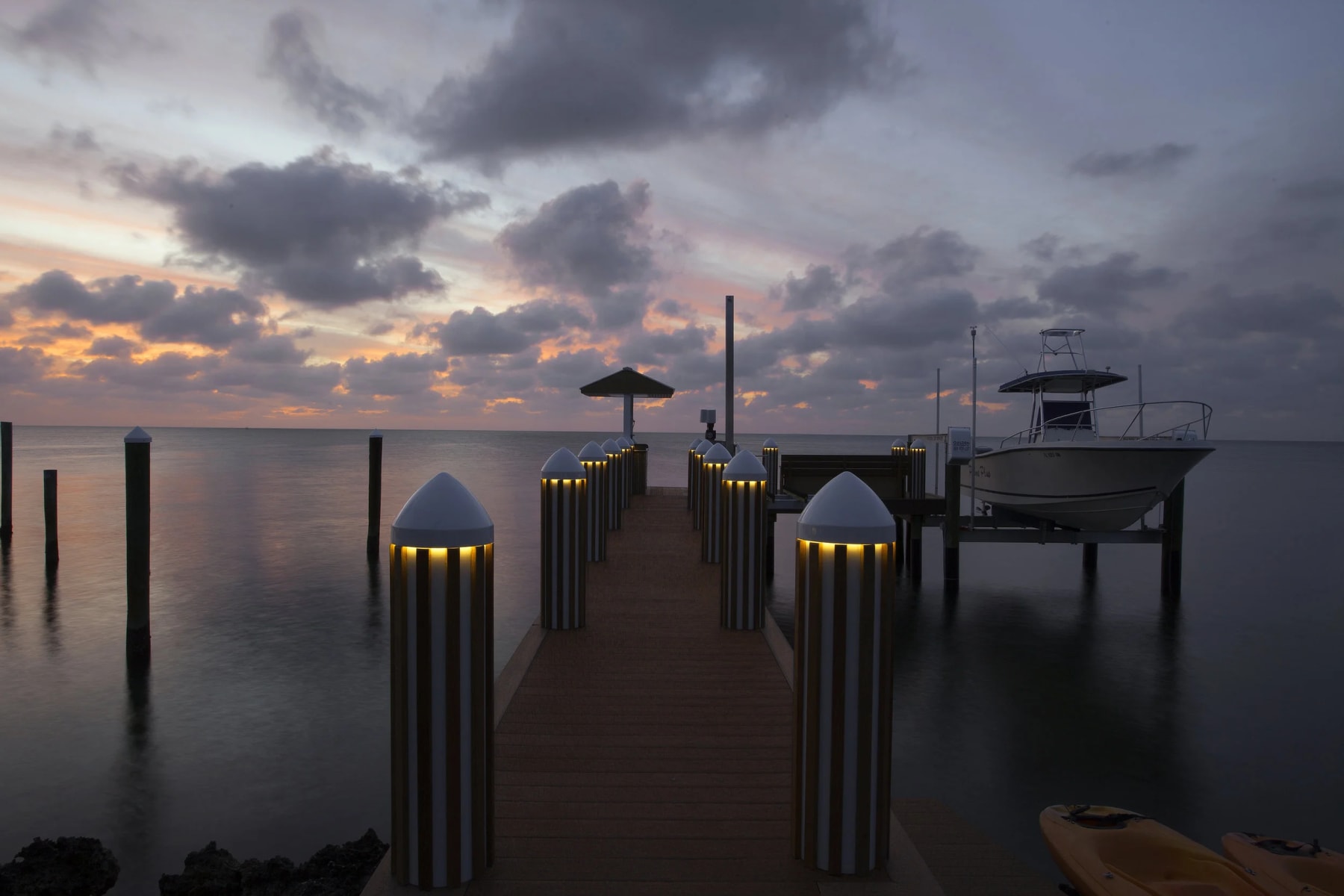
Thoughtful dock lighting in the Hamptons makes paths, steps and boarding areas easier to navigate while preserving dark water and the view beyond. A successful plan considers glare, coastal exposure, nighttime use and the transition from the house to the shoreline.
At Hamptons Landscape Lighting, we consider dock access, shoreline paths, terraces, stairs and adjoining gardens as one nighttime experience. Rather than surrounding a dock with decorative brightness, we place useful light where people actually move and gather.
Design intent
Light the transition. Preserve the water.
A waterfront lighting plan begins with a simple question: what must someone be able to see to move comfortably after sunset? For one property, that may be a garden path leading toward a private dock. For another, it may be the steps between a terrace and a floating landing, or a change in level where guests board a boat.
The point is not to make every surface equally bright. It is to establish a legible sequence of gentle cues, keeping the surrounding shoreline and open water naturally dark. Our wider landscape lighting services use the same design principle across entries, gardens and outdoor living spaces.
- Pathways and approaches: low-glare guidance at turns and decision points.
- Steps and level changes: discreet lighting directed onto walking surfaces.
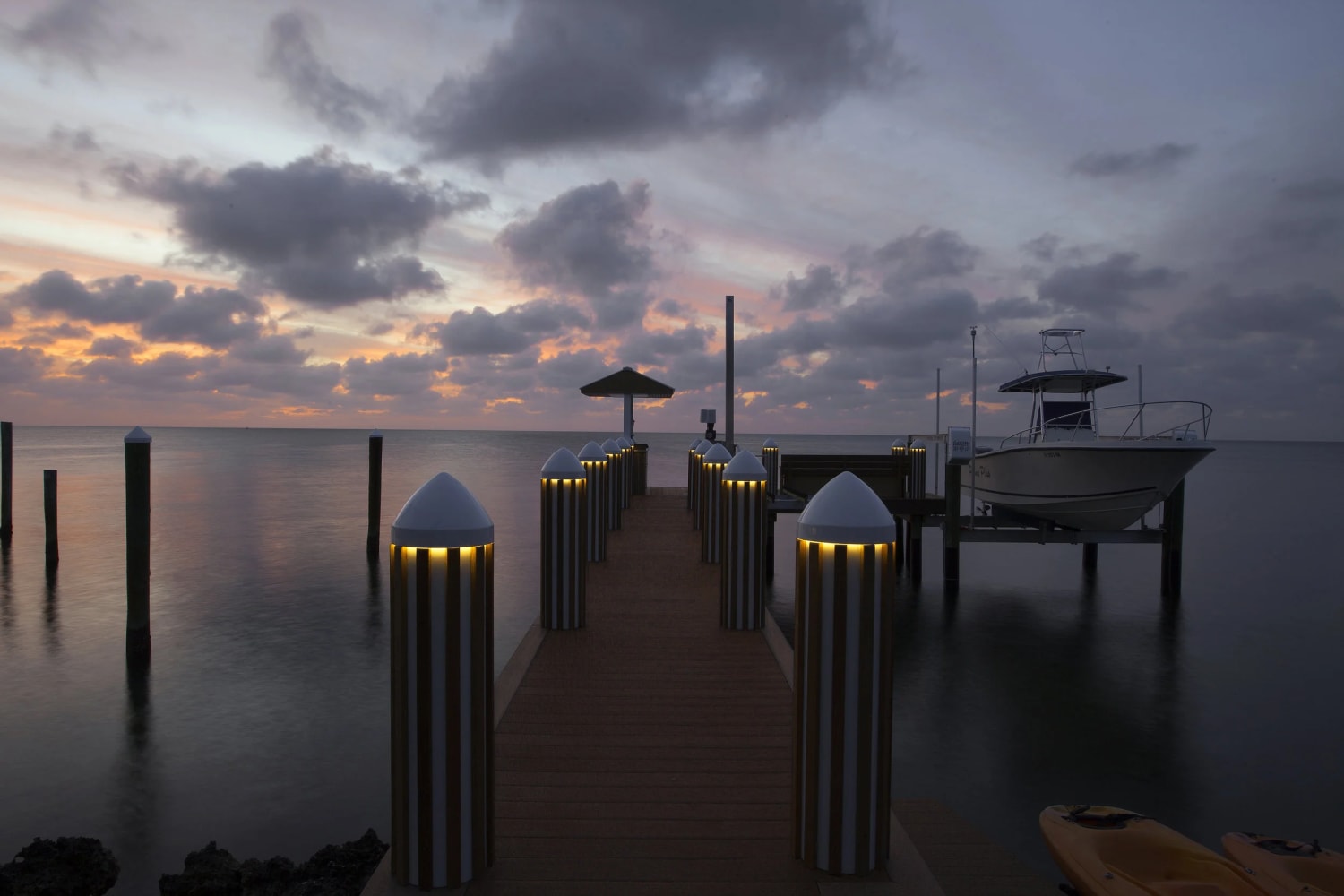
- Dock edges and pilings: carefully positioned markers where visibility is needed, without making a bright perimeter.
- Waterside seating: softer, independently controlled illumination for conversation and dining.
- Connection to the home: coordinated transitions between the landscape, terrace and waterfront.
The coastal environment
Marine conditions change the specification.
Salt spray, moisture, wind-driven rain, shifting dock structures and seasonal exposure demand more than an attractive outdoor fixture. Materials, seals, fasteners and electrical connections must be selected for the actual exposure, with particular care in splash-prone areas.
Corrosion-resistant components, appropriate enclosure ratings, protected wiring routes and accessible connections are important parts of the design. A fixture suitable for a sheltered landscape bed is not automatically appropriate for a tidal dock. Electrical work should follow applicable codes and manufacturer requirements, especially near water.
Coordinate electrical design and installation with a qualified licensed electrician familiar with waterfront requirements. Dock structures, water levels, electrical protection and applicable marine rules require site-specific review. We also plan around service. A waterfront system may need periodic cleaning, inspection, re-aiming and replacement of components exposed to coastal conditions. Our Brilliance Care™ program supports ongoing landscape lighting upkeep, with waterfront-specific maintenance needs reviewed for each property.
An important distinction: decorative dock and landscape lighting does not replace required navigation lights, harbor markers, code-mandated illumination or other marine safety equipment. Those requirements must be established separately with the relevant authorities and qualified professionals.
After sunset
Glare is amplified beside water.
On land, a poorly aimed fixture can distract the eye. Beside a harbor, its reflection can travel across the water, creating a second bright point that changes how the entire scene feels. More wattage is rarely the solution.
Shielded optics, warm color temperatures, careful mounting heights and final nighttime aiming help keep light on steps, decking and paths instead of in neighboring windows or across the harbor. We consider views from the house, the dock, nearby properties and, where practical, the water itself.
This approach echoes our guidance on Montauk waterfront and dark-sky lighting and Shelter Island's waterfront lighting considerations. Requirements vary by municipality and site, so local rules should be reviewed before installation.
Control and use
A dock does not need one all-night setting.
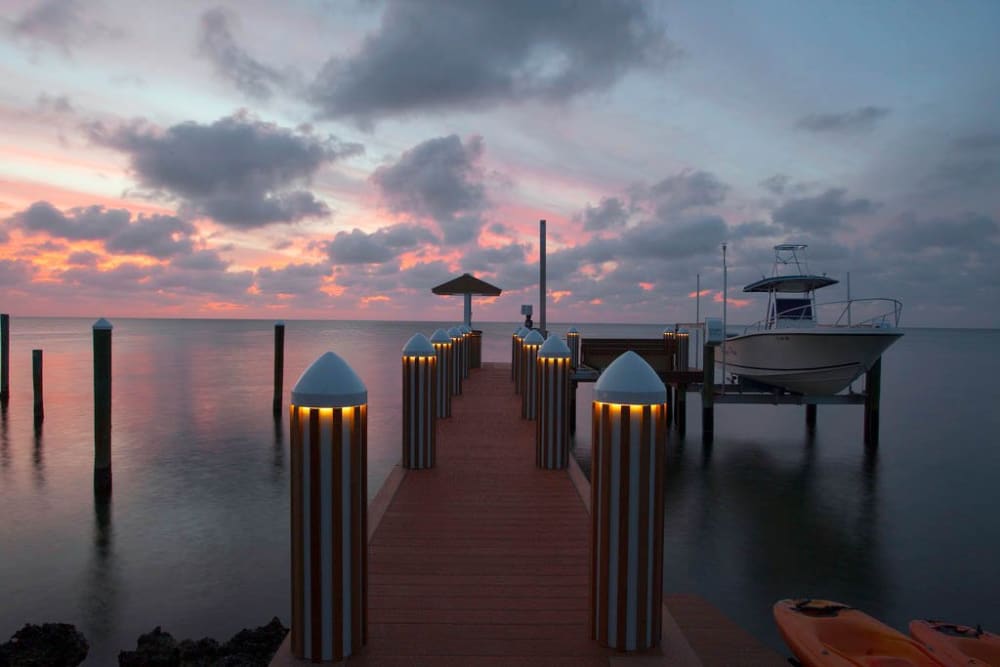
A waterfront property has different rhythms. At sunset, a gentle approach scene may guide guests toward outdoor seating. Later, dock access lighting can remain available where needed while decorative landscape zones dim or turn off. A return by boat may call for a temporary, focused scene that is distinct from everyday evening lighting.
Compatible controls can support schedules, astronomical timing and separately managed zones. HLL can coordinate suitable exterior lighting with the property's wider control system when the project calls for it. Learn more in our lighting and control services.
For properties in Sag Harbor, Southampton, East Hampton or Montauk, we recommend planning these scenes around actual nighttime use, neighboring views and applicable operating-hour restrictions rather than leaving every fixture on at full output.
The larger composition
Connect the dock to the whole property.
The waterfront should not feel detached from the rest of the estate. Planting near the shore, a garden route, a dining terrace and the dock can be composed as a sequence of spaces, each with its own level of illumination and visual character.
In our landscape lighting design process, we examine views and circulation before choosing fixture types. That same discipline matters at the water's edge. It helps avoid a common mistake: making the dock dramatically brighter than the path that leads to it.
Where a project includes decks or waterside seating, our guide to lighting sensitive waterfronts explores ways to protect the view and surrounding environment. An existing dock lighting system may also be worth assessing and refining rather than replacing entirely.
Frequently asked questions
Waterfront lighting, answered.
What is the best lighting for a private dock?
Usually a combination of shielded, low-output lights at essential transitions, stairs, walking surfaces and access points. The exact placement depends on dock geometry, exposure, use and any applicable safety requirements.
Should dock lights stay on all night?
Not necessarily. Separately controlled zones allow decorative lighting to dim or switch off while necessary access lighting remains available. Required navigation or safety lighting must be handled independently.
Can ordinary landscape lights be used on a waterfront dock?
Not all of them. Splash exposure, corrosion, connections and installation conditions matter. The fixture and full electrical installation must be appropriate for the location.
How do you prevent dock lighting from shining across the harbor?
By using shielding, carefully selected beam spreads, low mounting positions where suitable, and nighttime aiming. The design should direct light onto useful surfaces while limiting visible sources and unwanted reflections.
Can an existing dock lighting system be improved?
Often. An assessment can identify excessive glare, failed components, exposed connections, outdated controls and locations where a different fixture or aiming adjustment would be more effective.
Related reading: LED dock lighting for private waterfronts, Montauk dark-sky lighting, Shelter Island lighting considerations, and lighting sensitive waterfronts.