
The Hamptons · Garden lighting after dark
The Transformation of a Hamptons Garden from Dusk to Evening
Hamptons garden lighting makes the transition from fading daylight to evening feel gradual and intentional, bringing paths, planting, architecture, and outdoor living areas into view without overwhelming the landscape.
The most successful garden lighting does not arrive all at once. It reveals the property in layers as daylight fades, creating a quieter and more dimensional version of the landscape after dark.
A Hamptons garden has a distinctive presence during the day, shaped by coastal light, curated planting, and architecture. At dusk, colors soften, shadows stretch across paths, and the details that make the garden feel composed begin to recede. A considered landscape lighting design restores just enough definition for the garden to remain inviting and easy to use.
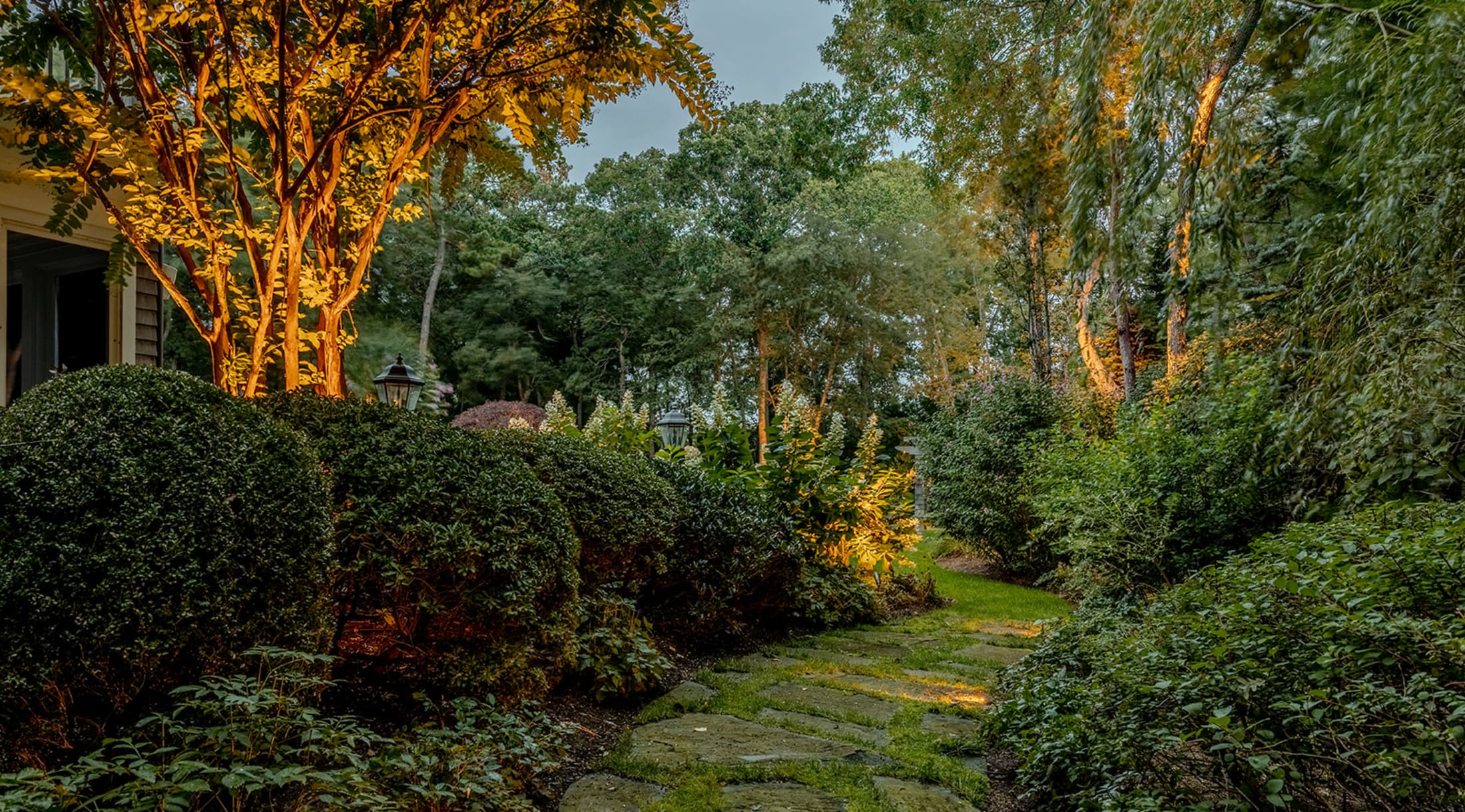
Designing for the in-between light
At dusk, guidance matters more than brightness.
Natural light disappears unevenly. A step may become difficult to read before a terrace does; planting beds may lose their edges while an interior view remains bright. Rather than flooding every surface with light, professional designs introduce restrained guidance: paths become legible, transitions feel comfortable, and a few focal points begin to hold the composition together.
A well-planned path and walkway lighting design focuses on steps and changes in direction, positioning fixtures to illuminate the walking surface while limiting glare. This is why fixture placement, beam direction, and glare control matter. The garden should continue to feel calm from the drive, a seating area, and the view through the glass. Our article on how we design landscape lighting explains how those perspectives guide a fixture-by-fixture plan and nighttime refinement.
The goal is a gradual transition from garden to evening retreat, with darkness and shadow still part of the composition.
A layered evening garden
Three layers bring depth, rhythm, and comfort after sunset.
Path light
Subtle pathway lighting supports safe movement through the garden without calling attention to the fixtures.
Accent light
Selective accents reveal specimen trees, sculptural shrubs, stonework, and architectural details that deserve emphasis.
Ambient light
Low, reflected, or indirect layers connect the scene, softening contrast around terraces and outdoor living areas.
Each layer has a purpose. Together, they allow the garden to gain dimension as daylight disappears. For a closer look at lighting a garden walk, explore pathway lighting for evening garden strolls. Read more about restraint, shadow, and visual comfort in Refined Restraint in Lighting.

Architecture, texture, and outdoor living
Evening lighting reveals what daylight allows us to overlook.
Uplighting can give mature trees and canopies a measured presence. Controlled grazing across hedges, stone walls, and garden structures reveals texture without overexposure. Pergolas, garden walls, and water features can become quiet anchors that give the nighttime landscape rhythm.
The same approach extends the way a garden is lived in. Seating areas, dining spaces, and terraces become more welcoming when surrounded by warm, indirect light rather than bright fixtures overhead. For a close look at creating a balanced pool or terrace setting, see Restrained Poolside Landscape Lighting.
A garden changes over time. Branches grow into beams, planting can conceal fixtures, and lenses collect soil or salt. Brilliance Care™ landscape lighting maintenance includes scheduled service to help keep fixtures clean and properly aimed. Learn more about designing lighting to grow with the garden.
Garden lighting questions
FAQs about Hamptons garden lighting
How should a garden change from dusk to evening?
It should feel gradual. As daylight fades, well-placed path, accent, and ambient layers restore useful definition while allowing shadow and darkness to remain part of the composition.
What should be lit in a garden at night?
Prioritize movement routes, grade changes, primary seating areas, important interior views, and a selective set of focal points such as specimen trees, planting, stonework, or architecture.
Will tree uplighting make a garden feel too bright?
Not when it is selective and correctly aimed. The goal is to create hierarchy and depth, not to illuminate every tree or surface equally.
Why is professional nighttime aiming important?
A garden cannot be evaluated fully in daylight. A nighttime review allows beam direction, glare, intensity, focal points, and visual balance to be adjusted in the conditions the property will actually be experienced.
A garden designed for evening
Make the hours after sunset feel as considered as the day.
Hamptons Landscape Lighting designs and supports outdoor lighting systems that reveal a property with warmth, restraint, and long-term care.