
How Bright Should Outdoor Lighting Be for Security
Security-conscious lighting
Is Brighter Outdoor Lighting More Secure?
A floodlight can make a property feel attended to. But more brightness does not automatically create better visibility, safer movement, or a better nighttime experience.
Brighter outdoor lighting is not necessarily more secure. Excessive output can cause glare, flatten depth, and create the deep shadows that make a driveway, entry, or side yard harder to read. A better approach is a layered, purposeful lighting plan that reveals the route and key transitions without overwhelming the night.
That distinction sits at the center of HLL’s security-lighting approach. The goal is not to make every surface equally bright. It is to create useful sightlines for the people who live on and move through the property.
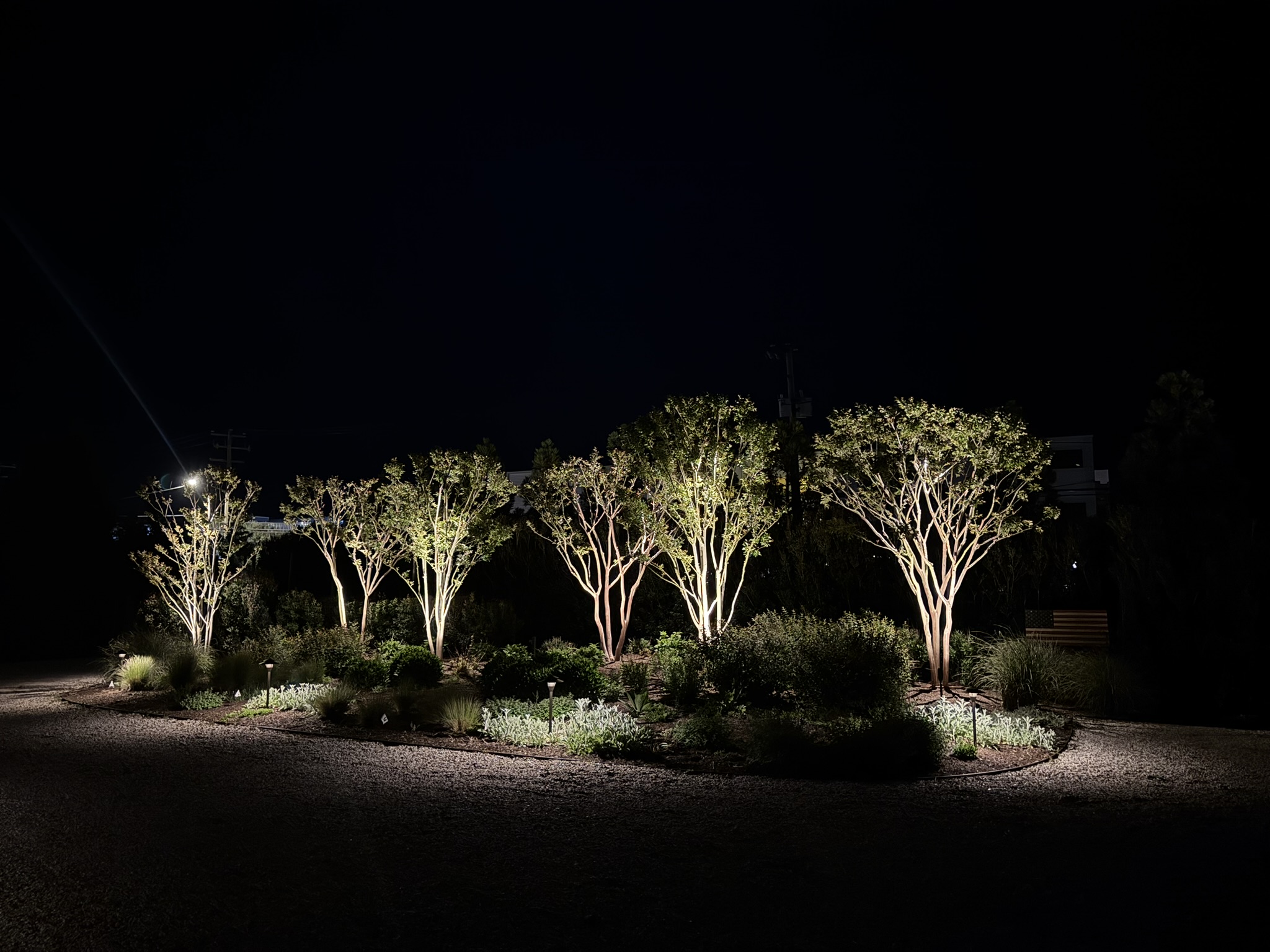
Why Glare Can Work Against Visibility
Glare happens when the source is visible or a bright beam enters the eye. At an entry or drive, that discomfort can make it harder to see the edge of a walk, a person against a darker background, or a camera’s useful field of view. Good lighting directs output where it is needed and keeps the source as concealed as practical.
The same discipline matters for paths, steps, and walkways. A gentle sequence of light gives the eye time to move through the landscape. A bright, isolated source can do the opposite.
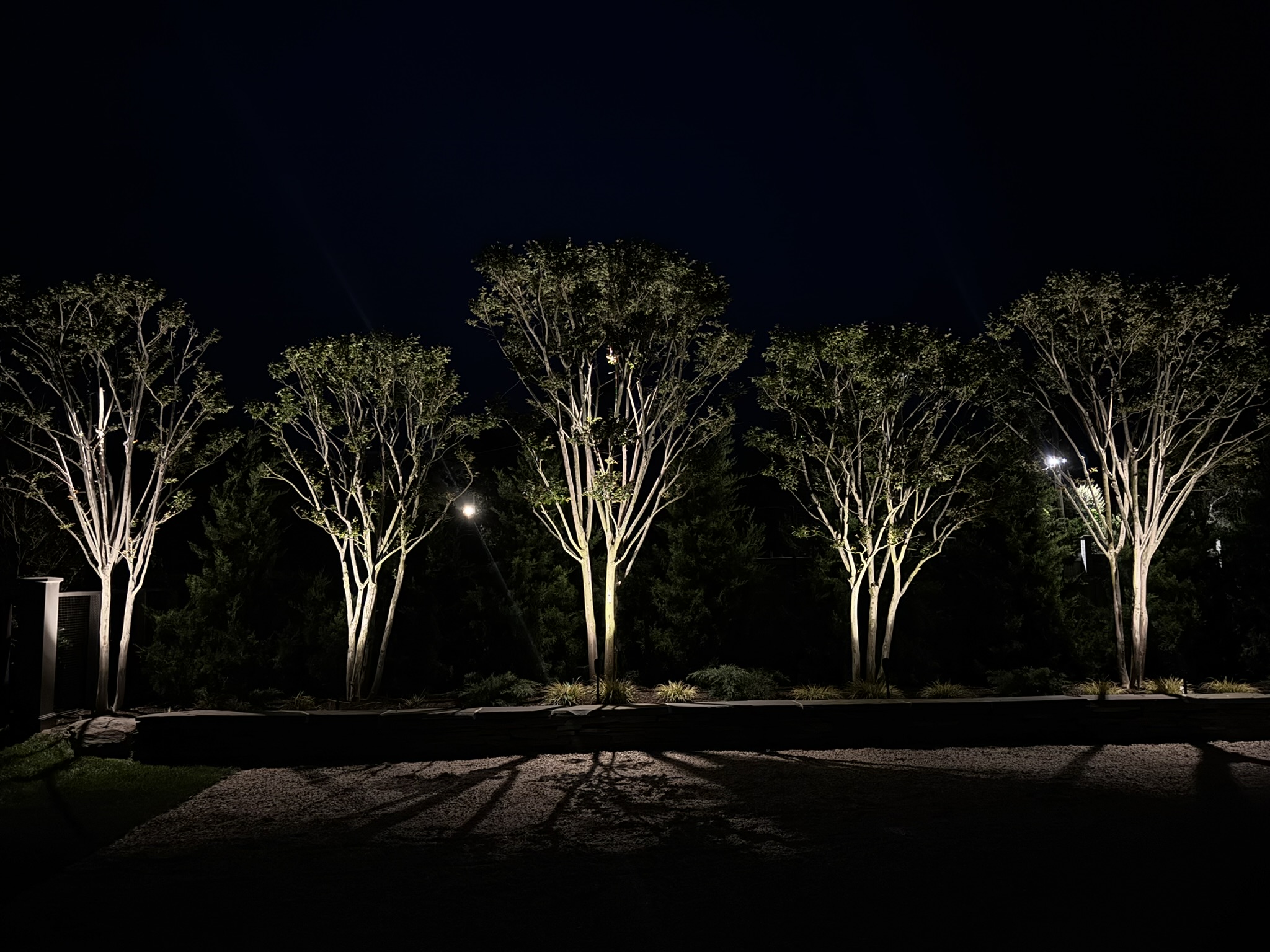
What a Security-Conscious Plan Prioritizes
Start with arrivals, gates, side entries, service routes, terraces, and the transitions between buildings. Then match fixture placement, beam direction, shielding, zones, and control behavior to those real uses. HLL’s landscape-lighting design process considers those decisions before installation, then refines the result after dark.
For a closer look at an important approach, see our guidance on driveway, gate, and estate-entry lighting. On the East End and North Fork, restraint also helps avoid light spill and protects the character of the night. Read the Southold dark-sky lighting guide for the local implications of shielding and controlled output.
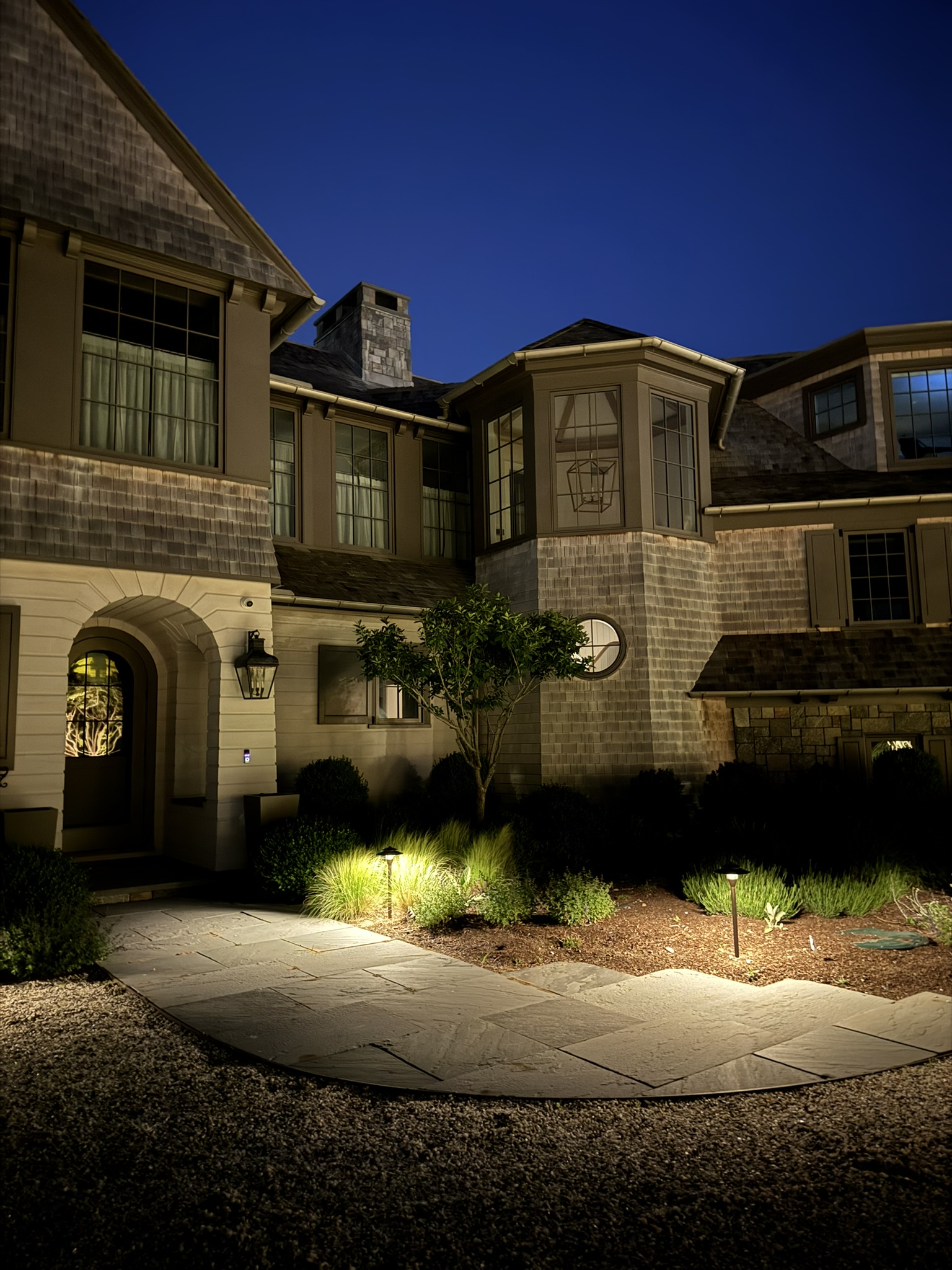
Good Lighting Supports the Whole Property
Security-conscious lighting is not separate from good landscape lighting. When entries, paths, planting, architecture, and exterior rooms are considered together, the property is easier to read and more comfortable to use after dark. Explore how HLL designs landscape lighting, or see how a complete system is planned for coastal durability, controls, and long-term performance.
As the landscape changes, fixtures may need cleaning, re-aiming, or a more thoughtful schedule. Brilliance Care™ helps preserve the balance of an established system through seasonal maintenance.
Frequently Asked Questions
Is brighter outdoor lighting more secure?
Not necessarily. Excessive brightness can create glare and deep shadows that make transitions, people, and camera views harder to read. Controlled, layered lighting is usually more useful.
Can landscape lighting support camera views?
Yes. Fixture placement can support useful visibility while avoiding reflections, flare, and uncontrolled hotspots.
Which outdoor areas should be considered first?
Arrival routes, gates, entries, paths, side yards, service routes, and the transitions between buildings are a practical starting point.
How can an existing outdoor lighting system be improved?
An after-dark assessment can identify glare, dark zones, poorly aimed fixtures, aging components, and schedules that no longer fit how the property is used.
Related reading: How We Design Landscape Lighting, Outdoor Lighting Design & Engineering, and Dark Sky Landscape Lighting in Southold and the North Fork.
See More of the Property, Without Over-Lighting It.
Start with the areas that affect arrival, movement, and peace of mind after dark.
Discuss Your Property Explore Our Services