
Lighting a Hamptons Property From the Inside Out
The exterior view through glass is part of the room. It deserves to be designed that way.
At night, the garden, pool, terrace and trees beyond the windows become part of the interior. A well-lit exterior does not simply make the property visible. It gives living rooms, kitchens, bedrooms and entertaining spaces a considered backdrop—one that has depth, quiet and a sense of place.
Start where people are sitting
Landscape lighting is often planned from the outside looking in: which tree, wall or path should be illuminated? That matters, but it is only half of the experience. At HLL, we also study the view from the sofa, the kitchen island, the dining table and the bedside. We ask what the eye lands on after the sun is gone—and what should fade into darkness.
This inside-out approach connects architectural landscape lighting to the way a home is actually lived in. A pool may be a focal point from one room and a distraction from another. A specimen tree can give a bedroom view depth, while a bright path light near the glass can interrupt it.
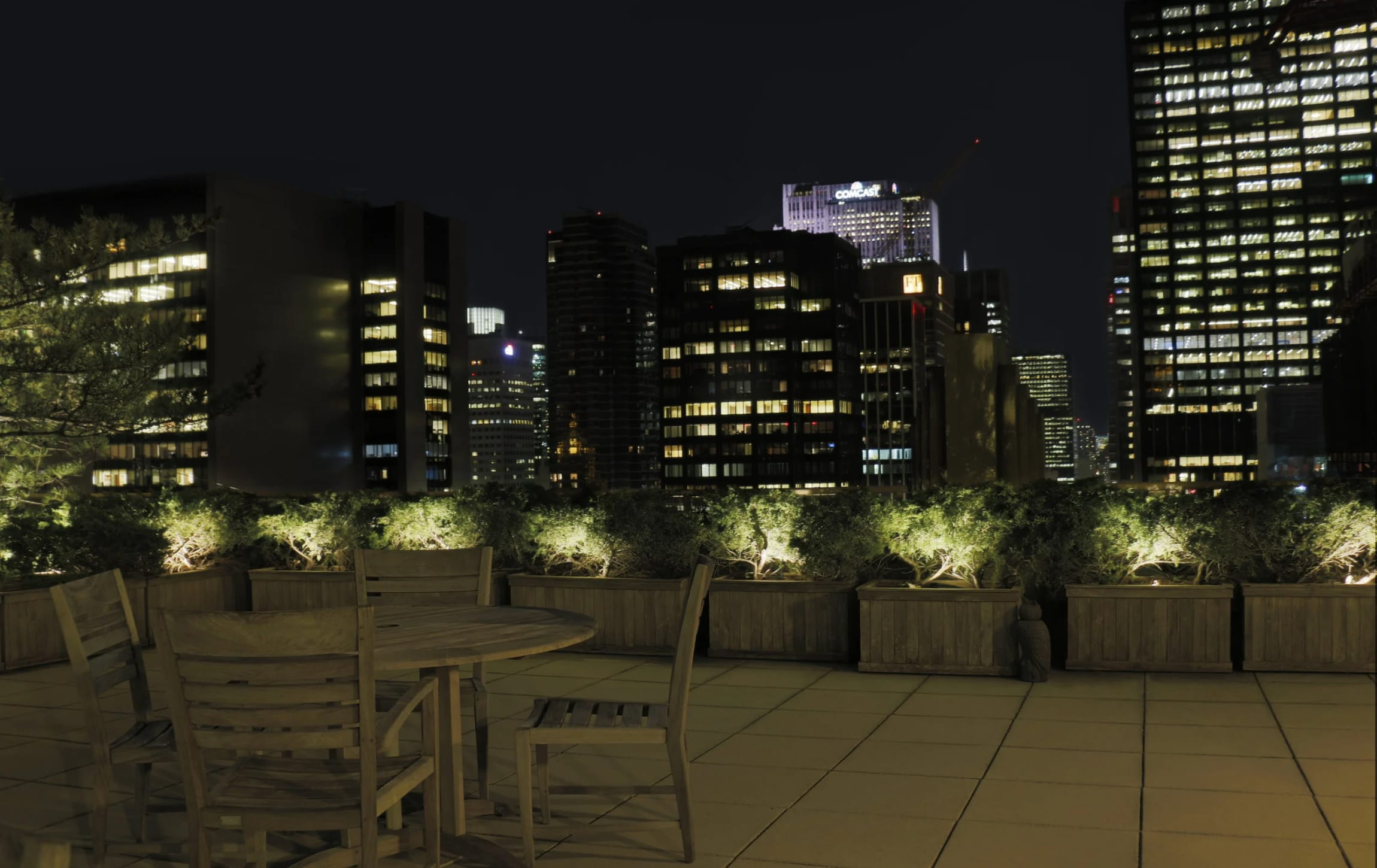
The view is a composition, not a fixture list
From indoors, the strongest exterior scenes usually have layers: a near plane that gives the window something to frame, a middle distance that reveals planting or architecture, and a quieter backdrop beyond. The result feels dimensional. The viewer is not looking at scattered bright points; they are looking into a landscape with depth.
Different rooms ask for different nighttime views.
A kitchen may need the garden close to the house to feel connected while dinner is being prepared. A living room can support a longer view to mature trees, water or a pool. Bedrooms often benefit from a gentler composition with fewer direct sources. Exterior entertaining spaces need enough layered light to make faces, food and walking routes comfortable without competing with the interior behind them.
That is why a dedicated lighting design process considers sightlines, window locations, interior finishes and intended use along with the planting and architecture outside.
Three principles for an inside-out lighting plan
Frame, don’t flood
Give the eye a few meaningful elements to rest on, rather than a bright, uniform wash across the yard.
Protect the glass
Keep visible sources away from major windows and use shielding and aiming to reduce reflections.
Carry the room outward
Let the exterior composition respond to the scale, mood and materials of the room looking toward it.
Glare control is an interior comfort issue too
Glare is not limited to a driveway or path. A poorly placed exterior fixture can create a bright reflection on a window, make a television harder to watch, or pull attention away from a conversation. Nighttime aiming lets the design be evaluated from the places it will actually be seen, not only from the garden.
Our ongoing Brilliance Care™ service can also help preserve that balance as planting grows and sightlines change. For waterfront properties, it becomes especially important to protect views and reflections while maintaining comfortable movement near the edge.

Design the nightscape as part of the home.
From lighting design and installation to maintenance, upgrades, lighting control systems, and outdoor audio/video, Hamptons Landscape Lighting provides comprehensive outdoor lighting services. When a project includes compatible controls through Home Technology Experts, scenes can make those interior-to-exterior relationships simple to live with.
Related reading: How We Design Landscape Lighting, Moonlight-Inspired Outdoor Lighting, Restrained Poolside Landscape Lighting, and Thoughtful Lighting Design Ages Gracefully.
Inside-Out Lighting FAQ
What does “lighting from the inside out” mean?
It means evaluating outdoor lighting from the rooms where it will be seen most often, then designing the garden, architecture and circulation layers to create a comfortable nighttime view through the glass.
Can exterior lighting reduce reflections in windows?
Thoughtful fixture placement, shielding and aiming can reduce distracting visible sources and reflections. The interior lighting level and window type also affect the experience.
Is this approach only for large estates?
No. It is valuable anywhere a home has meaningful garden, terrace, pool or waterfront views. The scale of the composition simply changes with the property.
Consider the view after dark.
We can help you design an exterior lighting composition that feels as considered from inside the home as it does from the garden.