
Lighting Design vs. Fixture Installation: Why the Difference Matters
Lighting design determines what a property should feel like after dark. Fixture installation is the skilled work of building that plan accurately, discreetly, and for dependable long-term performance.
The two are closely connected, but they are not interchangeable. When homeowners or project teams understand the distinction between lighting design and installation, they can make better decisions about scope, coordination, investment, and the finished nighttime experience.
Lighting design answers “what, where, and why?”
Landscape lighting design begins before a fixture is selected or a trench is opened. It considers the home, planting plan, circulation, views from inside, and how the property will be used at night. The result is a cohesive composition rather than a collection of bright spots.
A dedicated plan establishes the visual hierarchy: what should be emphasized, what should remain quiet, where light should guide movement, and how brightness should transition between the driveway, entry, gardens, pool, and entertaining areas. This is the approach behind our lighting process and the fixture-by-fixture planning described in How We Design Landscape Lighting.
Design typically includes
- Property walk-through and after-dark priorities
- Fixture type, location, beam spread, and aiming intent
- Glare, spill-light, and interior-view considerations
- Zones, scenes, and lighting control systems
- Power, wire, conduit, and coordination requirements
- Future service and landscape-growth considerations
The design outcome
A clear roadmap that allows the homeowner, architect, landscape architect, builder, electrician, and installation team to understand not simply where fixtures belong, but the role each one plays in the whole nightscape.
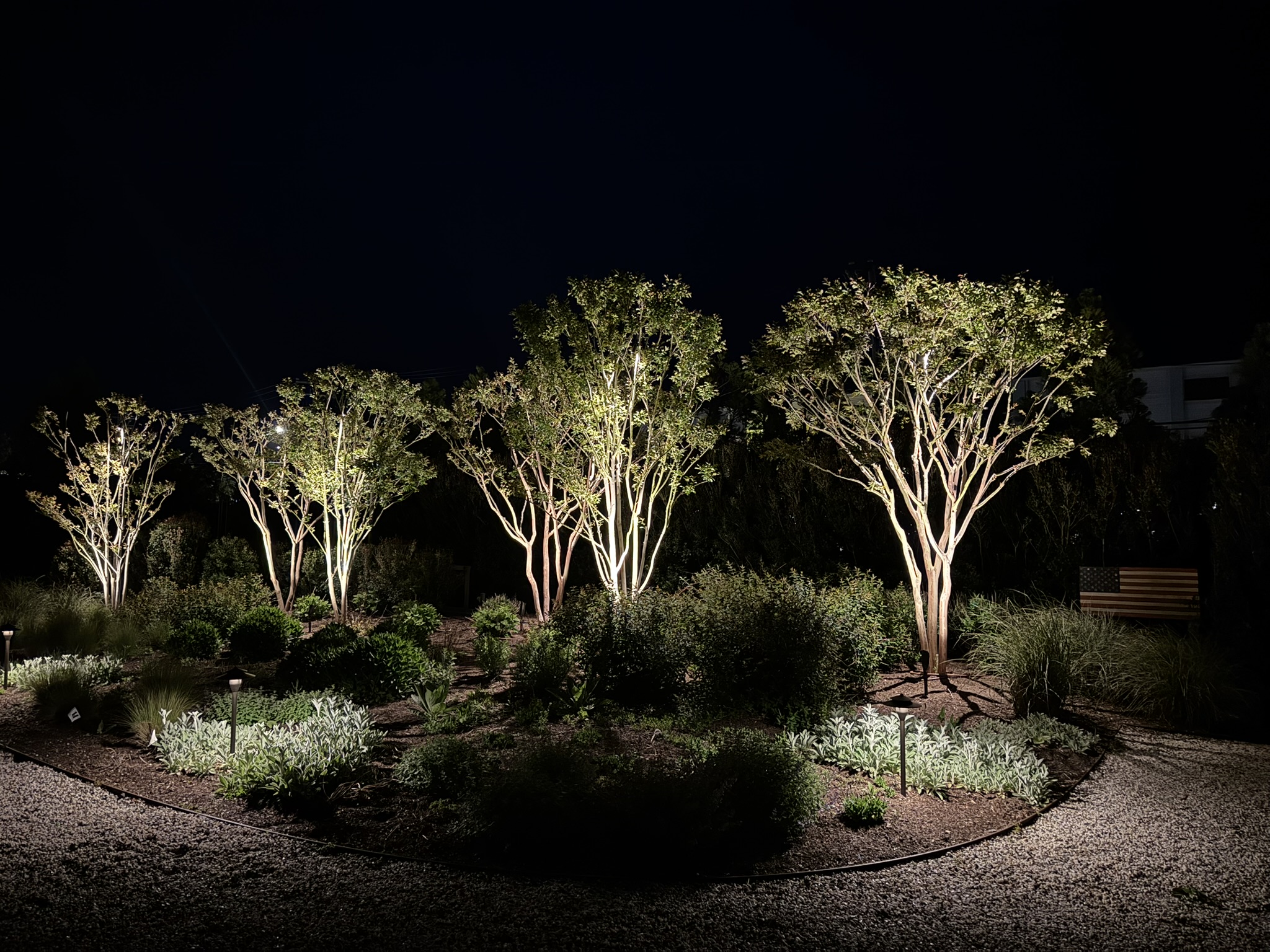
Fixture installation answers “how?”
Installation turns the lighting plan into a durable, functioning system. It is disciplined field work: placing and concealing equipment, making reliable connections, protecting the landscape and hardscape, and building the infrastructure required for the design to perform.
That includes the details that are easy to miss in a finished project: transformer placement, properly sized wire runs, sleeves beneath hardscape, drainage-aware fixture placement, access for service, secure mounting, and careful coordination with other trades. For exposed East End properties, the chosen equipment and installation methods must also account for salt air, moisture, irrigation, soil conditions, and seasonal change.
Where the phases overlap: nighttime aiming
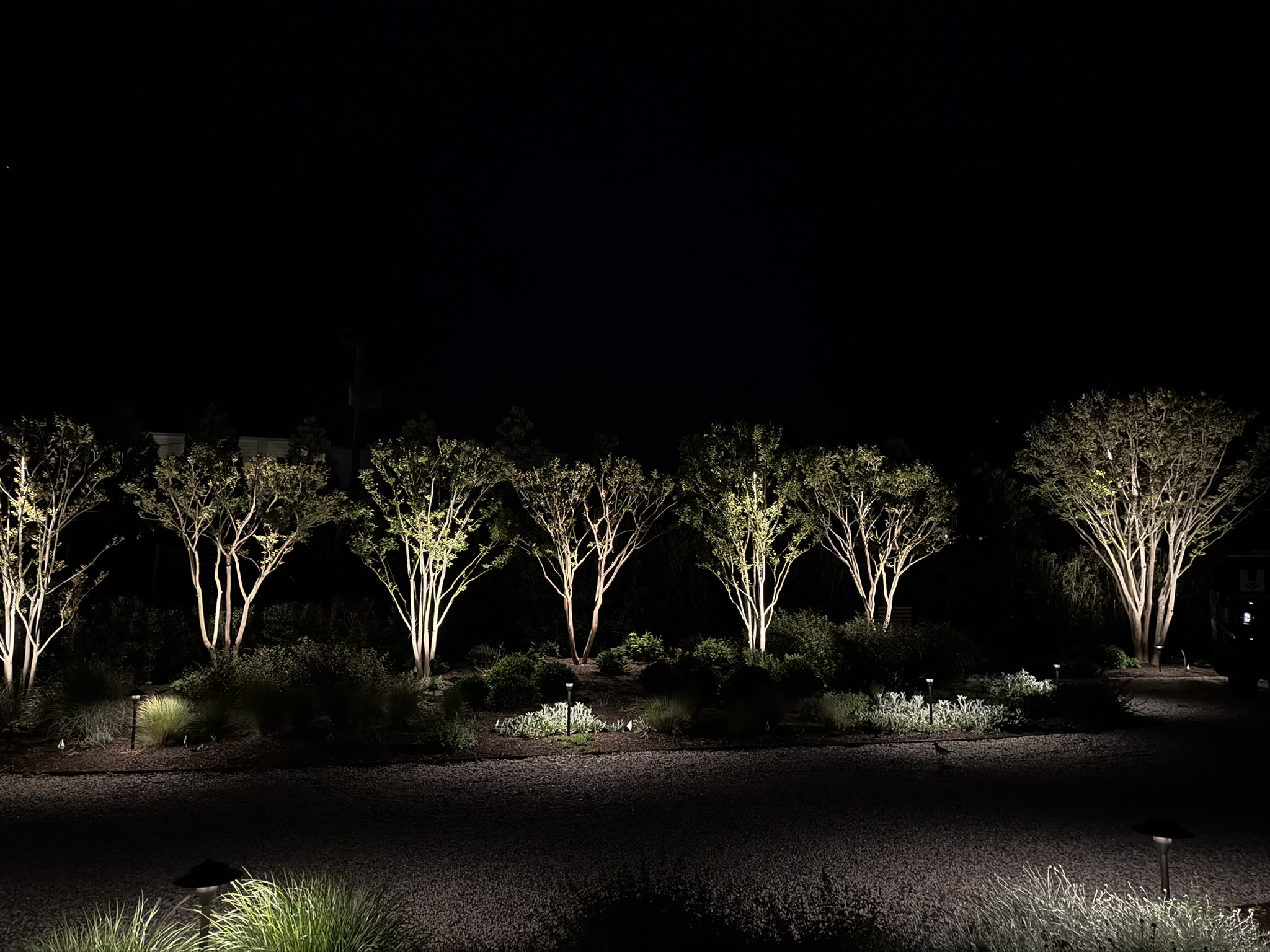
The handoff is not absolute. A plan must be tested in the real environment after dark. During nighttime aiming, fixtures are adjusted for beam direction, output, shielding, and balance. This is when the installed system is refined against the original design goals—and where a property begins to feel considered rather than merely illuminated.
Our Quogue landscape lighting case study shows how design intent, infrastructure, installation, and nighttime aiming work together. It also explains why some fixtures may be moved, reduced, shielded, or reserved for a later phase once the full composition is visible.
Why the distinction protects the project
Separating design thinking from field execution creates clarity early, especially on projects with a landscape architect, architect, builder, pool contractor, or electrician. It enables coordination before hardscape is complete, helps avoid compromised fixture locations, and makes future phases easier to plan.
It also gives homeowners a better way to compare proposals. A fixture count alone does not reveal whether the system has been designed around the property’s use, views, control needs, and long-term maintenance. A complete scope should identify both the design work and the installation work required to execute it.
For a focused area such as a front walk, entry, patio, or existing system improvement, our QuickStart path can be appropriate. Larger or more complex properties benefit from the dedicated design phase described on our services page.
Frequently asked questions
Can a landscape lighting installer also create the design?
Yes—when the company provides both disciplines. The important question is whether the installation is guided by an intentional lighting plan that accounts for composition, beam control, zones, wiring, coordination, and nighttime aiming.
Do I need a design before replacing existing fixtures?
Not always. A simple one-for-one replacement may require limited planning. But an older system, a mature landscape, a changed outdoor layout, or recurring glare and reliability issues usually benefit from revisiting the design before new fixtures are installed. Our article on landscape lighting upgrades and additions explains why.
Is nighttime aiming part of installation?
It is the final field refinement, informed by the original design. It confirms that the installed fixtures produce the intended hierarchy, comfort, and restraint after dark.
What is the difference between fixture selection and lighting design?
Fixture selection is one component of design. Lighting design determines the role, location, beam spread, output, mounting method, and control behavior of that fixture within the larger property.
Begin with a plan that respects the property.
Whether you are planning a new landscape, improving an existing system, or coordinating a larger exterior project, Hamptons Landscape Lighting can define the design and execute the installation with one clear standard.