
The Hamptons · Outdoor living after dark
Landscape Lighting Upgrades That Make Evenings Feel More Complete
Better evenings do not require a brighter property. They begin with the right light for arriving home, moving comfortably outdoors, gathering on the terrace, and enjoying the garden from inside.
The most worthwhile landscape lighting upgrades improve how you use and experience your property after sunset: clearer paths and steps, more inviting outdoor rooms, a welcoming arrival, comfortable views from the house, and lighting that responds to different moments of the evening.
A Hamptons home often has several nighttime personalities. The arrival drive feels different from a dining terrace. The garden that looks beautiful from a living-room window needs a different treatment from the path to the pool house. When each area is illuminated independently, the result can feel fragmented, even when every fixture works.
At Hamptons Landscape Lighting, we approach an upgrade as a question of experience first. How do you arrive, entertain, move between spaces, and look out at the landscape after dark? The answers guide a cohesive landscape lighting design that balances useful illumination with atmosphere and preserved shadow.
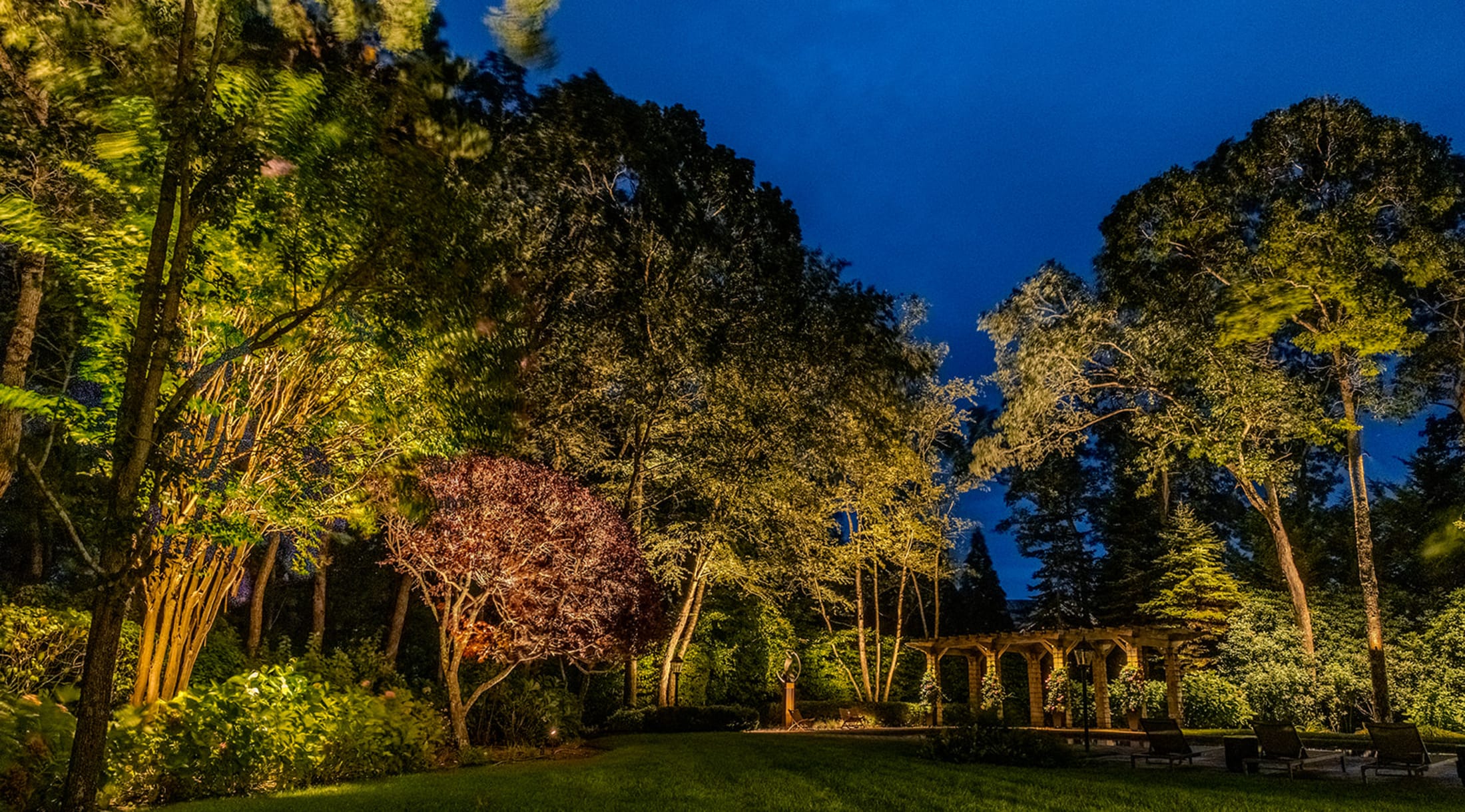
Where an upgrade makes a difference
Five ways to make evenings outdoors feel better
Before choosing a new fixture, identify the moments that could feel more comfortable, welcoming, or visually connected. These five improvements often provide a useful starting point.
Make the arrival feel welcoming
Consider the journey from driveway to entry: where the route turns, where guests leave a vehicle, and where the architecture should first become visible. Selective lighting on planting, entries, and transitions creates a sense of arrival without turning the drive into a brightly lit corridor.
Give paths and steps visual clarity
Well-placed, shielded pathway and step lighting helps reveal changes in grade and where to walk. Avoid a row of equally bright fixtures when subtle, appropriately spaced illumination can provide better guidance and less glare.
Make the terrace feel like an outdoor room
Dining, conversation, and quiet evenings do not need identical light. Layer illumination at the perimeter, nearby planting, and important circulation routes so the setting feels inviting while light sources remain unobtrusive from seating positions.
Restore depth to garden views
One carefully illuminated tree, hedge, or stone wall can create a more dimensional view from the living room than a dozen indiscriminate accents. Evaluate the design from inside the home as well as from the lawn; reflective glass and exposed lamps can change the effect dramatically.
Make the evening easier to manage
Thoughtful zones, timers, and compatible controls can let the property move from arrival to entertaining to a quieter late-evening setting. Lighting scenes should support the way you live, not add complicated technology for its own sake.
What matters most? Prioritize areas that are difficult to use after dark or uncomfortable because of glare. Then improve the views and atmosphere that make an ordinary evening feel special.
A design-led approach
Better light does not mean more light
Direct the beam
Put light where it has a purpose. Shielding and precise aiming help reduce spill into seating areas, neighboring properties, windows, and the night sky.
Preserve shadow
Darkness gives illuminated trees, paths, architecture, and garden features their contrast. A property can feel richer with fewer, better-chosen focal points.
Coordinate warmth
Choose color temperature and intensity in relation to cedar, stone, water, planting, and the home's existing lighting, rather than selecting every lamp in isolation.
Finish after dark
Professional nighttime aiming reveals the actual glare, reflections, bright spots, and missing transitions that daytime adjustments cannot fully show.
Working with what you already have
Can you improve an existing lighting system without replacing it?
Often, yes. A focused review may identify fixtures that can be cleaned, repositioned, shielded, or re-aimed; damaged connections that need repair; and a limited number of places where additional or replacement fixtures would improve the whole composition.
Other systems need more substantial work. Aging components, inconsistent lamp types, inadequate electrical capacity, poor wiring condition, or incompatible controls may limit what can be preserved. A site assessment helps determine whether targeted improvements are practical or a coordinated redesign is the better investment.
This is different from simply adding lights as the property grows. Our companion article on landscape lighting additions and evolving landscapes examines expansion and future planning. Here, the priority is the quality of everyday evenings in the spaces you already enjoy.

A useful evening walk-through
How to decide what to upgrade first
Walk the property after sunset, following the routes you and your guests actually take. Then look back toward the house from the terrace and out through the windows of the rooms used most in the evening.
- Arrival: Are entry points, turns, and transitions easy to recognize without excessive brightness?
- Circulation: Are steps, paths, and changes in elevation visible and comfortably lit?
- Gathering: Does the terrace or patio feel welcoming from seated eye level, without exposed light sources?
- Views: Do garden features have depth from the main interior windows, or do bright reflections dominate?
- Controls: Is it easy to choose appropriate lighting for arrival, entertaining, and quieter late evenings?
- Condition: Have plant growth, weather, damaged fixtures, or shifted aiming altered the original design?
A professional review turns those observations into a practical scope: adjustment and maintenance, selective upgrades, or a more complete redesign. For pool areas, our guide to restrained poolside landscape lighting explains the particular importance of reflections, shielding, and visual comfort around water.
Care after installation
Keep the evening experience consistent as the seasons change
A successful upgrade should remain successful after the planting grows and the daylight schedule shifts. Lenses collect debris, storms can move fixtures, and a light that once framed a young tree may eventually be blocked by its canopy.
HLL's Brilliance Care maintenance program supports the long-term composition with scheduled cleaning, inspection, re-aiming, and timer or transformer checks. Maintenance preserves the design intent and helps identify developing issues before they affect more of the property.
Common questions
Landscape lighting upgrade FAQs
What is the best first landscape lighting upgrade?
Start with an area that is used frequently but feels uncomfortable or difficult to navigate after dark, such as an entry, path, steps, or a terrace affected by glare. A nighttime review helps identify the improvement with the greatest practical and visual benefit.
Do I need to replace the whole system?
Not always. Useful fixtures, wiring, and controls may be retained when they are in good condition and compatible with the desired design. A professional assessment determines which elements can be adjusted, repaired, or reused and which should be replaced.
Can better lighting improve the view from indoors?
Yes. Selective illumination on trees, planting, architecture, and paths can give windows a more layered view after dark. Fixture placement and shielding matter because visible lamps and reflections in glass can undermine the result.
Will adding outdoor lighting make my property too bright?
It should not. A thoughtful design uses targeted light, measured output, shielding, and preserved shadow. The goal is a comfortable nighttime setting, not uniform brightness across the property.
How do I keep upgraded lighting looking its best?
Periodic cleaning, inspections, aiming adjustments, and control checks help lighting adapt to coastal weather, landscape growth, and seasonal schedules. HLL offers this support through its Brilliance Care program.