

A Design-First Approach to Hamptons Landscape Lighting
In the Hamptons, outdoor living has never been about spectacle.
It is about time — evenings that unfold slowly, quiet gatherings beneath mature trees, the soft transition from interior spaces into gardens, terraces, and coastal landscapes.
Here, the outdoors is not separate from the home. It is an extension of architecture itself.
For this reason, Hamptons Landscape Lighting (HLL) must follow the same philosophy. Technology should not compete with the architecture or the landscape. It should support the experience quietly, revealing form, texture, and movement without announcing its presence.
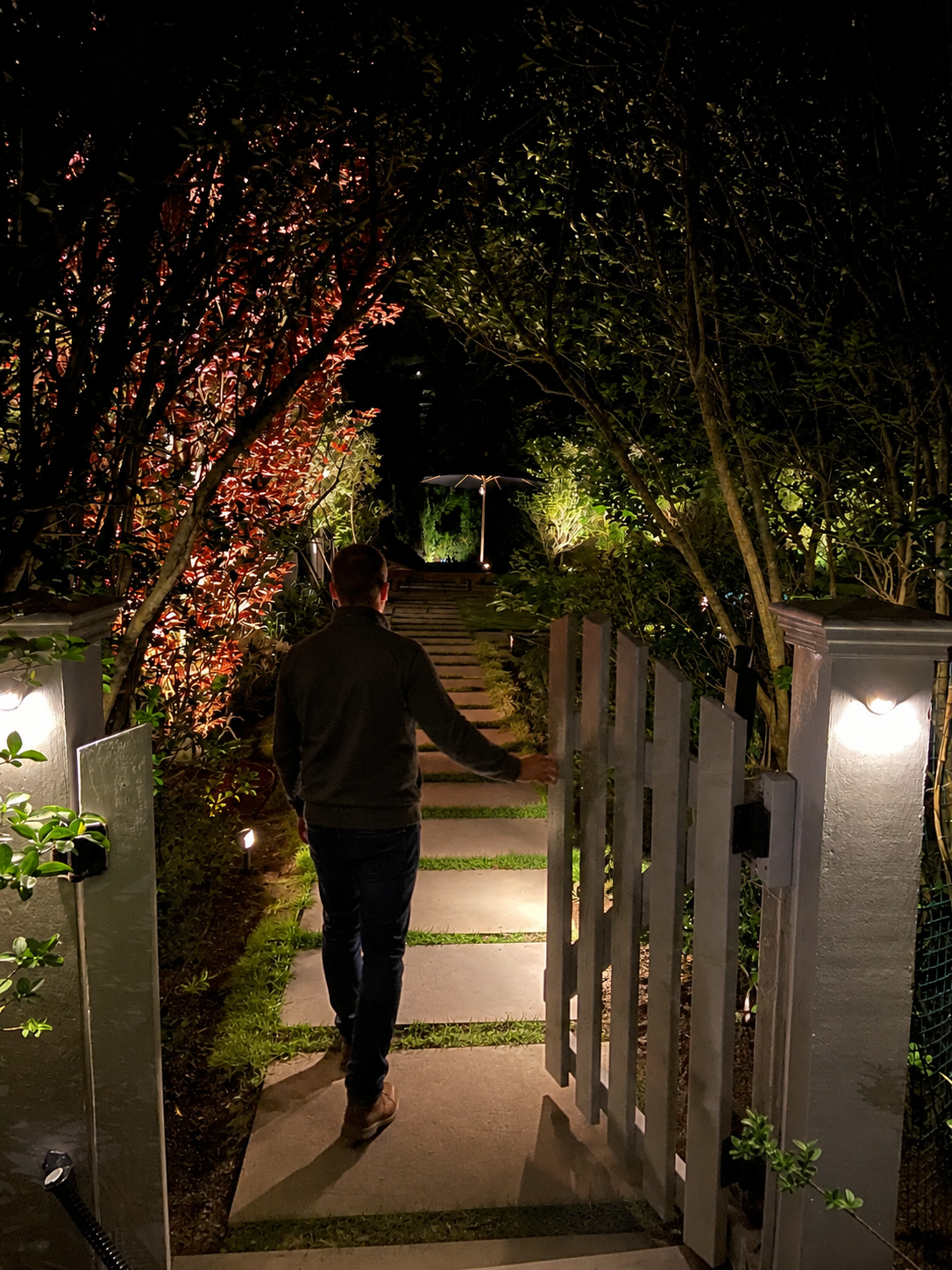
When outdoor lighting in the Hamptons is designed well, it feels less like a system and more like a natural condition of the property. Walkways are intuitive. Gardens feel dimensional after sunset. Architecture holds its presence against the dark coastal sky.
Nothing appears added.
Everything feels inevitable.
Why Subtlety Defines Hamptons Outdoor Lighting
The most refined Hamptons homes share a common quality: restraint.
Architecture is composed with intention. Landscape design emphasizes structure and natural rhythm. Materials are chosen for how they weather over time rather than how they appear on the day of installation.
Lighting must respect that same discipline.
Overscaled fixtures, excessive brightness, and poorly positioned technology disrupt the quiet character that defines the region’s most successful homes.
Instead, luxury landscape lighting in the Hamptons focuses on restraint and precision.
Light is used sparingly and with purpose:
• Guiding circulation through pathways and terraces
• Revealing the texture of stone, wood, and architectural surfaces
• Framing mature trees and landscape structure
• Creating depth across lawns, gardens, and water features
The goal is not illumination.
It is atmosphere.
Hamptons Landscape Lighting Begins With Architecture
Our team works with Landscape designers, architects and landscape contractors to ensure that all the material selections for a project are approved and complement the original design intent.
In well-composed properties, lighting is not applied after the fact. It is considered a part of the architectural environment.
Sightlines, structural rhythm, and circulation paths all influence where and how light should exist.
This architectural approach to outdoor lighting allows fixtures to remain discreet while the effects of light feel intentional and balanced.
Columns are gently grazed to reveal texture. Stone walls gain depth through subtle shadow. Mature trees become quiet focal points across the property after sunset.
Rather than drawing attention to fixtures themselves, the lighting reveals the composition of the home and landscape.
The technology disappears.
The design remains.
Designing Outdoor Lighting for Coastal Conditions
The Hamptons landscape is shaped by proximity to water. Salt air, high humidity, seasonal storms, and intense sun exposure place constant pressure on outdoor materials and technology.
Systems designed for milder environments rarely perform well here.
Finishes deteriorate. Components corrode. Illumination becomes inconsistent. What was intended to feel seamless gradually becomes a visible maintenance problem.
Effective coastal landscape lighting systems are selected with these conditions in mind.
Marine-grade metals, sealed fixtures, corrosion-resistant finishes, and carefully engineered installation methods allow outdoor lighting to perform reliably year after year.
Durability in this context is not merely a technical specification.
It reflects a commitment to longevity — ensuring that lighting continues to support the architecture and landscape rather than distract from them.
The Importance of Early Lighting Design
The most cohesive outdoor environments in the Hamptons emerge through collaboration.
Architecture, landscape design, lighting design, and outdoor technology must align early in the design process in order to maintain visual clarity.
When lighting is introduced late, compromises are often visible:
• Conduit must be exposed
• Fixture placement conflicts with planting plans
• Infrastructure disrupts architectural lines
When lighting design begins early, these problems disappear.
Infrastructure is concealed within landscape construction. Fixtures integrate into planting design. Lighting layers align with architectural sightlines.
The result is an outdoor environment where technology supports the design without leaving visible evidence behind.
This is often the difference between outdoor lighting that feels installed and outdoor lighting that feels inherent to the property.
A Design Philosophy Rooted in the Hamptons
At Hamptons Landscape Lighting, outdoor lighting design begins with a simple premise: technology should support architecture and landscape, not compete with them.
Working alongside architects, landscape designers, and our sister company Home Technology Experts, lighting systems are integrated early so that infrastructure remains hidden and the design of the property remains intact.
This collaborative approach allows outdoor lighting to perform quietly — guiding movement, revealing landscape structure, and creating atmosphere without drawing attention to itself.
In the Hamptons, restraint is not minimalism for its own sake. These design techniques are a reflection of confidence in the architecture/ concept, the landscape, and the natural beauty that defines the region.
Well-designed Hamptons landscape lighting simply allows these architectural and landscaped elements to be experienced more fully after sunset.