
Coastal Lighting · The Hamptons
Coastal Lighting and Wildlife: Designing Responsibly at the Shore
Responsible coastal lighting uses low, warm, shielded illumination to preserve comfort and beauty while respecting the night environment around shoreline properties.
Lighting a beachfront retreat comes with a different set of responsibilities. Along the shore, darkness is not an absence of design. It is part of the setting: protecting long views across the water, reducing visual clutter, and helping limit unnecessary disruption to nocturnal wildlife.
At Hamptons Landscape Lighting, a coastal plan begins with the property itself—its exposure, sightlines, paths, decks, planting, and the way it is used after sunset. Our lighting-design process uses restraint and precise aiming so light supports the property without spilling beyond it.
Why darkness matters at the shoreline
Artificial light at night can change how animals move, feed, nest, and orient. The effects vary by species and location, which is why coastal properties benefit from a site-specific approach and an understanding of local requirements.
Birds
Migratory and nocturnal birds can be drawn off course or become disoriented by excessive illumination.
Insects
Unshielded light can attract insects away from natural patterns, affecting the food web around the property.
Shoreline habitat
Low, controlled light helps maintain a quieter transition between the home, planting, dune, and water.
Sea turtles are a well-known example in nesting regions: adults and hatchlings can be affected by artificial illumination near the beach. While conditions and local rules differ by shoreline, the design lesson is universal—light only what needs light, and keep it directed where it belongs.

Four principles for responsible coastal lighting
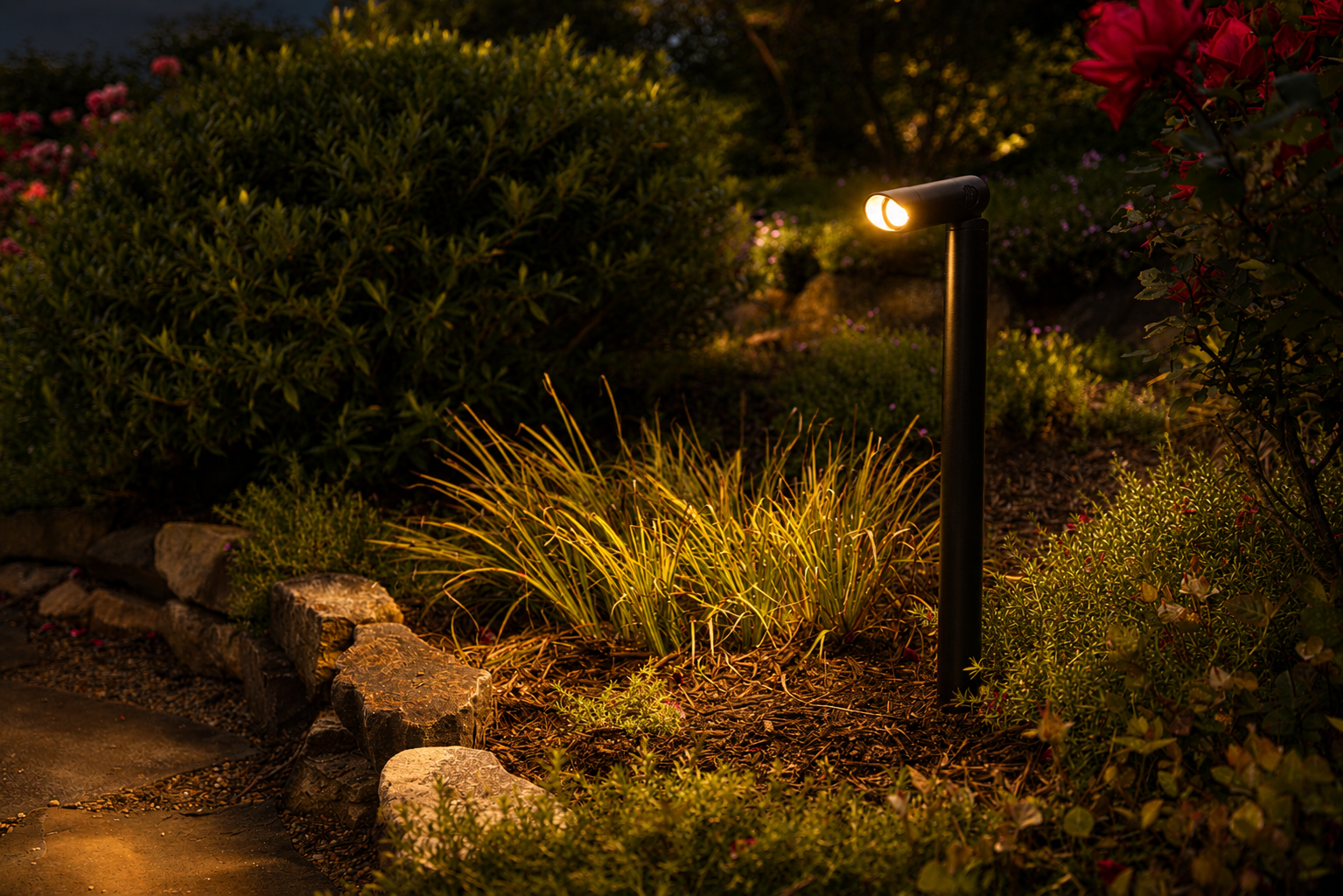
Keep it low. Lower mounting heights and modest light levels reduce glare and limit how far light travels.
Keep it warm. Warm color temperatures are generally more comfortable for people and less visually harsh than cooler white light.
Keep it shielded. Aim fixtures downward and conceal the source where possible. The illuminated surface—not the lamp—should be what the eye notices.
Keep it intentional. Use timers, dimming, and appropriate controls so exterior lighting reflects how the property is actually used rather than remaining at full output all night.
These same choices help preserve views from indoor spaces, reduce glare at terraces and paths, and support a refined nightscape. See our guide to dark-sky-friendly landscape lighting for more on reducing light trespass and skyglow.
Planning before installation matters
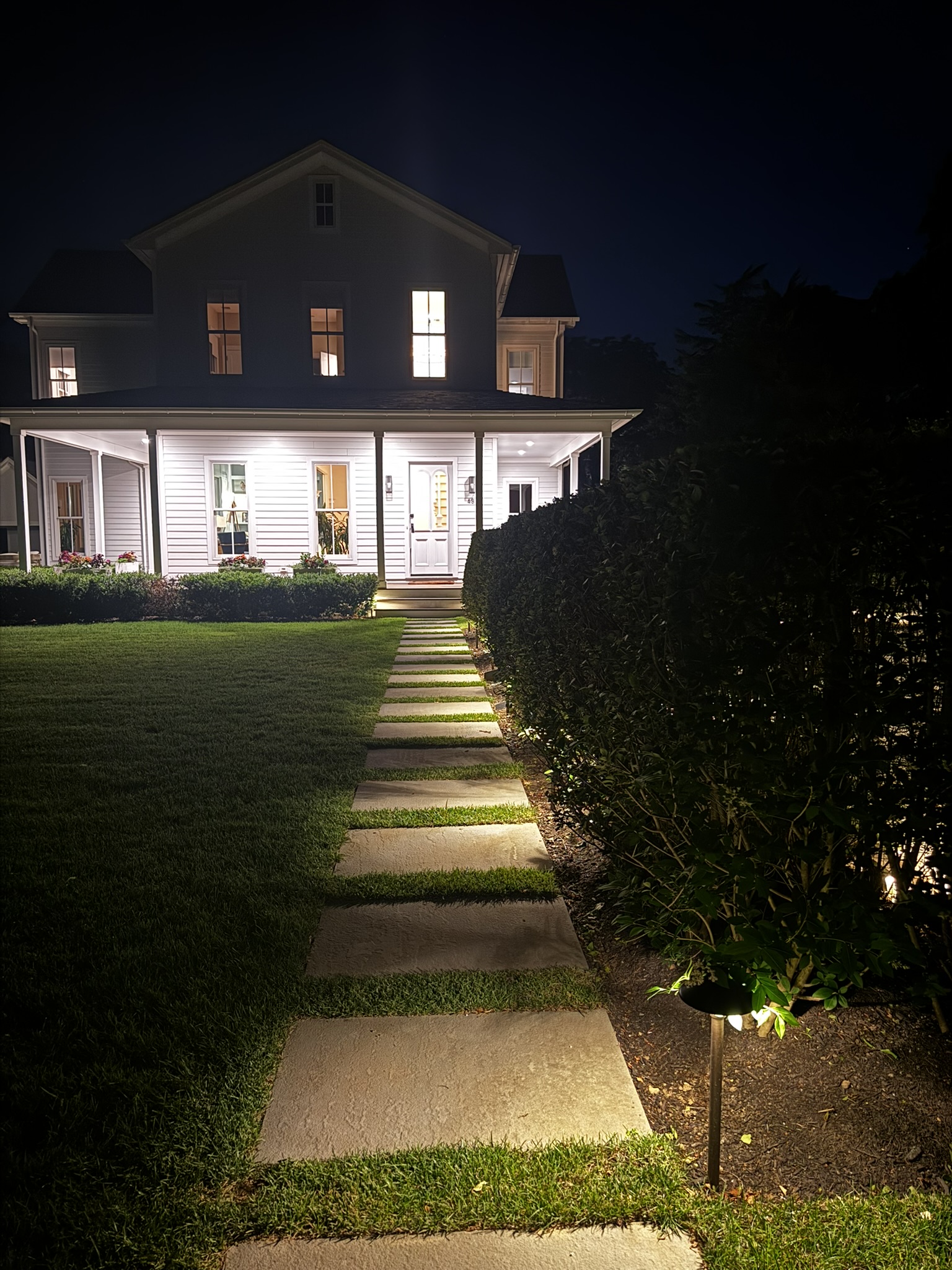
Beachfront properties can amplify glare across open water and sand. A lighting plan should consider the brightest views from the house, the approach from the drive, exterior circulation, and what a neighbor or person on the beach might see. Early coordination also helps avoid costly retrofits or permitting surprises.
For properties near the water, materials and installation details matter as much as light quality. Salt air, moisture, irrigation, wind, and seasonal conditions all inform our installation approach and the ongoing adjustment available through Brilliance Care™.
Related reading: How We Design Landscape Lighting · Refined Restraint in Lighting · Landscape Lighting Upgrades and Additions · Outdoor In-Ground Lighting
Stewardship, comfort, and a better nightscape
Coastal lighting is a stewardship decision as much as a design one. With restraint, precision, and thoughtful control, a shoreline property can feel safe, welcoming, and beautifully composed without asking the surrounding night to do more than it should.
Frequently asked questions
Is warm lighting always wildlife-friendly?
Warm lighting is one helpful strategy, but it is not a substitute for careful placement, shielding, low output, and appropriate operating hours. Local requirements and the property context should guide the complete plan.
Can existing coastal lighting be improved?
Often, yes. A focused audit can identify exposed lamps, excessive output, poor aiming, unnecessary overnight operation, and opportunities for shielding or control upgrades.
Will responsible lighting make the property feel too dark?
No. Good design creates enough visibility for arrival, movement, and outdoor living while preserving contrast and avoiding uniform brightness. The result usually feels calmer and more usable.