
Landscape Lighting Design Guide
Landscape Lighting for Mature Trees and Specimen Plantings
The right light does not simply make a tree visible. It reveals the structure, texture, depth, and quiet presence that make a mature landscape feel like itself after dark.
Mature trees and specimen plantings deserve more consideration than a fixture placed at their base. Their trunks, branching patterns, canopy density, surrounding planting, and relationship to the home all change what light should do and where it should stop. A thoughtful plan begins with the landscape itself, then selects the technique, beam control, and seasonal care that will preserve its character over time.
Begin with the tree, not the fixture
A mature oak near an arrival drive asks for a different response than a sculptural Japanese maple beside a terrace, a row of evergreens defining a property edge, or a broad canopy shading a garden path. Before choosing a fixture, consider what makes the planting important after dark: silhouette, bark, branching, canopy volume, seasonal color, circulation, or the view from indoors.
That design-first approach is central to HLL’s landscape lighting design process. It helps avoid the common result of a bright trunk, a lost canopy, or a garden that feels evenly lit but visually flat.
Lighting Techniques
Choose a technique by the tree and the experience
Uplighting, downlighting, and moonlighting are not interchangeable effects. Each changes how a tree is read in the landscape and how the surrounding space feels to use.
Uplighting
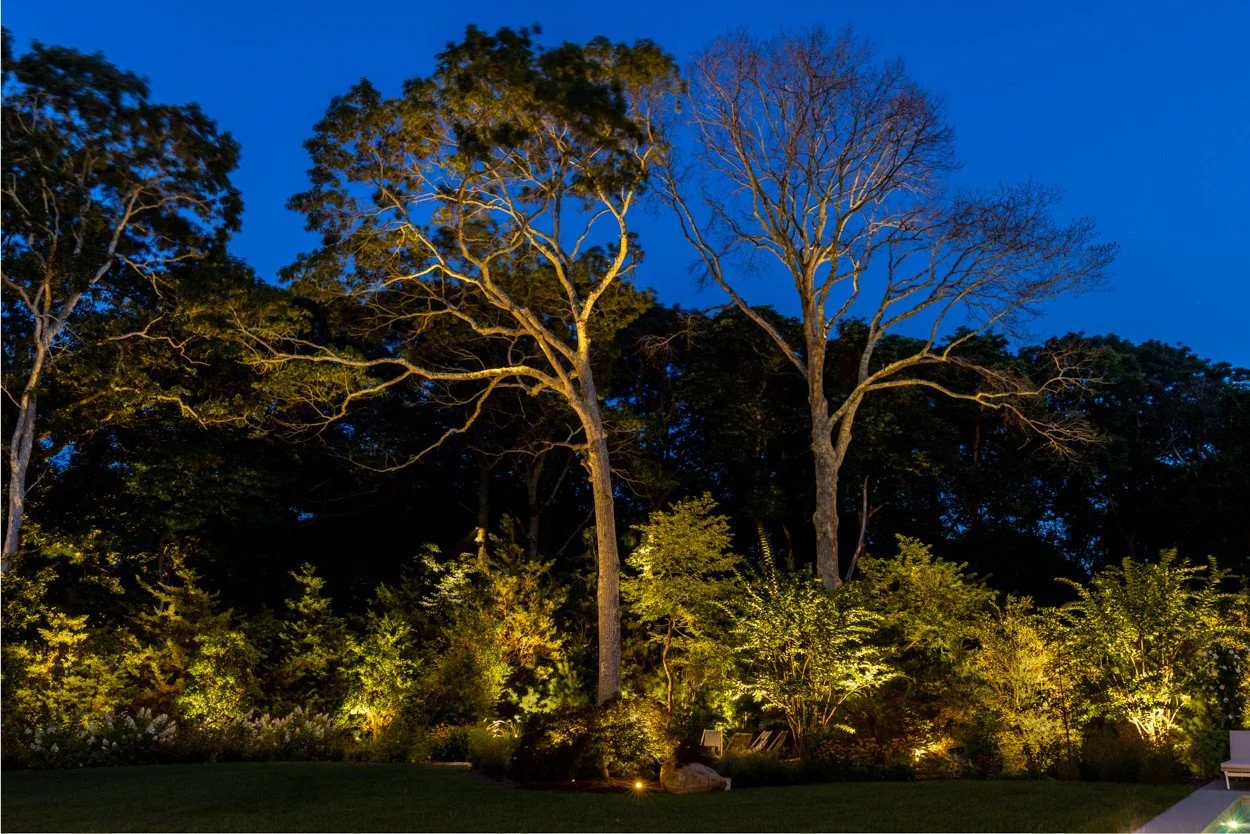
Uplighting is often the right choice when a trunk, branching structure, or canopy should become a focal point. The beam should be chosen for the scale of the tree, then aimed so it reveals form without creating a harsh hotspot or washing the surrounding garden in unnecessary light.
Downlighting
Downlighting places the source above the eye line and directs light through branches onto a path, terrace, planting bed, or gathering area. It can add useful orientation while preserving the sense that the landscape, rather than the equipment, is doing the work.
Moonlighting
Moonlighting uses a high, carefully positioned fixture to create a soft, filtered effect below the canopy. The best results rely on texture, thoughtful aiming, and restraint. The source should disappear into the tree and the light should feel naturally placed rather than theatrically projected.
Silhouette and layered planting
Some specimen plantings are strongest when they are outlined against a wall, hedge, or distant view instead of lit directly. A layered composition can also use nearby shrubs, grasses, stone, and low planting to give the tree depth rather than isolating it in a pool of light.
Beam control matters more than brightness
A successful tree-lighting plan is rarely about adding more output. It is about directing the right amount of light toward the right part of the composition. Beam spread, fixture position, shielding, mounting height, and the viewing angle from the home all affect the final result.
- Match the optic to the tree.
A narrow beam may define a tall trunk or a single branch structure. A wider beam may be needed to reveal a layered canopy or a grouping of specimen plantings. - Protect the view from inside.
Light that looks appealing from the garden can become distracting when it lands directly in a bedroom, living room, or kitchen sightline. - Let shadows remain useful.
Contrast gives the landscape depth. A fully flattened canopy often looks less natural and less refined than one with selective areas of light and shade. - Control glare at the source.
Good aiming and discreet fixture placement make the effect more comfortable for homeowners, guests, and neighbors. Read more about avoiding glare in outdoor lighting.
Beam discipline also supports a more responsible nighttime environment. HLL’s guide to dark-sky landscape lighting explores why useful, directed illumination is a better long-term approach than broad or uncontrolled brightness.
Protect roots, bark, and the finished landscape
Lighting around established trees requires practical restraint below grade as well as above it. Fixture locations and wire routes should be planned around the tree, existing planting, irrigation, hardscape, and the ongoing needs of the property. The goal is to create a durable lighting system without treating the landscape as an empty installation field.
For substantial trees or sensitive planting areas, the design team should coordinate early with the landscape architect, gardener, builder, or arborist as appropriate. This is especially important when grading, new hardscape, planting work, or utility routing is already part of the project.
During installation, HLL considers fixture concealment, clean wire routing, finished surfaces, and the landscape’s future growth. The selected fixtures should support the design without becoming a visible interruption during the day.
Design for four versions of the same tree
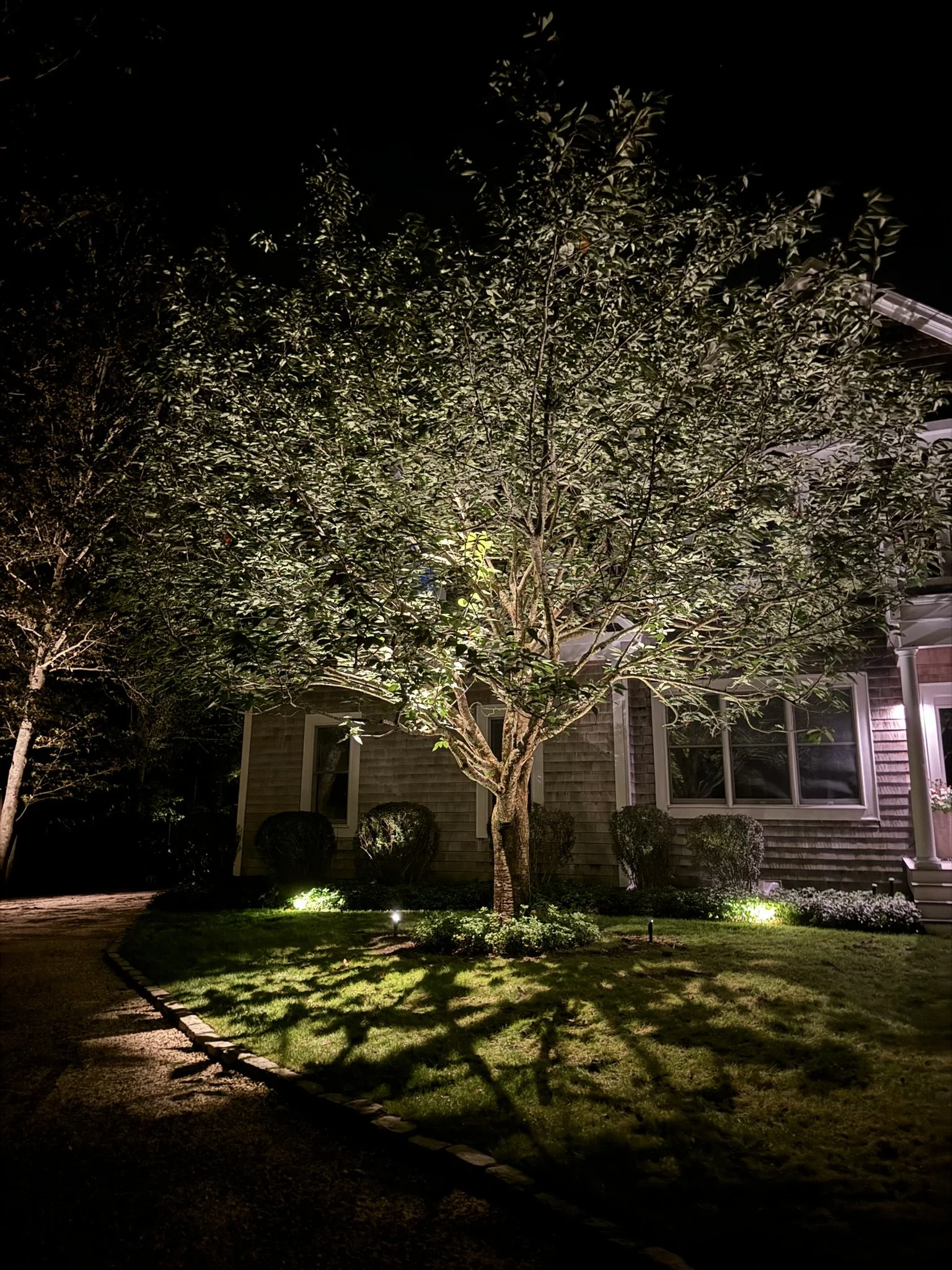
A landscape is not static. The canopy that softly filters light in July may expose a branch structure in November. Hydrangeas, ornamental grasses, and understory planting can gradually block a fixture. A tree that becomes a winter focal point may need a different emphasis when its leaves return.
That is why the best lighting plans leave room for refinement. Seasonal adjustments can restore beam direction, clean lenses, account for plant growth, and make sure a lighting composition continues to support how the property is used. Explore HLL’s Brilliance Care program and learn why landscape lighting upgrades and additions often begin with an evolving garden rather than a failed system.
See your trees as part of the nighttime plan
From a single specimen tree to a layered estate landscape, HLL designs lighting that makes the property more usable and more considered after dark.
When tree lighting deserves a separate design discussion
Tree lighting is worth discussing early when a mature canopy defines the arrival sequence, frames a view from the house, shades a pool or terrace, anchors a garden room, or sits near property boundaries where spill light and comfort matter. It is also valuable when a renovation, planting plan, or outdoor-living project may change the surrounding landscape.
For broader planning, HLL’s design process considers the relationship among architecture, planting, paths, outdoor living areas, and the views that matter most after dark.
Frequently Asked Questions
Questions about lighting mature trees
What is the best lighting technique for mature trees?
The best approach depends on the tree’s form, scale, location, and role in the landscape. Uplighting can reveal a trunk and canopy, while downlighting or moonlighting can create softer orientation around paths, terraces, and planting below.
When is moonlighting better than uplighting?
Moonlighting is especially effective when the experience below the tree matters as much as the tree itself. It can provide a gentle, filtered layer of light across circulation areas or gathering spaces without making the trunk the central focal point.
Can landscape lighting be installed around tree roots?
It can be planned around established trees, but fixture placement and wire routing should be considered carefully alongside existing planting, irrigation, hardscape, and any guidance from the project’s landscape professionals.
Does tree lighting need seasonal adjustment?
Often, yes. Leaf growth, pruning, changing understory planting, weather, and shifts in how a property is used can all affect beam direction and the way a tree appears after dark.
How can tree lighting avoid glare?
Glare is reduced through appropriate fixture placement, beam selection, shielding, and nighttime aiming. The finished effect should reveal the landscape while keeping the source visually discreet from key paths, terraces, and interior rooms.
Plan a landscape that still feels natural after dark
HLL designs, installs, and maintains refined landscape lighting for Hamptons properties.
From lighting design and installation to maintenance, upgrades, lighting control systems, and outdoor audio/video, Hamptons Landscape Lighting provides comprehensive outdoor lighting services.