
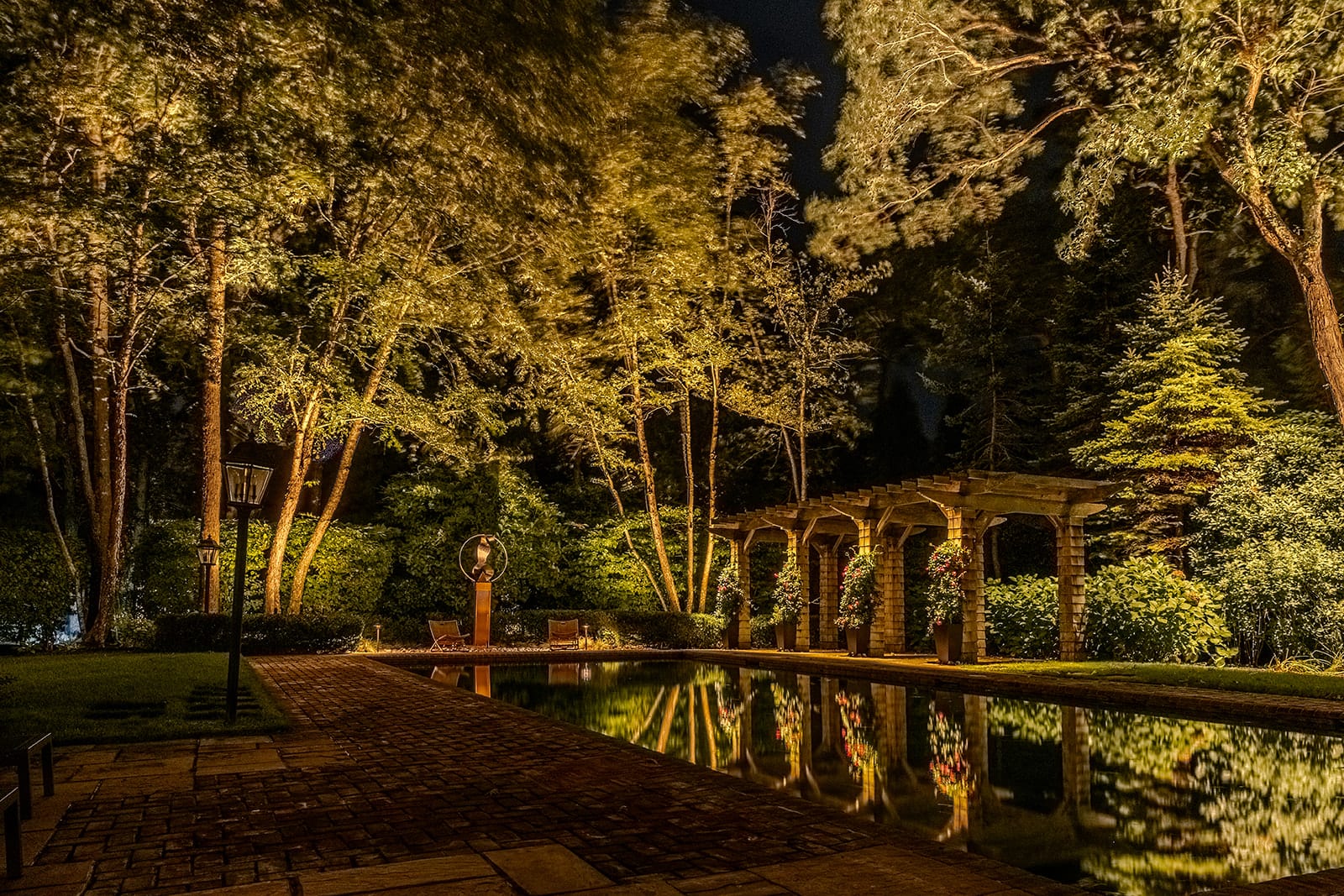
Landscape Lighting Design · The Hamptons
Architectural Luminaires: Lighting That Shapes the Night
Architectural luminaires reveal form, texture, and depth with warm, controlled light,so the home feels more intentional after dark without becoming overlit.
When landscape lighting is done well, most people never notice the fixtures. They notice the feeling: a warmer arrival, a more inviting terrace, and architecture that holds its presence after sunset.
Architectural luminaires are part of that experience. They are selected and positioned to illuminate the structure itself,not simply to make a property brighter, but to reveal shape, material, balance, and depth in a controlled way. At Hamptons Landscape Lighting, they are considered within the complete landscape-lighting design, alongside gardens, paths, views from inside, and the way the property is used at night.
What are architectural luminaires?
Architectural luminaires are fixtures used to bring quiet definition to parts of the home and its immediate surroundings. Their purpose is to support the architecture while keeping the hardware visually discreet during the day.
They can reveal
- Stone, brick, cedar, and shingle textures
- Entryways, columns, rooflines, and overhangs
- Façade proportions and details
They can support
- Stairways, paths, and arrival transitions
- Terraces and outdoor living spaces
- Plantings that frame the home
The most successful result feels integrated into the property rather than added onto it. This is the same principle behind our article on how we design landscape lighting: the light is planned around what the eye should experience, not around a generic fixture layout.
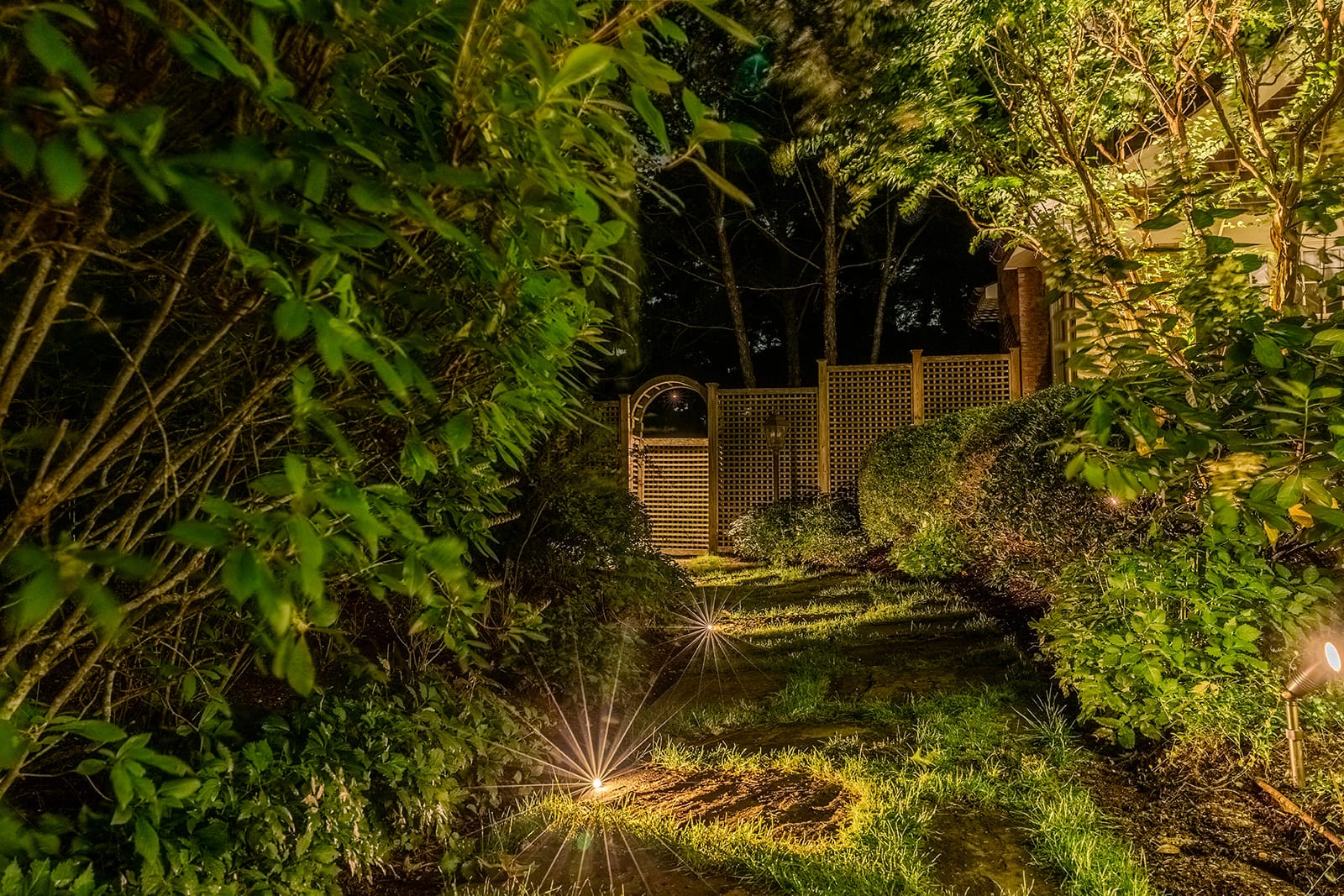
Lighting that supports architecture
A common mistake in outdoor lighting is over-lighting the home. Too much brightness can flatten texture, create glare, and make a property feel exposed rather than welcoming. Thoughtful architectural lighting works differently: it guides the eye with selective illumination and subtle contrast.
Instead of flooding every surface, the design may let a stone wall hold shadow at its edges, allow a roofline to recede, or use a restrained wash to reveal the depth of shingle and trim. The goal is calm visual hierarchy. Our guide to refined restraint in lighting explains why controlled darkness is as valuable as the illuminated moments.
Placement is the design
The fixture matters, but its placement matters more. Beam spread, aiming angle, reflection, surrounding planting, sightlines from the home, and evening use all shape the outcome. A small change in position can be the difference between a warm architectural accent and an exposed source of glare.
That is why each property is approached individually, from the first fixture-by-fixture plan through nighttime aiming. We consider where guests arrive, where people sit, where windows look out, and what should remain quiet. For a built example of this layered approach, see the Quogue landscape-lighting case study.
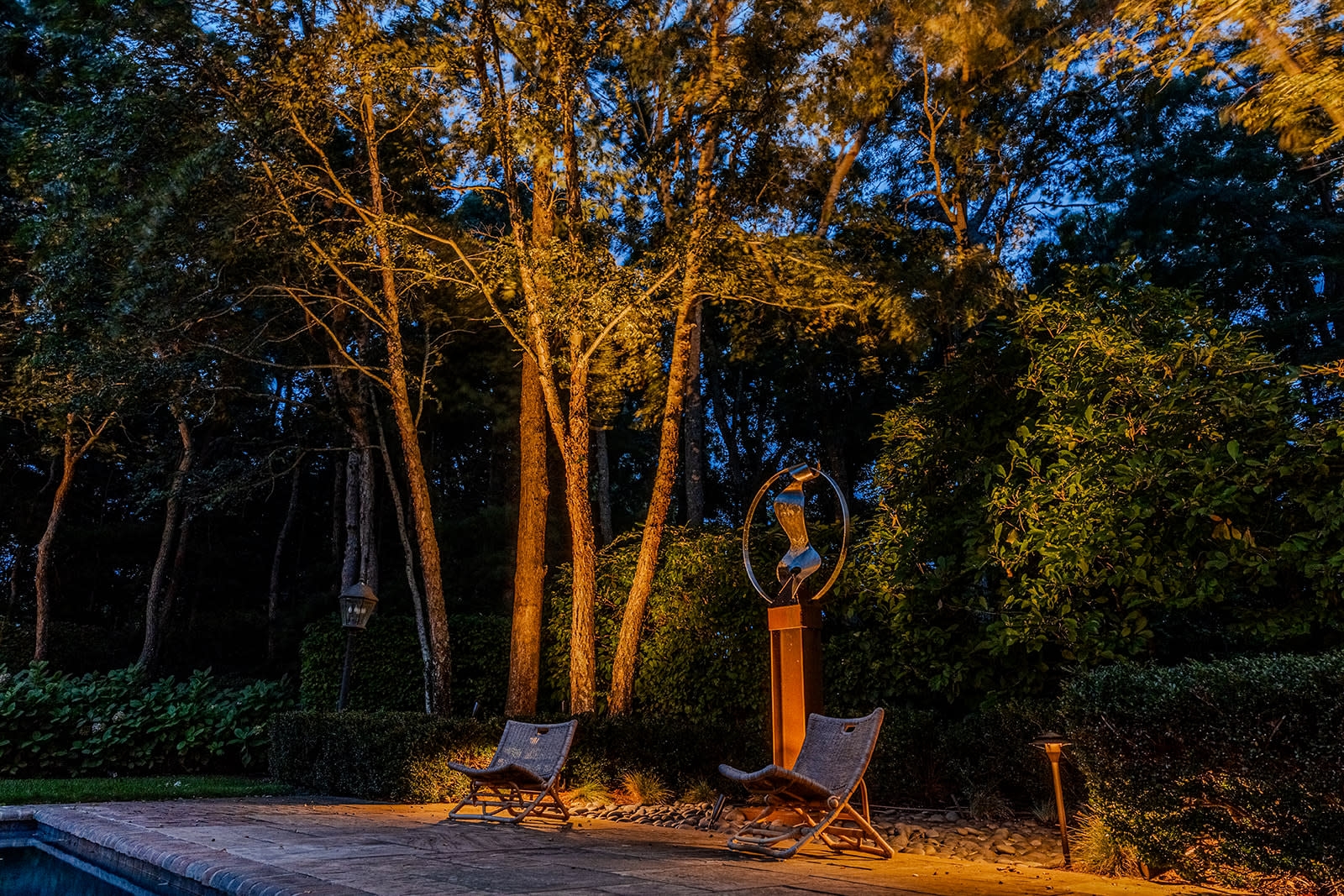
Warmth over brightness
In luxury outdoor environments, warmth matters more than intensity. Soft light around an entry, layered illumination across a terrace, and gentle definition on selected architectural details can make a property feel welcoming while allowing the home and landscape to remain the focus.
The objective is not an artificially lit property. It is an effortless nighttime experience,one that supports gatherings, arrival, and the view from inside. Where appropriate, lighting control systems can help different zones respond to the evening, from a welcoming arrival scene to a quieter late-night setting.
Designed for long-term performance
Architectural lighting should continue to perform as landscaping matures and the property evolves. That requires durable materials, proper installation, accurate aiming, and professional support. Coastal exposure, irrigation, seasonal change, and growth around fixtures all matter. Our approach to Brilliance Care™ maintenance helps preserve the original design intent through inspection, cleaning, and adjustment over time.
For more guidance, read our overview of professional landscape-lighting installation, including careful installation practices for coastal conditions.
A more thoughtful nightscape
Architectural luminaires are not about making a statement. They shape the experience of a property after dark,making a home feel more welcoming, outdoor spaces more usable, and important details quietly present.
The best landscape lighting does not compete for attention. It simply makes the entire property feel more complete.
Frequently asked questions
What is the difference between architectural lighting and floodlighting?
Architectural lighting uses selective, controlled illumination to reveal form, texture, and proportion. Floodlighting broadly illuminates a large surface and can flatten details or create glare when it is not carefully managed.
How do you keep architectural lighting from creating glare?
Glare is controlled through fixture selection, shielding, beam angle, mounting position, output, and final after-dark aiming. The source should be less noticeable than the architecture it is intended to reveal.
Can architectural lighting be added to an existing home?
Yes. An existing property can be evaluated for its architecture, access, landscape maturity, electrical infrastructure, and the way exterior spaces are used. The right scope may range from a focused improvement to a larger renovation and upgrade.
Does landscape lighting need ongoing adjustment?
It often benefits from it. Plants grow, seasonal conditions change, and fixtures can require cleaning or re-aiming. Periodic maintenance helps preserve visual balance and system performance.
Related reading: How We Design Landscape Lighting · Refined Restraint in Lighting · Outdoor In-Ground Lighting · How to Design Landscape Lighting